Okenia nodosa
A small white nudibranch turning up on cool reefs from Bohuslän to Northern Ireland, best spotted on close-focus dives in 8 to 14 C water.
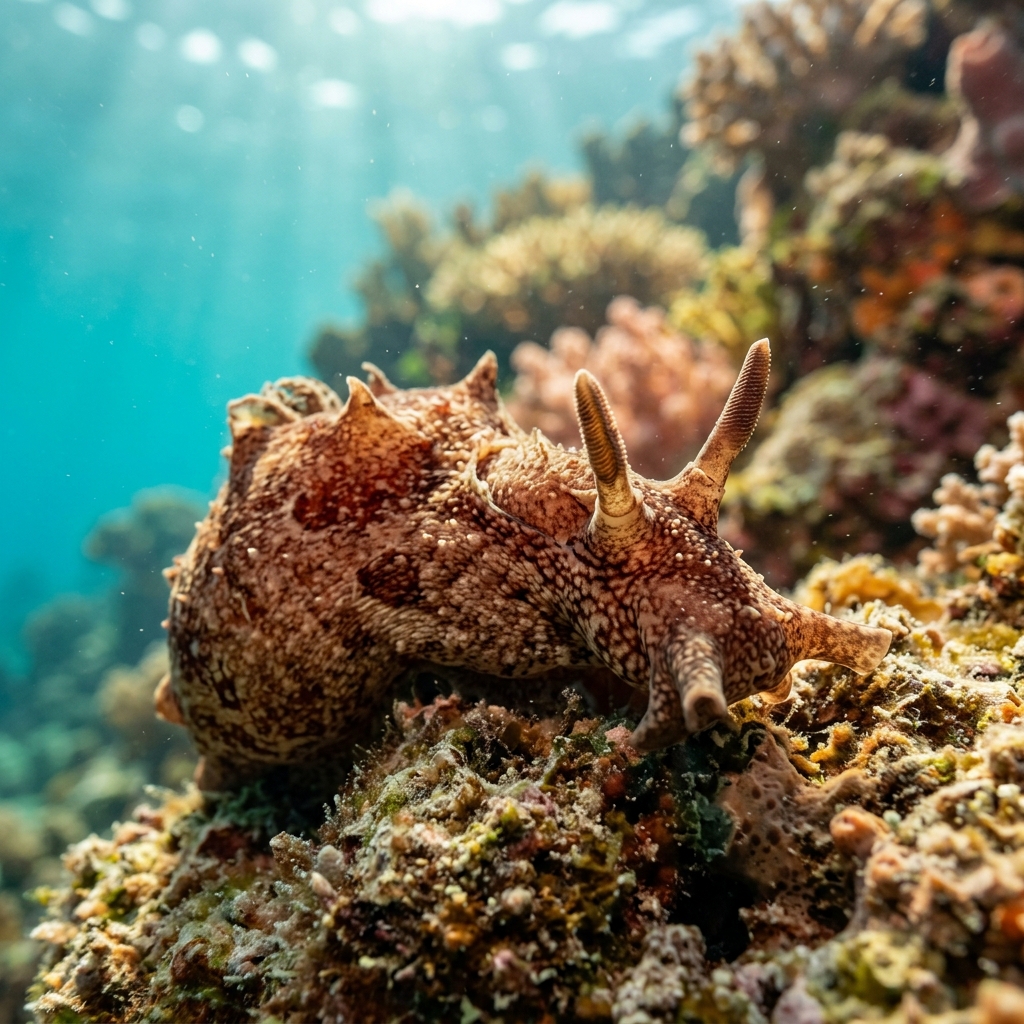
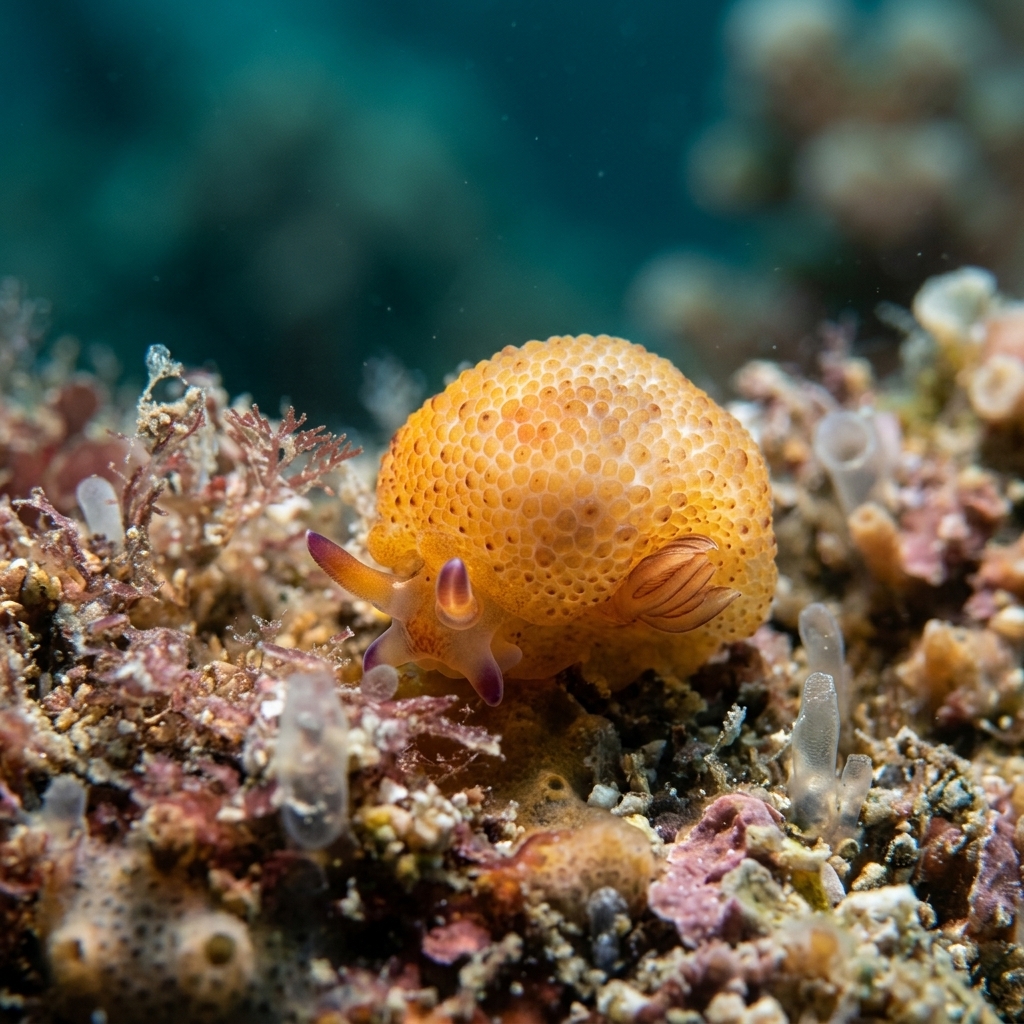
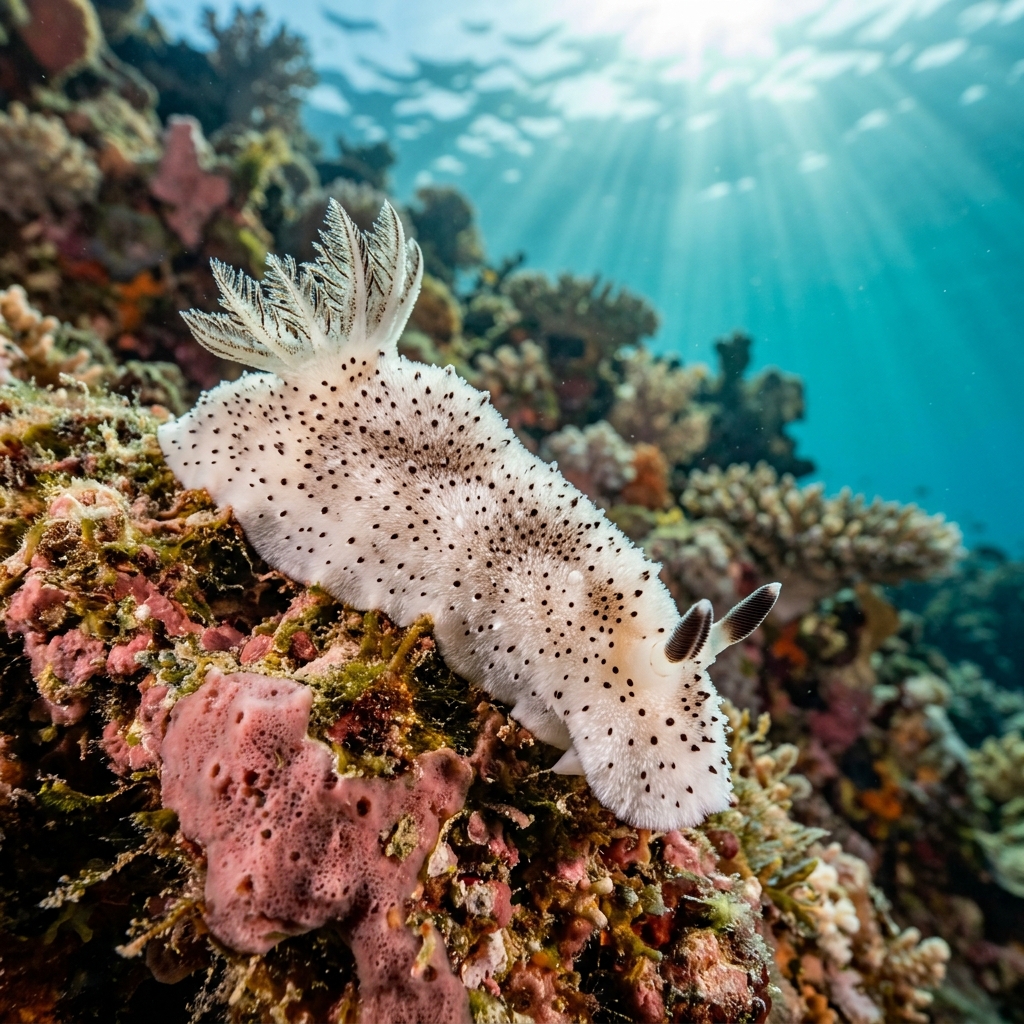
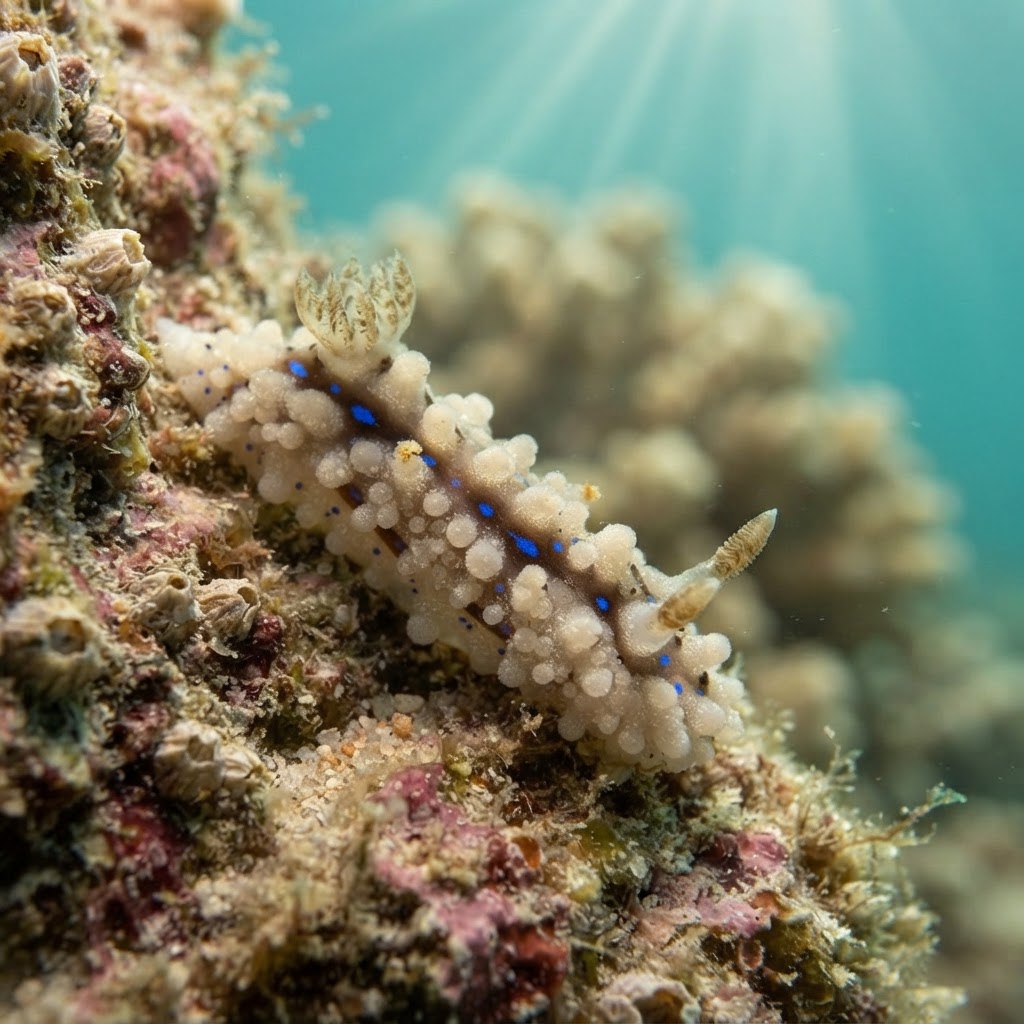
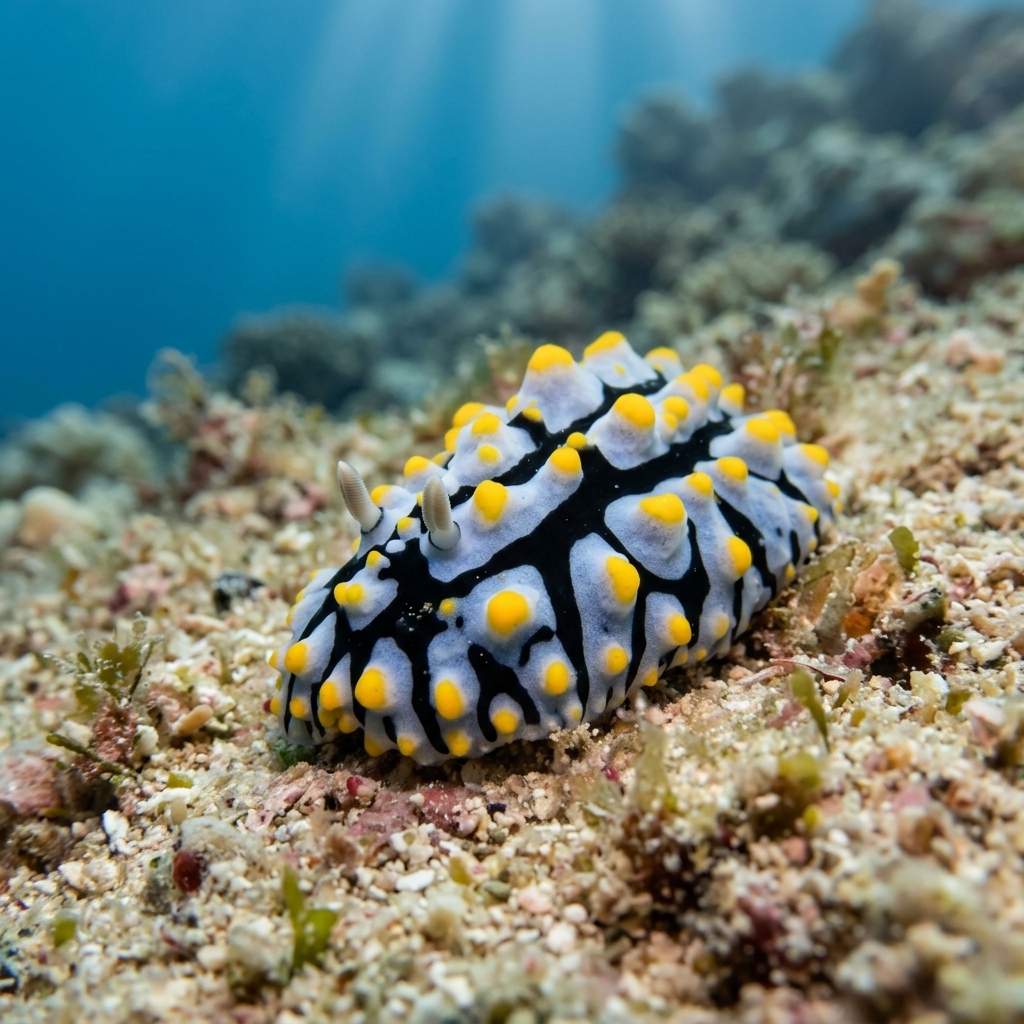
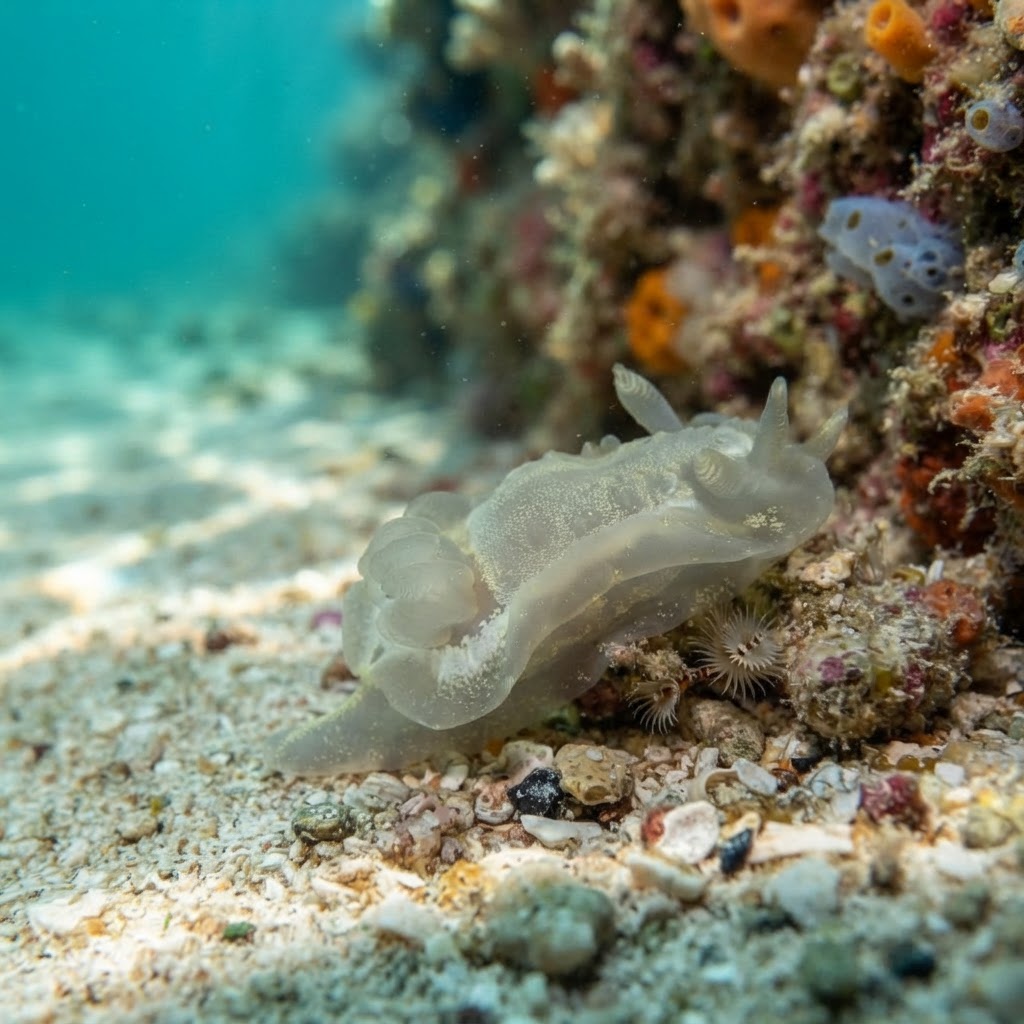
A small, translucent white to pale cream nudibranch with a scattering of raised, knobbly tubercles (small bumps) along its back that give it a rough, textured look rather than a smooth one. The body is slug-shaped and low to the substrate, with feathery gills (a cluster of frilly appendages) visible towards the rear and short tentacle-like rhinophores up front. It is easy to miss without a careful eye or a torch, since it sits low against rock and algae and rarely stands out in colour against pale cold-water reef.
Divers usually find it sitting still or moving slowly over rock, algae, or hard substrate rather than swimming or fleeing, as is typical for nudibranchs of this size. It's the kind of animal you spot on a slow, methodical macro-focused dive rather than a drift or wreck dive, often tucked among encrusting growth where its bumpy texture blends in. It shows no reaction to divers beyond simply continuing its slow grazing.
Like other goniodorid nudibranchs, it almost certainly feeds on specific encrusting invertebrates such as bryozoans or sponges, so its presence on a rock face often points to a food source worth a second look with a torch.
Sightings don't show a clear seasonal pattern, so treat it as a year-round find on the sites where it occurs. Its comfort range of roughly 8.3 to 14.3 C matches the cool water typical of the UK, Norwegian, and Swedish coasts across most of the year.
Most consistently logged in the United Kingdom, particularly England, Northern Ireland, and Wales, with strong showings in Scotland too. Outside the UK it turns up reliably in Bohuslän on Sweden's west coast and in Østlandet, Norway, making it very much a northern European cold-water species rather than a tropical one.
Mapping where Angular Seaslug is logged…
It's most reliably logged in the United Kingdom, especially England, Northern Ireland, and Wales, plus Bohuslän in Sweden and Østlandet in Norway. These cool-water Atlantic and North Sea coasts are its main known range among divers.
There's no strong seasonal pattern in the sightings, so it can be found year-round at sites where it occurs. Water temperatures of roughly 8 to 14 C, typical for much of the year in the UK and Scandinavia, suit it fine.
Look for a small, pale white to cream nudibranch with knobbly tubercles scattered across its back, giving it a rough rather than smooth surface. It sits low on rock or algae and has a cluster of gills near the tail end, best seen with a torch and close focus.
Exact size figures aren't well documented, but like most Okenia species it's a small nudibranch, generally under a couple of centimetres, easy to swim past without noticing.
No, it poses no danger to divers. It's a small, slow-moving nudibranch with no sting or bite of concern, happy to be observed and photographed at close range.
Site and sighting data is aggregated from diver logs, iNaturalist and GBIF. For taxonomy and conservation status:
Light-spotted Aegires
3,168 sites