Parachaetodon ocellatus
Wedge-bodied and barred like a tiny sole, this reef fish turns up uncommon around Koh Tao in 25 to 29C water, year-round.
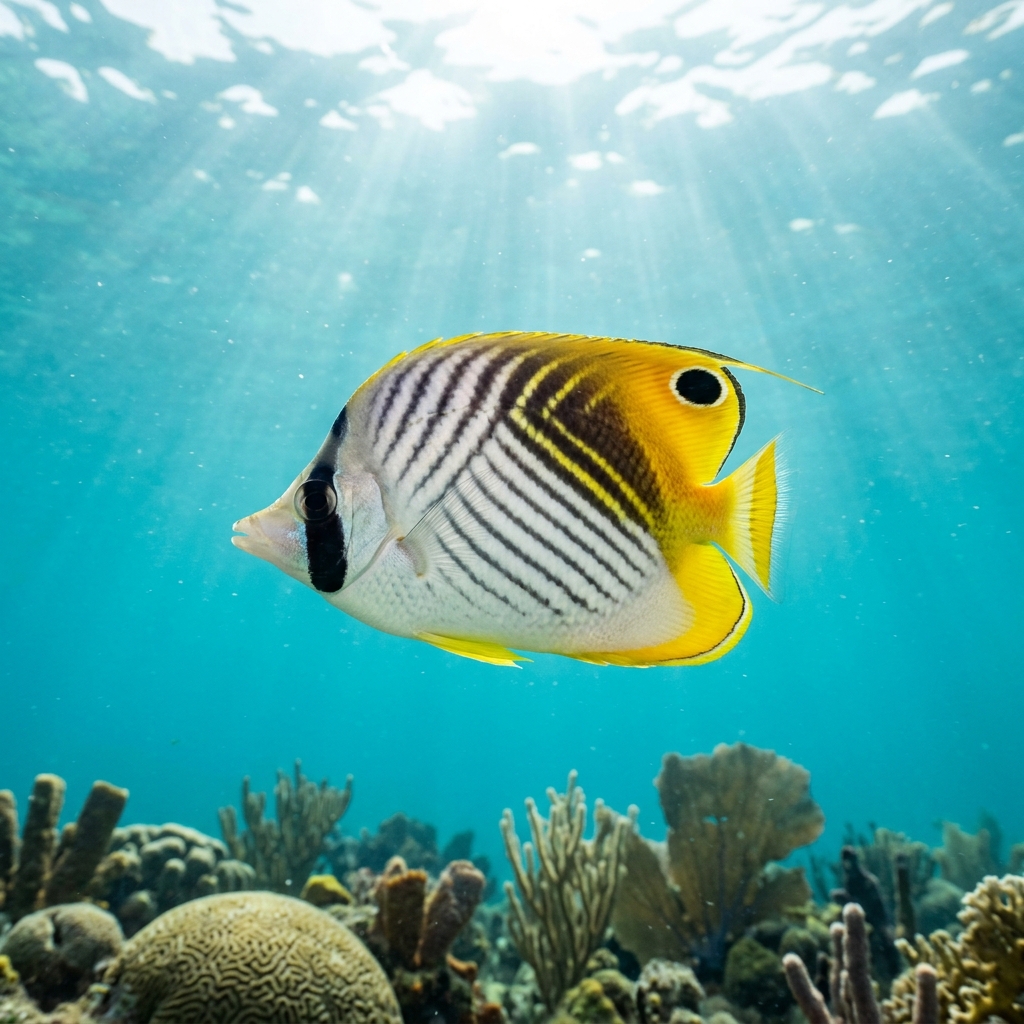
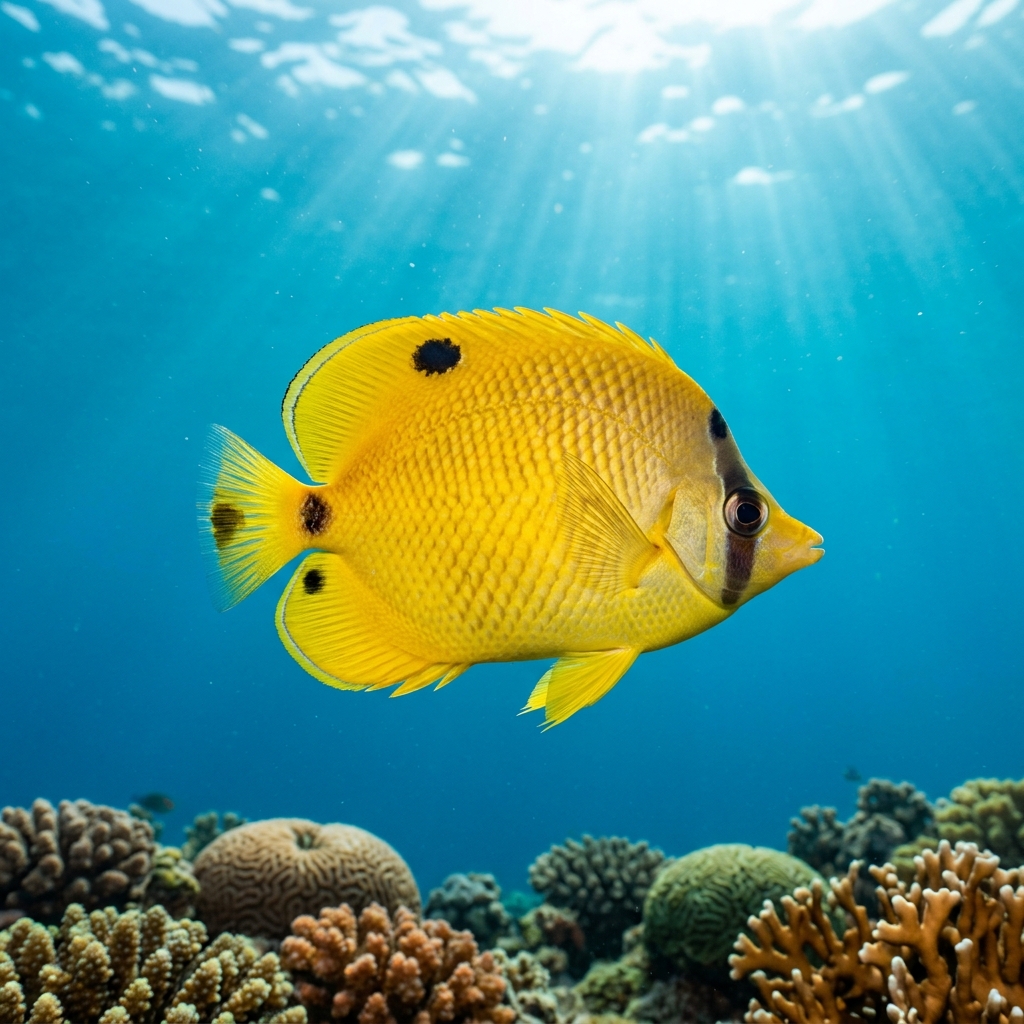
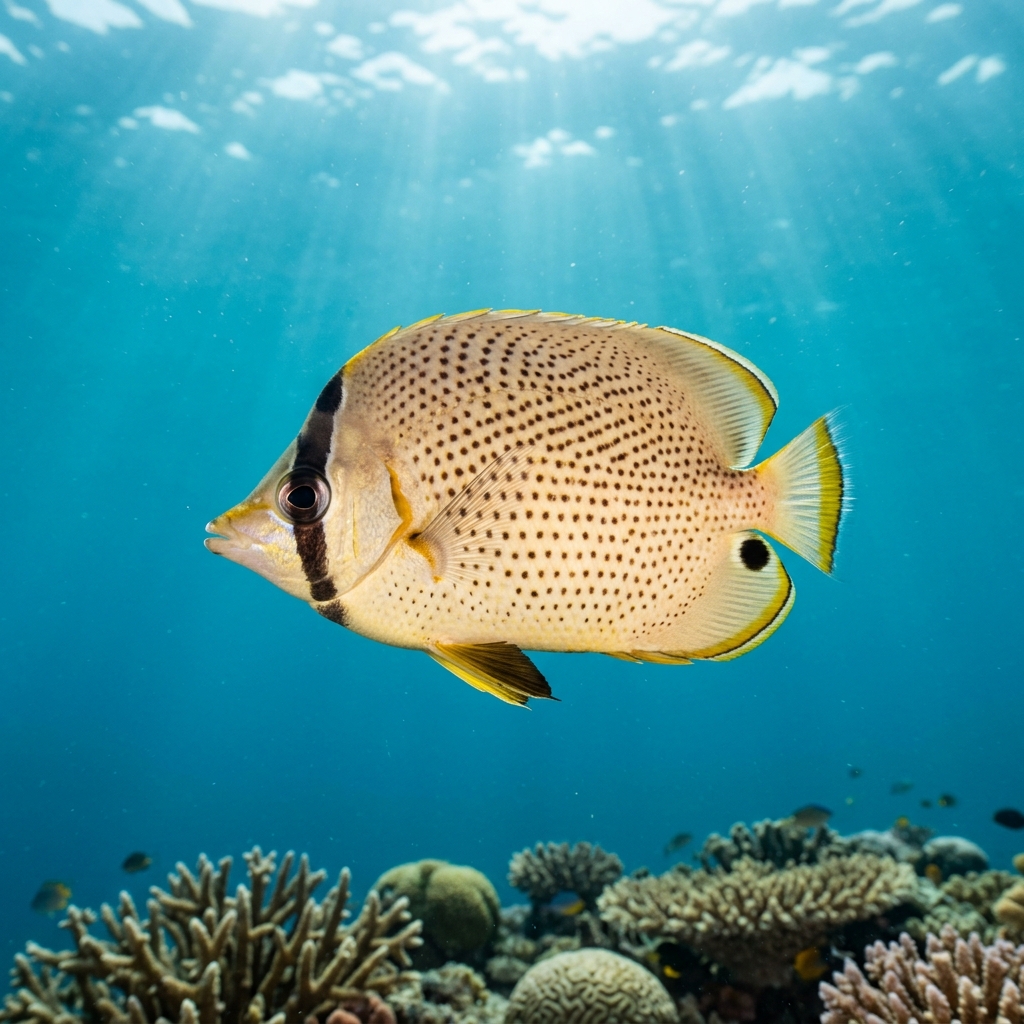
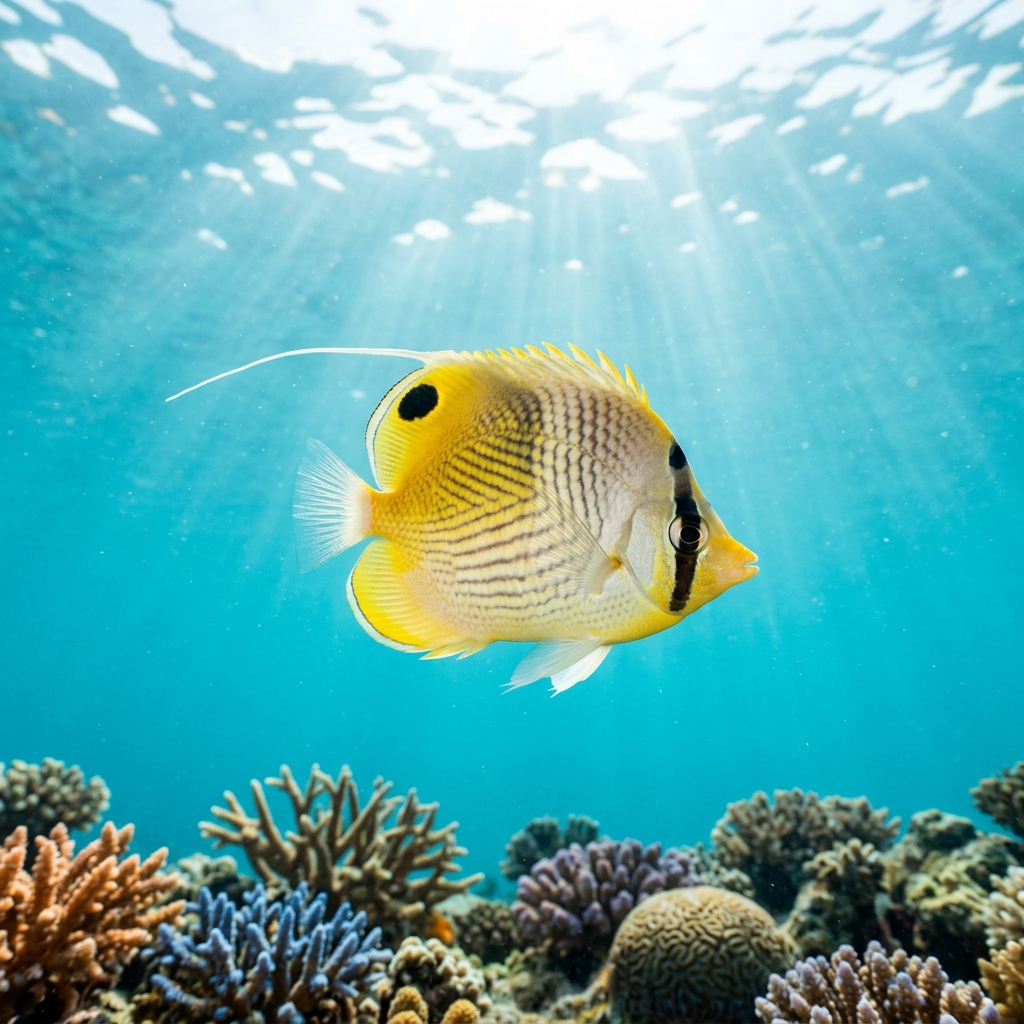
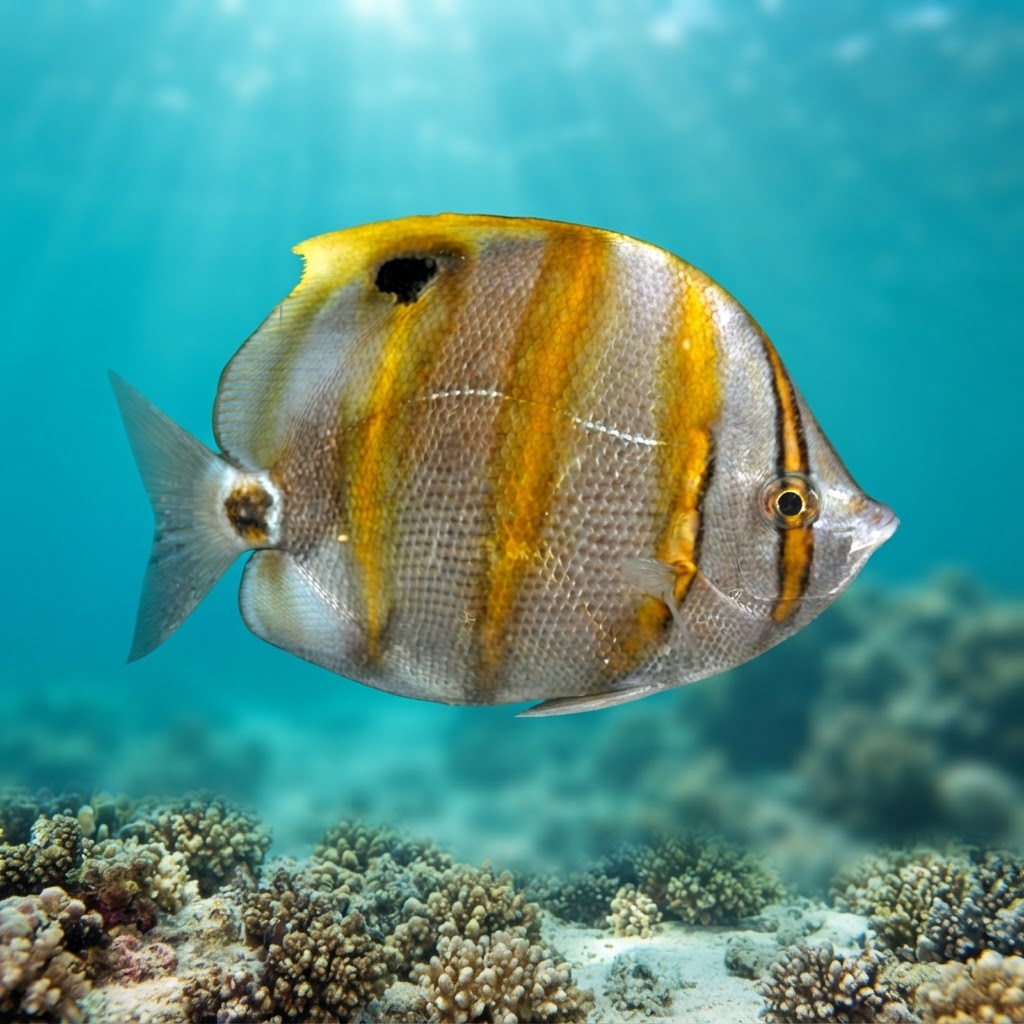
A wedge-shaped, almost flattened body that looks more like a small flounder than a typical butterflyfish, pale silvery-white with three or four bold dark bars running down the flanks. The giveaway is the large black eyespot (ocellus) ringed in yellow near the rear dorsal fin, which sits well away from the real eye and does the classic predator-confusing decoy job. At around 13cm it is small and easy to overlook against sand or rubble patches near reef edges.
Usually spotted alone or in loose pairs, hovering close to sand, rubble or low reef structure rather than out in open water. It tends to hold station and let divers approach reasonably close before easing away, more interested in picking food off the substrate than reacting to bubbles overhead. Its shape and stillness against sand make it blend in until you notice the eyespot.
That rear eyespot is a real decoy: predators strike at what looks like a head and tail-end target, giving the fish a split-second head start in the opposite direction when it actually flees.
No clear seasonal pattern shows up in the data, and with a comfortable range of roughly 25 to 29C it seems to sit on tropical reefs year-round rather than turning up only in a particular month. Plan around good visibility and site conditions rather than a season for this one.
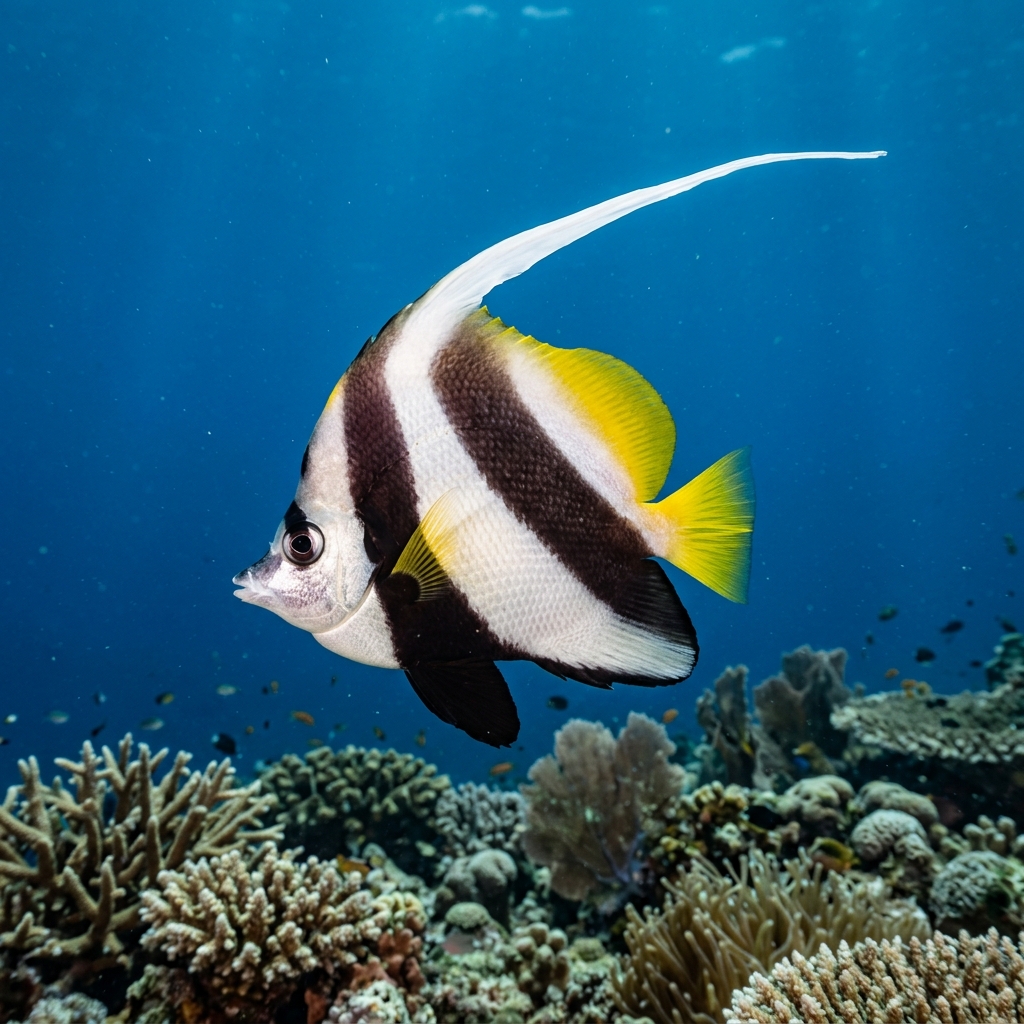
Reef neighbours a diver could mistake it for. Use the identification notes above to tell them apart.
Most reliably logged around Koh Tao in Thailand, which accounts for the vast majority of recorded sightings, with further records from Pattaya. Outside Thailand it turns up occasionally in the Visayas in the Philippines, in Bali, Indonesia, and off New South Wales in Australia, though always as an uncommon to rare find rather than a guaranteed sighting.
Mapping where Ocellated Butterflyfish is logged…
Koh Tao in Thailand is by far the most consistent spot, with additional sightings around Pattaya, the Visayas in the Philippines, Bali in Indonesia, and New South Wales in Australia. Even in these places it counts as an uncommon sighting rather than a certainty.
There's no strong seasonal signal in the sighting data, and its comfortable temperature range of roughly 25 to 29C suggests it stays put on reefs year-round. Any time you're diving Koh Tao or similar sites is worth keeping an eye on sand and rubble patches.
Look for a flattened, wedge-shaped body with bold dark bars on a pale background and a large black-and-yellow eyespot near the tail rather than near the actual eye. At only about 13cm and often resting near sand, it's easy to swim past without noticing.
They stay small, typically reaching around 13cm, which combined with their sand-hugging habit makes them easy to miss on a reef.
No, they pose no risk to divers and will simply move off if approached too closely.
Site and sighting data is aggregated from diver logs, iNaturalist and GBIF. For taxonomy and conservation status: