Nudibranchus exiguus
Cold-water find logged mostly in Østlandet, Norway and Jutland, Denmark, in water down to 7.8C, year-round.
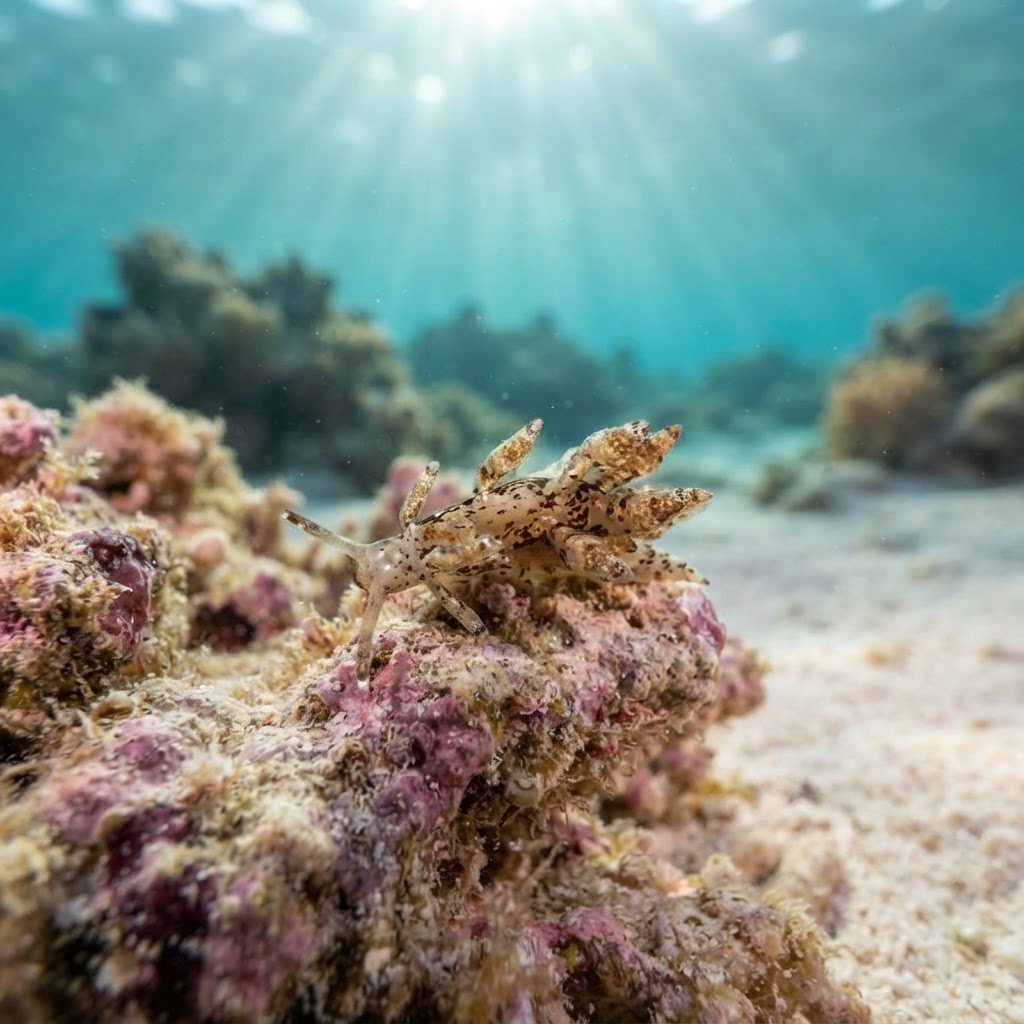
A tiny, slender-bodied nudibranch, easily overlooked against rock or algae, with fine finger-like projections (cerata) running along its back that give it a slightly fuzzy silhouette. Colouring tends toward pale or translucent tones that blend with the cold-water substrate it sits on, so divers usually spot it by scanning slowly rather than by colour contrast. There is no documented dramatic difference between individuals, so size and cerata pattern are the main things to key on underwater.
Divers typically find it sitting still or moving slowly over rock, algae, or hydroid growth, grazing rather than swimming off when approached. It shows no particular reaction to divers beyond continuing its slow feeding pace, which makes it an easy subject for macro photography once located. Most logs describe it as an uncommon find, so it rewards divers who take time to check likely surfaces closely rather than swim past.
Like other members of the Eubranchidae family, this nudibranch likely feeds on hydroids, small stinging colonial animals, and may store some of their stinging cells (cnidosacs) in its own cerata for defence.
Sightings do not show a clear season, and with a temperature niche of 7.8 to 13.8C it seems to tolerate the cold water typical of northern European seas through much of the year. Treat it as a year-round possibility rather than something tied to a particular month.
This is a cold-water species, most reliably logged in Norway, particularly around Østlandet, and in Denmark's Jutland region. Smaller numbers of sightings come from Wales in the United Kingdom and Zeeland in the Netherlands, so it is worth checking rock and algae-covered surfaces on any northern European dive in similar temperatures.
Mapping where Minute Aeolis is logged…
It is most commonly logged in Norway, especially the Østlandet region, and in Jutland, Denmark. Fewer sightings come from Wales in the UK and Zeeland in the Netherlands, so northern European cold-water sites are the best bet.
There is no strong seasonal pattern in the sightings, so it appears to be a year-round find in the cold waters it favours, roughly 7.8 to 13.8C.
Look for a small, slender nudibranch with fine cerata along its back, pale or translucent in colour, resting on rock or algae in cold water. It is easy to miss without a close, slow search of the substrate.
Exact size data is not confirmed for this species, but like most members of its family it is small, likely only a centimetre or two long, which is part of why it is logged as an uncommon sighting even where it occurs.
It most likely feeds on hydroids, small stinging colonial animals common on cold-water rock and algae, a typical diet for its family. Some species in this group even repurpose the prey's stinging cells for their own defence.
No, it poses no danger to divers. It is a small, slow-moving grazer that can be safely observed and photographed up close without disturbance.
Site and sighting data is aggregated from diver logs, iNaturalist and GBIF. For taxonomy and conservation status:
Light-spotted Aegires
3,168 sites