
Aeolidiella alderi
Uncommon but findable in Galicia and Zeeland, this small aeolid turns up in cold Atlantic water between 10.8 and 17.5 C.
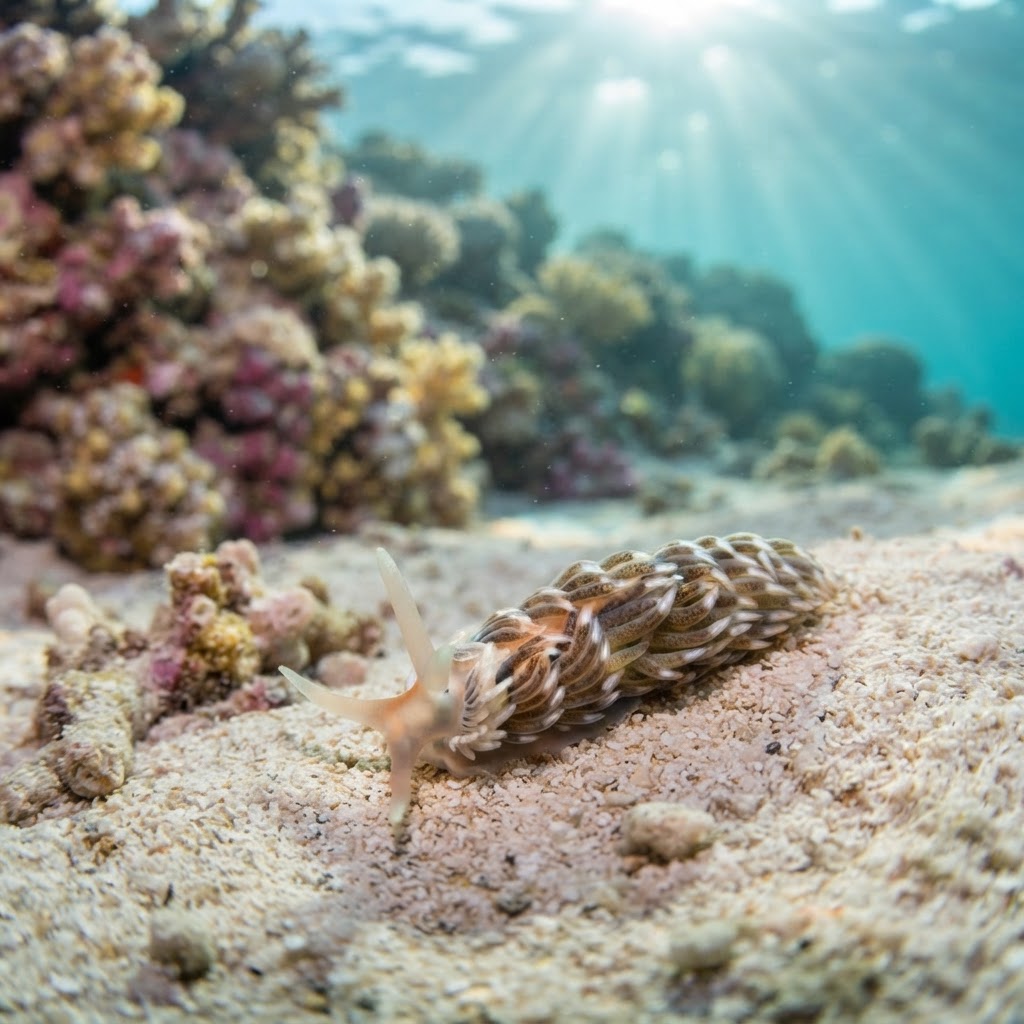
A small, slender nudibranch covered in finger-like projections called cerata running along its back, giving it a fuzzy, bristled outline rather than a smooth dorid shape. Body colour tends toward translucent grey or pale brown, with the cerata often showing a darker brownish or orange tip where the digestive gland shows through. Look for it tucked against rock or grazing low on the substrate rather than out in the open water column.
Divers typically find it moving slowly over rock and algae-covered surfaces rather than swimming, using the same crawling gait as other sea slugs. It's not a fish-cleaning or burrow species, so expect a static, close-focus subject best photographed with a macro lens rather than tracked across open water. Most logs describe it as uncommon at a site, so finding one usually means a slow, deliberate scan of the substrate rather than a chance encounter mid-dive.
Like other aeolid nudibranchs, it likely feeds on cnidarians such as anemones or hydroids and can store their stinging cells in its own cerata for defence, a trick called kleptocnidae.
Sightings don't show a clear seasonal peak in the data, so treat it as a year-round possibility wherever the water sits in its comfortable 10.8 to 17.5 C range. In practice that means cooler months may still be productive in these Atlantic and Channel sites, since the species tolerates the lower end of that range.
Most reliably logged in Galicia, Spain, and in Zeeland, Netherlands, with a further scatter of sightings across Occitanie and Normandy in France and around Jersey, Guernsey and Wales in the UK. This is a cold-water Atlantic and Channel species rather than a tropical reef one, so search rocky, current-swept sites in these regions rather than warm coral coasts.
Mapping where Alder's Aeolidiella is logged…
It's most consistently reported in Galicia, Spain, and Zeeland in the Netherlands, with smaller numbers of sightings in France, the UK, and the Channel Islands. These are all cold-temperate Atlantic and Channel sites rather than tropical reefs.
There's no strong seasonal pattern in current sightings, so it appears to be findable year-round in its known range. It's been recorded in water from 10.8 to 17.5 C, so cooler months in these regions shouldn't rule out a sighting.
Look for a slender-bodied nudibranch covered in soft, finger-like cerata rather than a smooth-backed dorid shape. The body is often translucent grey or pale brown with darker tips on the cerata, and it's usually found crawling slowly on rock rather than swimming.
No, it poses no threat to divers. It's a small, slow-moving slug best approached quietly with a macro lens rather than avoided.
Most sites where it's logged rate it as uncommon, with a smaller number of sites calling it rare and only a few calling it common. Expect to need a careful search rather than an easy find.
Site and sighting data is aggregated from diver logs, iNaturalist and GBIF. For taxonomy and conservation status:
Light-spotted Aegires
3,168 sites





