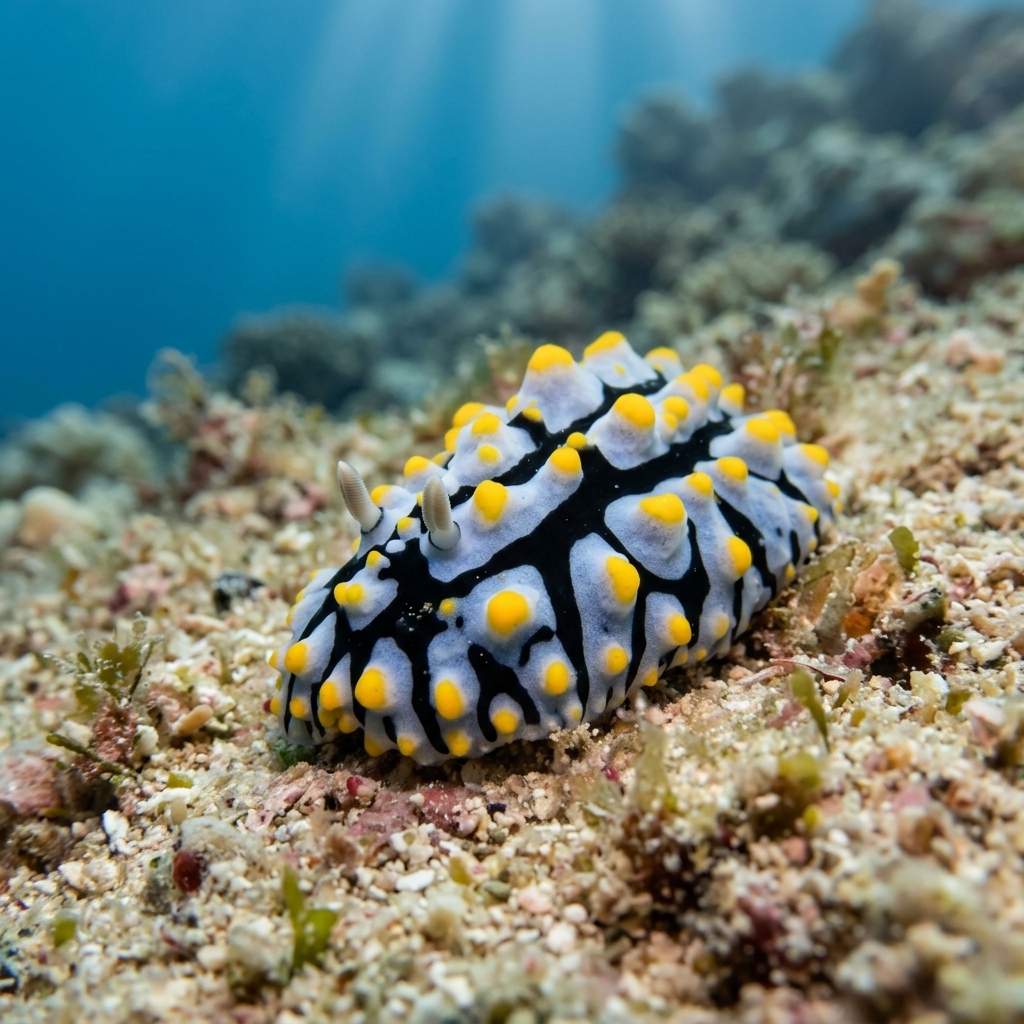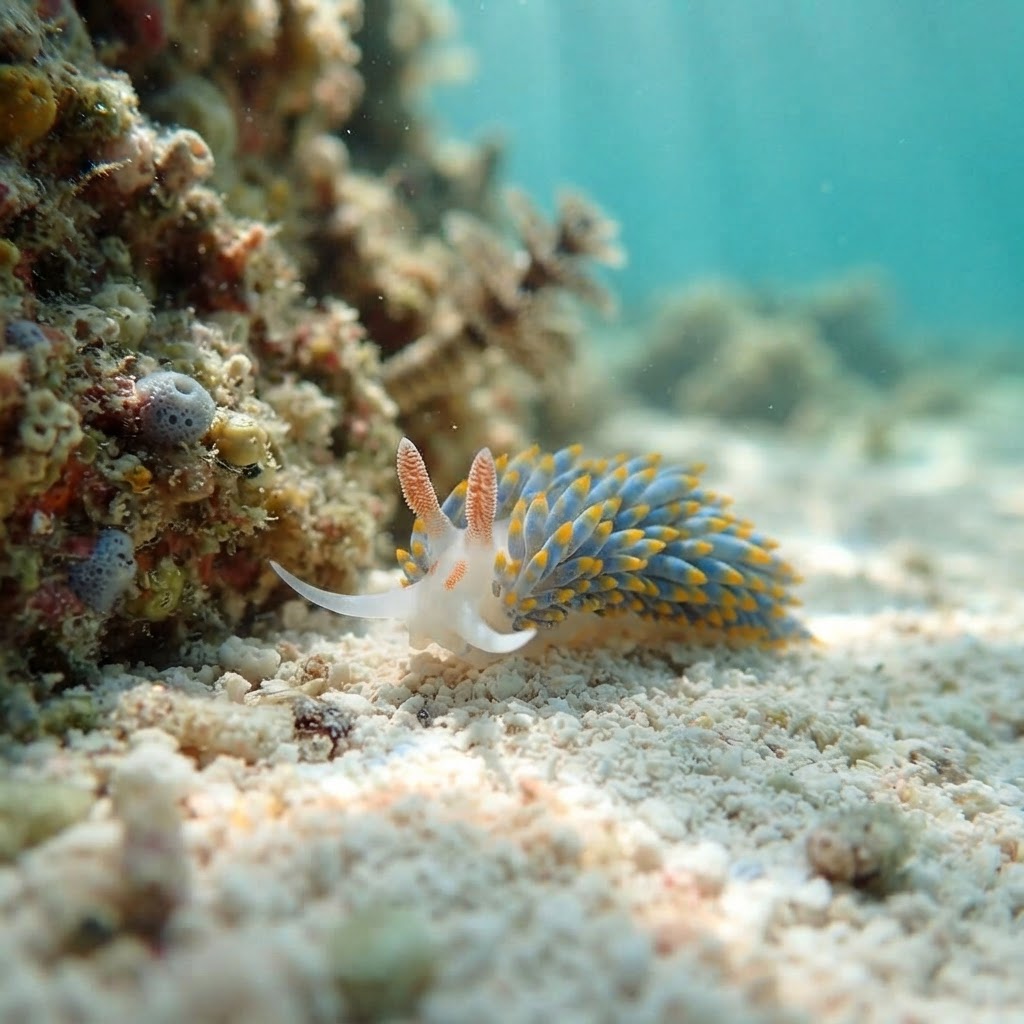
Berghia coerulescens
A 2cm blue-fringed slug logged at nearly 50 sites in Valencia, Spain, usually tucked uncommonly among shallow rocky reef.
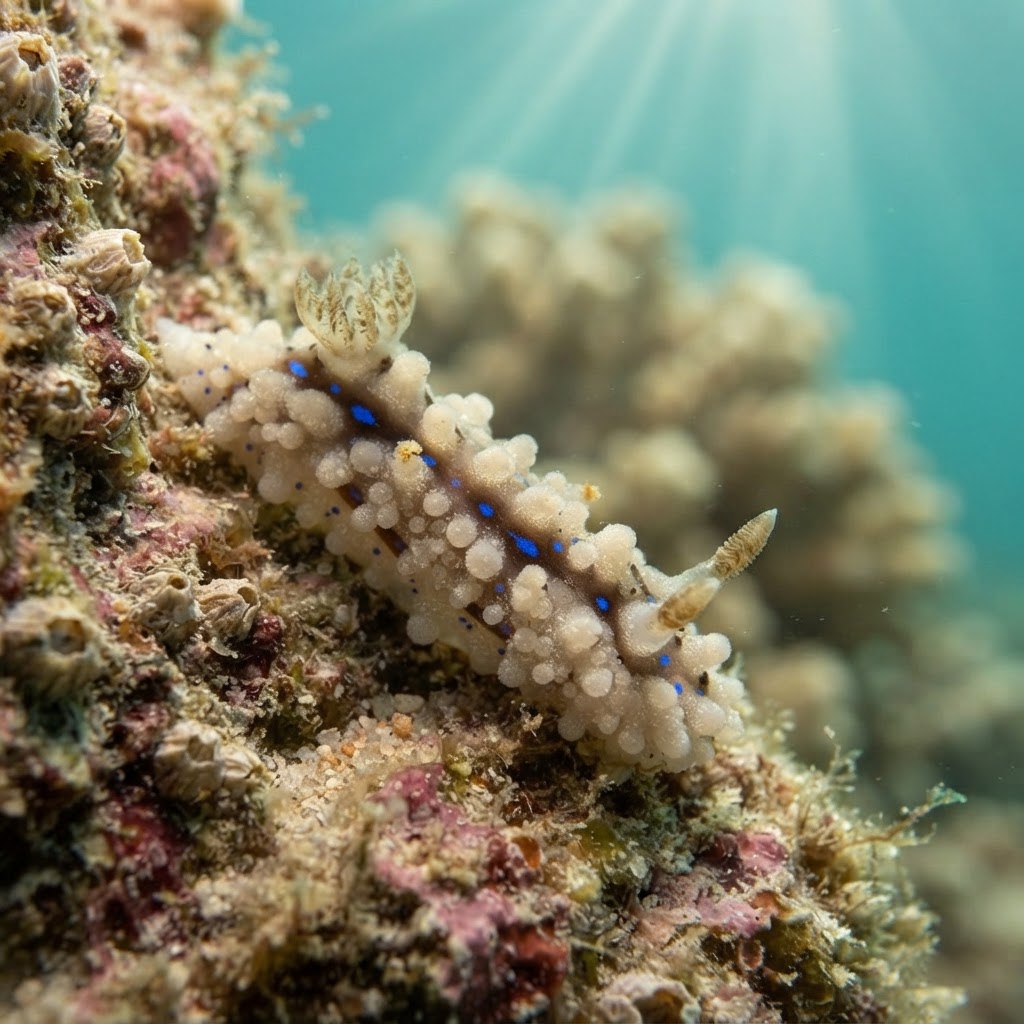
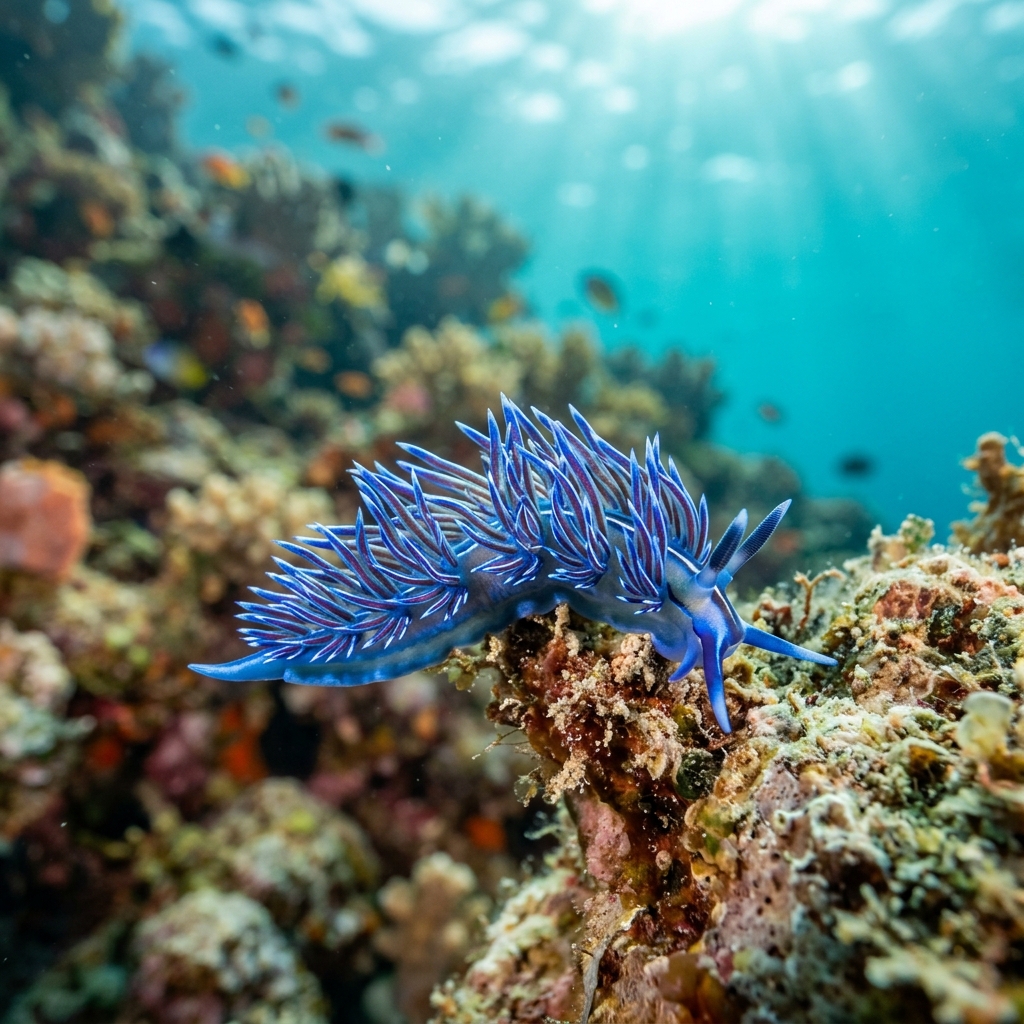
Look for a slender, translucent body barely 2cm long, covered in rows of finger-like projections (cerata) tipped in blue or violet. The head carries two pairs of tentacles, and the overall look is more
This is a shallow, slow-moving grazer, found crawling over rock and rubble in water often only a metre or two deep, close enough that snorkellers can spot it too. It doesn't react to divers beyond retracting its cerata if disturbed, and most sightings come from divers deliberately scanning crevices and undersides of rocks rather than open swimming water. Because it sits right at the surface zone, calm, clear shallows give the best odds of spotting one.
Aeolid nudibranchs like this one steal stinging cells from the anemones they eat and repurpose them in their own cerata as a defence against predators.
Sightings don't show a clear seasonal pattern, so treat it as a year-round find. The water temperature range logged for it, 14.4 to 20.4C, spans much of the Mediterranean's annual swing, which fits with divers finding it across different months rather than one tight window.
Spain carries the bulk of the sightings, especially Valencia and Catalonia, with the animal turning up at dozens of shallow rocky sites along that coast. Sicily in Italy is the next best bet, and it has also been logged at a single site in Occitanie, France, so the western Mediterranean is really its stronghold.
Mapping where Bluish Berghia is logged…
Spain is by far the most reliable place, particularly Valencia and Catalonia, where it's logged at dozens of shallow rocky sites. Sicily in Italy is another solid option, with a single confirmed sighting also recorded in Occitanie, France.
There's no strong seasonal pattern in the sightings, so it can be found year-round. Its recorded temperature range, roughly 14 to 20C, covers much of the Mediterranean's normal annual variation.
Look for a translucent, slender body about 2cm long covered in rows of cerata tipped with blue or violet. It moves slowly over rock and rubble in very shallow water, usually under a metre or two.
It's a small species, typically reaching around 2cm in length, so divers need to look closely at rock crevices to spot one.
No, it poses no risk to divers. It's a tiny, harmless grazer that relies on stolen stinging cells for its own defence rather than posing any threat to people.
Like other aeolid nudibranchs, it feeds on anemones and stores their stinging cells in its own cerata, turning a meal into a defensive weapon.
Site and sighting data is aggregated from diver logs, iNaturalist and GBIF. For taxonomy and conservation status:
Light-spotted Aegires
3,168 sites