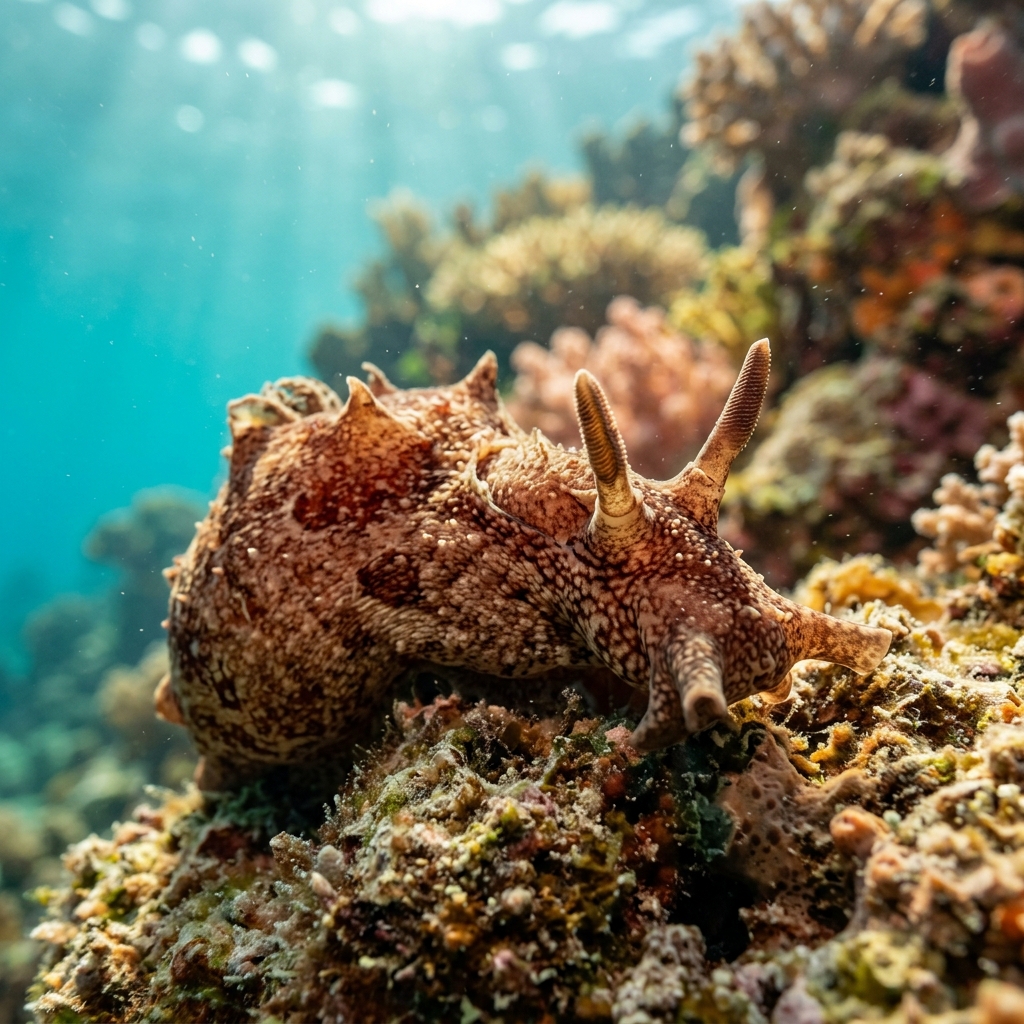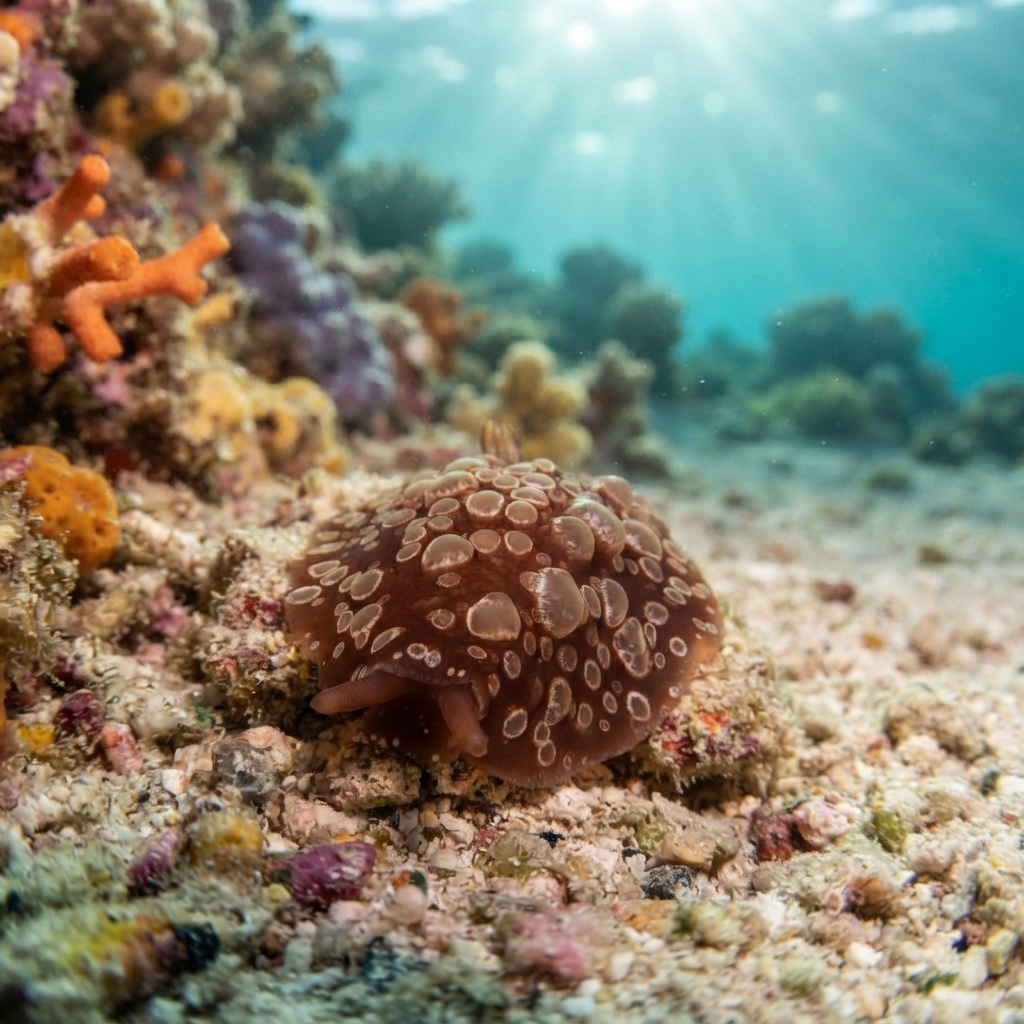
Berthella ocellata
An uncommon find in cool Sardinian and Sicilian waters (13.8-19.8C), logged year-round across 44 Mediterranean dive sites.
A smooth, dome-shaped mantle covers the body almost completely, giving it more of a slug-like limpet look than the frilly, gill-tufted profile most divers picture when they hear nudibranch. The surface is pale and finely mottled, without the bold stripes or spots that make many sea slugs easy to call from a distance. Small size and a low, rounded profile mean it is usually spotted while scanning rock and algae-covered surfaces at close range rather than swimming in open water.
Divers find this one parked on rock faces and algae-covered surfaces, moving slowly if at all, in the classic unhurried nudibranch style. It shows no reaction to divers beyond simply continuing its business, making it an easy, low-stress subject for a close-focus photo once you have spotted it. Because it is logged as uncommon even at its best sites, finding one usually means a slow, deliberate scan of the substrate rather than a lucky mid-water encounter.
Its smooth, almost featureless mantle is a real identification challenge underwater, since it lacks the gaudy colour patterns that make most reef nudibranchs simple to key out on sight.
Sightings show no detected seasonal pattern, so treat it as a year-round find. The observed water temperature range of 13.8 to 19.8C spans much of the Mediterranean's cooler-to-mild diving season, which fits a species that does not disappear in winter.
This is a Mediterranean species through and through, most reliably logged in Italy, with Sardinia and Sicily standing out as the strongest regions. France turns up sightings too, particularly around Occitanie and the French Riviera, though in smaller numbers than the Italian sites.
Mapping where Spotted Berthella is logged…
It is most reliably found in Italian waters, especially around Sardinia and Sicily, with additional sightings logged in southern France around Occitanie and the French Riviera.
There is no clear seasonal pattern in the sighting data, so it can turn up any time of year. It has been recorded in water from 13.8 to 19.8C, covering much of the Mediterranean's cooler diving months as well as its milder ones.
Look for a smooth, dome-shaped mantle covering the body, pale and finely mottled rather than brightly patterned. It lacks the obvious frilly gills or bold colour blocks of many reef nudibranchs, so it is often spotted only on a close, slow scan of rock and algae.
No, it poses no danger to divers. Like most nudibranchs it is harmless to touch and simply continues about its business when approached.
It is logged as uncommon at nearly all of its recorded sites and rare at a few others, so spotting one usually takes a deliberate search rather than a chance encounter.
Site and sighting data is aggregated from diver logs, iNaturalist and GBIF. For taxonomy and conservation status:
Light-spotted Aegires
3,168 sites