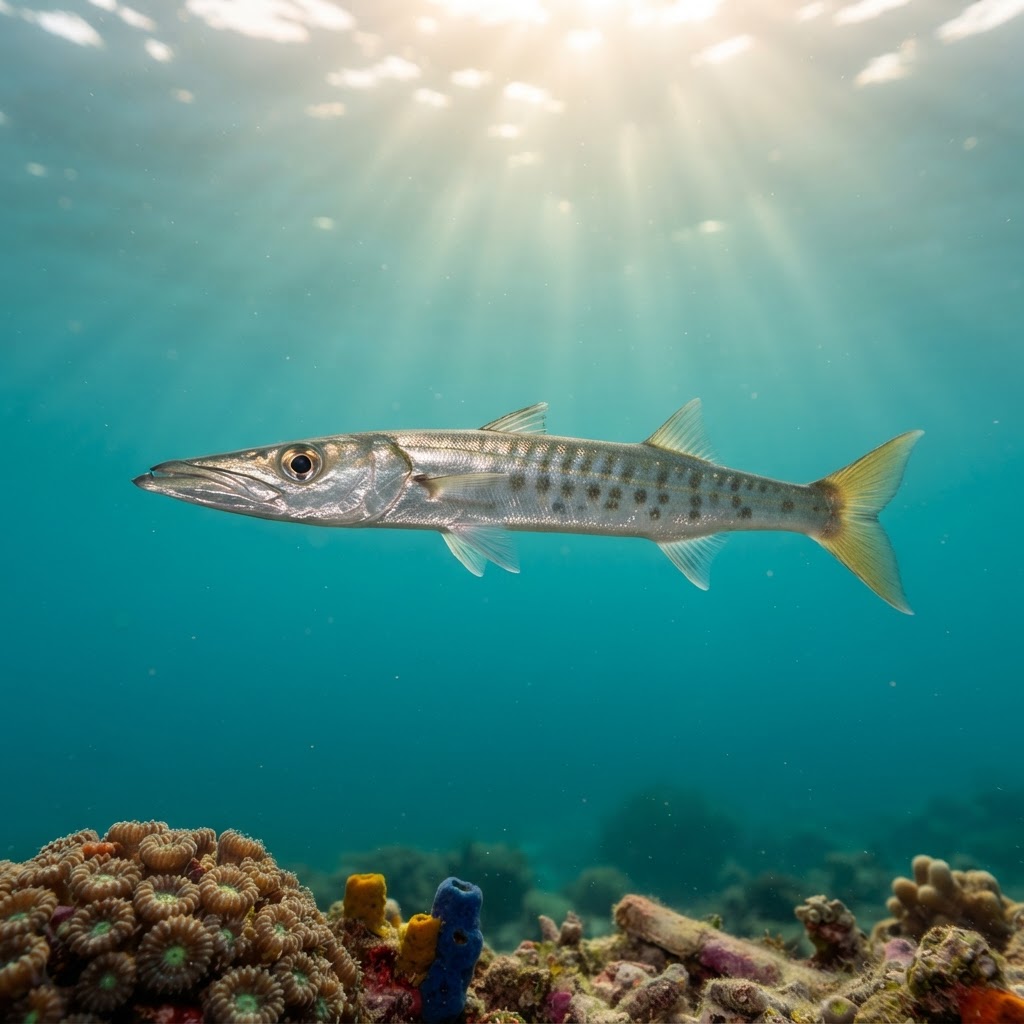
Sphyraena borealis
A slim, rarely-seen barracuda logged mostly off Nova Scotia in water from 12.5 to 27.7C, year-round with no fixed season.
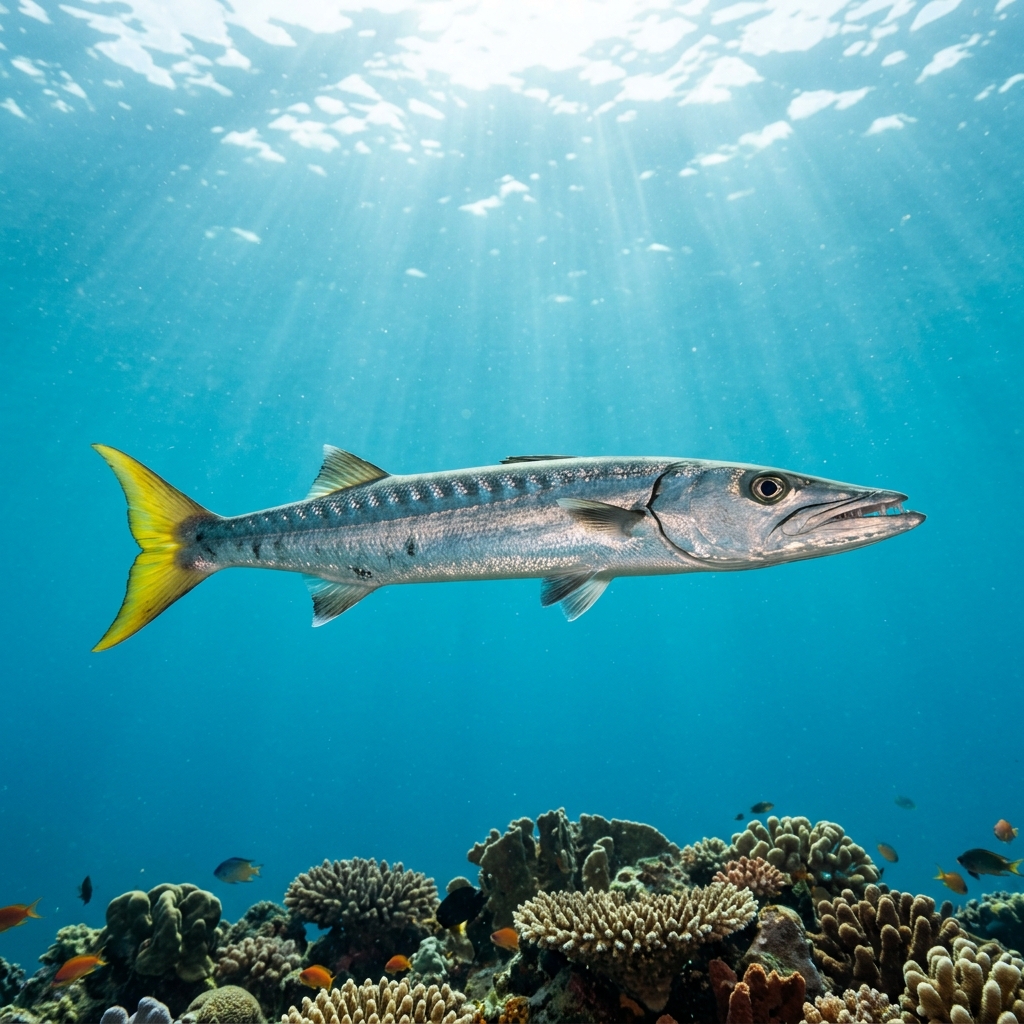
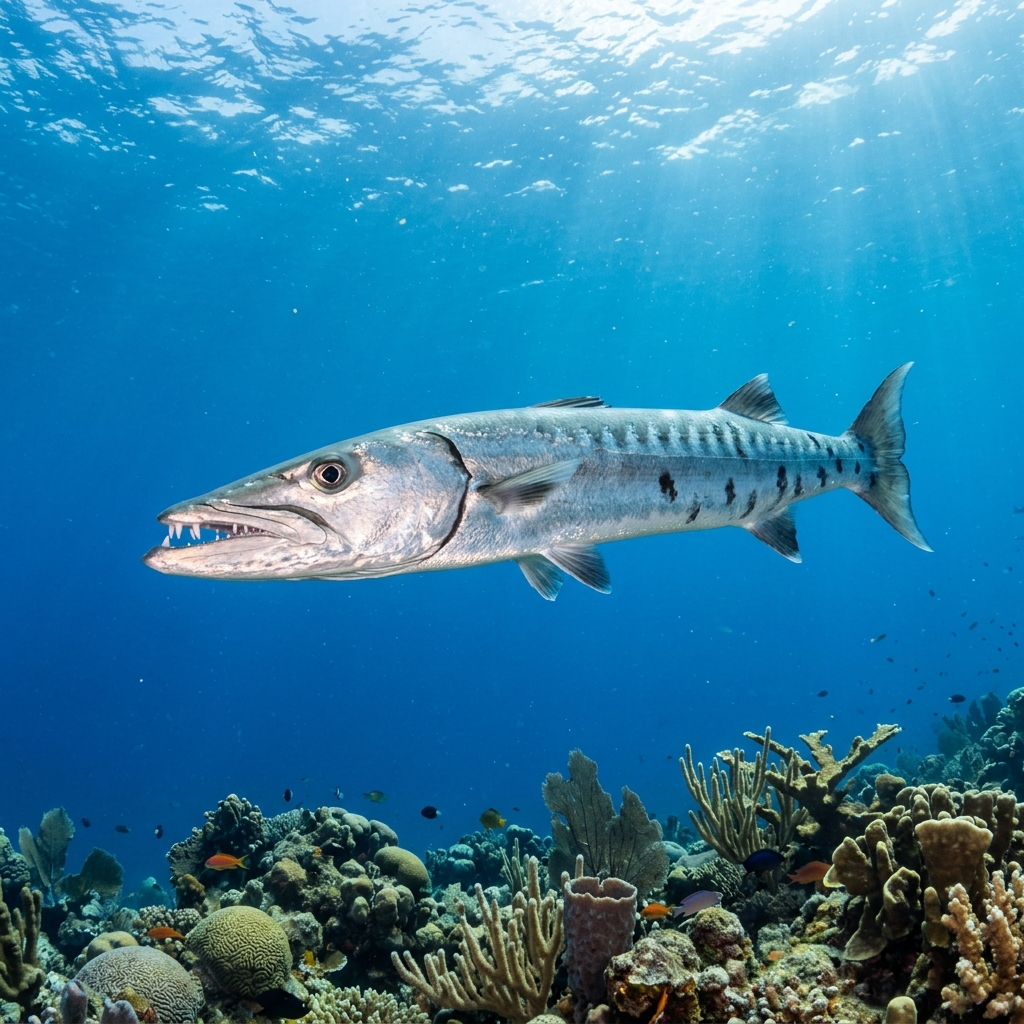
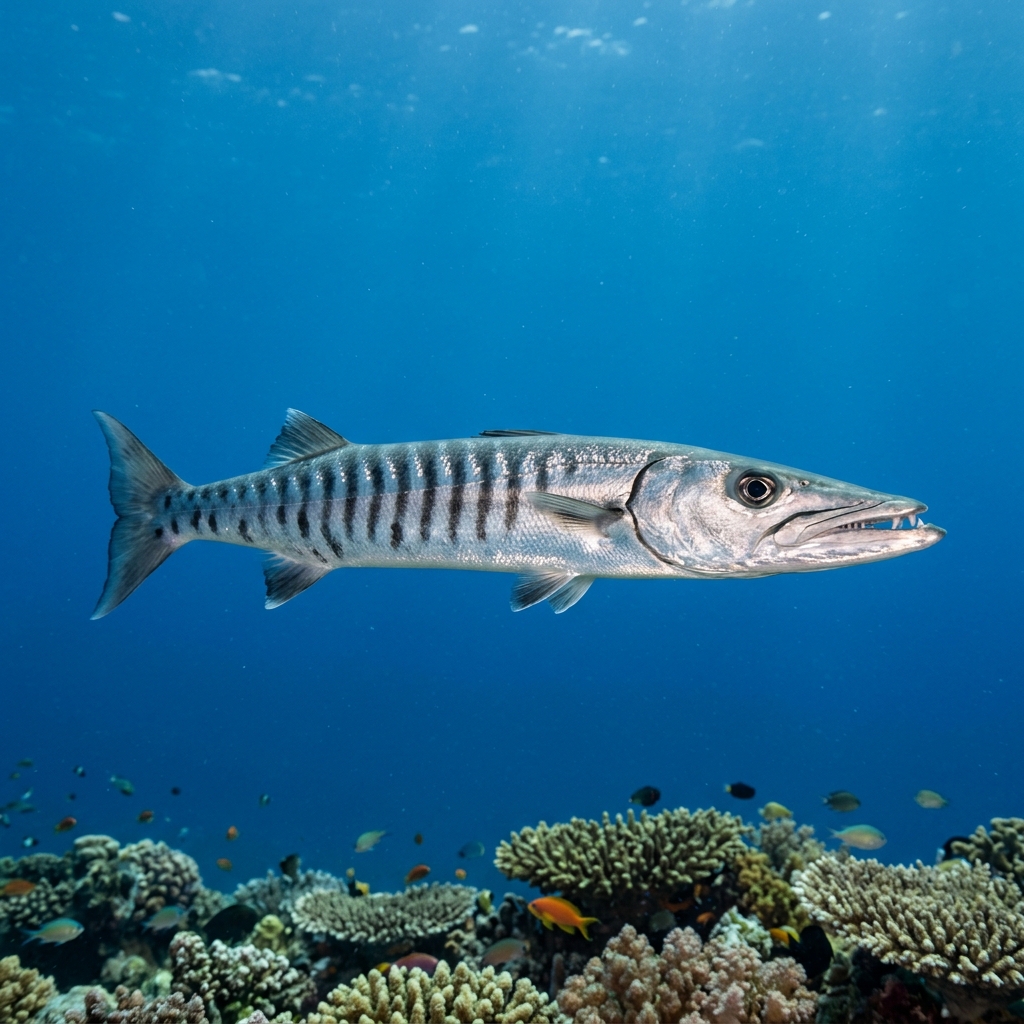
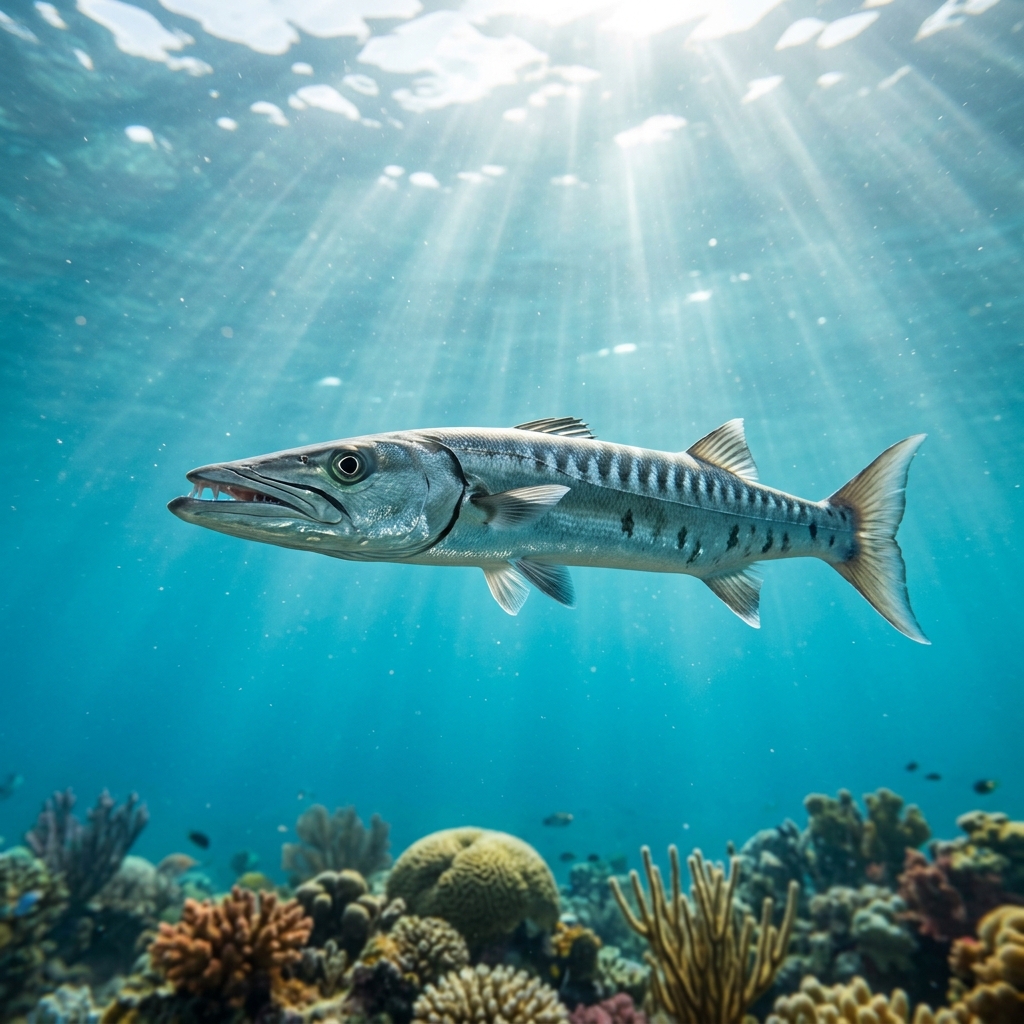
A slim, cigar-shaped body topped out around 32 cm, far smaller and less bulky than its tropical cousins. Look for a silvery-grey flank, a pointed snout, and a single faint dusky stripe running along the lateral line. It usually shows alone or in a loose scatter rather than a tight ball, which helps separate it from schooling look-alikes.
Divers typically find it hanging singly or in small loose groups over open bottom rather than tucked into structure, holding fairly still in midwater until a diver gets close. It is not a fish that schools tightly like some of its larger relatives, and sightings logged as rare or uncommon suggest it does not linger for long once approached. Most reports come from temperate coastal sites rather than deep structure, consistent with a species that stays inshore and shallow.
Despite the barracuda name and toothy family reputation, this is a small, slender species that behaves nothing like the reef-patrolling giants divers picture, most sightings are brief glimpses of a lone fish rather than an encounter with a pack.
No clear seasonal pattern shows up in the data, so treat it as a year-round possibility wherever it occurs. Its recorded temperature range of 12.5 to 27.7C spans cold and warm water alike, which fits with sightings turning up across the calendar rather than in one tight window.
Reef neighbours a diver could mistake it for. Use the identification notes above to tell them apart.
Most reliably logged in Nova Scotia, Canada, which accounts for the bulk of recorded sightings, with a secondary presence along the Northeast United States and a scattering of sightings down into the Carolinas. Divers working cooler Atlantic sites in these regions have the best real shot at a sighting, though even there it stays a rare find rather than a given.
Mapping where Northern Sennet is logged…
Nova Scotia, Canada is by far the strongest area for sightings, with additional records from the Northeast United States and the Carolinas. Outside these regions it has not been logged with any regularity.
There is no detected seasonal peak, so sightings are logged across the year. Its temperature tolerance from 12.5 to 27.7C means it can turn up in both cooler and warmer water conditions.
Look for a small, slim, silvery fish around 32 cm with a pointed snout and a faint stripe along its side. It tends to sit alone or in loose small numbers rather than in a tight school, which helps rule out larger schooling barracudas.
They are a small member of the barracuda family, typically reaching around 32 cm in length. That is well short of the larger tropical barracudas divers may be picturing.
No, they are not considered a danger to divers. They are a small, low-key fish typically seen alone or in loose small groups rather than displaying any of the bold behaviour associated with larger barracuda species.
Site and sighting data is aggregated from diver logs, iNaturalist and GBIF. For taxonomy and conservation status:
Pickhandle Barracuda
1,020 sites