Limenandra nodosa
A 3cm aeolid nudibranch turning up on muck and reef dives from Guadeloupe to the French Riviera and Florida, year-round.
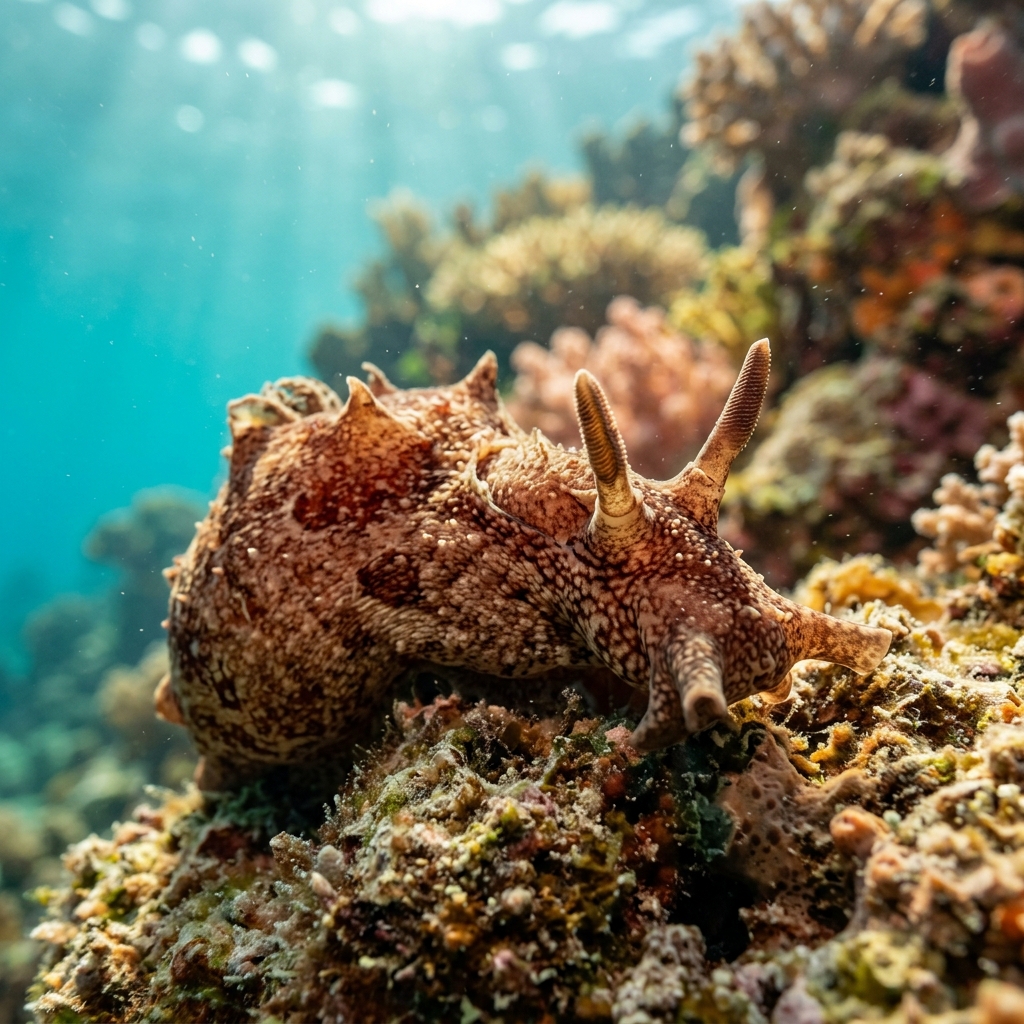
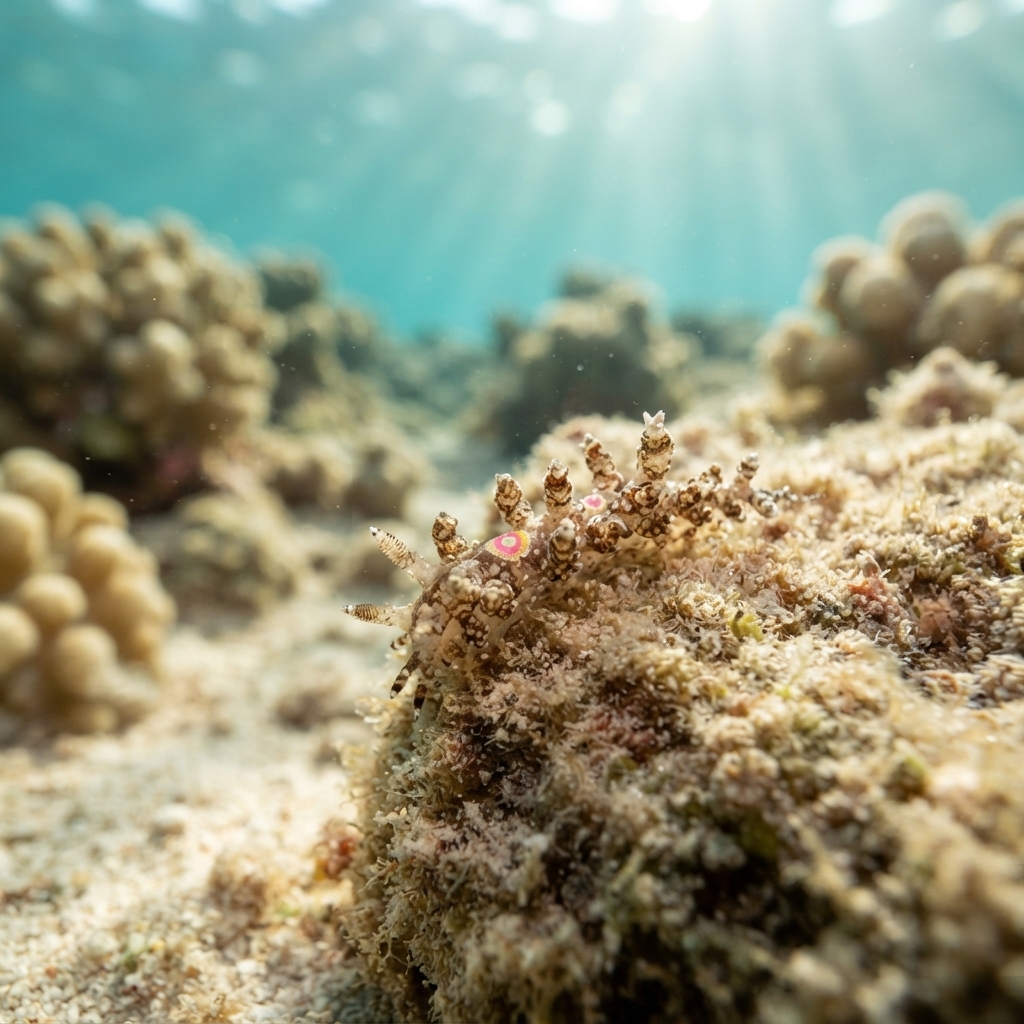
Look for a slender, soft-bodied slug about 3cm long, its back covered in finger-like projections called cerata (the fleshy spikes running along an aeolid's back) that give it a knobbly, textured silhouette rather than a smooth one. Colouring tends toward mottled brown, orange or grey tones that blend into rubble and algae, so divers usually spot it by the shape first, not a bright colour. There's no reported difference between juveniles and adults in the data, so size is really your best clue alongside that lumpy-backed profile.
This is a slow, deliberate crawler you'll find grazing over rock and rubble surfaces rather than swimming or hiding, usually spotted by divers scanning close to the substrate on a slow drift or macro-focused dive. It shows no reaction to divers beyond continuing its unhurried grazing, and most logs describe it as an uncommon find rather than something you'll stumble on every dive.
Like other aeolid nudibranchs, the cerata on its back likely double as gills and a defence mechanism, some aeolids store stinging cells from the hydroids they eat and redeploy them against predators.
Sightings are spread across the year with no clear seasonal peak, and its recorded temperature range of 17 to 28.8C covers both cooler Mediterranean conditions and warmer Caribbean water, so it's fair game on any dive in season.
Most consistently logged in Guadeloupe, particularly around Basse-Terre and Grande-Terre, with a second strong cluster on the French Riviera and Provence coast in France. Florida also turns up regularly in diver logs, making it a species you can realistically plan a Caribbean or Mediterranean muck-hunting dive around.
Mapping where Nodulous Aeolid is logged…
Best logged around Basse-Terre and Grande-Terre in Guadeloupe, along the French Riviera and Provence coast in France, and off Florida in the United States. It's an uncommon but reliable find at sites in all three areas rather than a species tied to one region.
There's no strong seasonal pattern in the sightings, so it's a year-round find. Its temperature tolerance of roughly 17 to 28.8C means it turns up on both cooler Mediterranean dives and warmer Caribbean and Florida reefs.
Around 3cm long, making it a small find best spotted by divers moving slowly and scanning rock and rubble surfaces closely.
Check for a small, soft-bodied slug with bumpy, finger-like cerata covering its back rather than a smooth dorsum, in muted brown, orange or grey tones. Its knobbly texture and modest size are the main clues since it lacks bold contrasting colours.
No, it poses no risk to divers. It's a slow-moving, harmless grazer you can observe closely without disturbing it.
Like many aeolid nudibranchs, its back cerata likely serve double duty as gills and defence, with some species in this group able to store stinging cells from prey like hydroids and reuse them against predators.
Site and sighting data is aggregated from diver logs, iNaturalist and GBIF. For taxonomy and conservation status:
Light-spotted Aegires
3,168 sites