Amanda armata
A rare aeolid nudibranch logged in cool Western Cape waters (13-19C), year-round with no clear season.
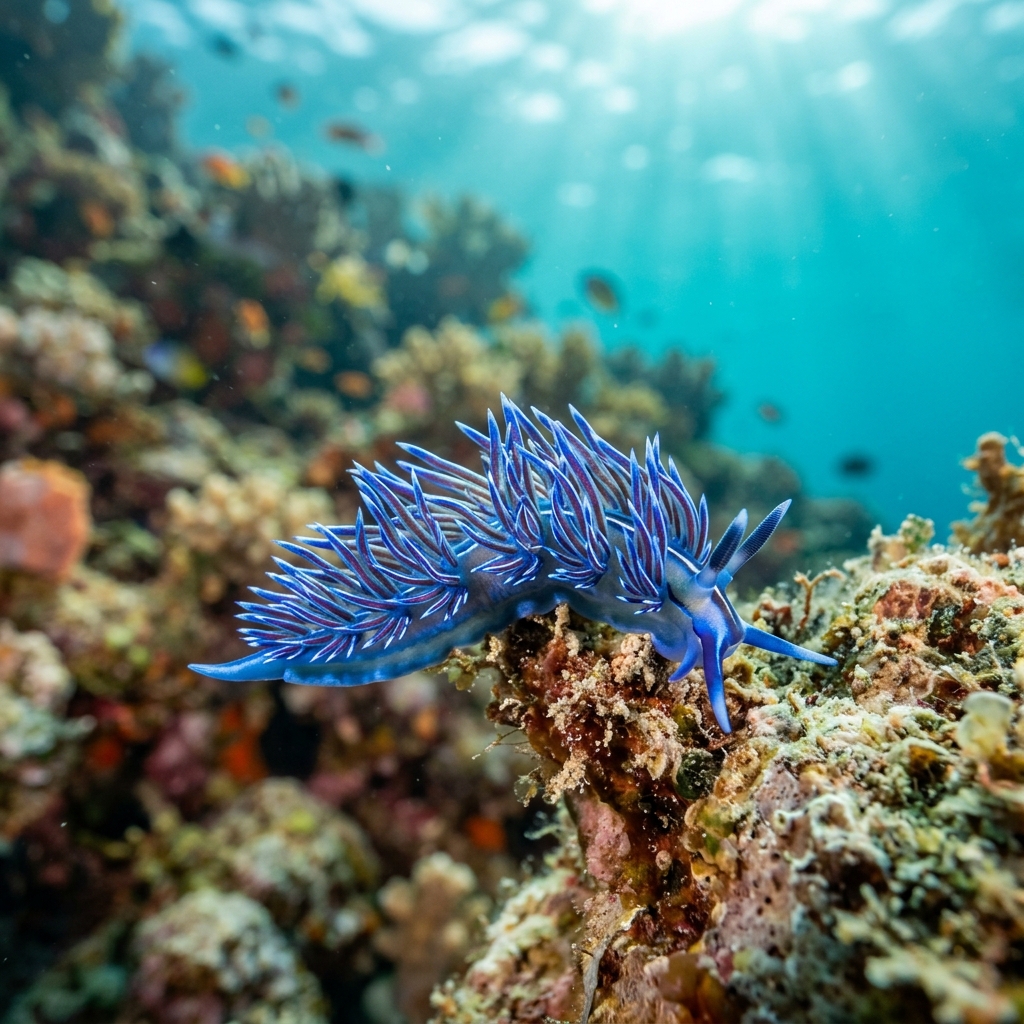
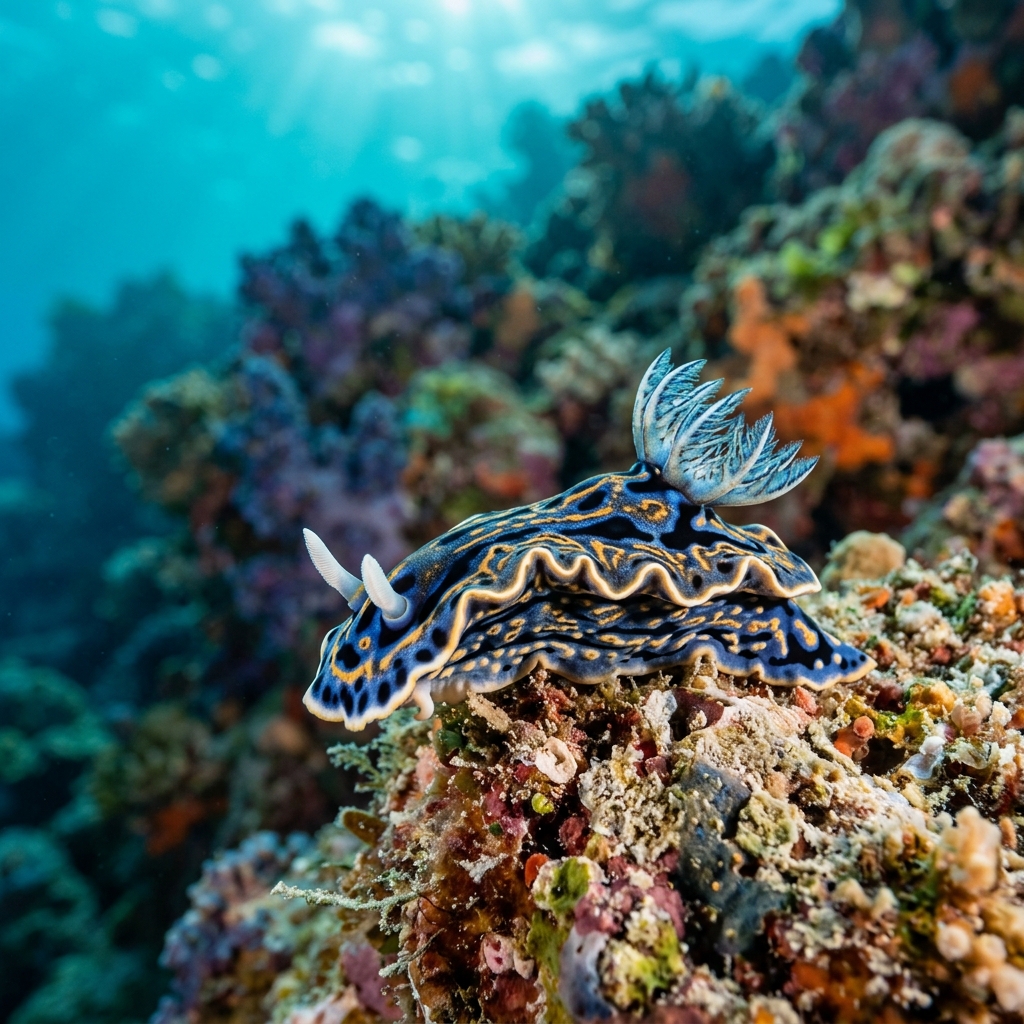
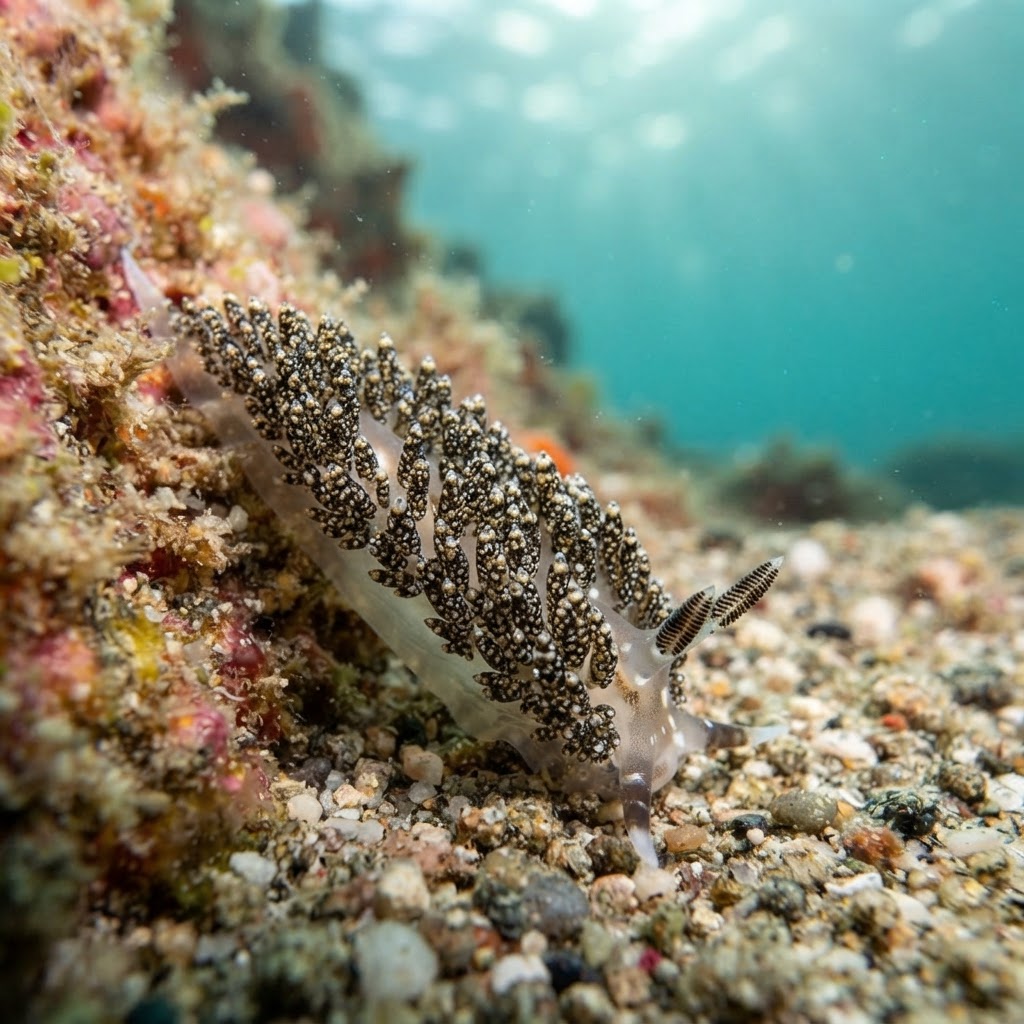
A small aeolid-type nudibranch, meaning its back is covered in finger-like projections called cerata rather than a smooth mantle, giving it a bristly, tentacled look. Expect a dark, mottled body with the cerata often carrying paler tips or flecks that catch the light against the surrounding rock or reef, hence the common name. Size in the water is small enough that divers usually spot it by scanning slowly over rock and sponge rather than at a distance.
Like other aeolids, it is likely found grazing slowly across rock, sponge or hydroid-covered surfaces where its prey lives, moving little when disturbed rather than fleeing. It is logged as rare at every site where it has been found, so sightings tend to be a slow, deliberate reward for divers doing close macro searches rather than a chance encounter on a drift past.
Aeolid nudibranchs like this one often store stinging cells from the hydroids they eat in the tips of their own cerata, turning a meal into a defence.
Sightings do not show a detectable seasonal pattern, so treat it as a year-round find on cool-water Western Cape reefs. It has been observed across the 13.4 to 19.4C range typical of that coast, which suggests it is not tied to a narrow warm-water window.
Every logged sighting comes from South Africa, specifically the Western Cape, making it the only region currently confirmed for this species. If you are diving the cool reefs and rocky reef systems around the Western Cape, this is the place to keep an eye out on close macro passes.
Mapping where Nightsky Tentacle Aeolid is logged…
All confirmed sightings are from South Africa, concentrated in the Western Cape. It has not yet been logged anywhere else, so this coast is currently the only known place to look for it.
There is no clear season in the sighting data, so it appears to be a year-round find in Western Cape waters. It has been recorded across a temperature range of roughly 13.4 to 19.4C, which covers most of that coast's annual range.
Look for a small, dark-bodied nudibranch covered in cerata, the finger-like projections on an aeolid's back, often with pale flecks along the tips. It is easiest to spot by scanning rock and sponge surfaces closely rather than looking for it in open water.
Exact size data is not available for this species, but like most aeolid nudibranchs it is small, typically only a few centimetres long, and easy to miss without a close, slow search.
Yes, it is logged as rare at every site where divers have recorded it. Seeing one usually takes a deliberate macro search of rock and sponge-covered surfaces rather than a passing glance.
Site and sighting data is aggregated from diver logs, iNaturalist and GBIF. For taxonomy and conservation status:
Blue Dragon
3,163 sites