Spurilla neapolitana
A frilly orange-brown nudibranch found in shallow water in Valencia and the Bay of Biscay, often overlooked at just 4cm long.
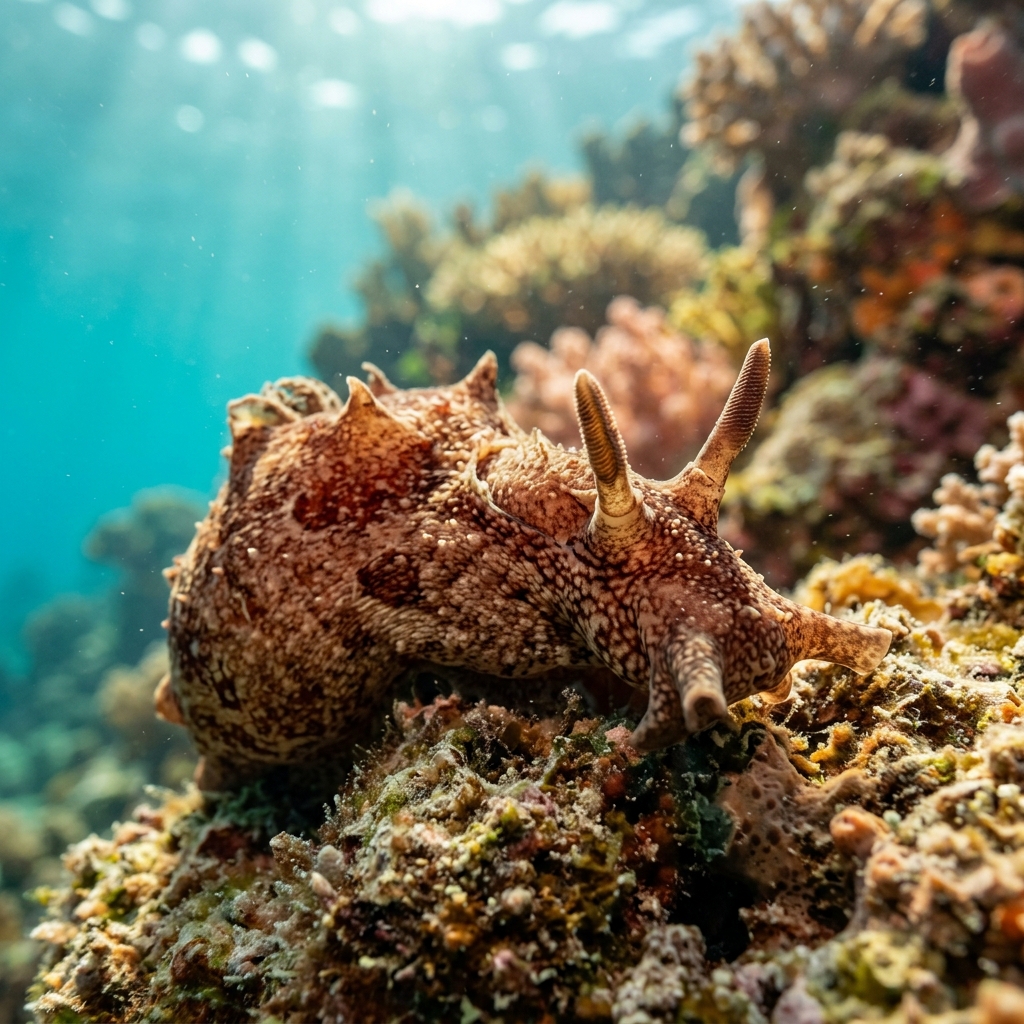
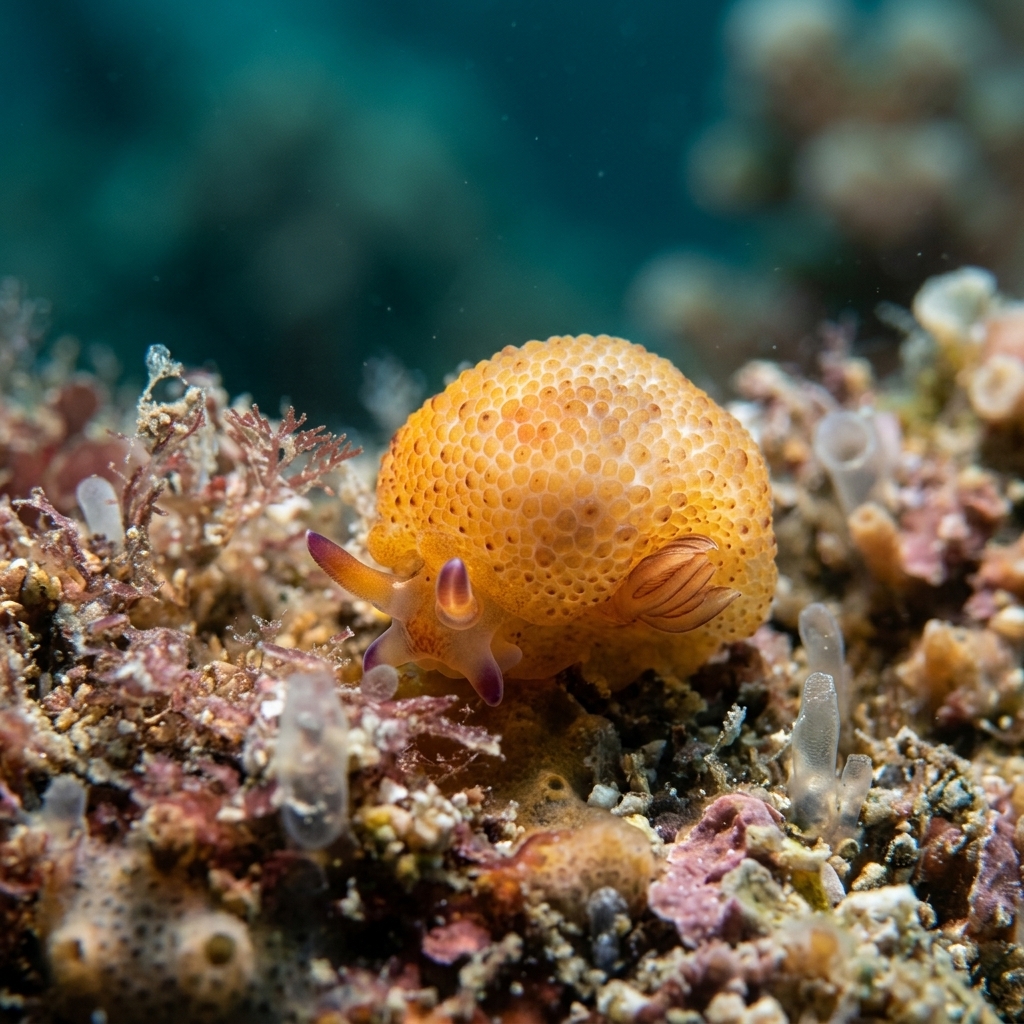
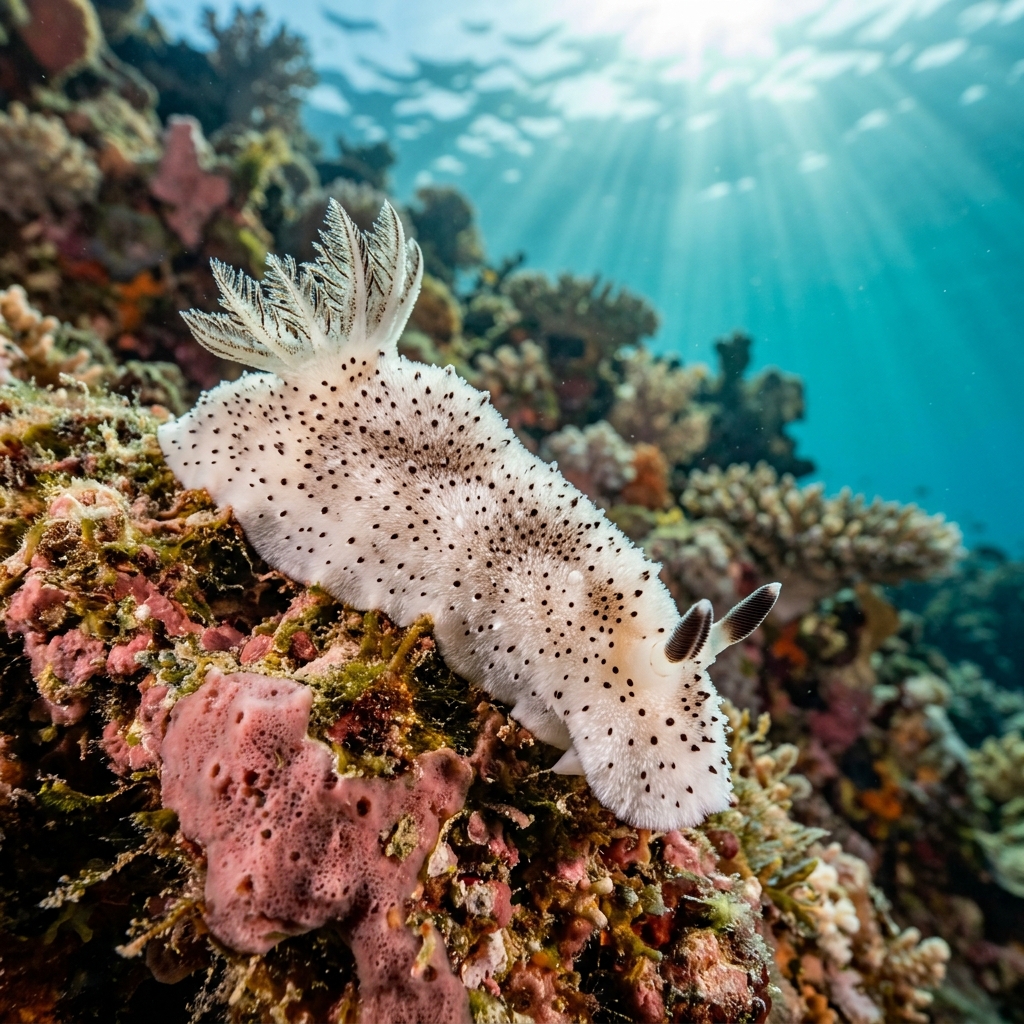
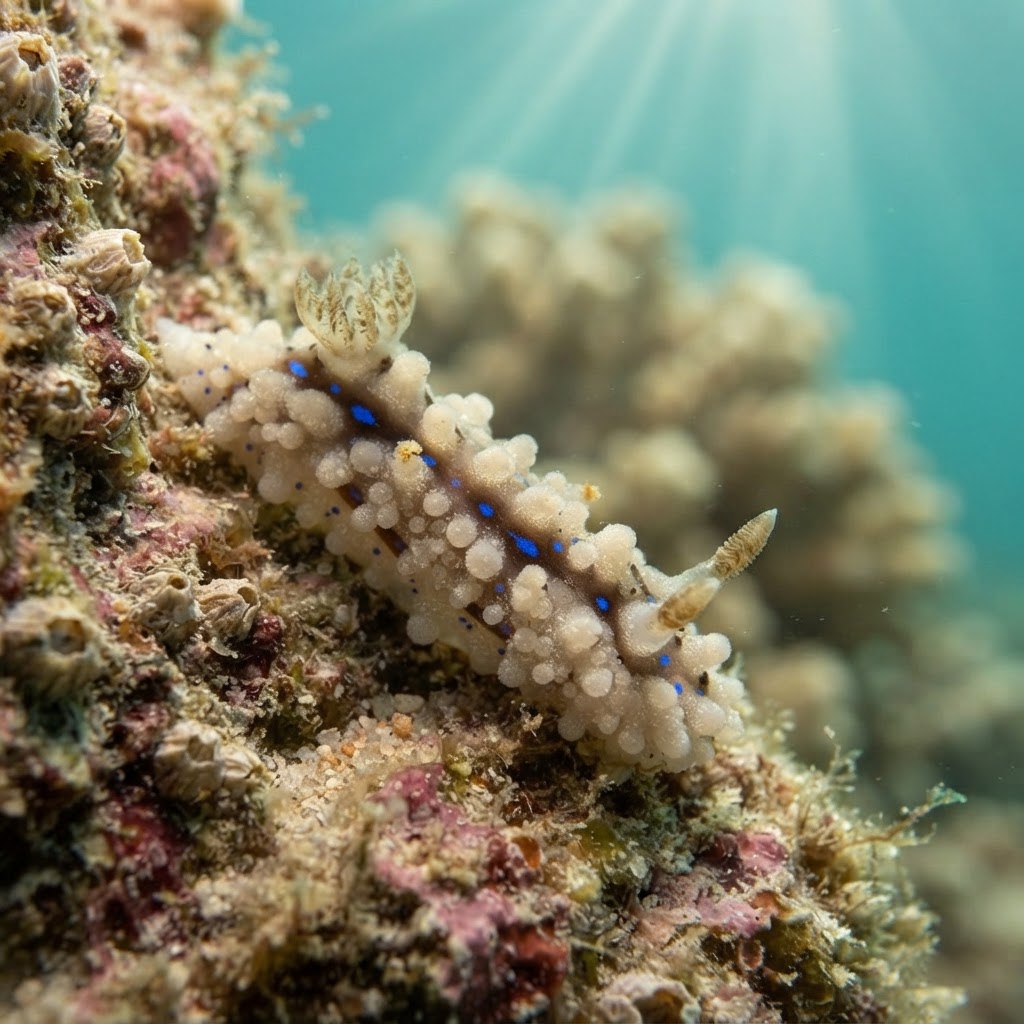
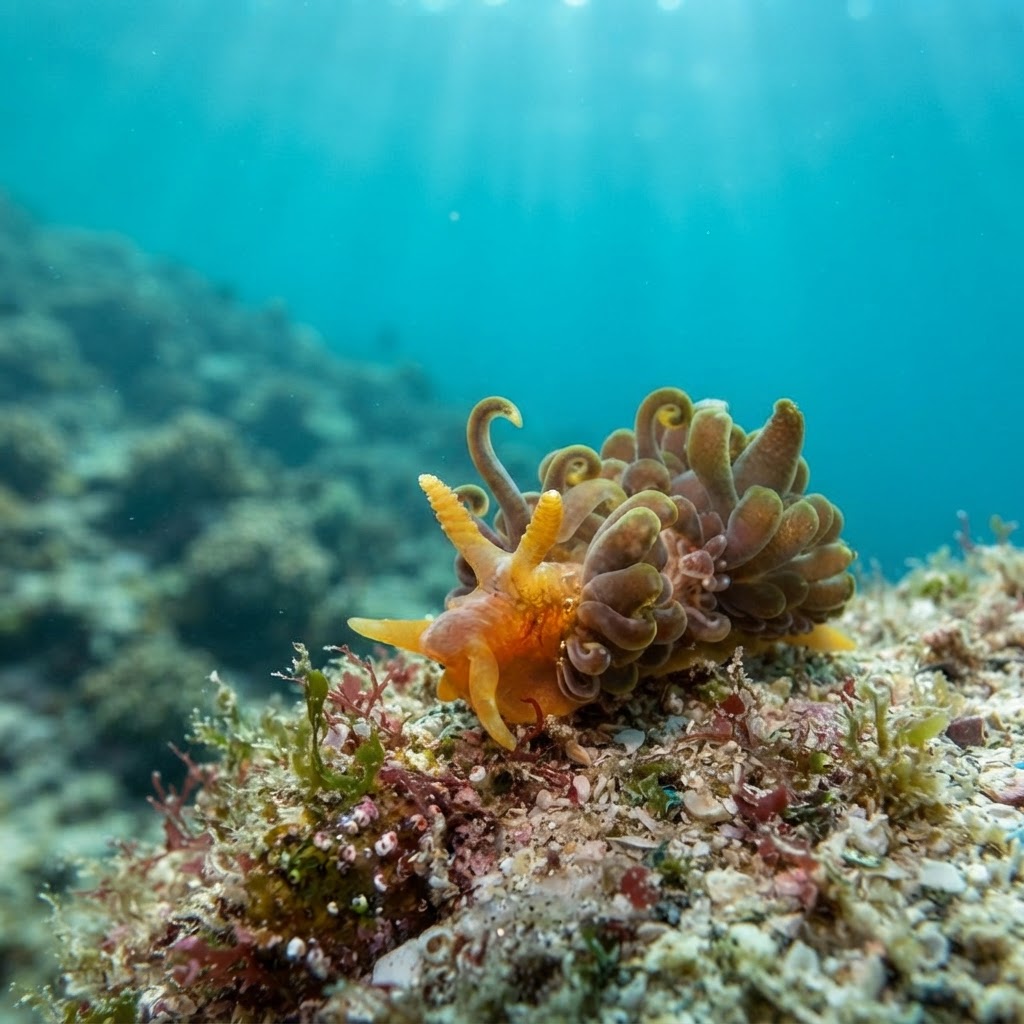
Look for a slug roughly 4cm long, its back covered in dense clusters of finger-like projections (cerata) in shades of brown, orange or grey, often tipped white. Two rhinophores (sensory tentacles) rise from the head, usually banded or ringed, and a pair of long, curled oral tentacles extend forward as it moves. The mottled, bristly texture is the giveaway against the smoother, more brightly patterned dorid nudibranchs divers might expect.
Divers usually find it tucked into shallow rocky crevices or among algae in the top few metres, moving slowly across the substrate as it hunts. It feeds on anemones and other cnidarians, and being an aeolid nudibranch it can repurpose its prey's stinging cells for its own defence, stored in those cerata on its back. It shows no reaction to divers beyond its usual slow crawl, making it an easy subject for close macro photography if you spot it.
Like other aeolid nudibranchs, it can steal stinging cells from the anemones it eats and store them in its cerata, turning its own back into a borrowed defence system.
Sightings are spread across the year with no clear seasonal peak in the data, and the species tolerates a wide range from about 12 to 19.5C, so it is worth checking on any dive within its depth range rather than timing a trip around a season.
Most reliably logged in Spain, especially around Valencia, Galicia and the Balearic Islands, and across France in the Bay of Biscay and the French Riviera and Provence. Smaller but steady numbers turn up in Cape Verde around São Vicente, plus sites in England, Greece, Portugal and Madeira.
Mapping where Naples Spurilla is logged…
It is most commonly logged around Valencia, Galicia and the Balearic Islands in Spain, and in the Bay of Biscay and French Riviera in France. Cape Verde's São Vicente region and shallow sites in England also produce regular sightings.
There is no strong seasonal pattern in the sightings, so it can turn up year-round. It has been recorded in water from around 12 to nearly 20C, which covers most conditions divers encounter at its usual shallow sites.
Check for a small, roughly 4cm slug covered in brown or orange cerata with pale tips, plus banded rhinophores and long curled oral tentacles. It moves slowly over rock and algae in very shallow water, rarely below 3 metres.
They reach about 4cm in length, making them a small find that rewards a slow, close look at shallow rocky ground rather than an open-water scan.
It feeds on anemones and can store their stinging cells in its own cerata, effectively borrowing its prey's weapons for defence rather than making its own.
Site and sighting data is aggregated from diver logs, iNaturalist and GBIF. For taxonomy and conservation status:
Light-spotted Aegires
3,168 sites