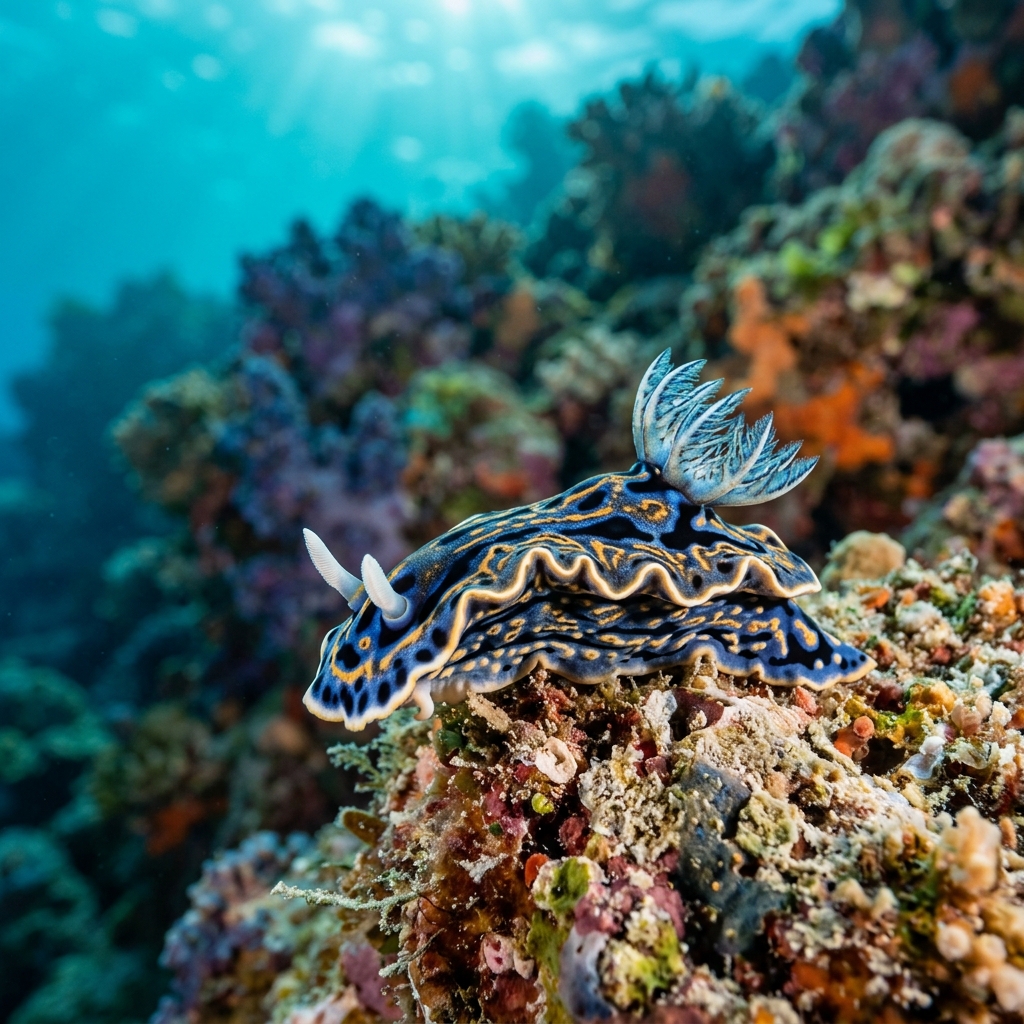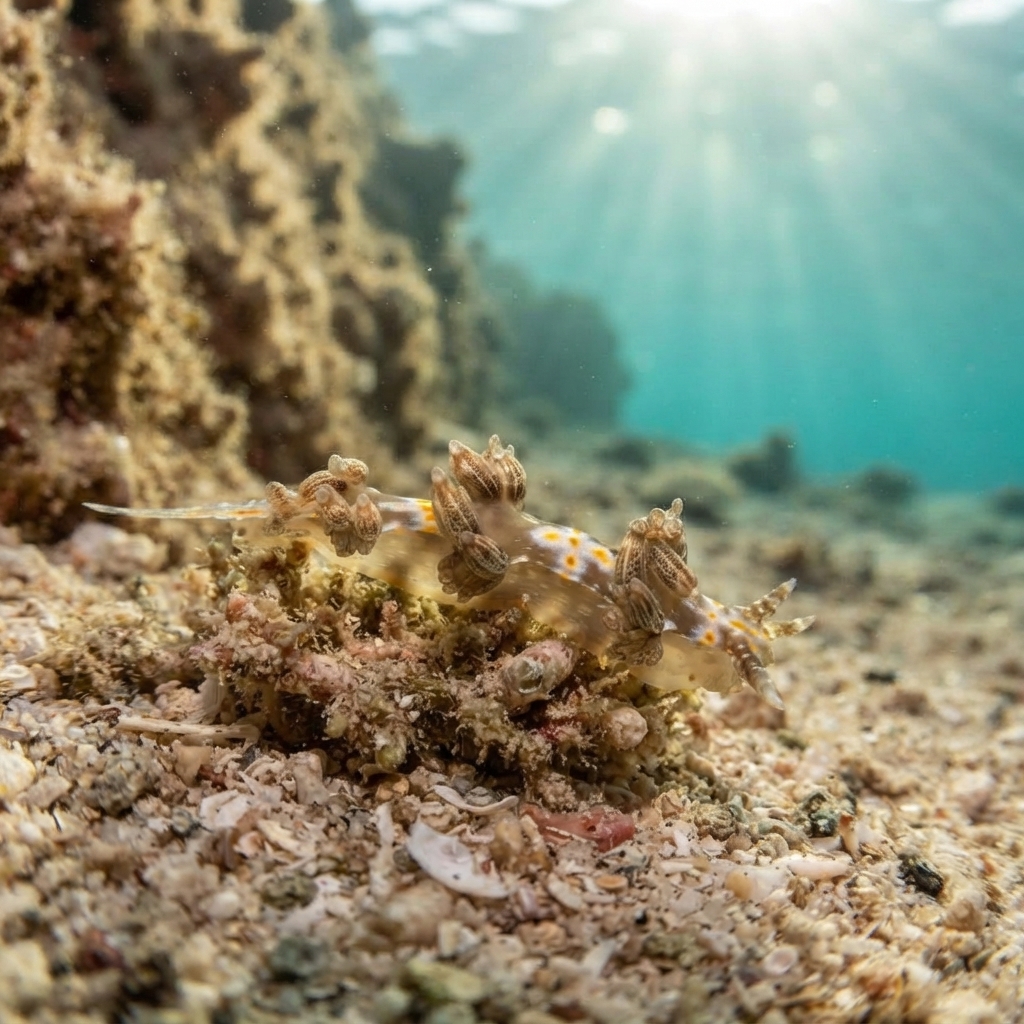
Nanuca leali
A small, uncommon nudibranch most reliably logged around Sint Maarten and Saint Martin in warm 25-31 C water, year-round.
A small sea slug (nudibranch) best picked out by scanning rubble and reef debris closely rather than looking for a splash of colour from a distance. Body shape follows the typical elongated nudibranch form with the pair of sensory tentacles (rhinophores) up front. Because sightings are consistently logged as uncommon even at sites where it turns up, most divers find it by deliberate slow searching rather than by chance.
Divers log this one crawling slowly over reef rubble and hard substrate, doing the unhurried grazing that nudibranchs are known for. It shows no reaction to divers beyond simply continuing on its way, so a slow approach and a steady light are all you need for a good look. Most sightings come from macro-focused dives where someone is already working the bottom closely rather than mid-water cruising.
Like other dorid nudibranchs, it almost certainly feeds on a specific sponge or bryozoan prey and stores chemical defences from that diet in its skin, which is the main reason nudibranchs of this kind can afford to be so unbothered by things swimming past them.
Water temperatures at the sites where it's been logged run from about 25 to 31 C, comfortably warm year-round in this part of the Caribbean, and there isn't enough monthly data to point to a stronger season. Treat it as a year-round find rather than something tied to a particular month.
This one is almost entirely a Sint Maarten and Saint Martin species as far as logged dives go, with the great majority of sightings coming from Sint Maarten itself and a solid secondary showing around Saint Martin. A single site on Anguilla rounds out the picture, making the Dutch and French sides of that shared island the place to focus a search.
Mapping where Nanuca Leali is logged…
The strongest sightings come from Sint Maarten and Saint Martin, with a further record from Anguilla. If you're diving that shared island, this is the region to search closely on rubble and hard bottom.
There's no clear season in the data, and water temperatures at its sites stay in a warm 25 to 31 C band year-round, so it's considered a year-round find rather than a seasonal one.
It's a small nudibranch best spotted by scanning reef rubble slowly rather than looking for it from a distance. It's logged as uncommon even at its best sites, so patience and a close look at the substrate matter more than size or colour alone.
No. It poses no threat to divers and simply continues grazing if you approach slowly and give it space.
Like most dorid nudibranchs, it likely draws chemical defences from its sponge or bryozoan diet, which lets it move across the reef in the open without needing to hide from predators.
Site and sighting data is aggregated from diver logs, iNaturalist and GBIF. For taxonomy and conservation status:
Blue Dragon
3,163 sites