Mourgona murca
A 1cm sea slug logged almost exclusively around Îles des Saintes, Guadeloupe, in warm 25-31C water year-round.
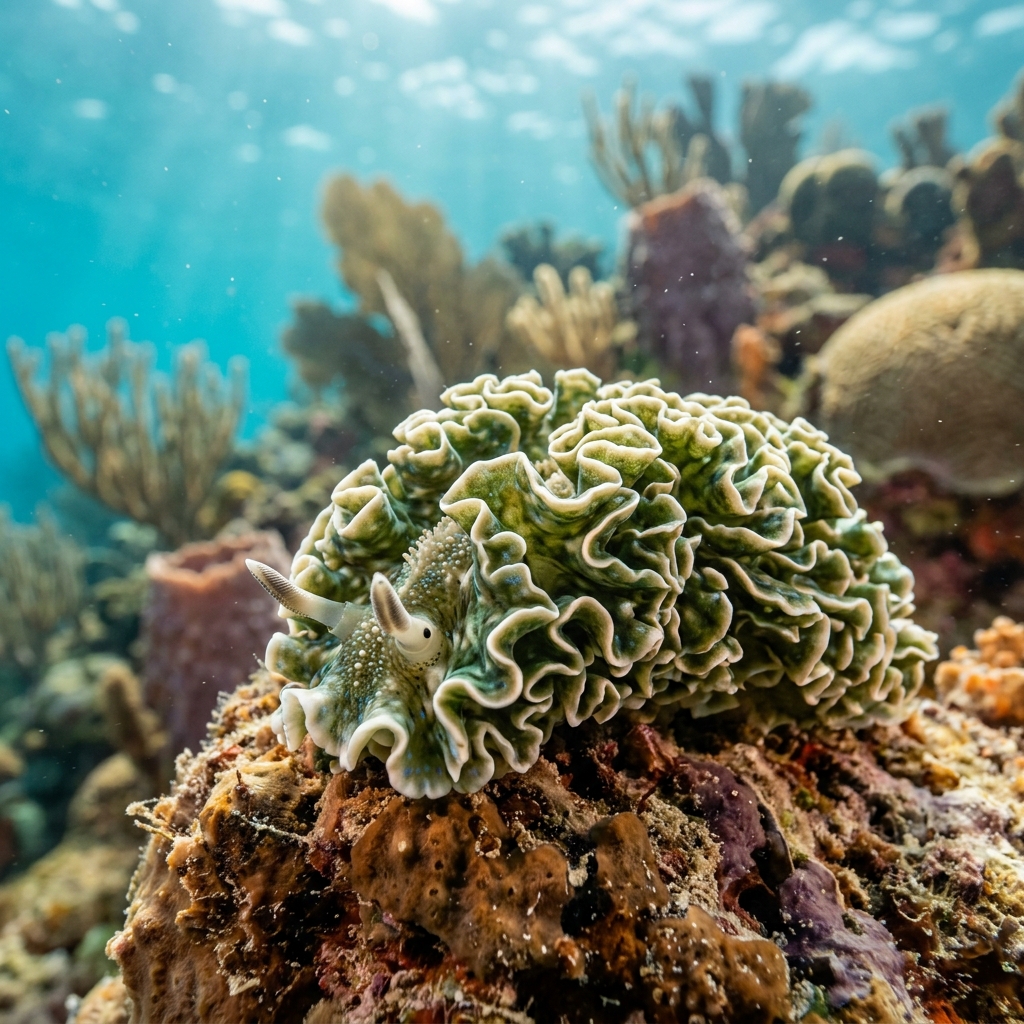
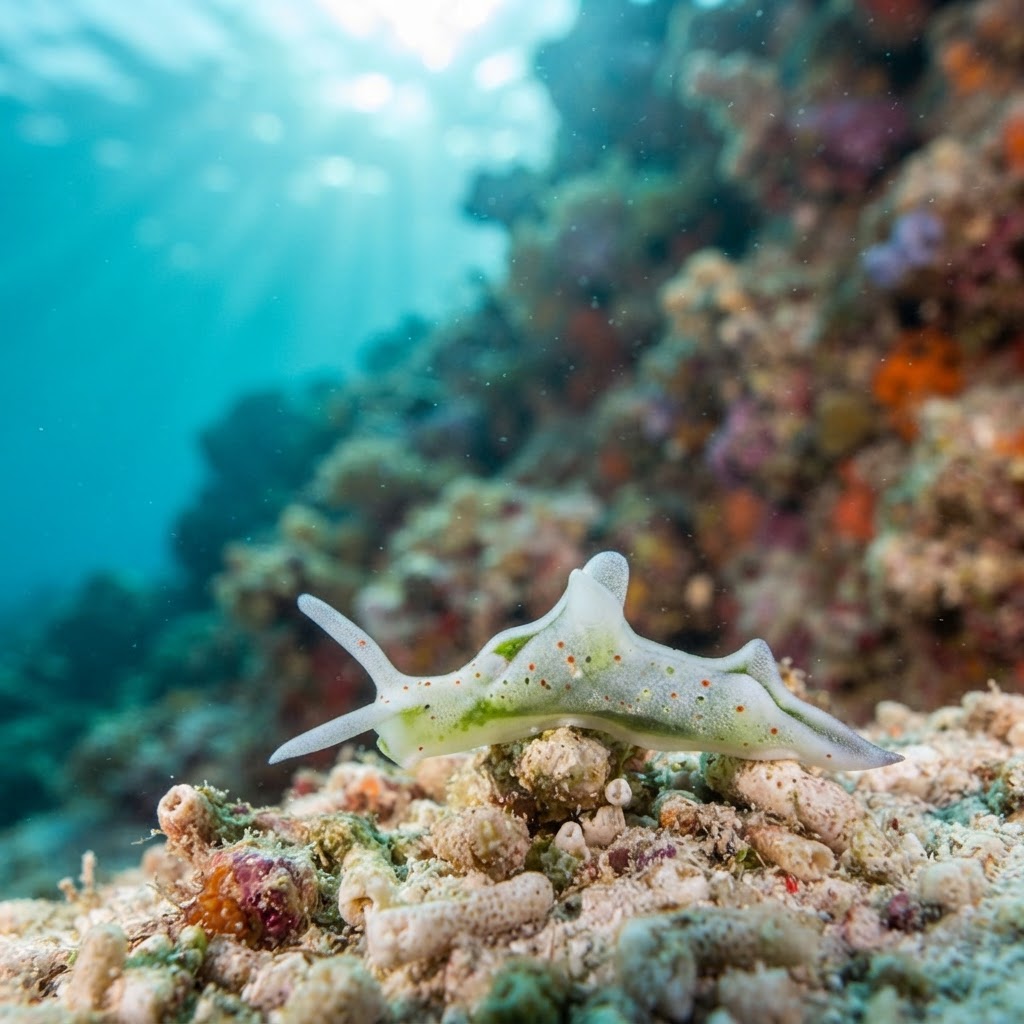
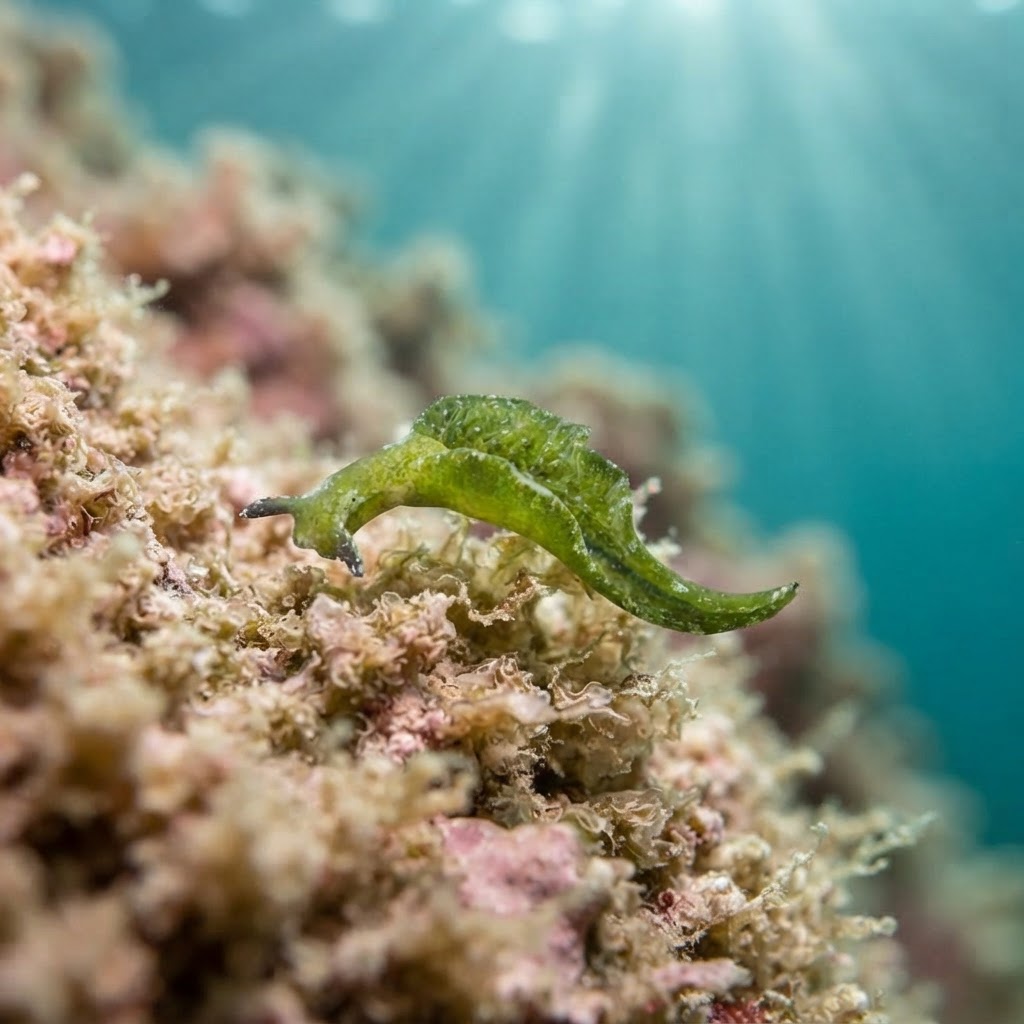
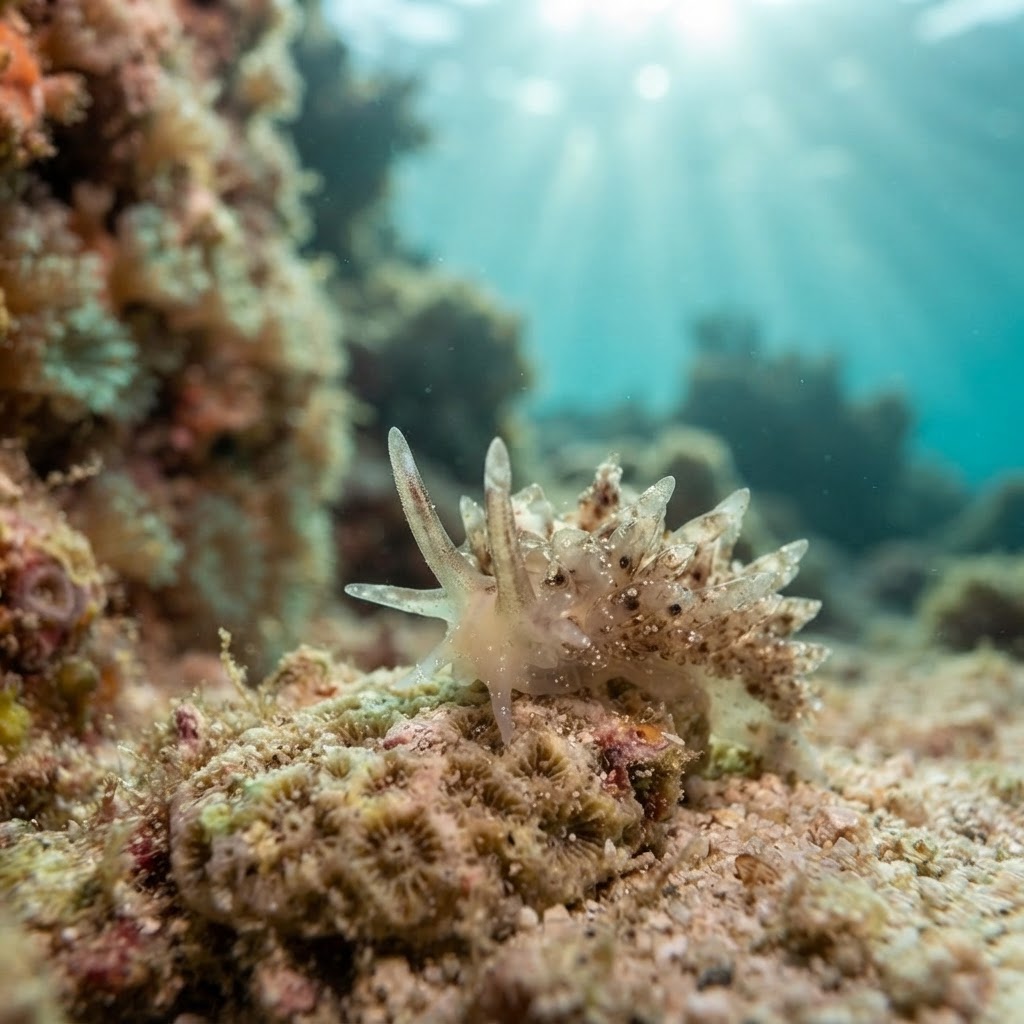
A 1 cm sea slug, easy to miss unless you're already scanning rubble and algae close-up. Look for a compact, soft-bodied slug with the finely textured, almost ruffled back typical of caliphyllid sea slugs, held low against the substrate. At this size colour and pattern are only really visible on macro photos, so divers usually key on shape and the way it sits motionless rather than any bold marking.
Divers find it sitting still on reef rubble and algae-covered surfaces rather than actively cruising about, which fits its tiny size and slow-moving lifestyle. It shows no reaction to divers, it simply stays put while you get close with a macro lens. Most sightings come from slow, deliberate reef scans rather than mid-water encounters.
It belongs to the sacoglossan group of sea slugs, many of which feed on algae and can incorporate the algae's chloroplasts into their own tissue for a time, a trick sometimes called kleptoplasty; a striking bit of biology packed into a slug barely a centimetre long.
Water at the logged sites sits between 25 and 31C, comfortably warm year-round, and there isn't enough monthly data to point to a particular season. Treat it as a year-round find on Guadeloupe's reefs rather than something tied to a specific month.
Every logged sighting so far comes from Guadeloupe, and specifically from Îles des Saintes, which accounts for the large majority of sites, with one additional record from Basse-Terre. If you're hunting for this one, Îles des Saintes is currently the only real bet.
Mapping where Mourgona Murca is logged…
Almost every recorded sighting is from Guadeloupe, concentrated around Îles des Saintes with a single site also logged in Basse-Terre. Outside Guadeloupe it hasn't been documented on dive logs yet.
There's no detected season, and the water it's found in stays warm between 25 and 31C year-round, so sightings are possible on any dive trip to Îles des Saintes rather than tied to a particular month.
Around 1 cm, making it a real macro subject. You'll want a good eye and a macro lens rather than expecting to spot it from a distance.
Look for a tiny, soft-bodied slug about 1 cm long with a finely textured back, sitting still on rubble or algae. At this size, fine detail only shows up on close macro shots, so patience and a slow scan of the substrate are key.
No, it poses no danger to divers. It's a small, stationary sea slug with no sting or bite risk.
It's a sacoglossan sea slug, a group known for sometimes retaining chloroplasts from the algae they eat, effectively running on borrowed photosynthesis for a while. It's a remarkable trick for an animal this small.
Site and sighting data is aggregated from diver logs, iNaturalist and GBIF. For taxonomy and conservation status:
Elysia Timida
573 sites