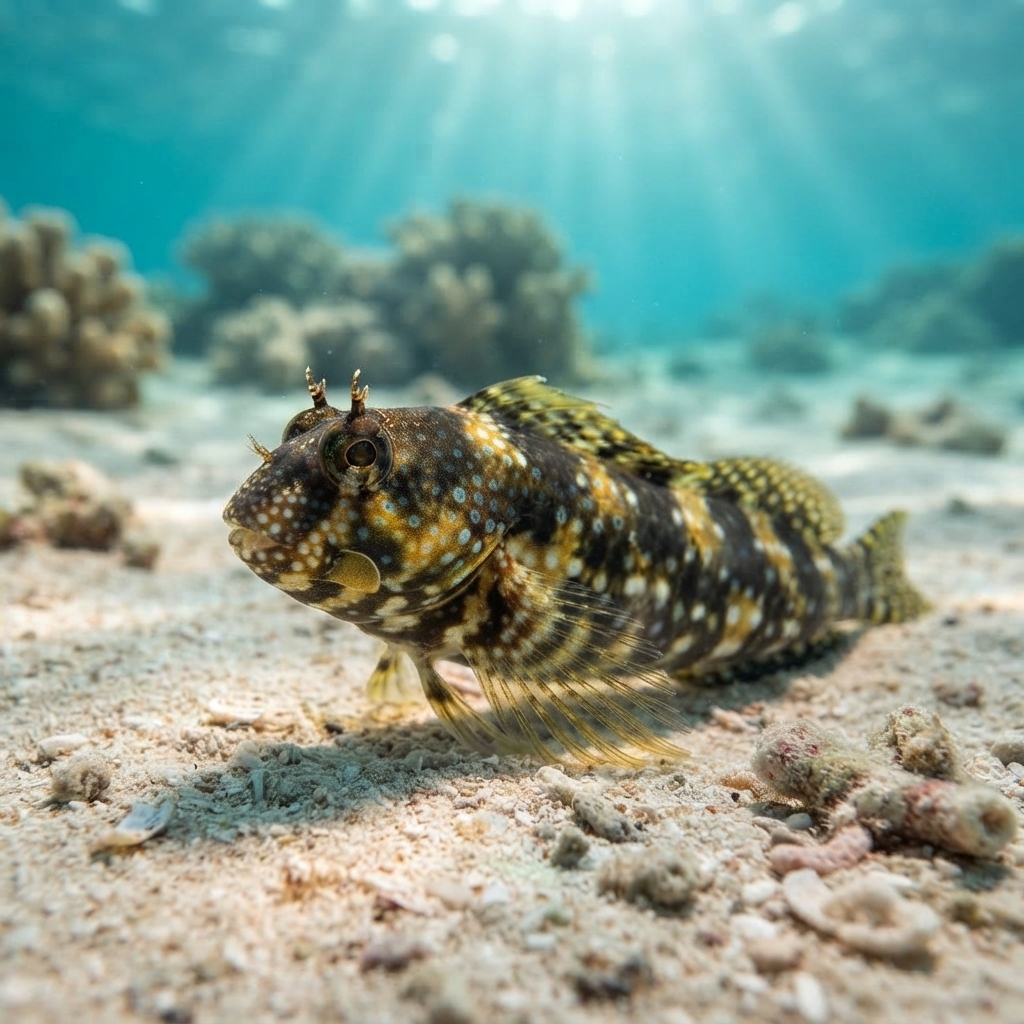
Coryphoblennius galerita
Tiny and territorial, Montagu's Blenny turns up year-round in the Algarve and Croatia's Kvarner in water as cool as 12.5 C.
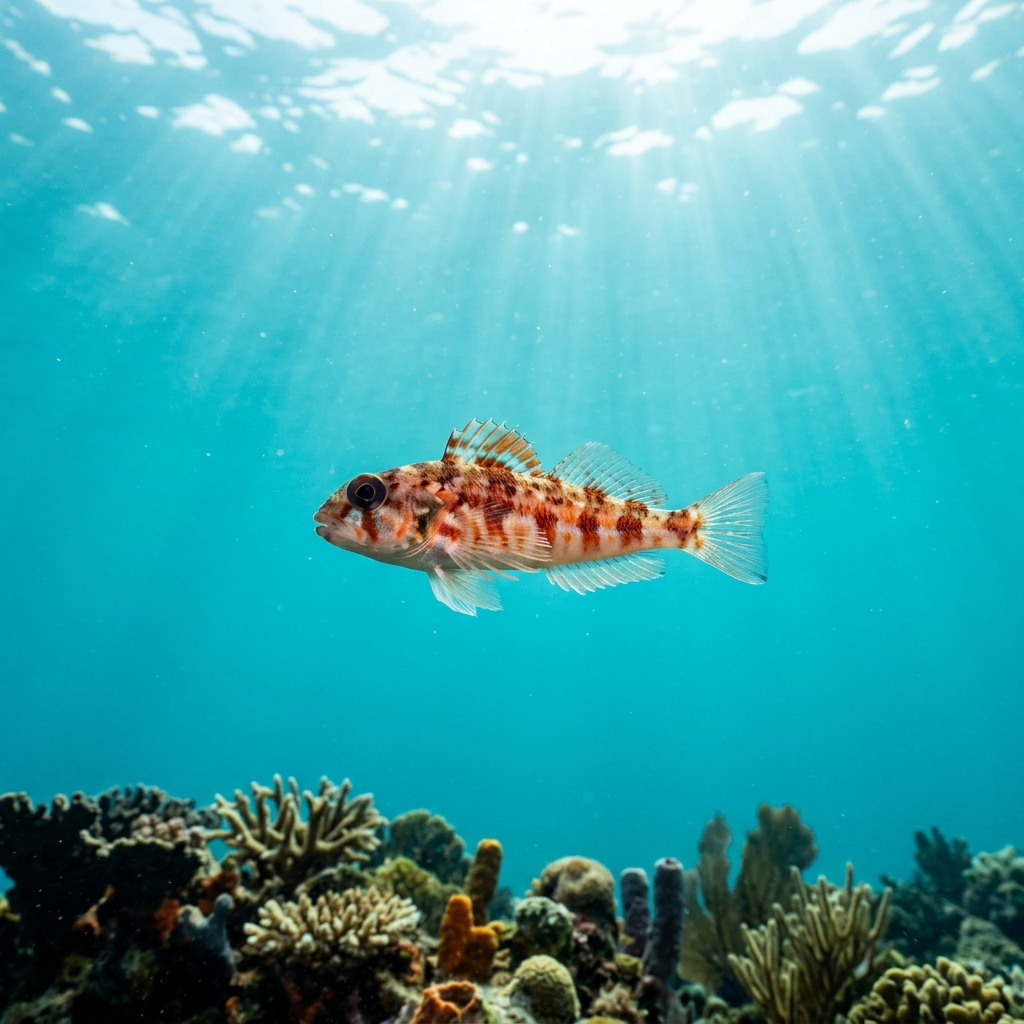
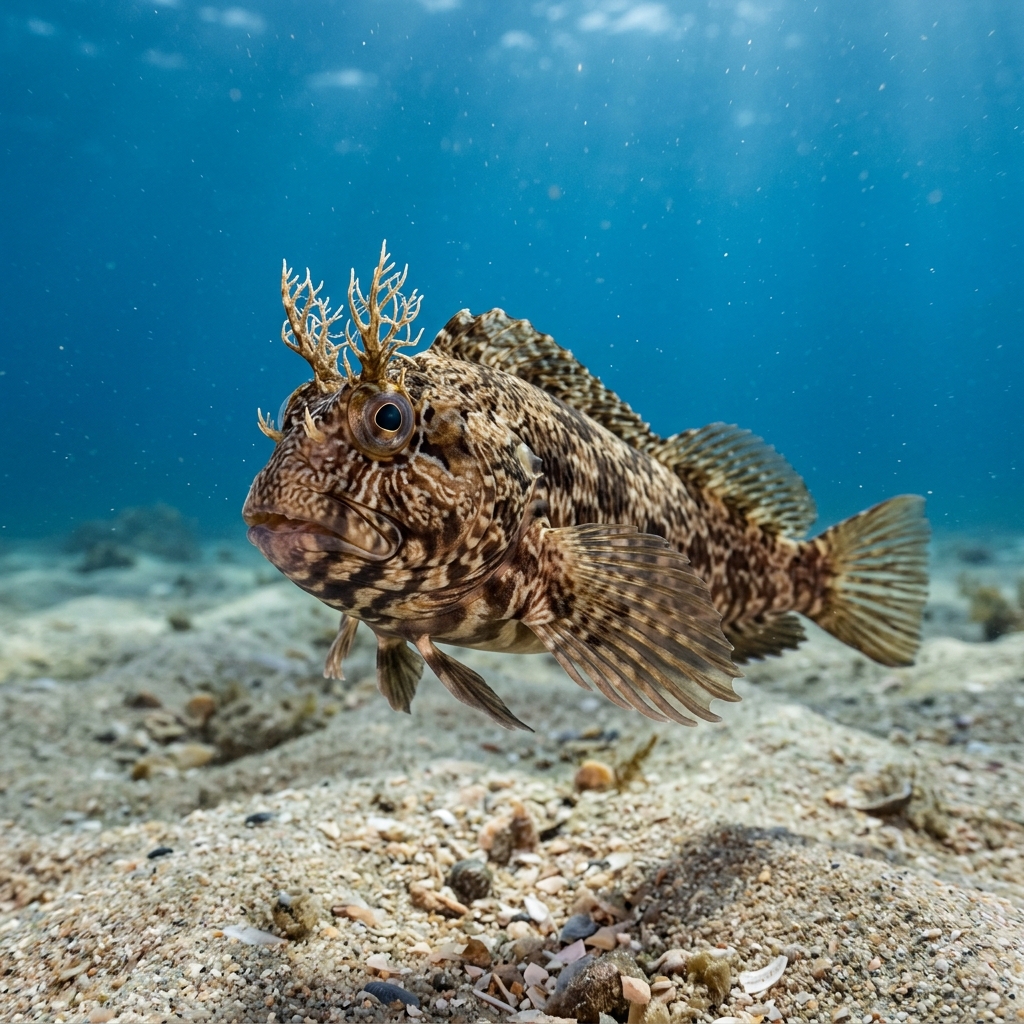
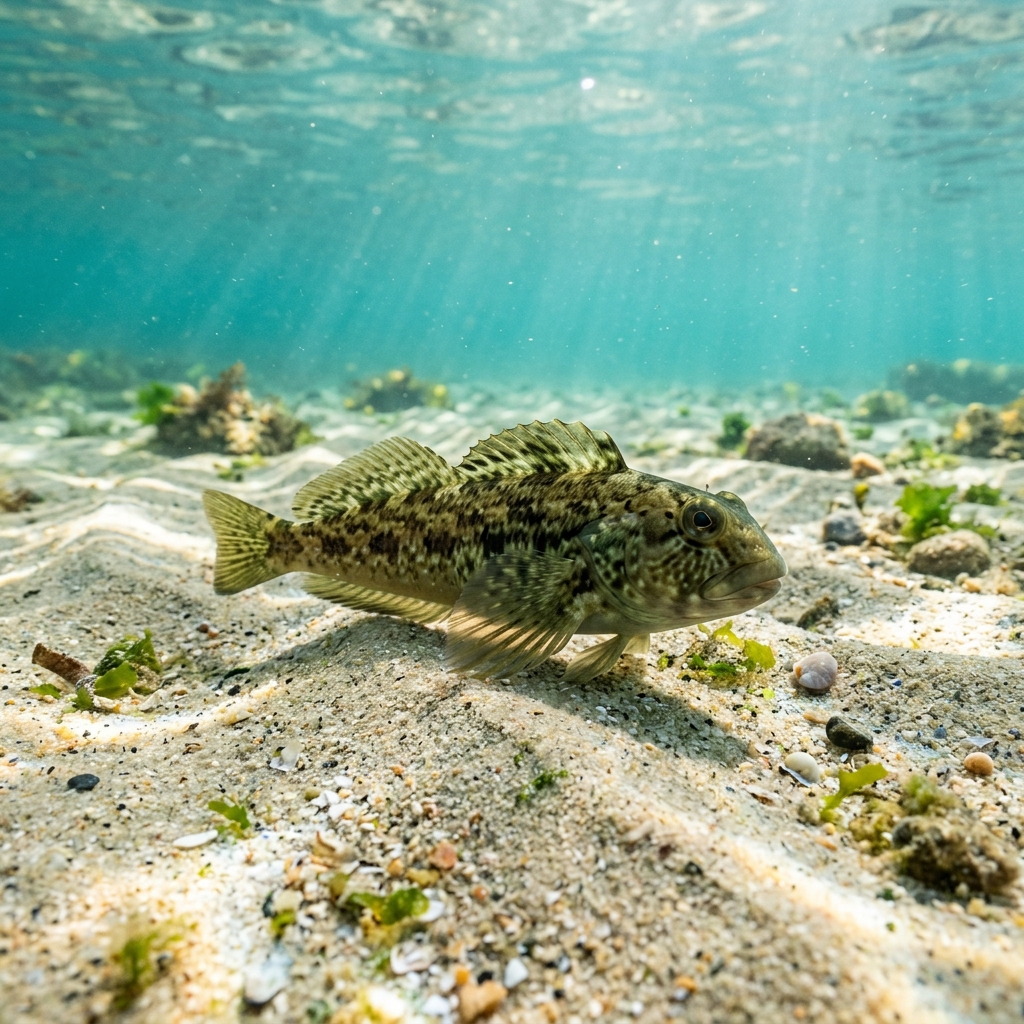
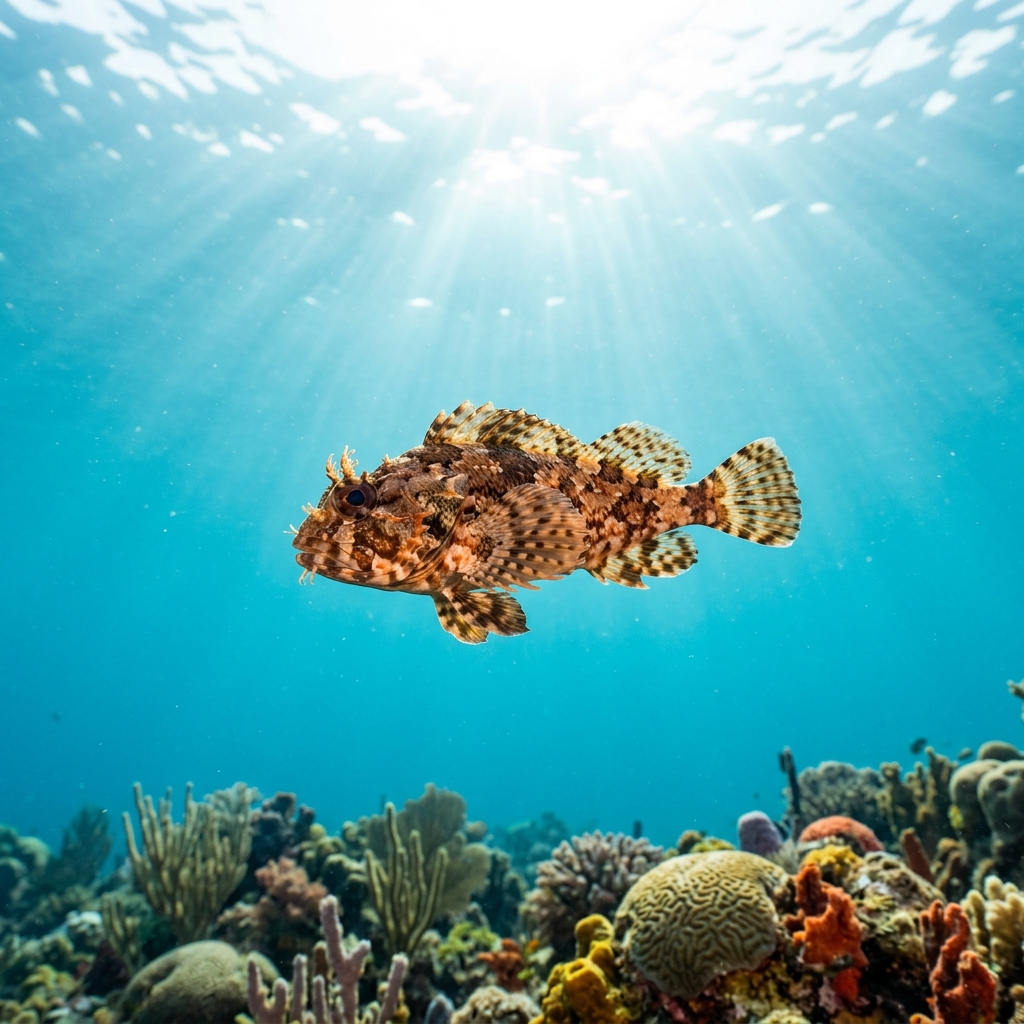
Barely 4 cm long, this blenny is a mottled brown to olive fish with a stubby, blunt-headed body that sits propped on rocks rather than swimming freely. Look for the fringed, feathery crest (a tuft of skin flaps called a cirrus) running between its eyes, which is the single best giveaway against other small blennies. Its pattern breaks into pale blotches and speckles that match the algae-covered rock it rests on, making it easy to miss until it moves.
Expect to find it wedged into a crevice or perched motionless on encrusted rock in the shallows, often at depths a snorkeller could reach rather than deep on a wall. It holds its ground rather than bolting, relying on camouflage and a quick dart into a crack when a diver's shadow passes close. Most sightings come from calm, sheltered rocky terrain where surge and wave wash keep the rock rich in algae for it to graze and hunt around.
It can survive brief exposure to air between tides, tucking into damp crevices in intertidal rock pools when the water retreats, a trick most reef blennies never need.
Sighting data shows no strong seasonal pattern, so it is logged across the year at the sites where it lives. Its recorded temperature range of 12.5 to 20.8 C spans a typical Mediterranean and Atlantic annual cycle, meaning divers and snorkellers find it in both cooler winter and warmer summer water.
Most reliably logged in the Algarve in Portugal and across Croatia's Kvarner and Istria regions, with strong numbers also in Malta, Italy's Tuscany coast, Brittany in France, and along the coasts of England. It favours shallow, wave-washed rock and intertidal pools rather than deep reef, so sightings cluster at sites with exposed rocky shoreline in Spain, Madeira and beyond.
Mapping where Montagu's Blenny is logged…
It shows up most often in the Algarve in Portugal and in Croatia's Kvarner and Istria regions, with reliable sightings also in Malta, Italy, Brittany and along the English coast. It sticks to shallow rocky shoreline rather than open reef.
There is no clear seasonal pattern in sighting data, so it can be found year-round at its usual rocky-shore sites. Its known temperature range of 12.5 to 20.8 C covers most of the annual cycle in the Mediterranean and Atlantic.
Look for a tiny, 4 cm mottled brown fish perched still on shallow rock, with a distinctive fringed crest of skin flaps between its eyes. It relies on camouflage against algae-covered rock rather than bright colour.
They stay small, typically around 4 cm long as adults, making them one of the smaller blennies divers and snorkellers encounter in shallow rocky habitat.
It can tolerate brief air exposure during low tide, hiding in damp crevices in intertidal rock pools until the water returns, a survival trick uncommon among reef-dwelling blennies.
No, it poses no danger to divers or snorkellers. It is a small, harmless fish that retreats into rock crevices rather than approaching or reacting aggressively to people.
Site and sighting data is aggregated from diver logs, iNaturalist and GBIF. For taxonomy and conservation status:
Rusty Blenny
2,605 sites