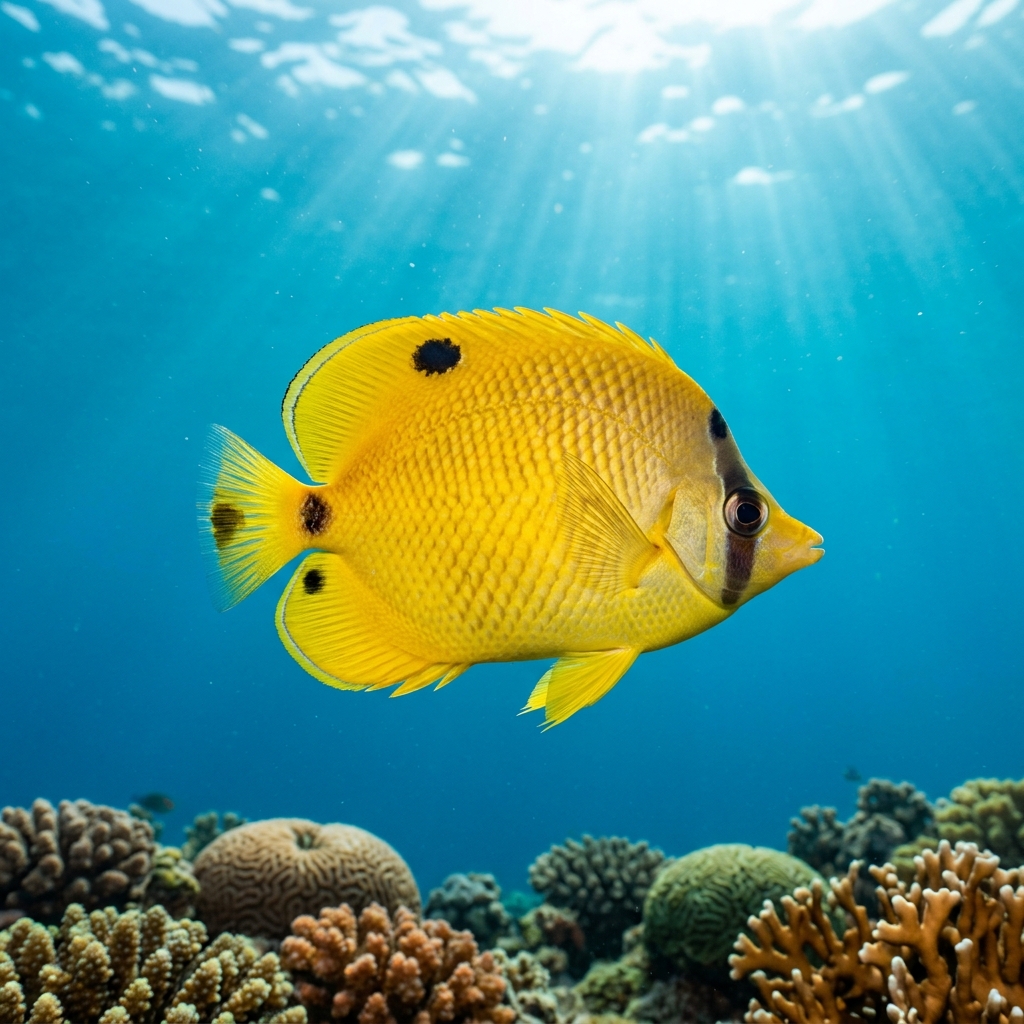
Chaetodon speculum
Look for the pale eye-spot on a dark flank in Sulawesi and Queensland reefs, 22.6-29.3C, seen year-round as an uncommon reef find.
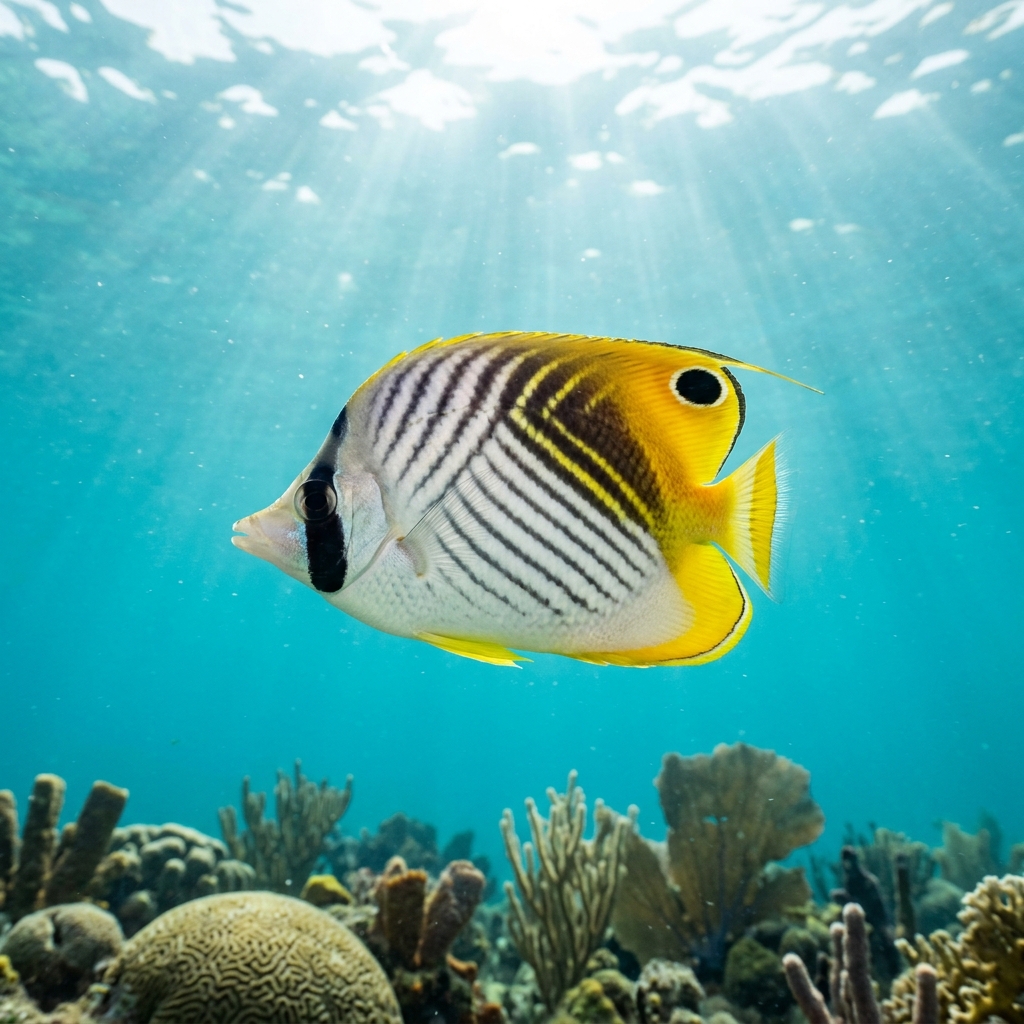
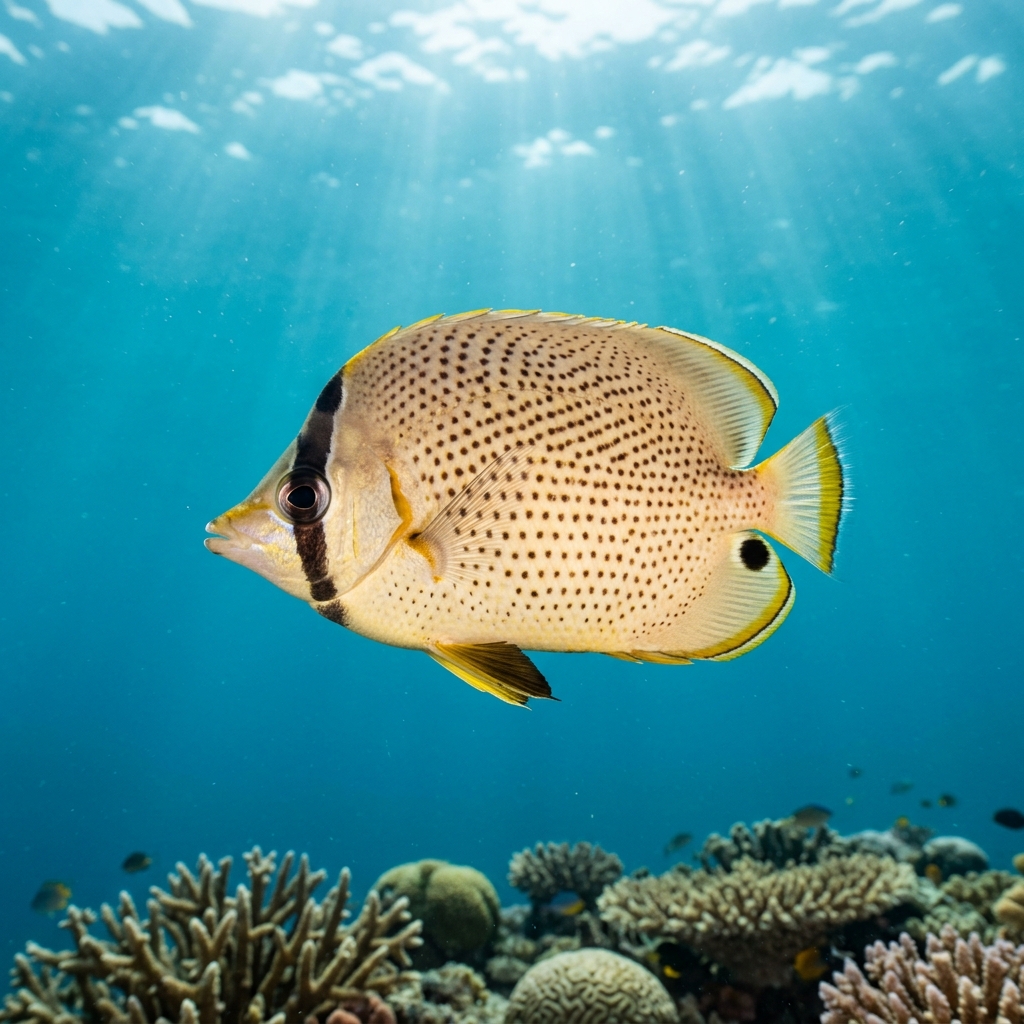
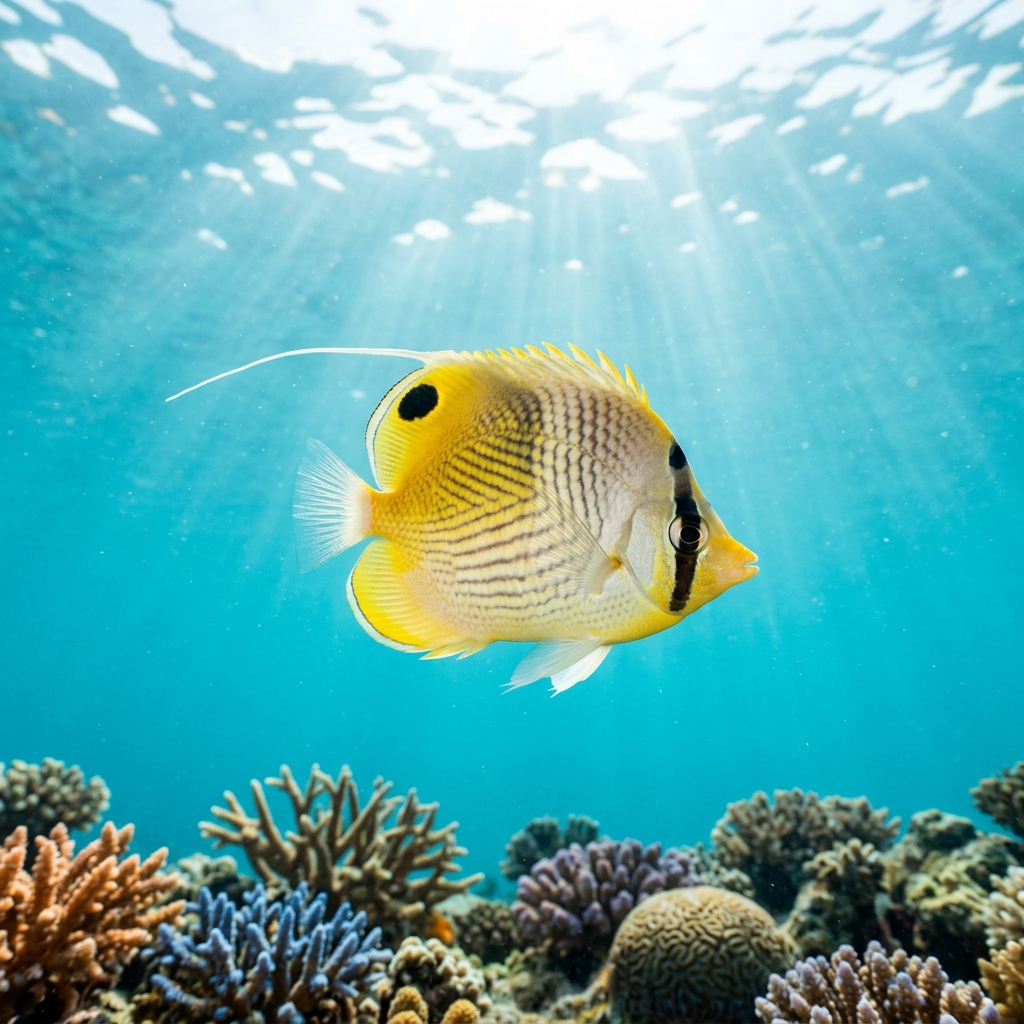
Compact, disc-shaped body around 12 cm, pale yellowish-white on the front half with a bold dark blotch across the rear flank that carries a lighter, eye-like spot in its centre, giving the species its common name. A dark vertical band runs through the true eye, and the tail is pale, helping separate the real eye from the decoy patch. It swims singly or in loose pairs rather than tight schools, close to the reef structure.
Usually spotted alone or in a pair, picking around coral heads and reef structure at fairly shallow to moderate depth rather than out in the open water. It is not a fish that schools or forms the loose feeding groups some butterflyfish do, and it tends to hold its ground near cover rather than bolt when divers approach. Most logs describe it as an uncommon but steady sighting rather than something divers see on every dive.
The dark blotch and pale spot on its rear flank work as a false eye, a classic butterflyfish trick that can confuse predators about which end is the head and which way the fish is about to dart.
No clear seasonal pattern shows up in the sightings, and it sits comfortably in water from 22.6 to 29.3 C, so it is a year-round resident on the reefs where it occurs rather than a seasonal visitor.
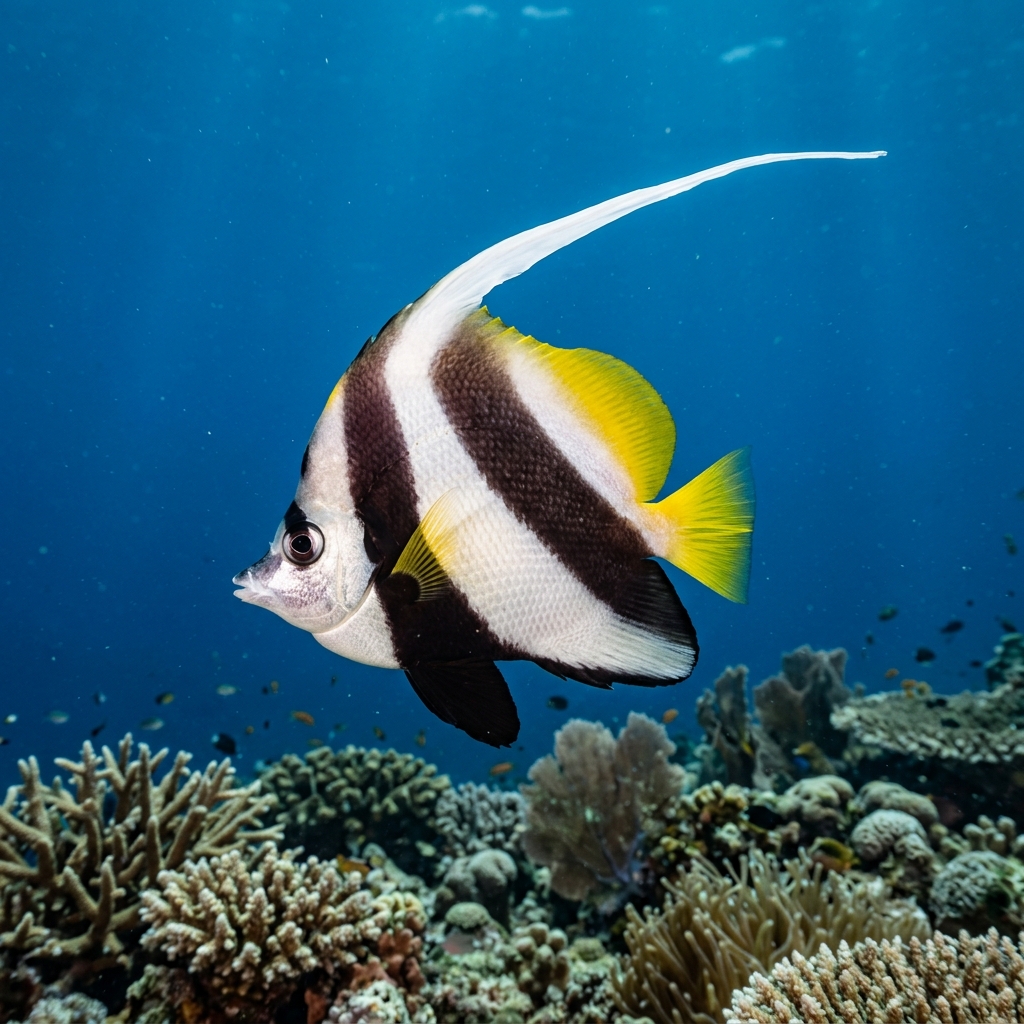
Reef neighbours a diver could mistake it for. Use the identification notes above to tell them apart.
Most reliably logged across Indonesia and the Philippines, with Sulawesi, Nusa Tenggara, Visayas, Luzon, Palawan and Mindanao all producing regular sightings. Queensland in Australia is another strong region, and it also turns up on reefs in Malaysia, Thailand, Japan, Taiwan and Micronesia.
Mapping where Mirror Butterflyfish is logged…
Best chances are in Indonesia and the Philippines, particularly Sulawesi, Nusa Tenggara, Visayas, Luzon, Palawan and Mindanao, plus Queensland in Australia. It also shows up on reefs in Malaysia, Thailand, Japan and Taiwan.
There is no strong seasonal pattern in the sightings, and it tolerates a wide temperature range of roughly 22.6 to 29.3 C, so it is present on its home reefs throughout the year.
Look for a small, pale-bodied butterflyfish with a dark blotch across the back half of its body that contains a lighter, eye-shaped spot in the centre. This false-eye patch, combined with its solitary or paired habit near reef structure, is the giveaway.
They reach around 12 cm, a typical small size for a reef butterflyfish, and are usually seen at that size alone or in pairs rather than in groups.
Its common name comes from the mirror-like false eye set inside a dark patch on its rear flank, a pattern thought to misdirect predators away from its real head and eyes.
Site and sighting data is aggregated from diver logs, iNaturalist and GBIF. For taxonomy and conservation status: