Phyllodesmium rudmani
Rarely logged outside the Philippines, this nudibranch turns up mostly around Luzon in warm 25-31C reef water year-round.
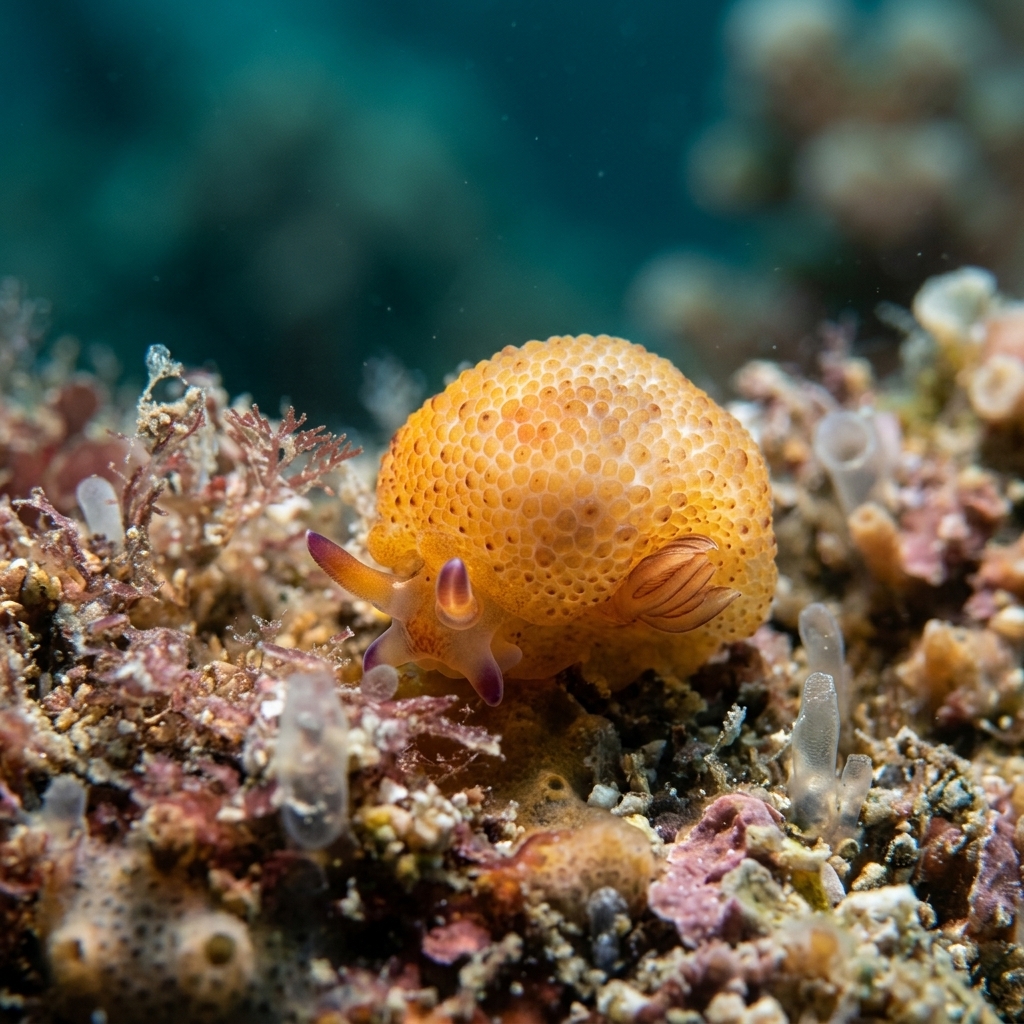
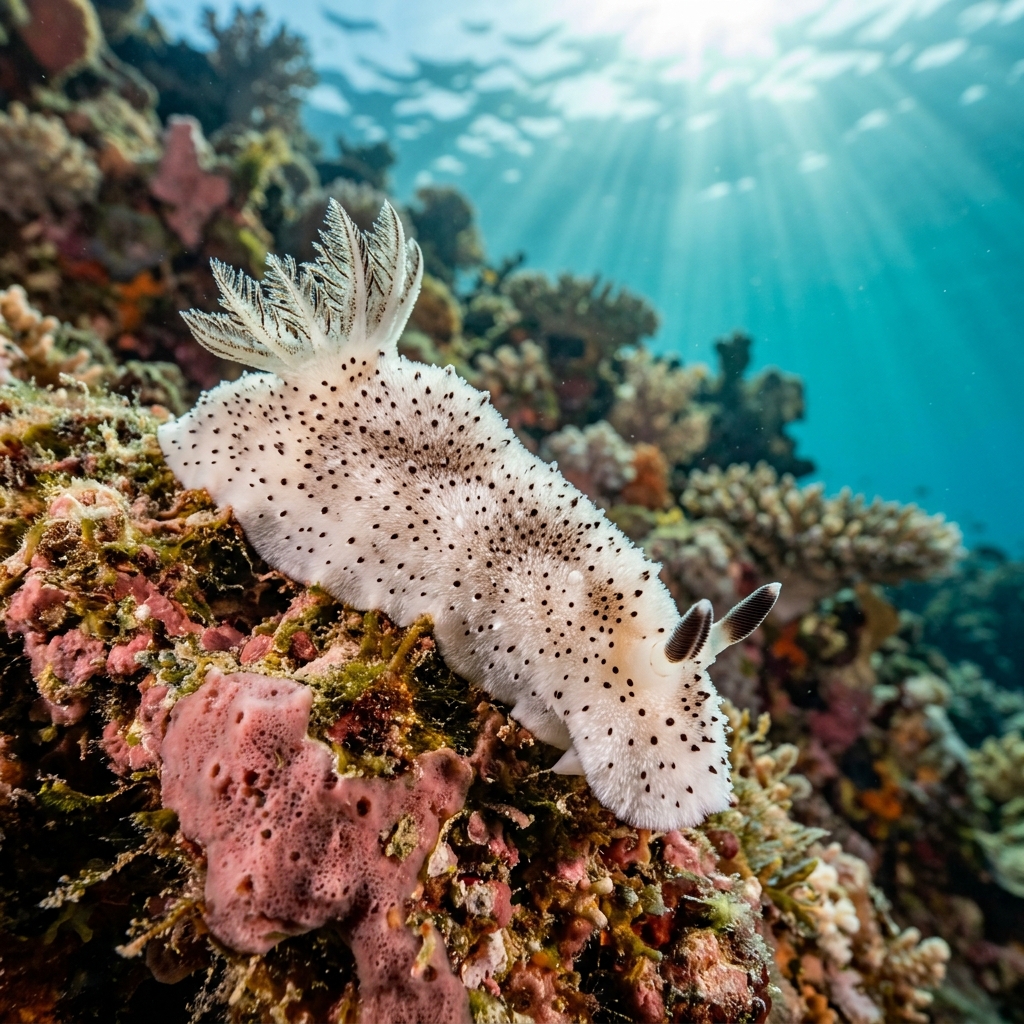
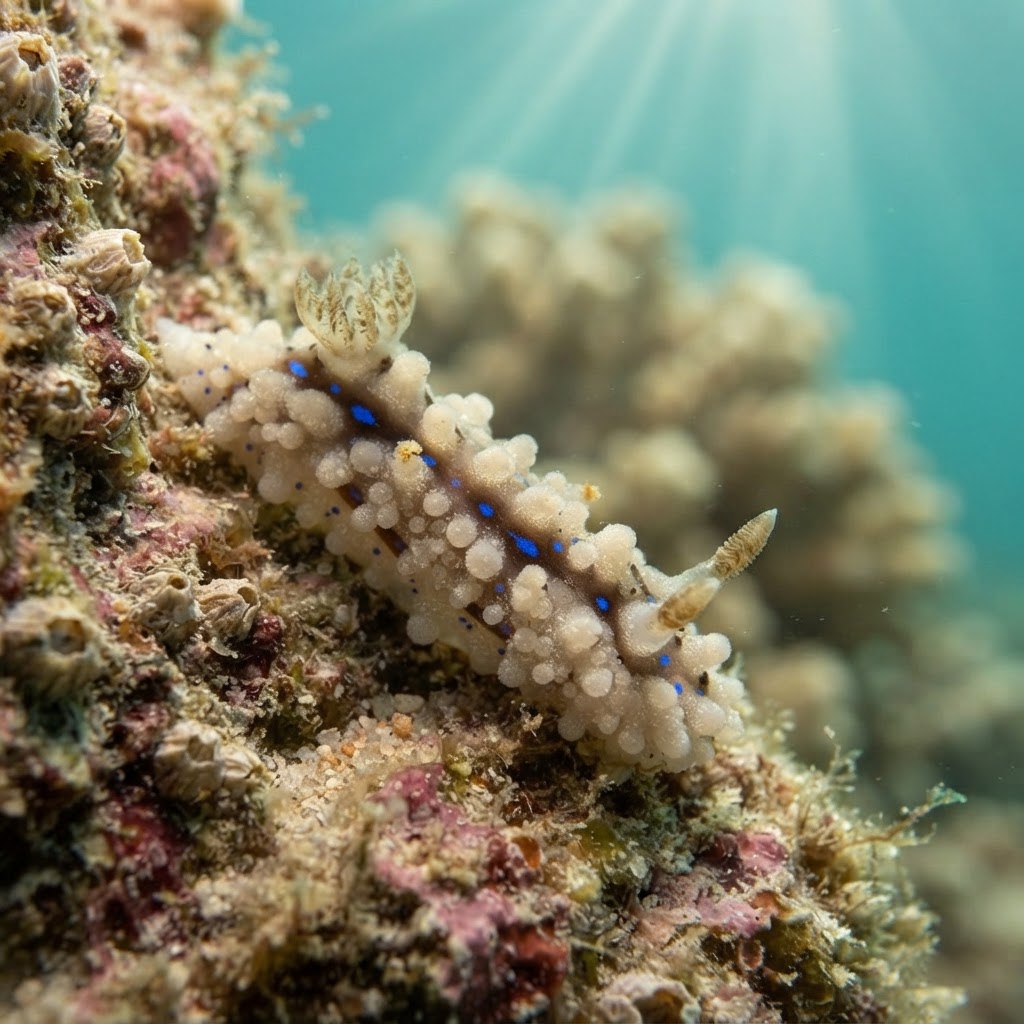
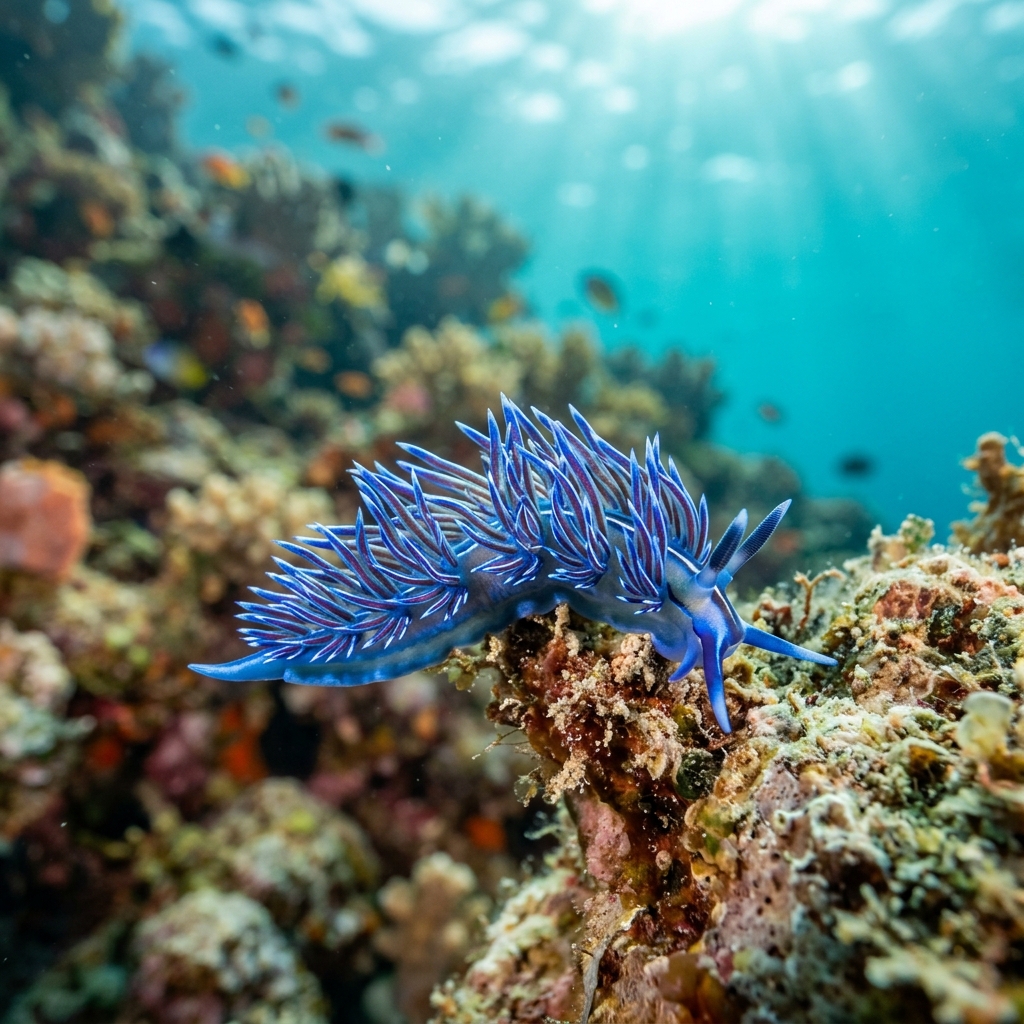
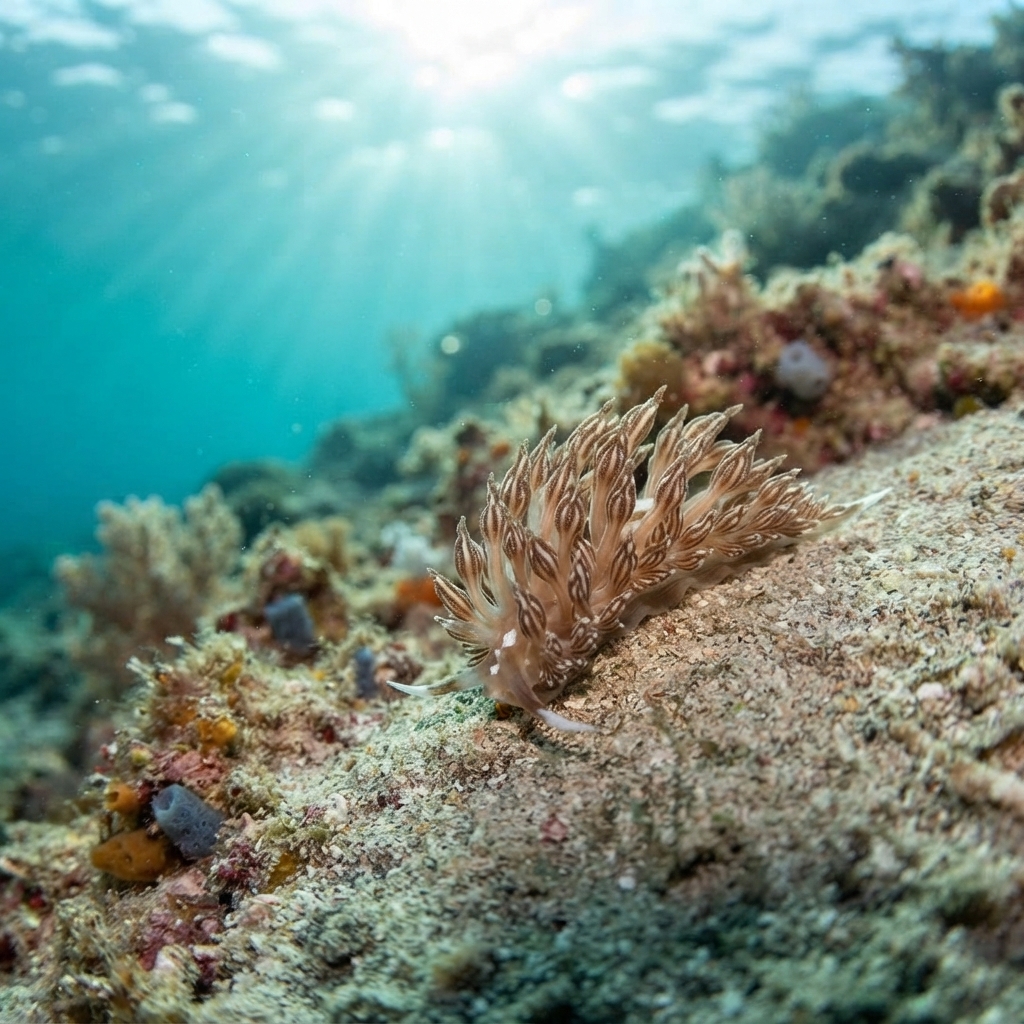
Look for a soft-bodied slug covered in finger-like projections (cerata) along its back that mimic the soft coral it feeds on, giving it a fuzzy, textured outline rather than a smooth dorid shape. Colour tends to blend with the host soft coral, running from pale cream to mottled brown or orange, which makes it easy to swim straight past. Size in the water is small, so most divers only spot one once a guide points a torch at a patch of soft coral and holds still.
Divers find it sitting motionless on or near the soft coral colonies it feeds on, often tucked in among the polyps where its cerata blend into the background. It does not swim off or react much when approached, so a slow, careful look along soft coral heads is the best way to find one rather than expecting it to come to you. Most sightings happen on regular reef dives rather than anything requiring a special night or muck dive.
Nudibranchs in this family are known for stealing stinging or defensive cells from the soft corals they eat and repurposing them in their own tissue, which is likely part of why this species' shape so closely tracks its host coral's polyps.
Water temperatures where it is found run from about 25.4 to 31.4C, comfortably warm year-round, and there is no clear seasonal pattern in the sightings data, so any month on a Luzon dive trip is fair game.
This one is very much a Philippines find, with the strongest run of sightings around Luzon, where the vast majority of logged dives with this species come from. A smaller number of sightings come from Sulawesi in Indonesia, so it is worth asking local guides there too, but Luzon is the reliable bet.
Mapping where Mimic Nudibranch is logged…
Luzon in the Philippines is by far the most reliable place, accounting for nearly all logged sightings. A smaller number of divers have also found it around Sulawesi, Indonesia.
There is no strong season in the sighting data. It is found in water between about 25.4 and 31.4C, which holds year-round on these tropical reefs, so any time of year works.
Look for a small slug with soft, finger-like cerata on its back that closely match the colour and texture of the soft coral it sits on. It has no bold dorsal pattern like many showier nudibranchs, so it relies on blending in rather than standing out.
Exact size data is not available, but like most species in this soft-coral-feeding family it stays small, generally a few centimetres, which is part of why it is easy to overlook on the reef.
Its cerata are shaped and coloured to closely resemble the polyps of the soft coral it lives on and feeds from, effectively camouflaging it against its own food source.
Site and sighting data is aggregated from diver logs, iNaturalist and GBIF. For taxonomy and conservation status:
Blue Dragon
3,163 sites