Elysia diomedea
Spot the frilly orange-and-blue Mexican Dancer on Baja California and Guanacaste reefs, warm water 23-30C, and sightings run year-round.
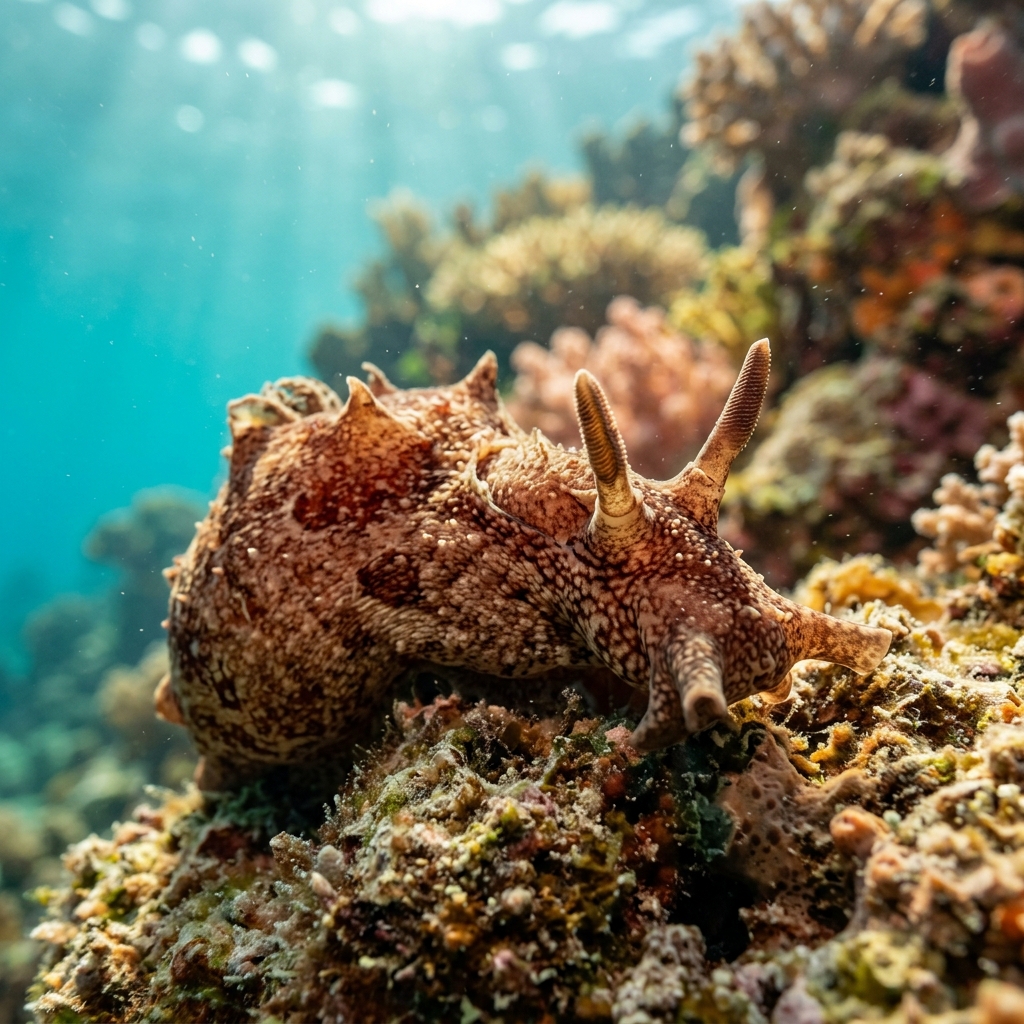
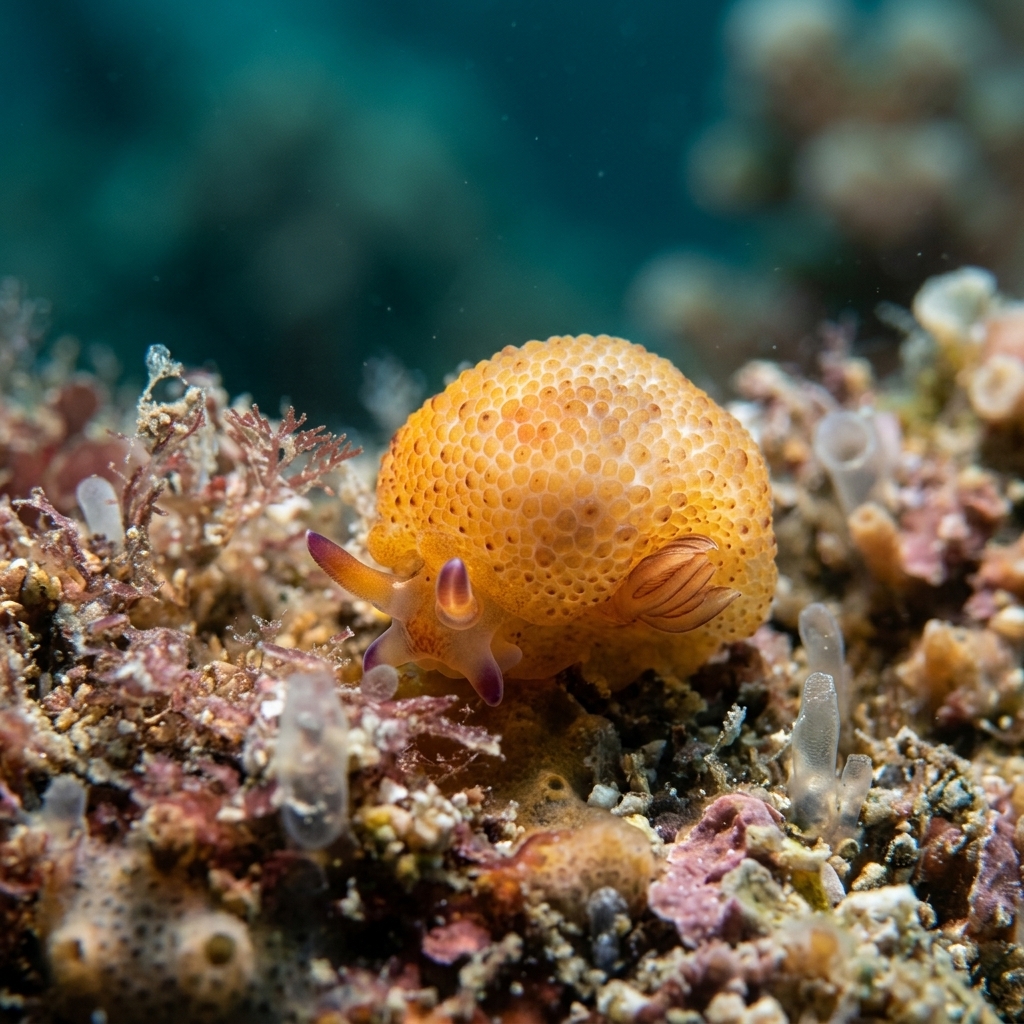
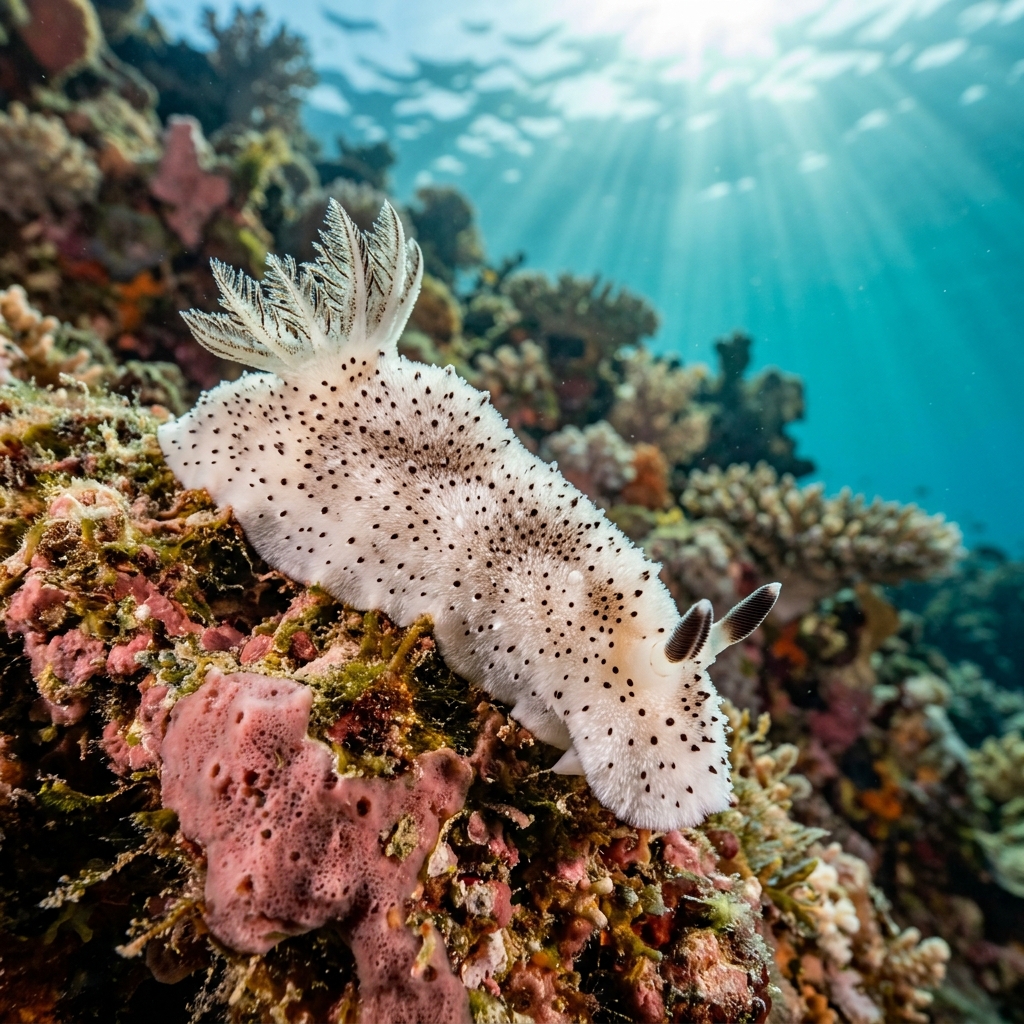
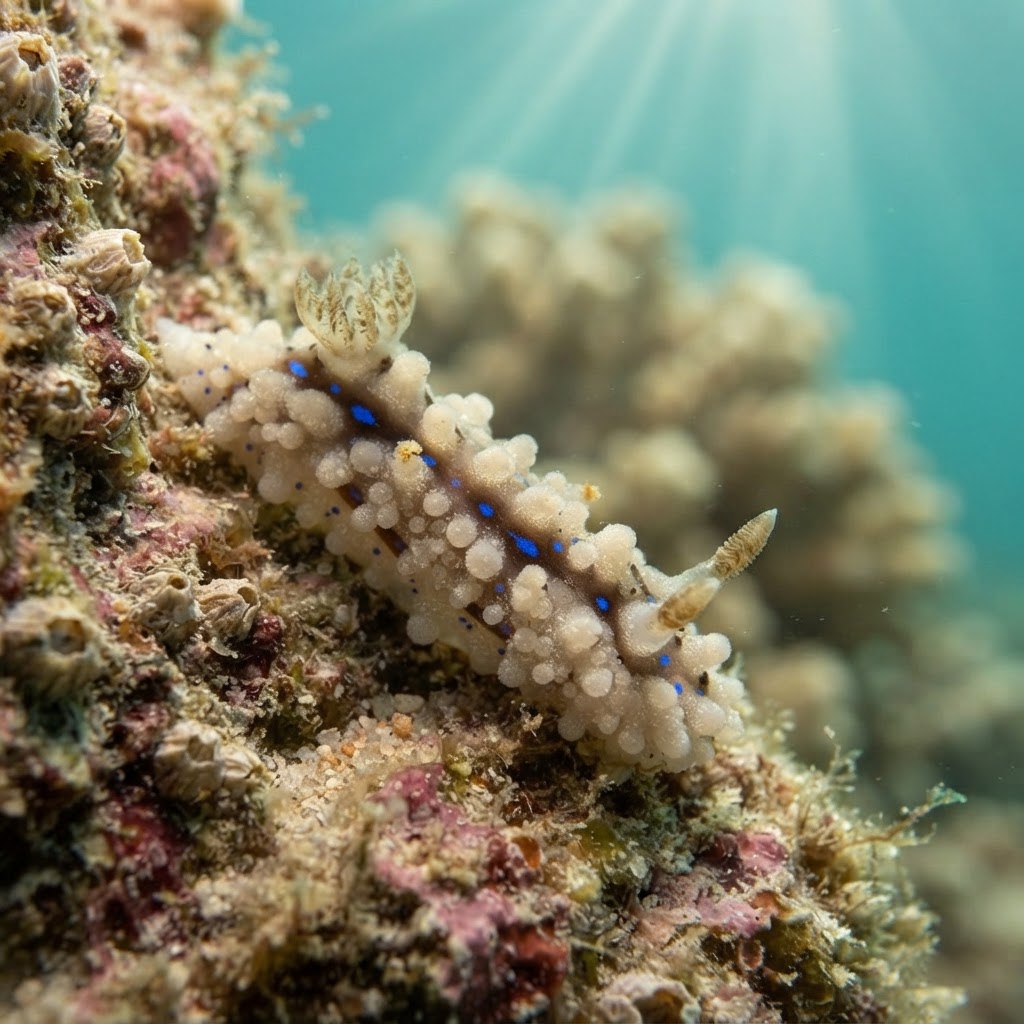
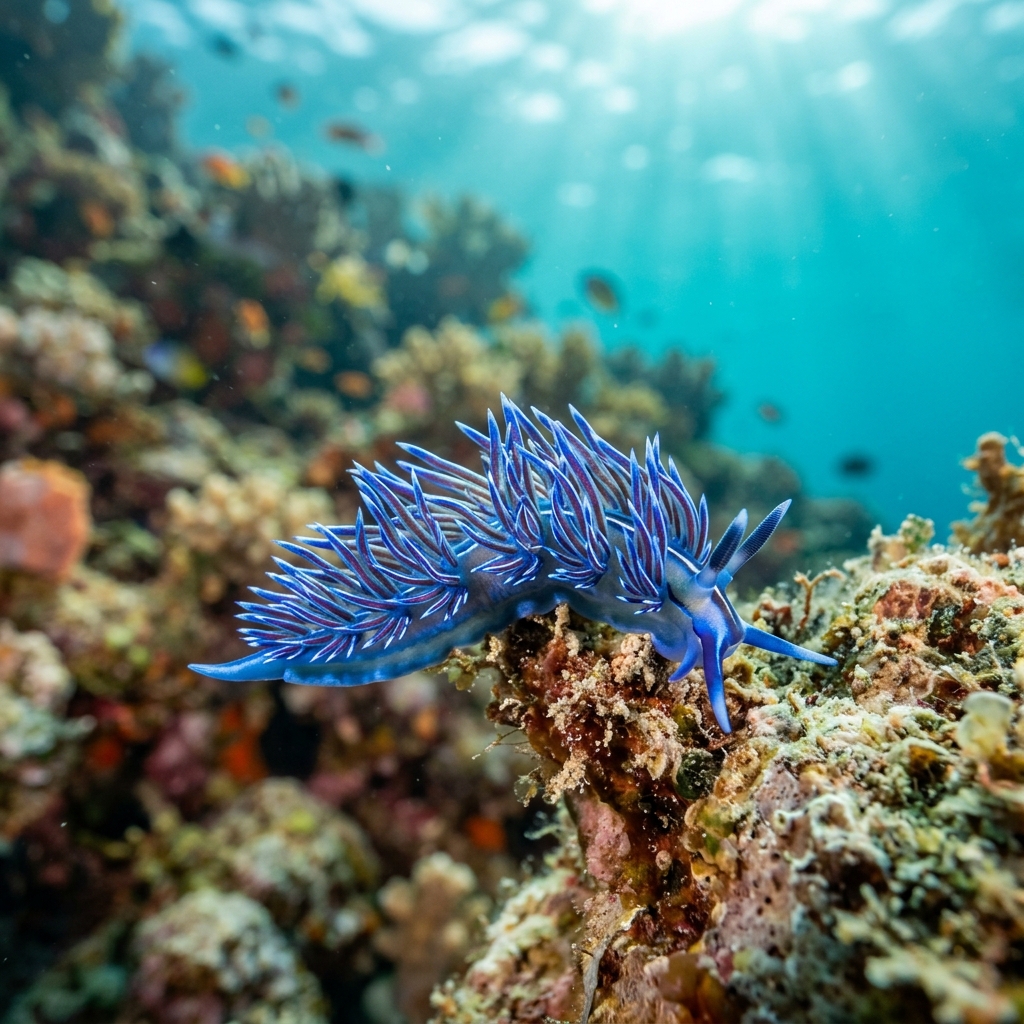
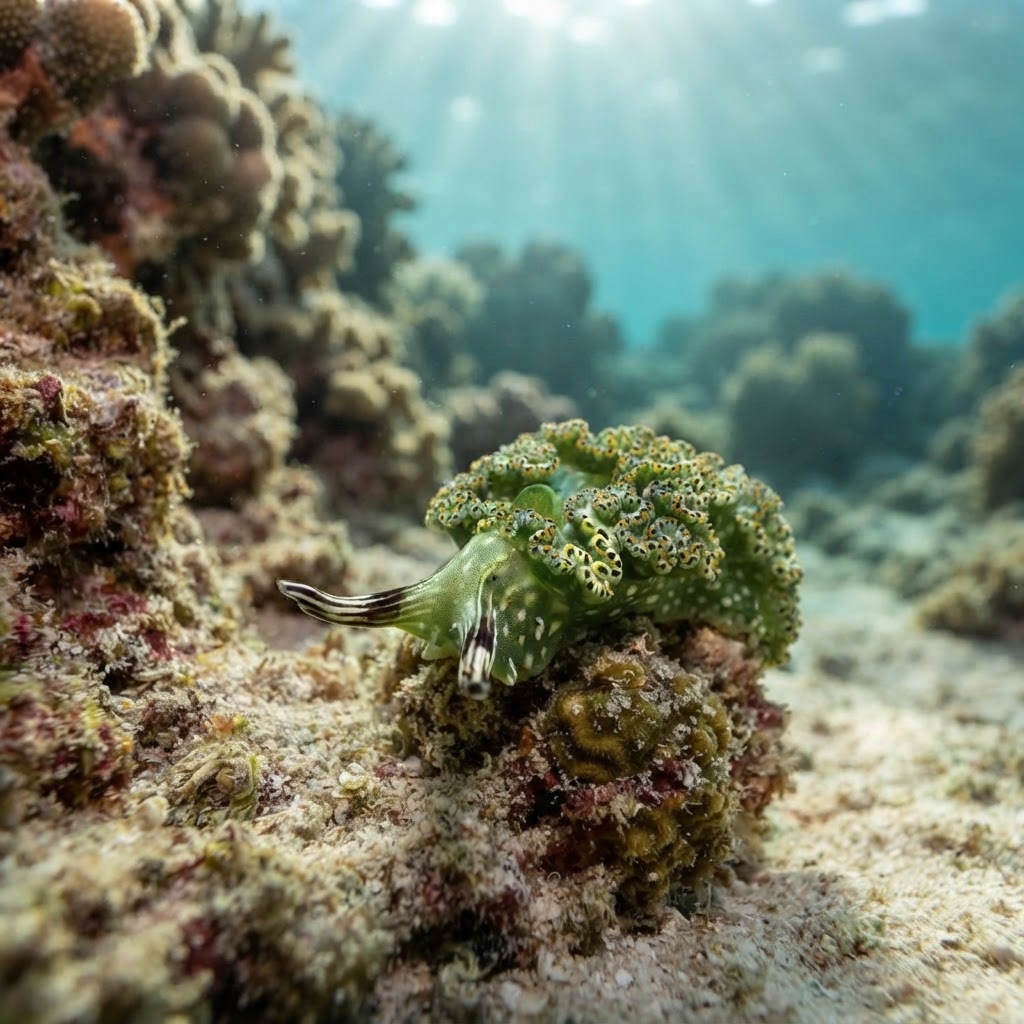
Grows to around 7cm, with a soft, ruffled body whose folded side flaps (parapodia) give it a frilled, almost dancing look as it moves. Base colour is typically a warm orange to brown, with fine blue or turquoise lines tracing the edges of the parapodia and rhinophores (the small paired sensory horns on the head). It moves slowly and openly over rock and rubble rather than hiding, so once you spot the colour contrast it is hard to mistake for background reef.
Divers usually find it grazing slowly across rock, rubble or algae-covered surfaces in daylight, moving at its own unhurried pace regardless of who is watching. It does not flee or hide when approached, making it an easy subject for close-up photos if you keep your fins clear of the substrate. Most logs describe it as uncommon rather than abundant, so a sighting is a matter of scanning likely surfaces carefully rather than expecting one on every dive.
Like other sap-sucking sea slugs in its family, it feeds on algae and can retain the algae's chloroplasts in its own tissue for a time, effectively running on borrowed photosynthesis alongside its normal feeding.
Sightings show no clear season, and with a comfortable range of roughly 23 to 30C it is present on these Pacific coast reefs year-round. Plan around good conditions at your chosen site rather than a particular month.
Most reliably logged in Mexico, especially Baja California and the Pacific Coast, and in Costa Rica's Guanacaste and Central Pacific regions. Smaller but consistent numbers turn up along Ecuador's Pacific Coast and at Colombia's Gorgona Island, so this is very much an eastern Pacific species.
Mapping where Mexican Dancer is logged…
Best chances are along Mexico's Baja California and Pacific Coast, and in Costa Rica's Guanacaste and Central Pacific regions. It also turns up in smaller numbers on Ecuador's Pacific Coast and at Gorgona in Colombia.
There is no strong season in the data, and it tolerates a wide warm-water range of about 23 to 30C, so it is seen year-round on eastern Pacific reefs rather than during a specific month.
Look for a small, roughly 7cm slug with ruffled orange to brown parapodia edged in blue or turquoise lines, moving slowly and openly over rock or rubble rather than staying hidden.
They typically reach around 7cm in length, making them a small but reasonably visible find once you know their colour pattern.
No, they pose no danger to divers and can be observed and photographed closely without any risk.
They belong to a family of sap-sucking slugs known for taking in chloroplasts from the algae they eat and keeping them functional in their own tissue for a while, a trick called kleptoplasty.
Site and sighting data is aggregated from diver logs, iNaturalist and GBIF. For taxonomy and conservation status:
Light-spotted Aegires
3,168 sites