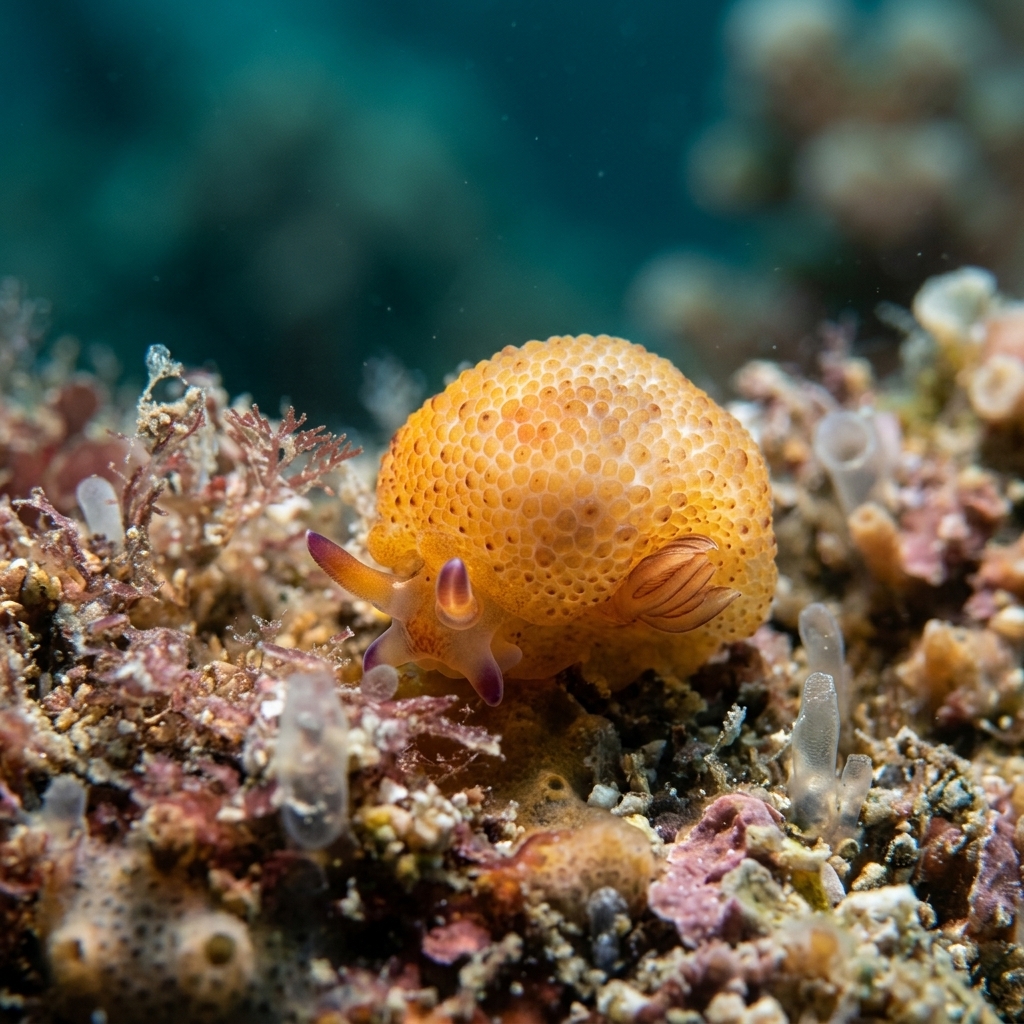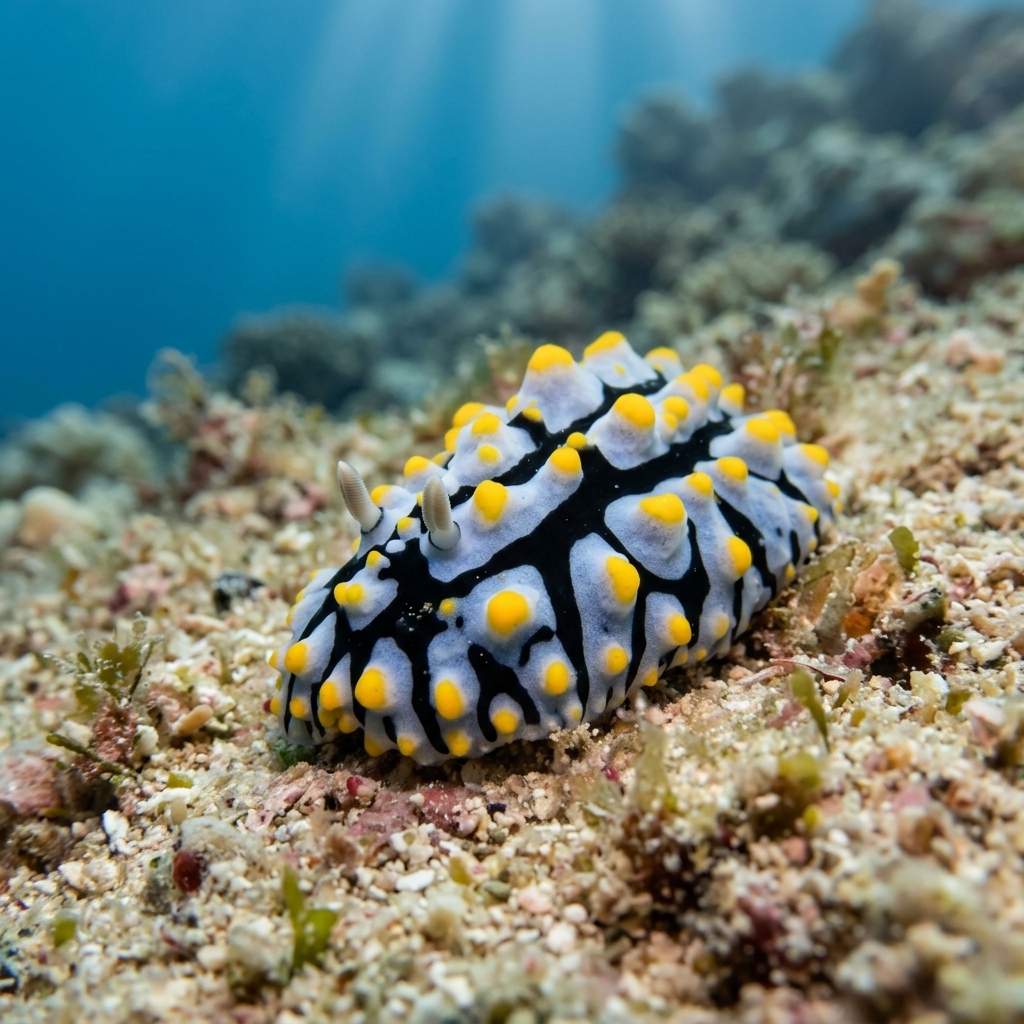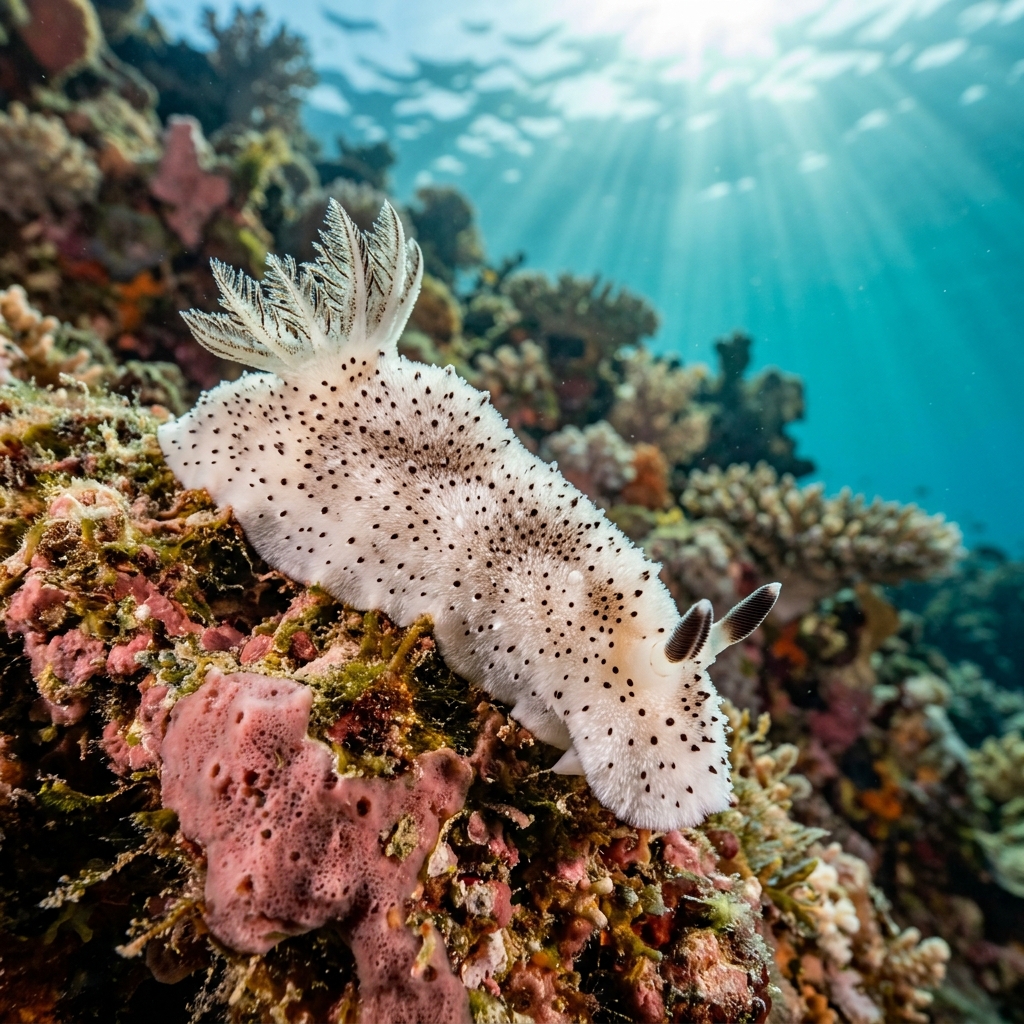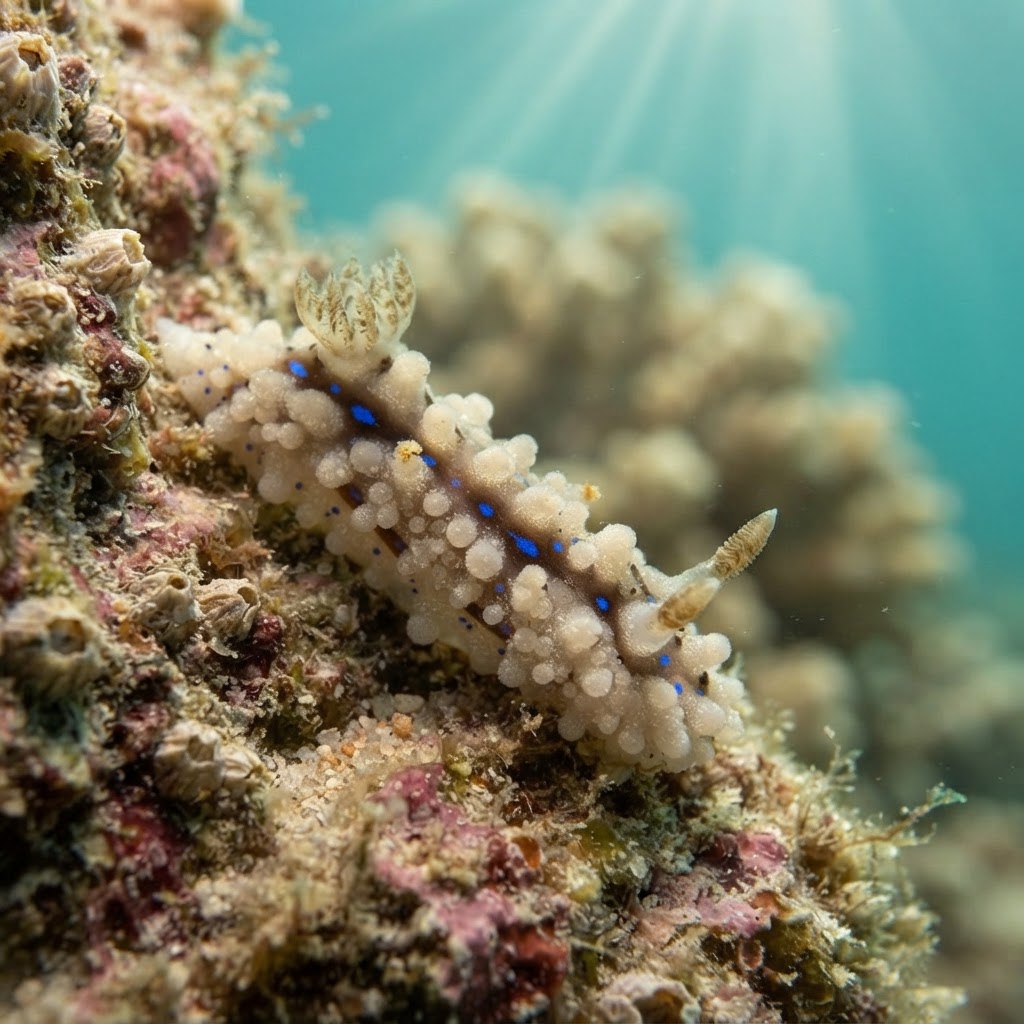
Melibe viridis
Spot Giant Monkdragon in Sharm el Sheikh, the Koh Rong Archipelago, and the Philippines. Sightings peak Mar, Apr in warm 24-29 °C waters.
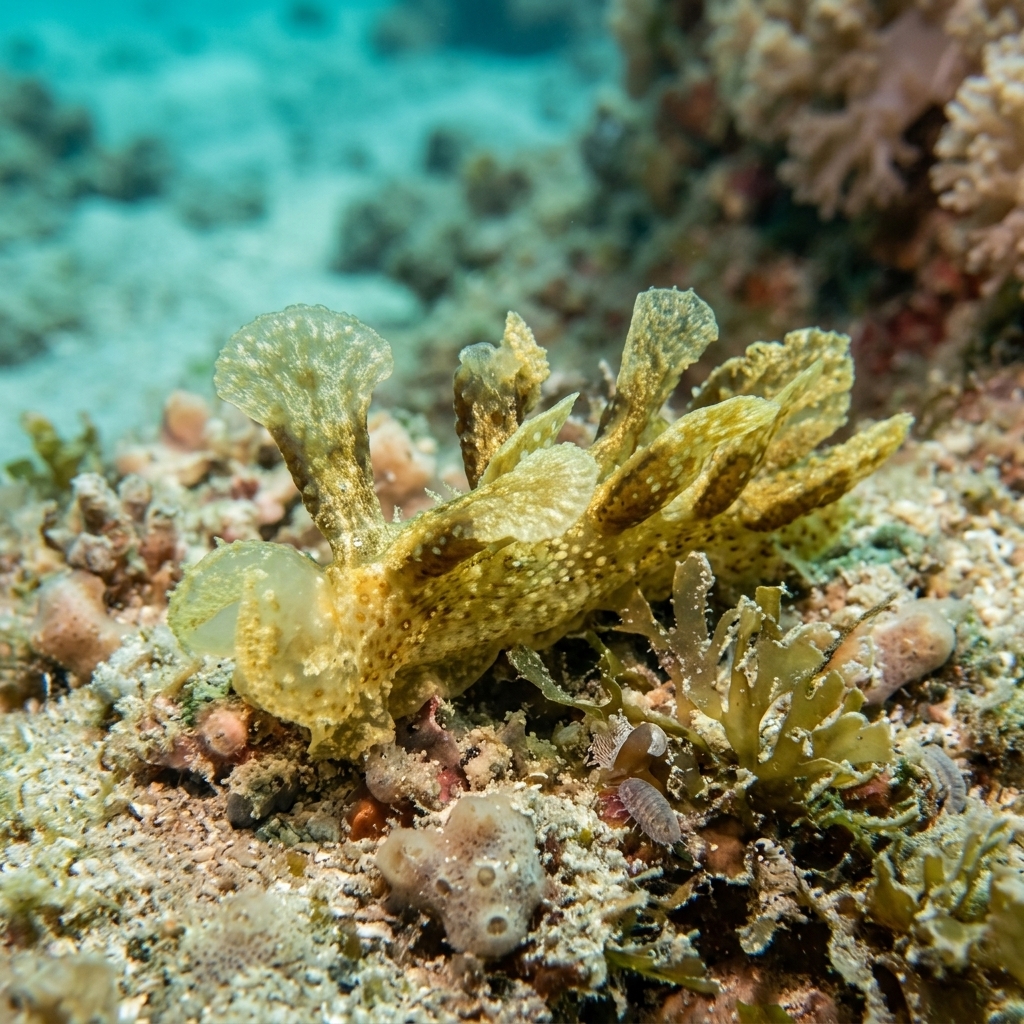
Melibe viridis belongs to a group of nudibranchs known for an enlarged, hood-like oral veil at the front of the body, which it uses to trap prey rather than rasp at surfaces. Underwater it appears translucent to pale green, with tall, finger-like cerata (gill-like projections) lining the back that give it a dragon or sea-plant silhouette. That distinctive oral hood, held open and fanning slowly through the water, is the single most reliable field mark and is unlike anything else on the reef.
Divers usually encounter this nudibranch moving slowly across rubble, sandy patches, or algae-covered substrate, holding its oral hood partially open as it hunts small crustaceans. It tends to ignore divers entirely and continues feeding even when approached closely, making it a cooperative subject. Look carefully in areas with mixed algae and rubble rather than on hard coral itself.
Unlike most nudibranchs that use a toothed radula to scrape food, the giant monkdragon actively captures prey by expanding its large oral hood like a net over small crustaceans, a feeding strategy almost unique among sea slugs.
Northern Hemisphere sightings concentrate in March and April, so timing a trip to Sharm el Sheikh, the Philippines, or Cambodia around those months gives the best odds. The species' observed temperature range of 24 to 29 °C points to warm tropical and subtropical reef systems as its core habitat.
Most sightings come from Sharm el Sheikh in Egypt, the Koh Rong Archipelago in Cambodia, and across Luzon and the Visayas in the Philippines, making these three areas the most reliable places to look. Indonesia, particularly Sulawesi, also produces consistent records, and a cluster of sightings exists in Halkidiki, Greece, suggesting a broader range than many divers expect.
Mapping where Giant Monkdragon is logged…
The strongest concentrations of diver sightings come from Sharm el Sheikh in Egypt, the Koh Rong Archipelago in Cambodia, and the Philippine islands of Luzon and the Visayas. Sulawesi in Indonesia and Halkidiki in Greece also produce reliable records.
Based on logged sightings, March and April are the peak months in Northern Hemisphere locations such as Egypt, Cambodia, and the Philippines. Diving in warm water between 24 and 29 °C gives you the best environmental match for finding one.
Look for a pale, translucent green nudibranch with a row of tall, feathery cerata along its back and, most distinctively, a large flared hood at its front end held open like a funnel. That oral hood is unique among nudibranchs and makes identification straightforward once you know what you are looking at.
It is uncommon to rare at most sites where it has been recorded. You are unlikely to see one on every dive, so it is worth asking local dive guides who know specific cleaning stations or algae patches where individuals have been spotted before.
Site and sighting data is aggregated from diver logs, iNaturalist and GBIF. For taxonomy and conservation status:
Nudibranch
3,168 sites