Melibe coralophilia
An uncommon coral-dwelling nudibranch logged across Luzon reef sites in the Philippines, in warm 25-31°C water year-round.
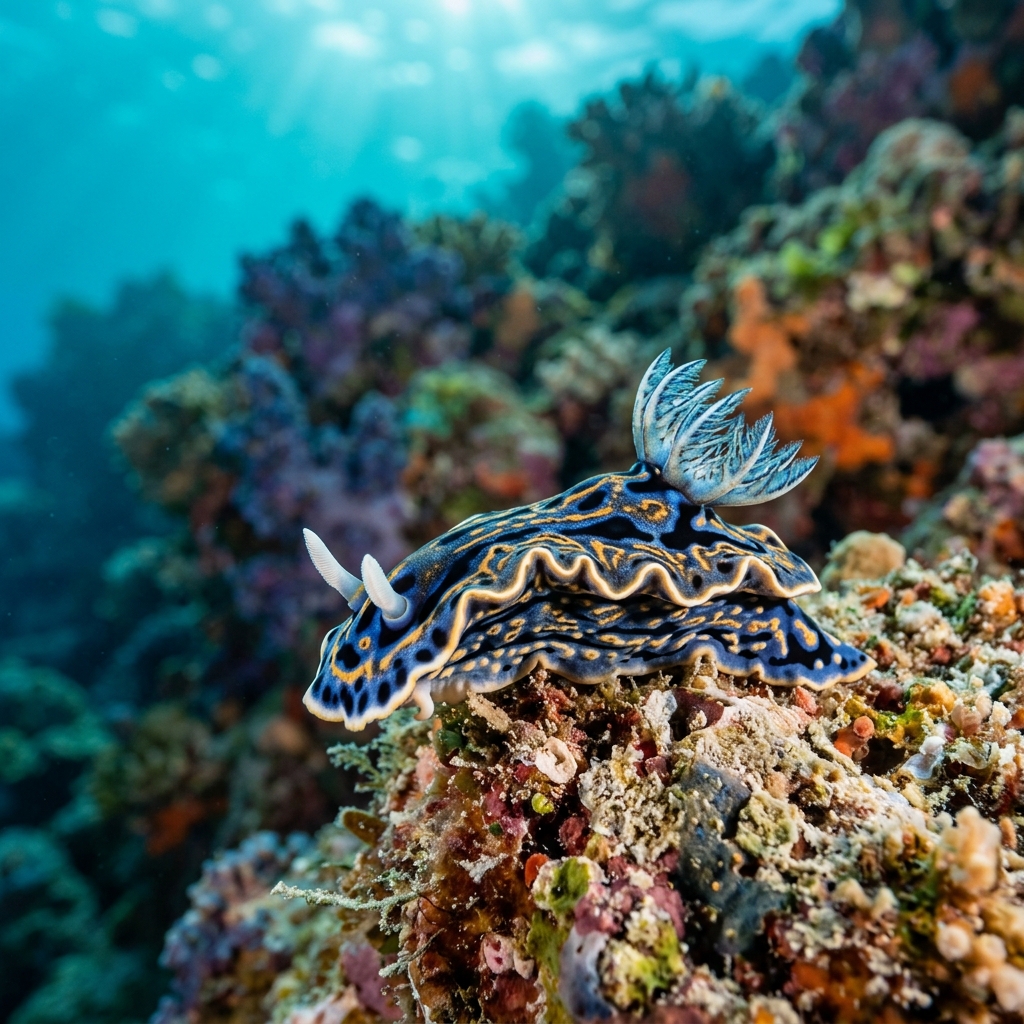
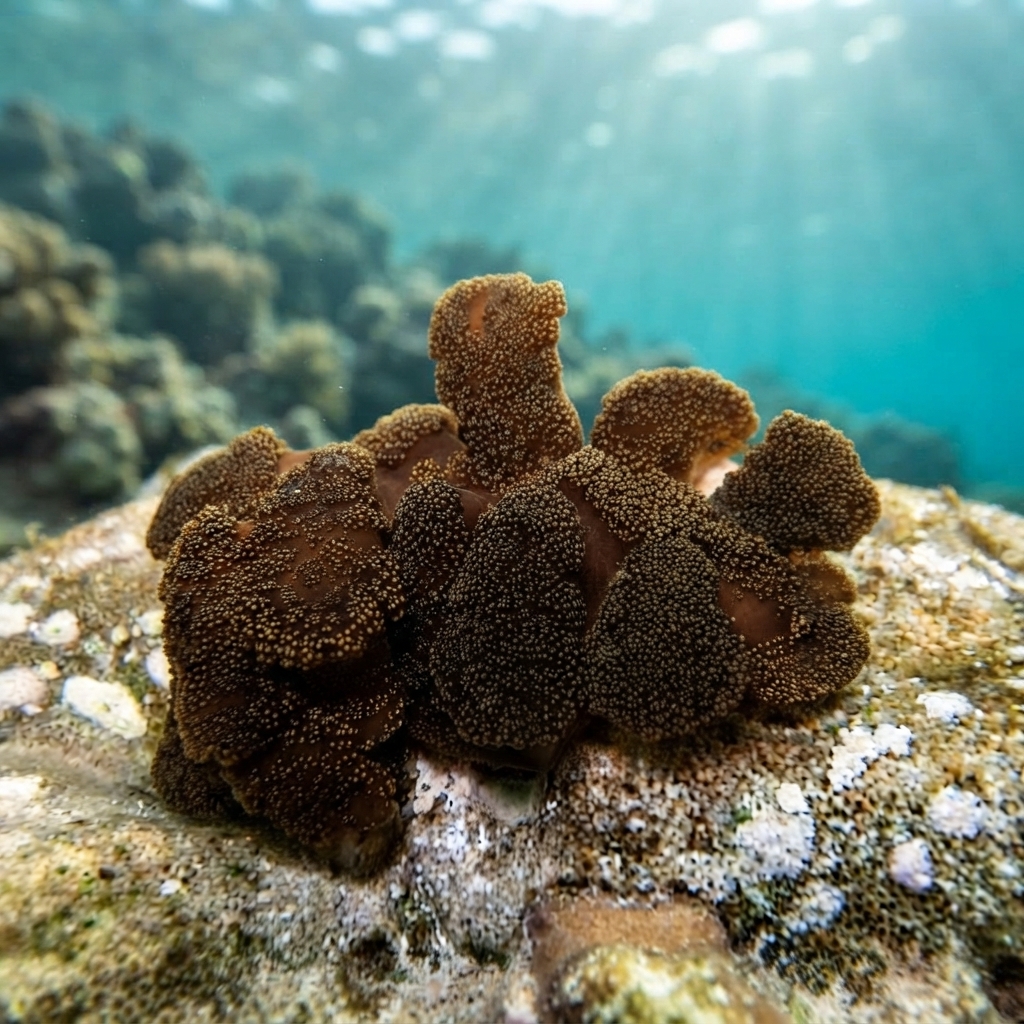
Look for a translucent, almost gelatinous body topped with a large expandable oral hood used like a net rather than a mouth for biting. The skin carries scattered soft, finger-like projections (cerata) along the back that help it blend against coral branches. Its shape is unmistakable once you spot the hood, which sets it apart from the flatter, brightly patterned dorid nudibranchs divers usually photograph on the same reefs.
Divers find it perched on or near coral branches, where its oral hood does the work: it flares the hood open and snaps it shut over passing plankton and small crustaceans rather than grazing like most nudibranchs. It moves slowly and stays put when approached, so patience and a careful eye on coral structure are more useful than speed. Sightings logged so far have all been on daytime dives.
Unlike most nudibranchs, which graze sponges or algae, Melibe species catch prey by ambush, expanding that oral hood into a temporary trap and closing it over anything unlucky enough to drift inside.
No clear seasonal pattern shows up in the data, and its temperature niche of 25.2 to 31.2°C spans the whole year on Luzon's reefs, so it is realistically a year-round find rather than a seasonal one.
This one is a Philippines specialty, with every logged sighting so far coming from sites in Luzon. If you are diving the reefs around Luzon and keep an eye on coral heads rather than open sand, this is the region to search.
Mapping where Melibe Coralophilia is logged…
All confirmed sightings come from dive sites in Luzon, Philippines. It has not yet been logged in other regions, so Luzon is currently the place to look for it.
There is no detected seasonal pattern, and its comfortable range of 25.2 to 31.2°C matches Luzon's reef temperatures year-round, so it can turn up on any dive.
Look for a translucent, gelatinous body with soft finger-like projections along the back and a distinctive large oral hood at the front, used to trap small prey rather than to bite.
No. It poses no risk to divers and has no defensive sting or bite worth noting; it simply sits on coral catching plankton.
Most nudibranchs graze sponges or algae, but this species feeds by flaring an expandable oral hood and snapping it shut over passing plankton and tiny crustaceans, more like a trap than a mouth.
Site and sighting data is aggregated from diver logs, iNaturalist and GBIF. For taxonomy and conservation status:
Blue Dragon
3,163 sites