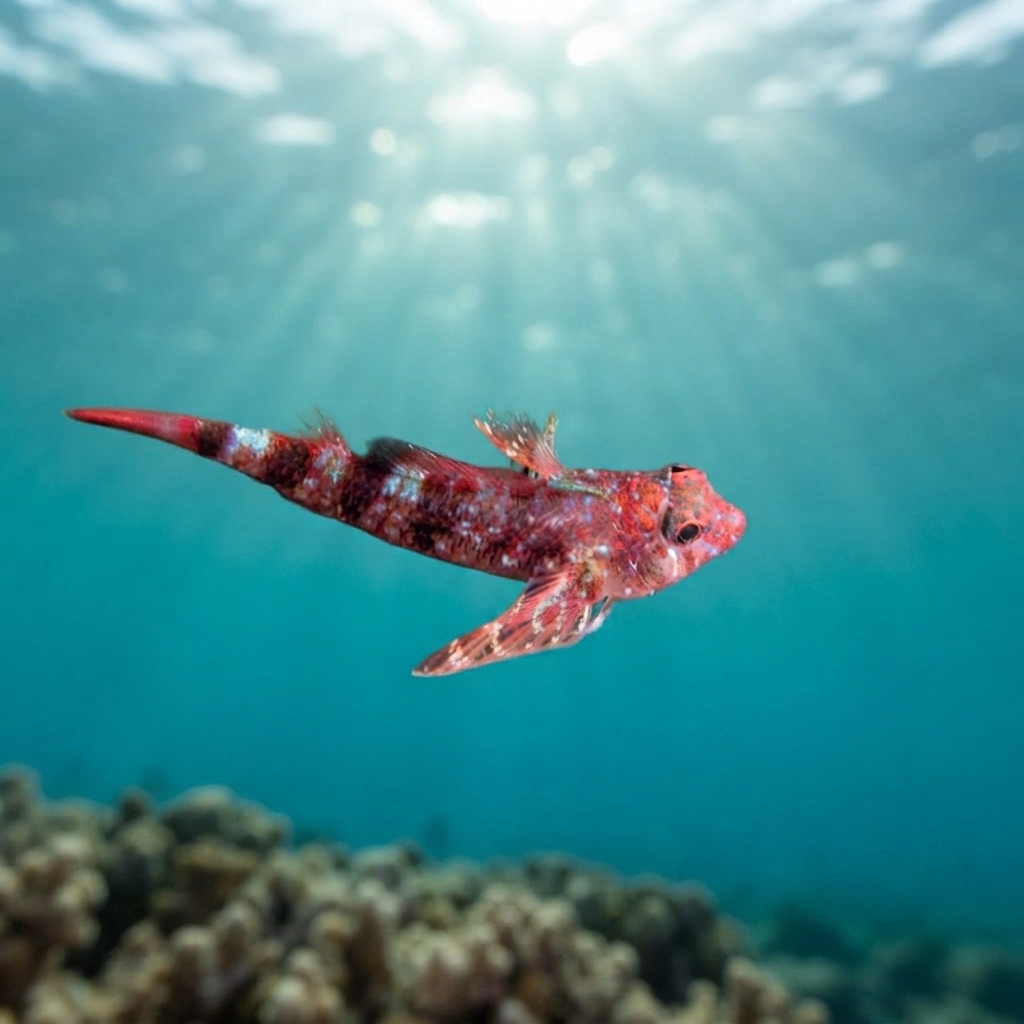
Enneanectes matador
A pinhead-sized fish logged in Saint John and Tent Reef, Saba, best found by scanning rubble and rock crevices closely.
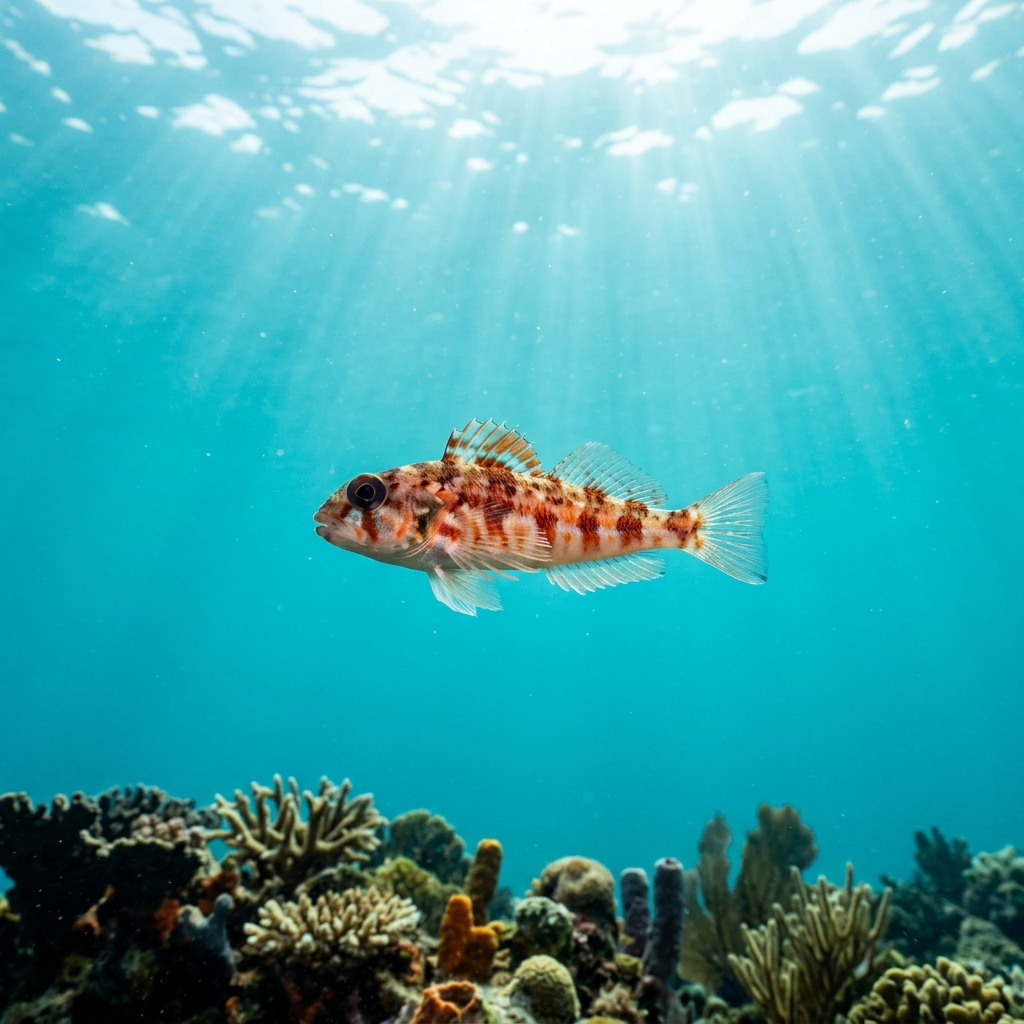
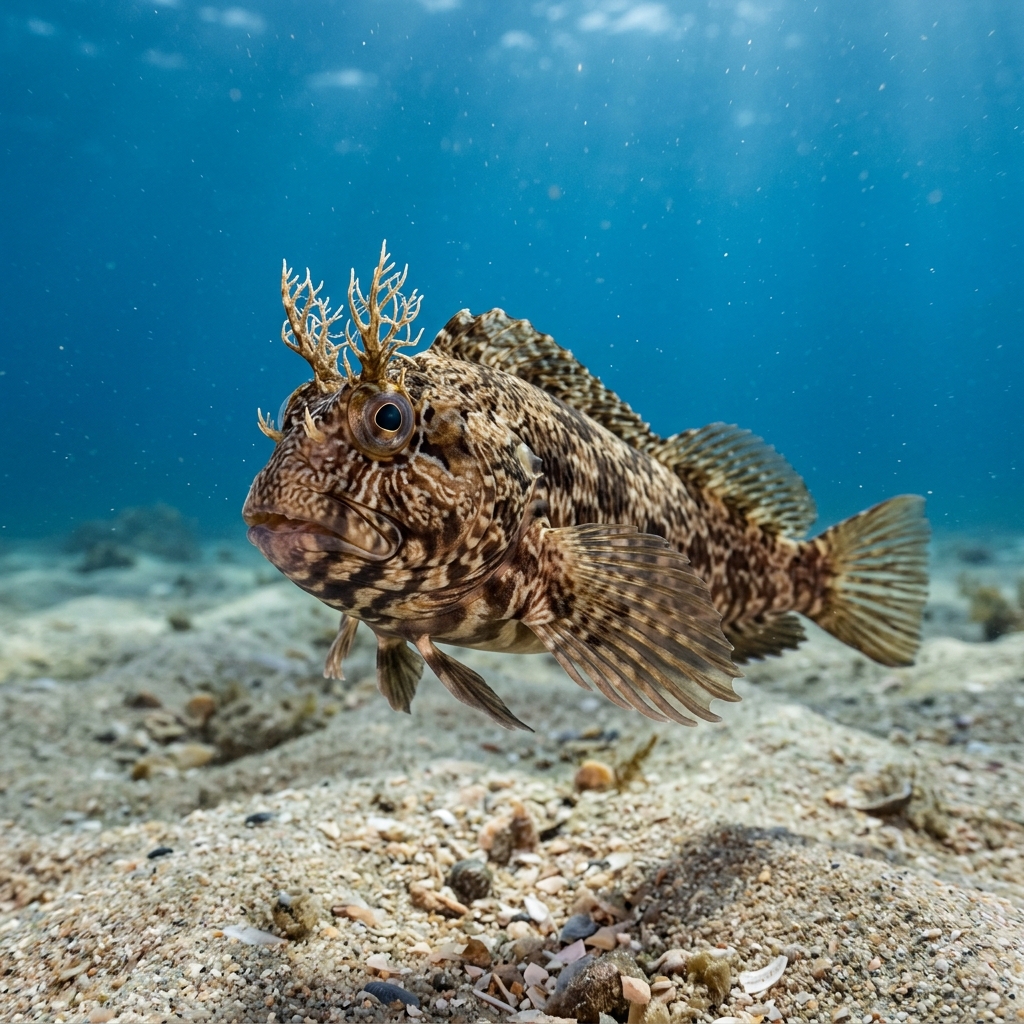
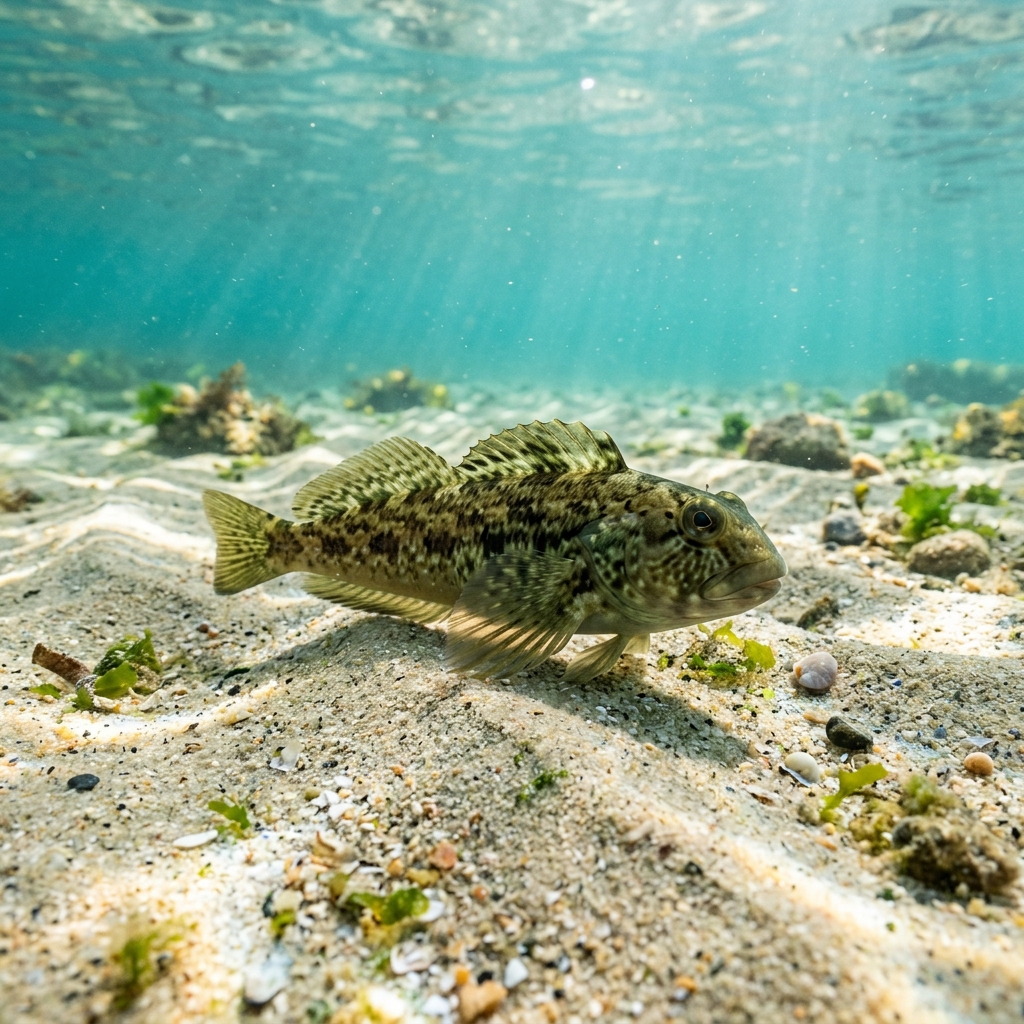
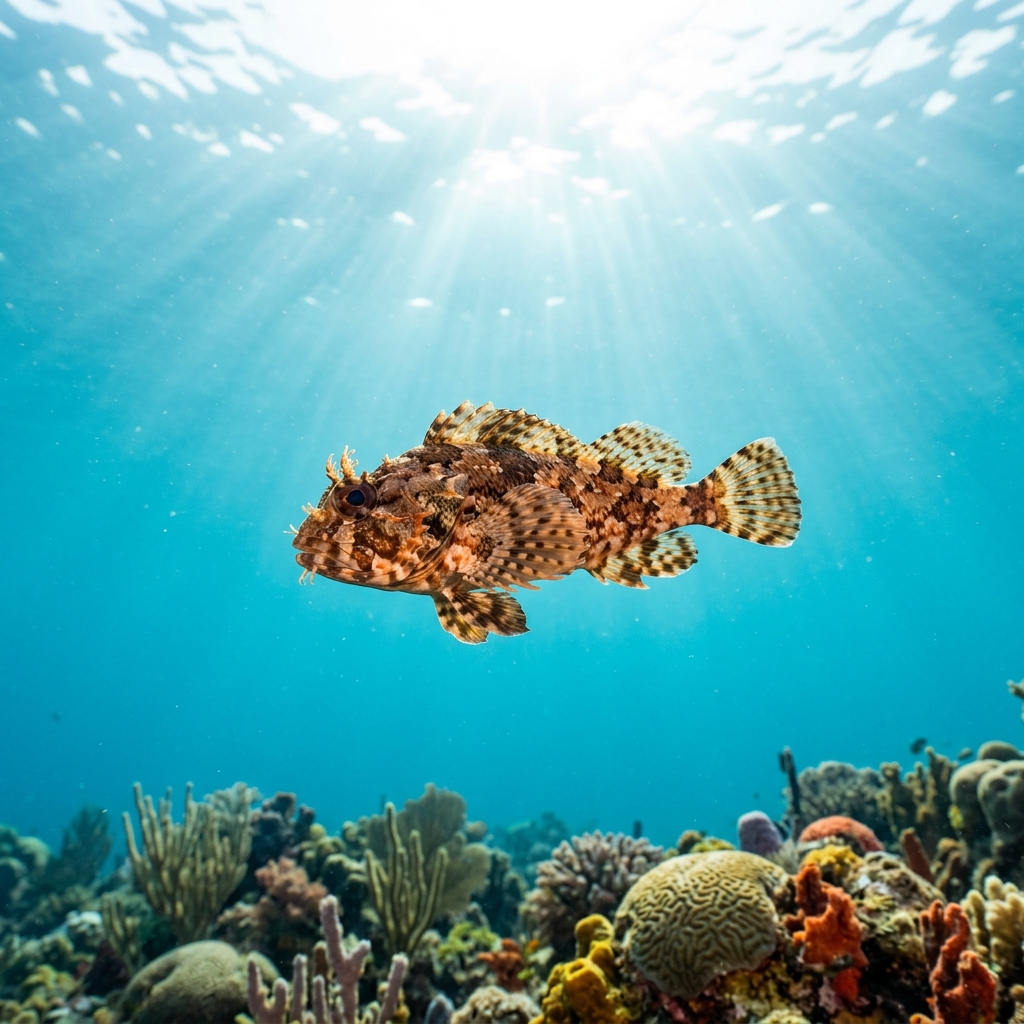
At about 1cm long, this fish is barely bigger than a fingernail, so most divers only spot it by scanning rock and rubble at close range rather than swimming past. It has a slim, tapered body in mottled brown and cream tones that blends into algae-covered substrate, with the three separate dorsal fins typical of triplefins forming a subtle stepped profile along its back. Look for it perched still on a rock face rather than swimming in open water.
This is a sit-and-wait fish, typically found perched motionless on bare rock or rubble rather than actively swimming, relying on its mottled colouring to stay unnoticed. Divers who do see one usually find it during slow, close-range searches of crevices and encrusted surfaces rather than mid-water. It shows little reaction to divers, mostly because it is easy to miss entirely rather than being particularly bold.
Triplefins in this genus are true micro-blennies, small enough that a magnifying lens or a macro-focused camera is often the only practical way to confirm an identification underwater.
No clear seasonal pattern shows up in the sighting data, and it turns up across a water-temperature range of roughly 24.6 to 30.6C, consistent with warm Caribbean reefs year-round. Plan around good visibility and calm conditions for macro spotting rather than a particular month.
Sightings cluster in the eastern Caribbean, with the strongest logs from Saint John and Saint Thomas in the US Virgin Islands and from Tent Reef in Saba. Across the ten known sites it is consistently rated uncommon, so finding one takes a deliberate close-focus search of rocky or rubble-strewn terrain rather than a casual reef scan.
Mapping where Matador Triplefin is logged…
It has been logged most often in the US Virgin Islands, particularly around Saint John and Saint Thomas, and at Tent Reef in Saba. All known sightings so far come from these eastern Caribbean locations.
There is no strong seasonal pattern in the sighting data, and it is found across a broad warm-water range of about 24.6 to 30.6C, so it can turn up on Caribbean reefs at any time of year.
Look for a mottled brown and cream fish barely a centimetre long, perched motionless on rock or rubble rather than swimming. Its three separate dorsal fins give it a subtly stepped back profile typical of triplefins.
They are tiny, reaching only about 1cm in length, making them one of the smallest fish a diver is likely to try to spot on a Caribbean reef.
No. They pose no risk to divers and are far too small and reef-bound to interact with people beyond being photographed at close range.
Site and sighting data is aggregated from diver logs, iNaturalist and GBIF. For taxonomy and conservation status:
Rusty Blenny
2,605 sites