Marionia blainvillea
An uncommon nudibranch of the Bay of Biscay, Lisbon Coast and Cantabria, turning up year-round in cool 14-20C water.
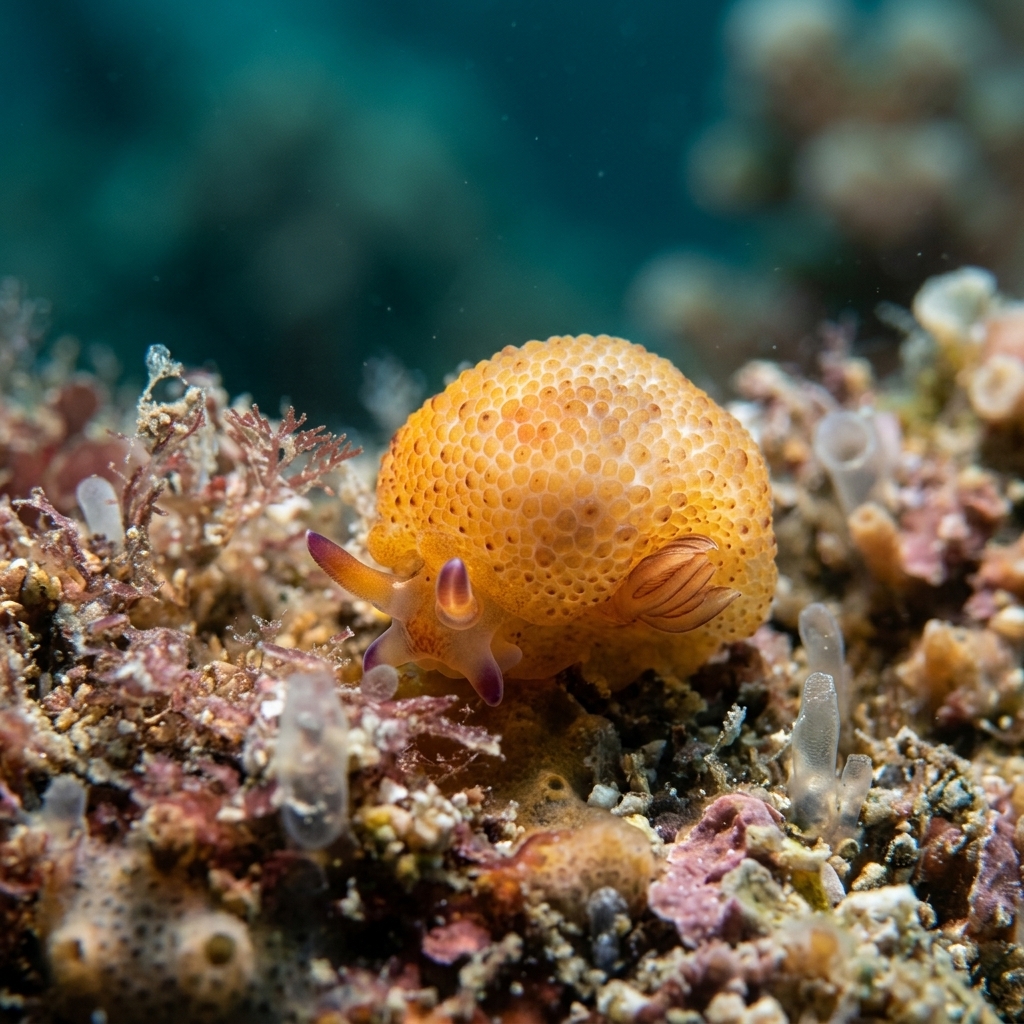
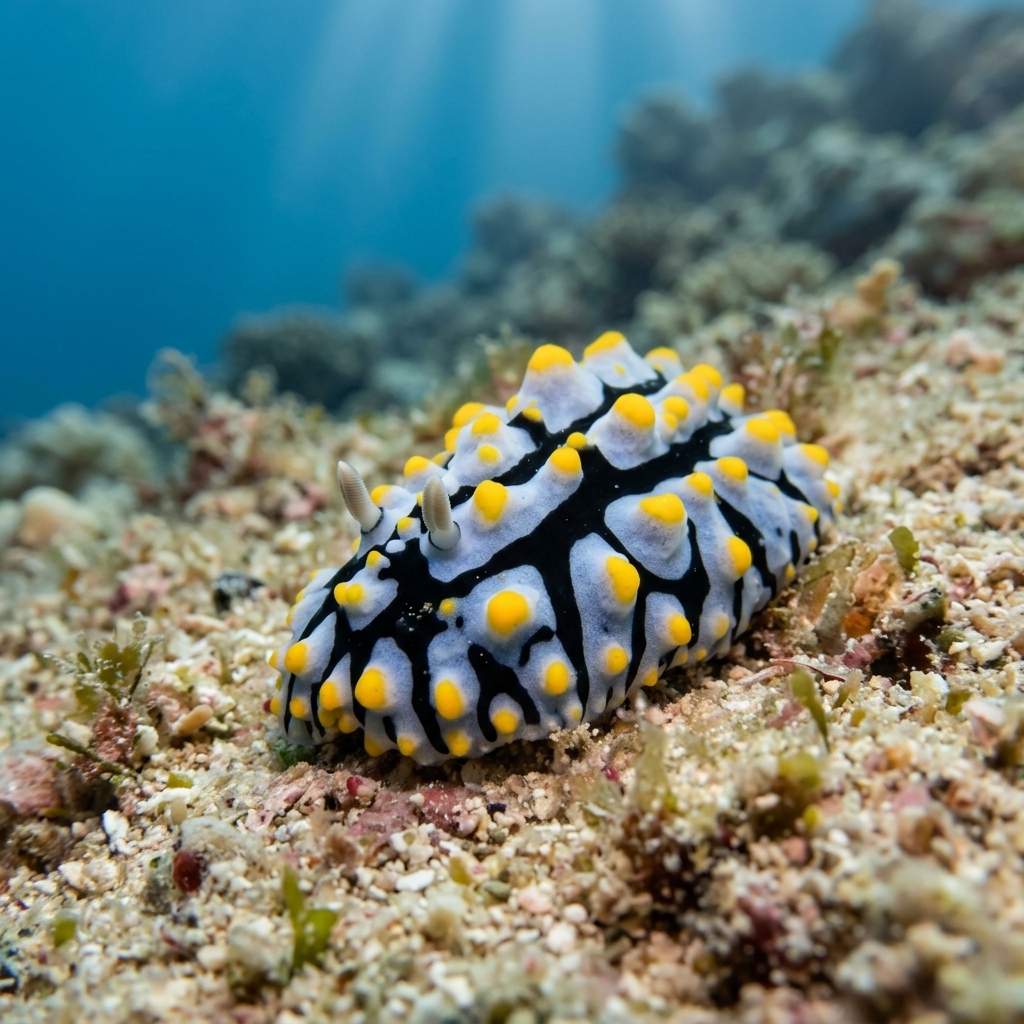
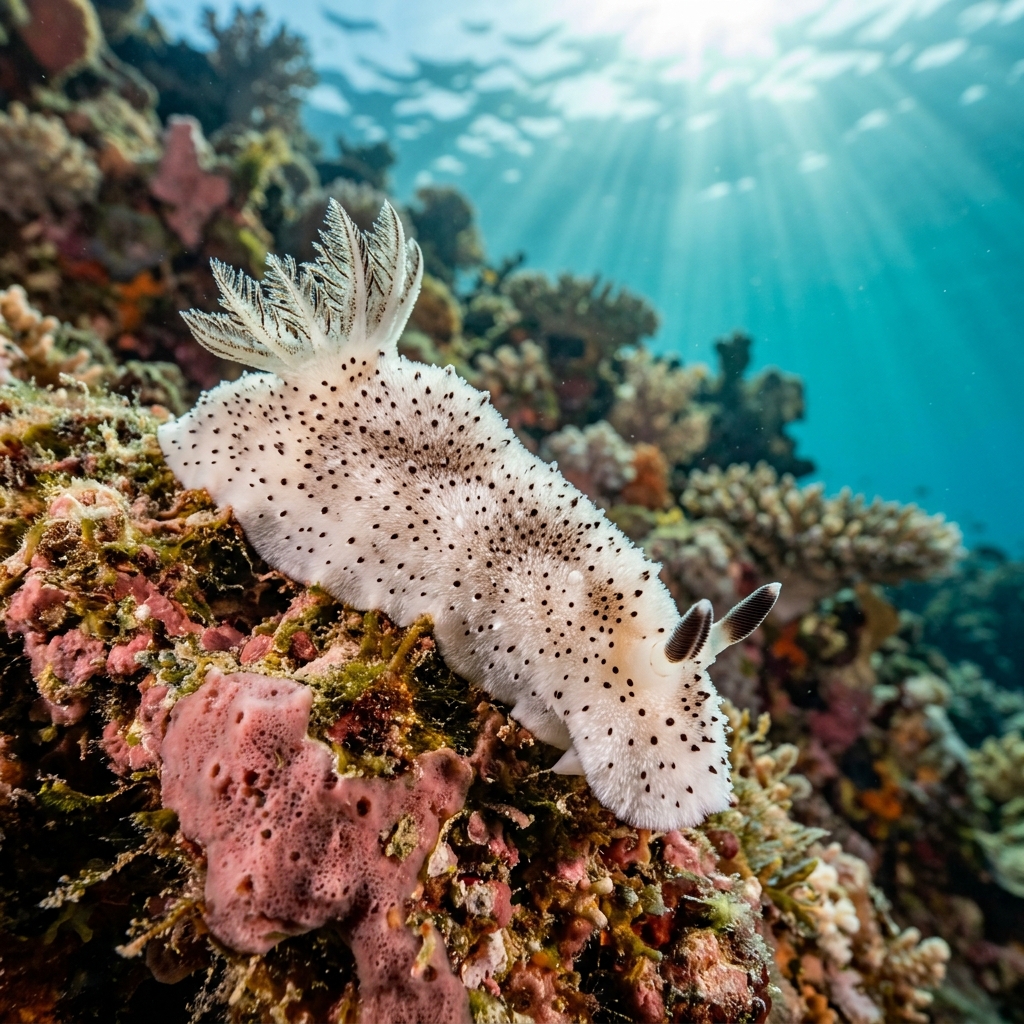
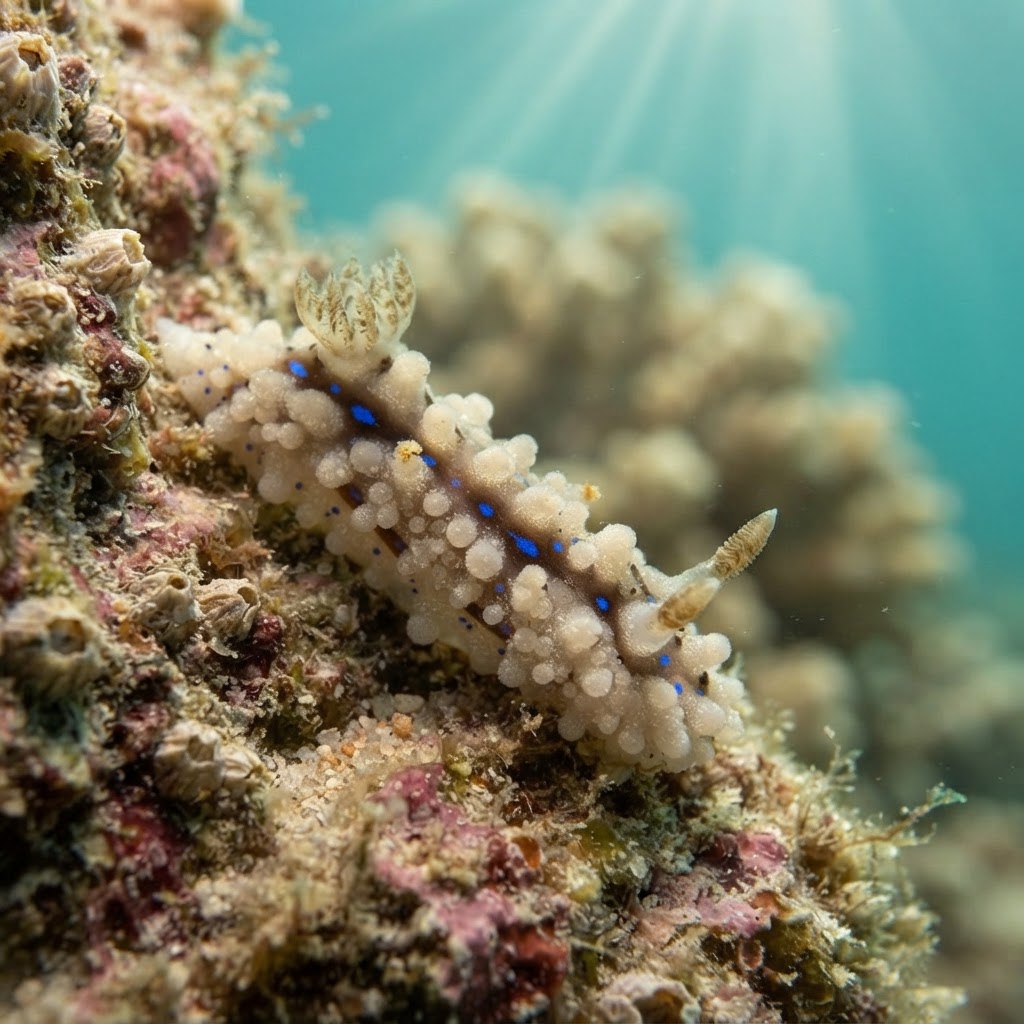
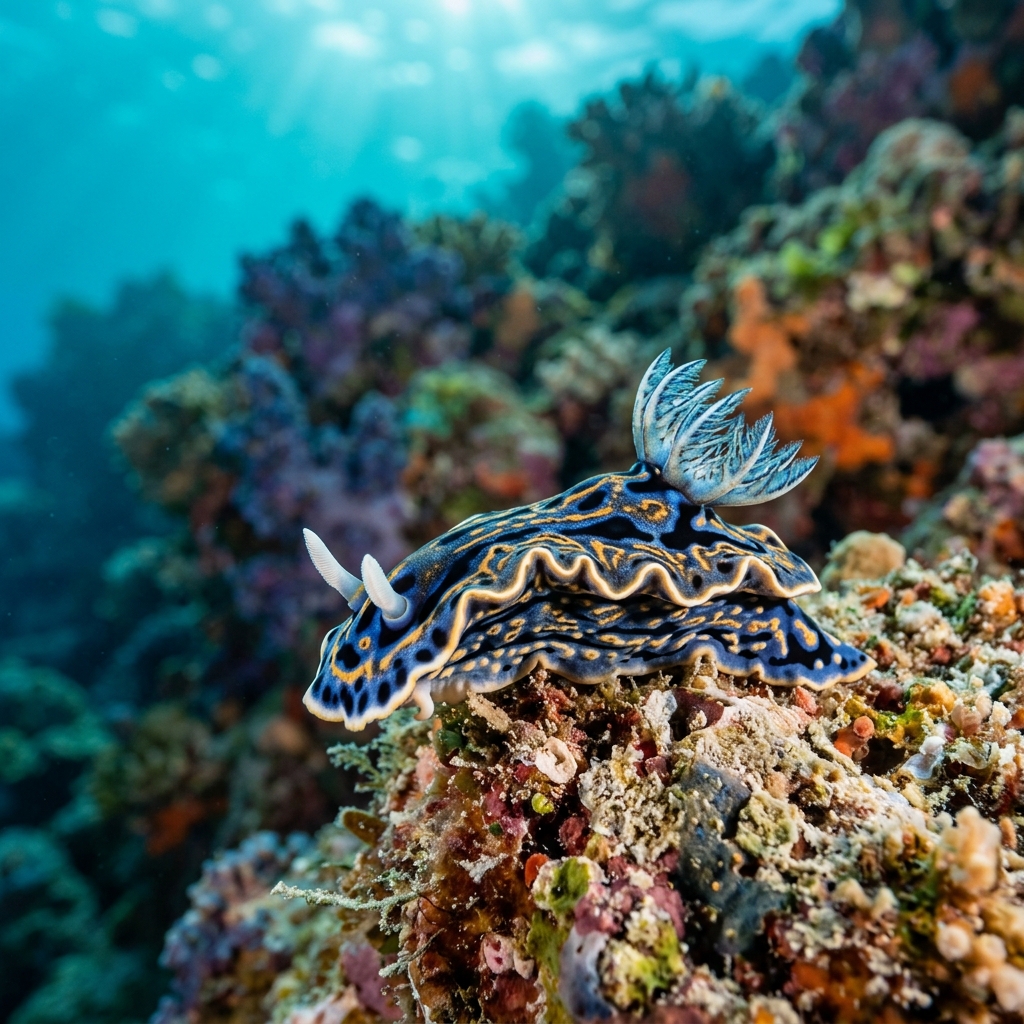
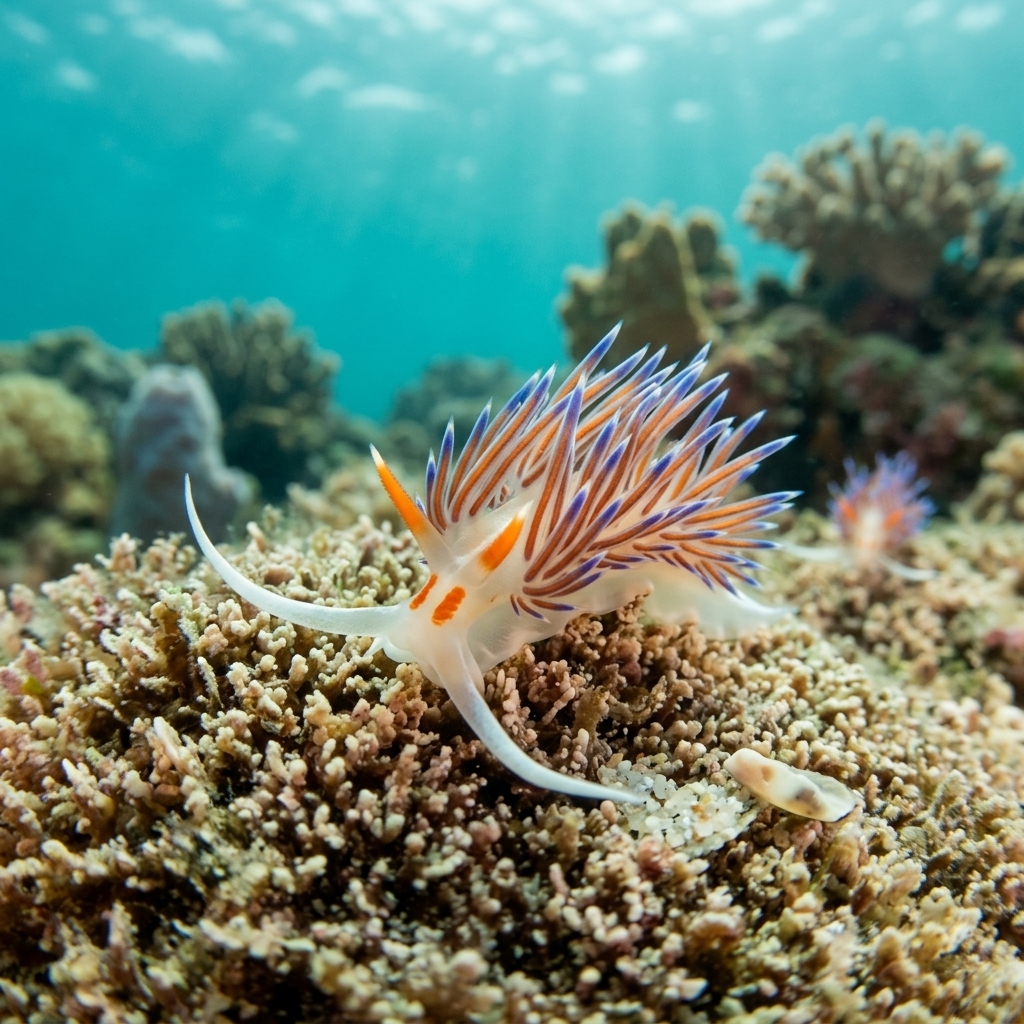
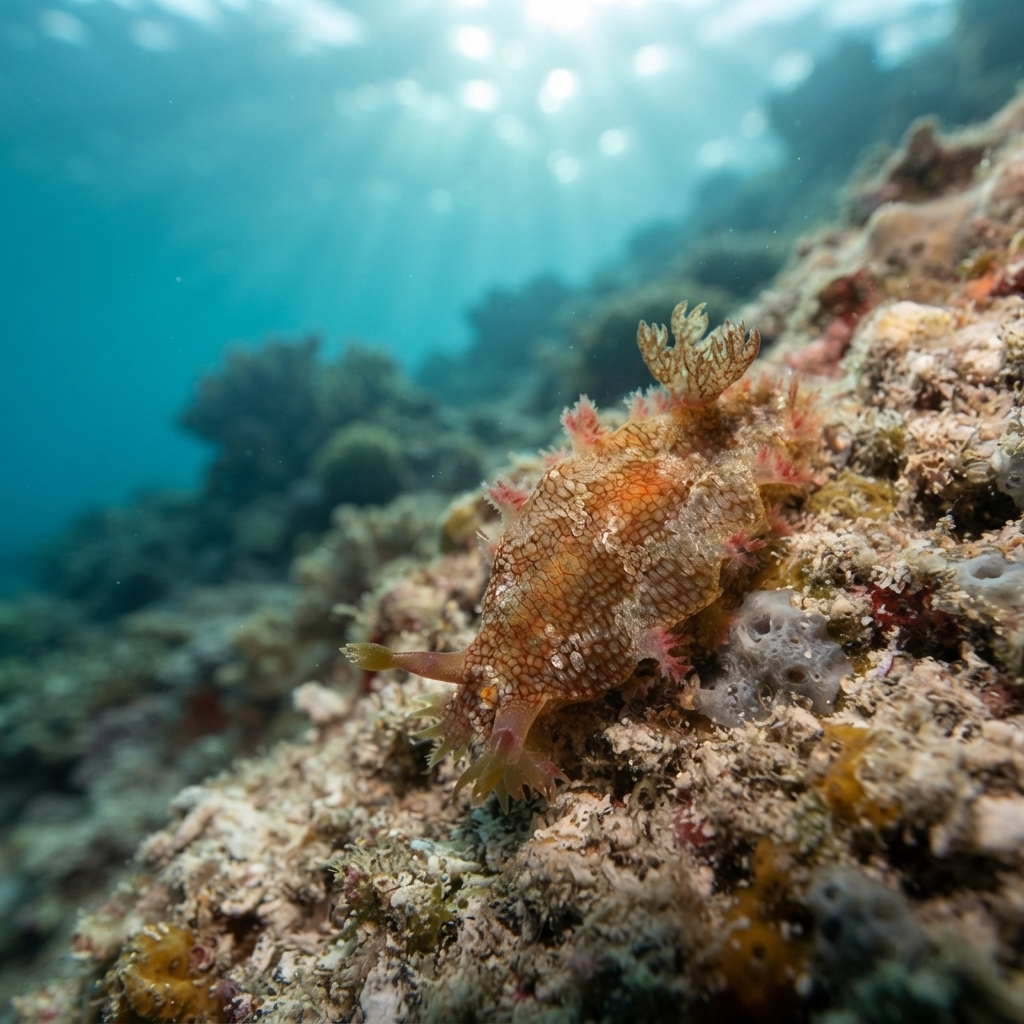
A soft-bodied sea slug with a translucent, brownish to grey body, usually a few centimetres long, marked by tufted branching gills (rhinophores and dorsal papillae) along its back that give it a slightly frilly, textured outline. Look for the paired rhinophores at the front of the body, sitting up like small stalked antennae, and a body shape that tapers gently toward the tail. It moves slowly across rock and rubble rather than swimming, so it is usually spotted stationary or inching along a wall.
Divers typically find it moving slowly over rock, rubble or algae-covered surfaces, grazing rather than reacting to a torch or camera. It shows no defensive display and will simply continue its slow crawl if approached carefully, making it an easy subject for close-focus photography. Most logs describe single individuals rather than groups, in keeping with its uncommon-to-rare status at most sites.
Like other tritoniid nudibranchs, it likely feeds on soft corals or gorgonians, using its gills to breathe directly through its exposed skin rather than internal structures.
Sightings do not show a clear seasonal pattern, so treat this as a year-round find within its cool-water range of roughly 14.2 to 20.2C. Cooler months may bring water temperatures closer to the lower end of that range, but there is no strong evidence of a peak season.
This is a Bay of Biscay speciality, most consistently logged along the French coast there, with additional sightings on Portugal's Lisbon Coast and Spain's Cantabrian Coast. Smaller numbers turn up in Catalonia and Occitanie, so divers working the Atlantic and northwestern Mediterranean coasts of France, Portugal and Spain have the best shot at it.
Mapping where Marionia is logged…
It is most reliably logged in France's Bay of Biscay, with further sightings on Portugal's Lisbon Coast and Spain's Cantabrian Coast and Catalonia. These cooler Atlantic and northwestern Mediterranean sites hold the strongest known populations.
There is no detected seasonal peak, so sightings happen across the year. It has been observed in water from about 14.2 to 20.2C, so it is present through the cooler and milder months alike.
Look for a translucent brownish to grey body a few centimetres long, with frilly branching gills along its back and a pair of stalked rhinophores up front. It moves slowly over rock and rubble rather than swimming.
Exact size data is not well documented for this species, but like most tritoniid nudibranchs it stays small, typically only a few centimetres in length when found on the reef.
No, it poses no danger to divers. It has no stinging cells or venom and simply crawls slowly across the substrate when observed.
As a member of the tritoniid nudibranch family, it most likely feeds on soft corals or gorgonians, breathing through exposed skin structures rather than gills hidden internally.
Site and sighting data is aggregated from diver logs, iNaturalist and GBIF. For taxonomy and conservation status:
Nudibranch
3,168 sites