Coryphellina marcusorum
A 1cm nudibranch logged across Baja California and Guanacaste in warm 24.6-30.6C water, year-round if you look close.
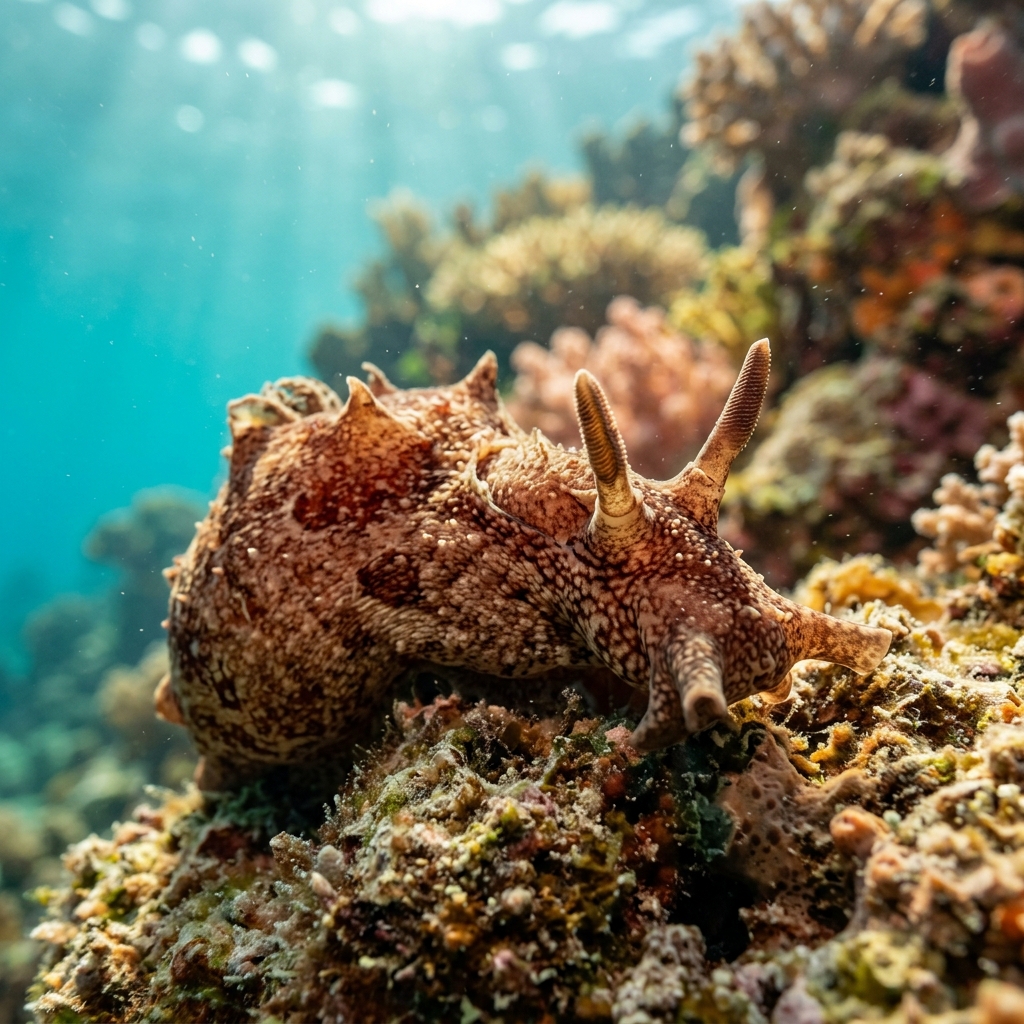
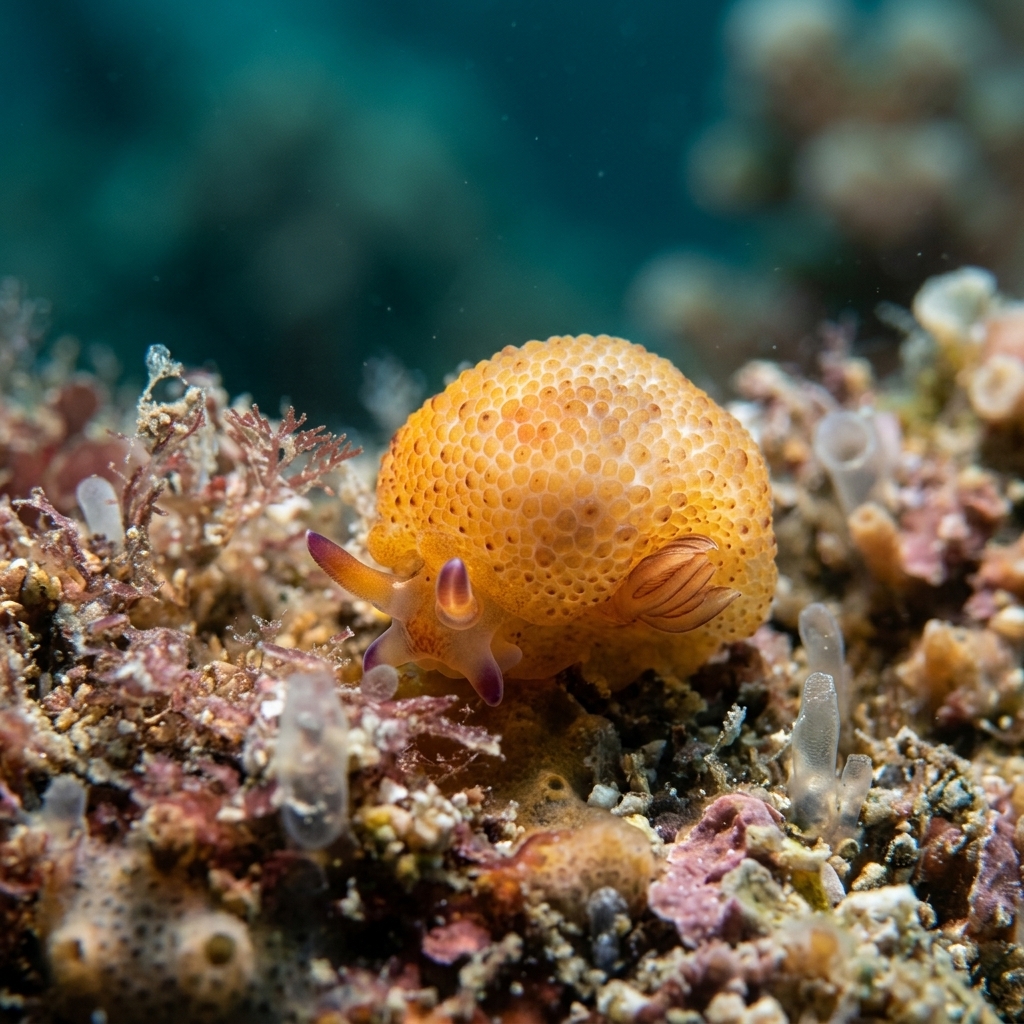
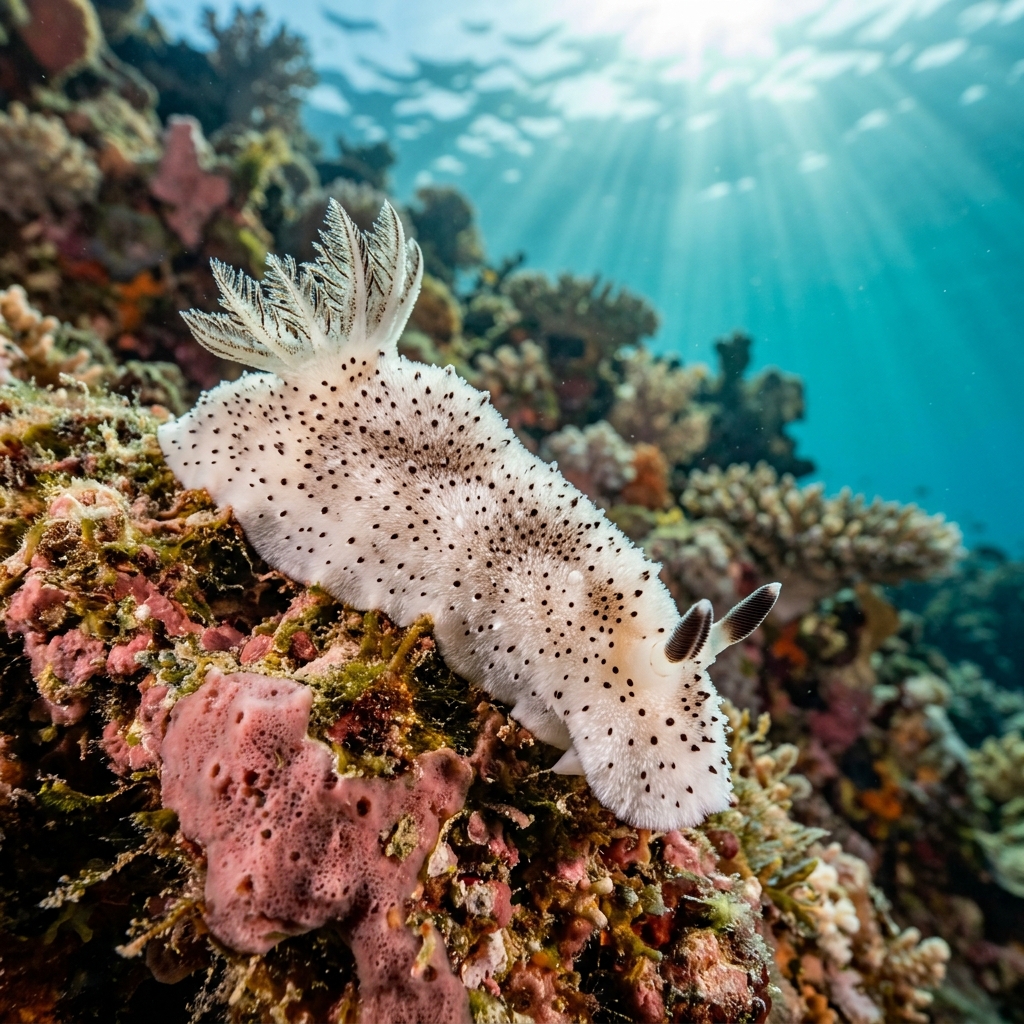
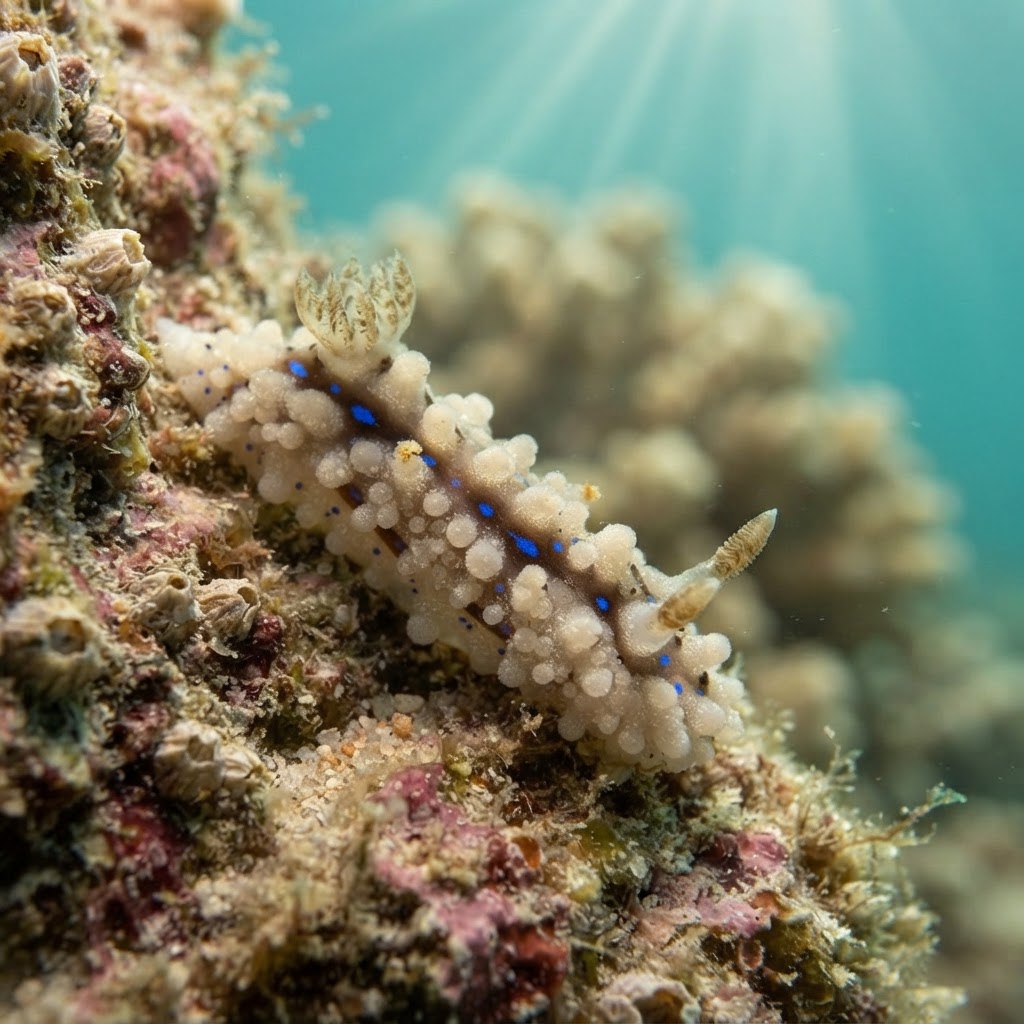
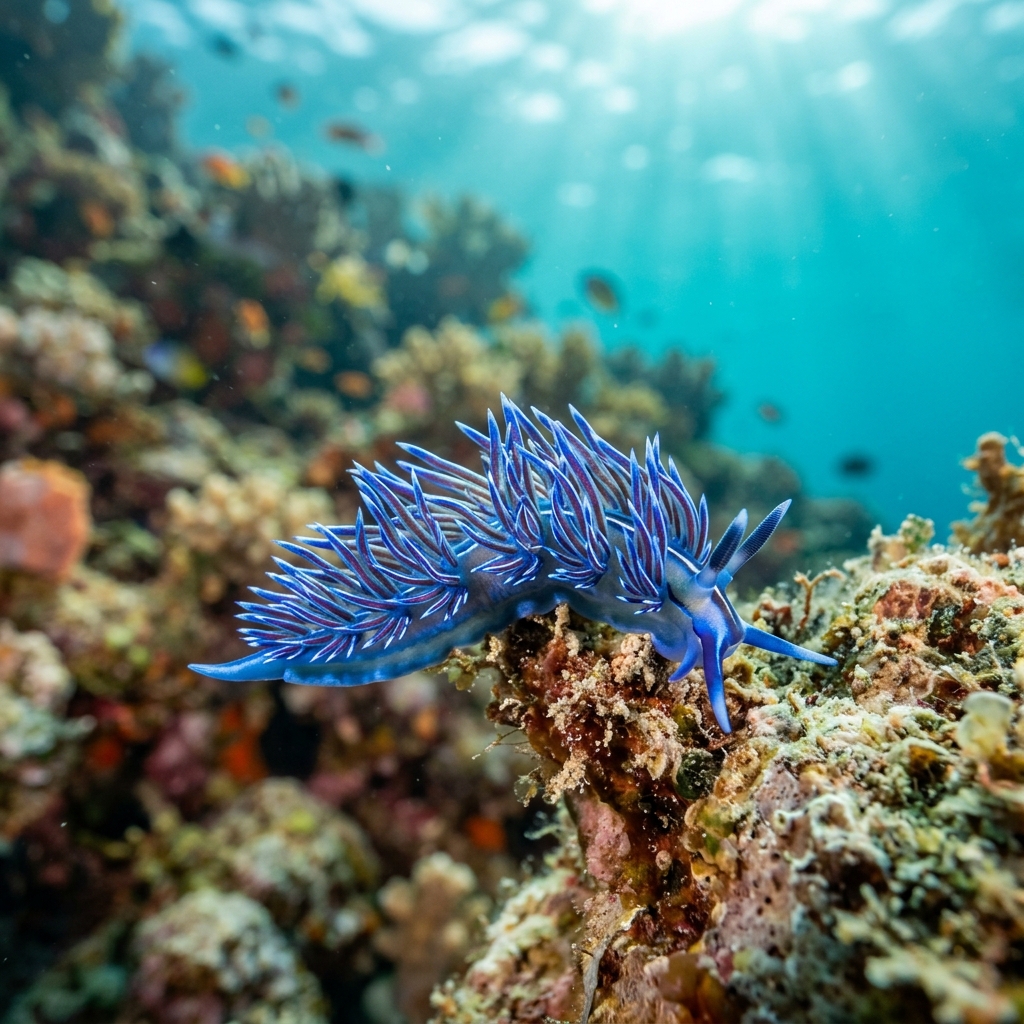
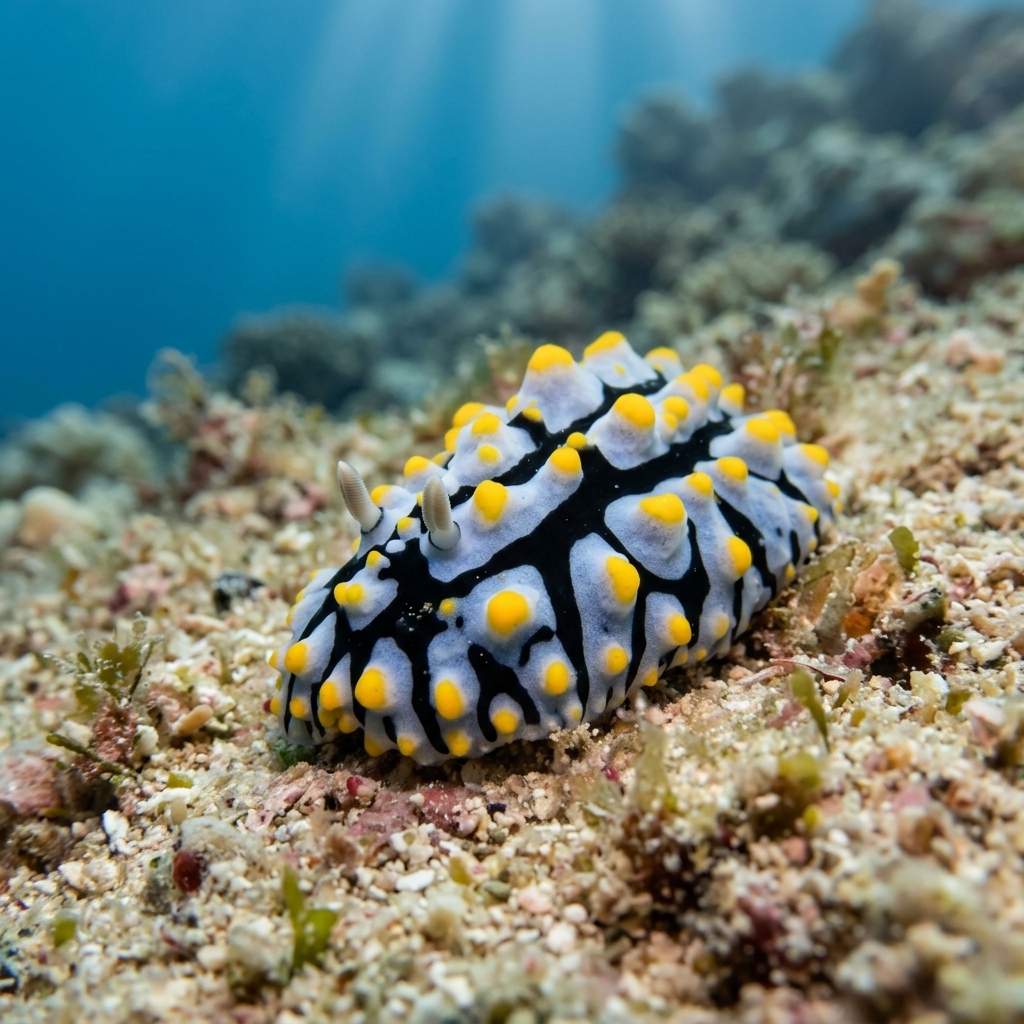
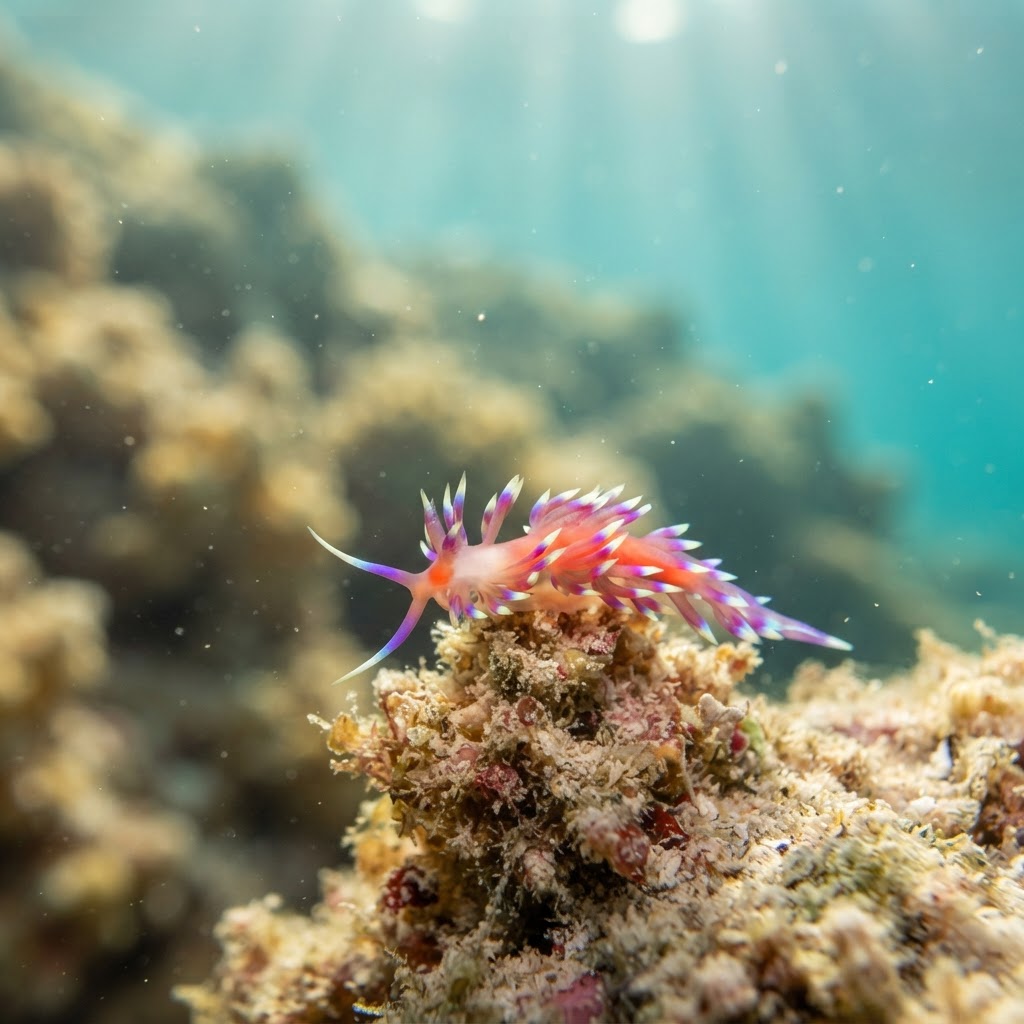
A tiny sea slug, barely a centimetre long, with a translucent white to pale body covered in slender finger-like projections called cerata (the fleshy tentacle-like structures on its back). Those cerata usually carry orange or pink tips with a thin white line running along each one, giving it a speckled, almost frosted look against the reef. Its head bears two rhinophores (the paired sensory stalks on a nudibranch's head) that are often ringed or tipped in the same warm colour as the cerata. At this size you are looking for a moving patch of texture on rock or rubble, not a shape.
Divers find it grazing slowly over rock and rubble patches, usually tucked close to the substrate rather than out in open water. It shows no reaction to divers beyond continuing its slow crawl, since at this size it has no real awareness of anything that large nearby. Look for it during a slow macro-focused dive, scanning low-relief surfaces rather than the open reef.
Those orange-tipped cerata likely store stinging cells taken from the hydroids it feeds on, recycling its prey's own defences as its own.
No clear seasonal pattern shows up in the sighting data, and its comfort range of roughly 24.6 to 30.6 C spans most of the year on the Pacific coasts of Mexico and Costa Rica, so treat it as a year-round possibility rather than a seasonal target.
Most consistently logged along Baja California in Mexico and Guanacaste in Costa Rica, with a further scatter of sightings down Mexico's Pacific Coast. Between these two countries you have the strongest chance of a sighting, though it stays an uncommon find rather than a guaranteed one even at its best sites.
Mapping where Marcus' Aeolid is logged…
It turns up most reliably in Baja California, Mexico, and Guanacaste, Costa Rica, with additional sightings scattered along Mexico's Pacific Coast. Even in these areas it stays an uncommon find, so it rewards a slow, close-focus search rather than a quick reef scan.
There is no detected season in the sighting data, and it has been observed across a wide 24.6 to 30.6 C temperature range, so it is best treated as a year-round possibility on Pacific Mexico and Costa Rica reefs.
About 1 cm long, making it one of the smaller nudibranchs a diver is likely to log. You are searching for texture and colour on rubble or rock, not a recognisable outline from any distance.
Look for a translucent, pale body covered in slender cerata tipped orange or pink with a fine white line, plus similarly coloured rhinophores on the head. Its tiny size and speckled cerata are the main giveaways underwater.
No. It poses no risk to divers and is harmless to approach, though its tiny size means it is easy to miss or accidentally disturb if you get too close with fins or gear.
Site and sighting data is aggregated from diver logs, iNaturalist and GBIF. For taxonomy and conservation status:
Light-spotted Aegires
3,168 sites