Ostorhinchus chrysotaenia
Small striped cardinalfish hovering over reefs in Luzon and Nusa Tenggara, best spotted in warm 22-29C water year-round.
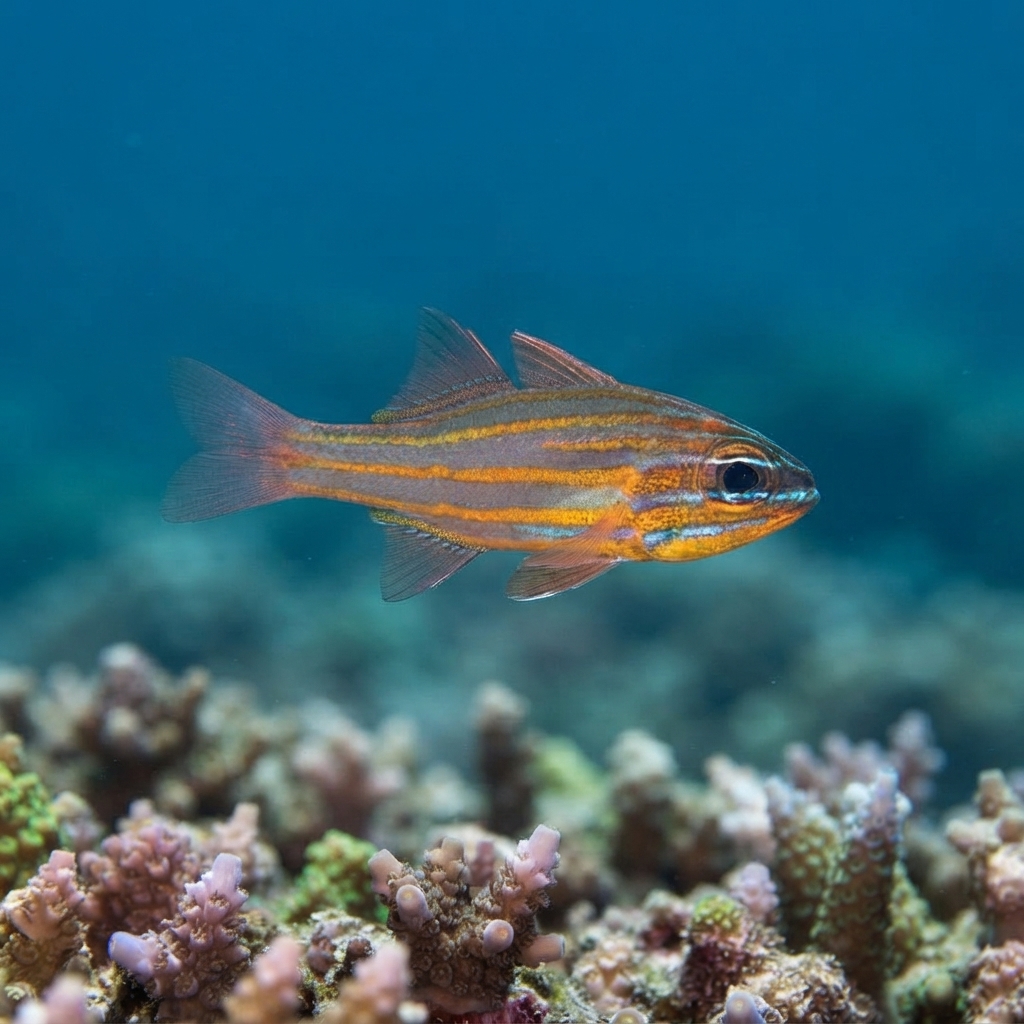
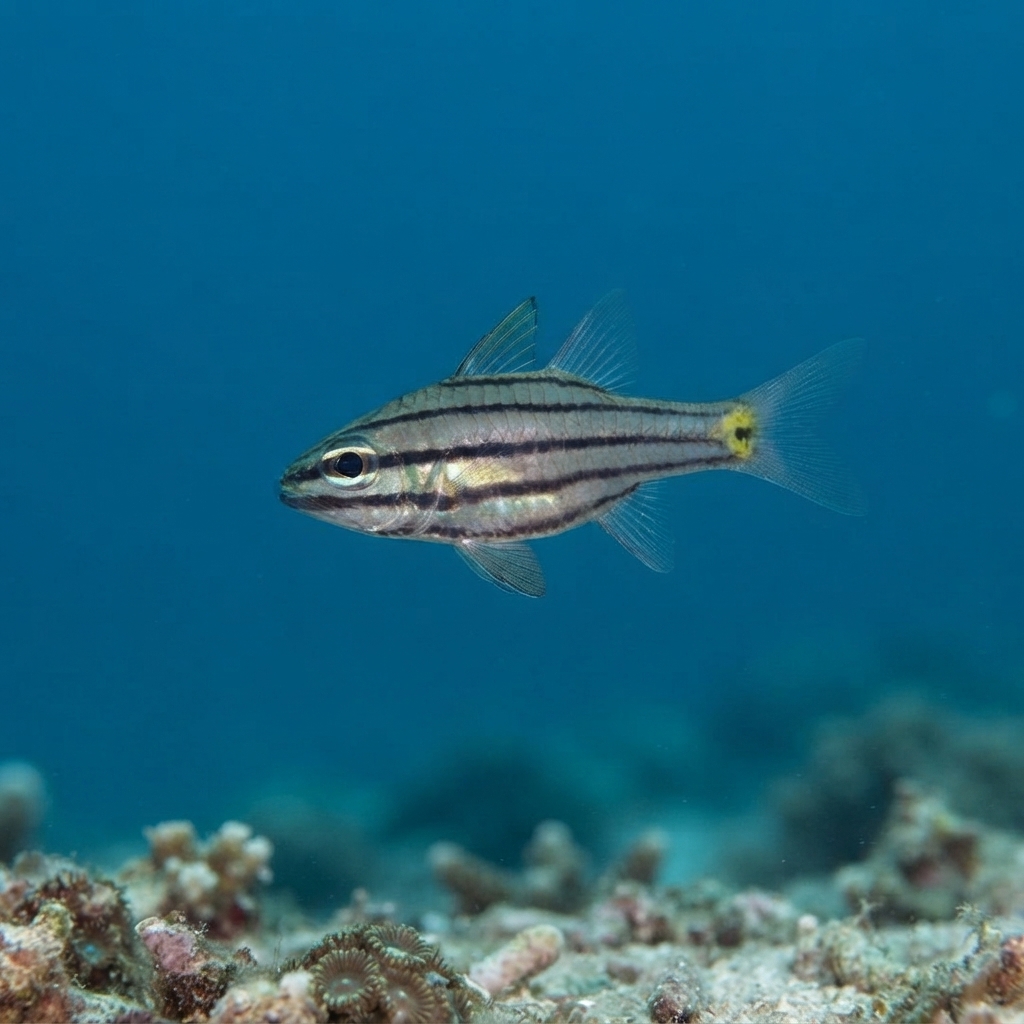
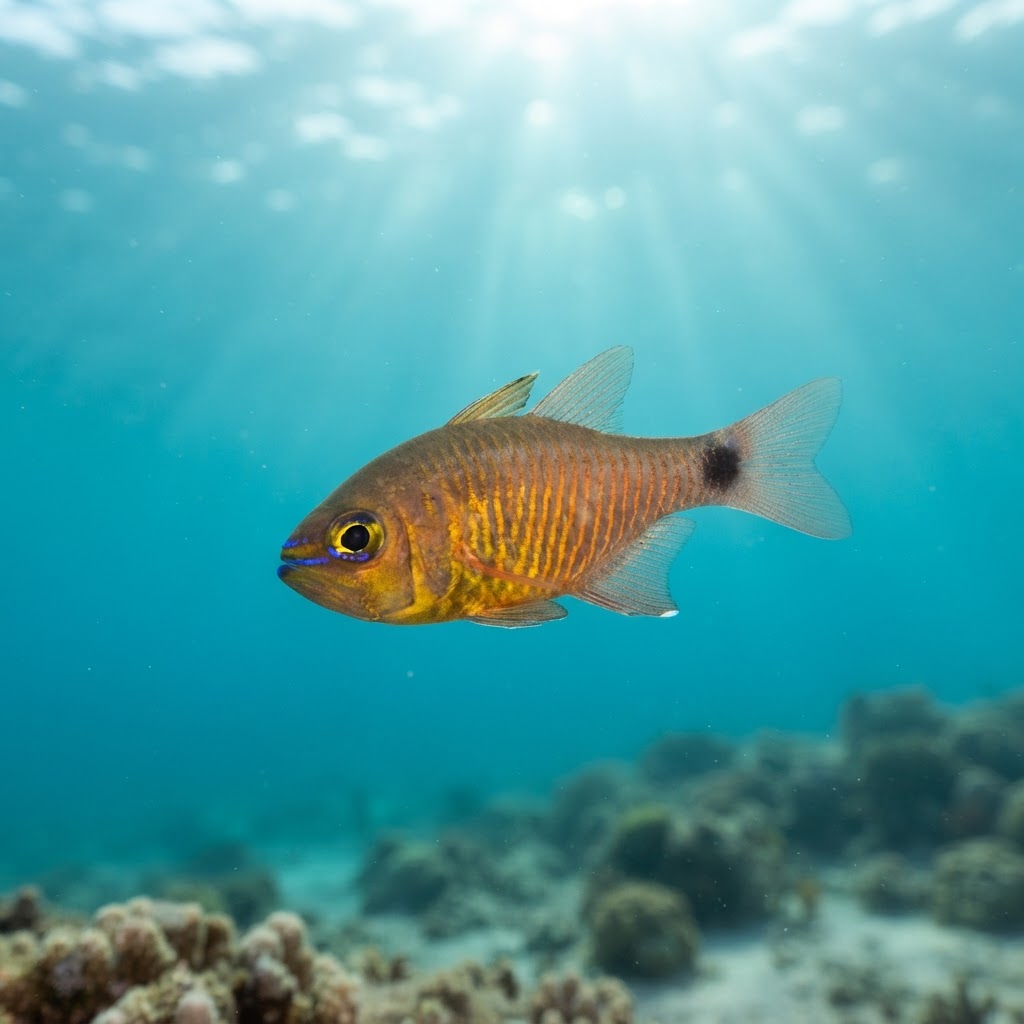
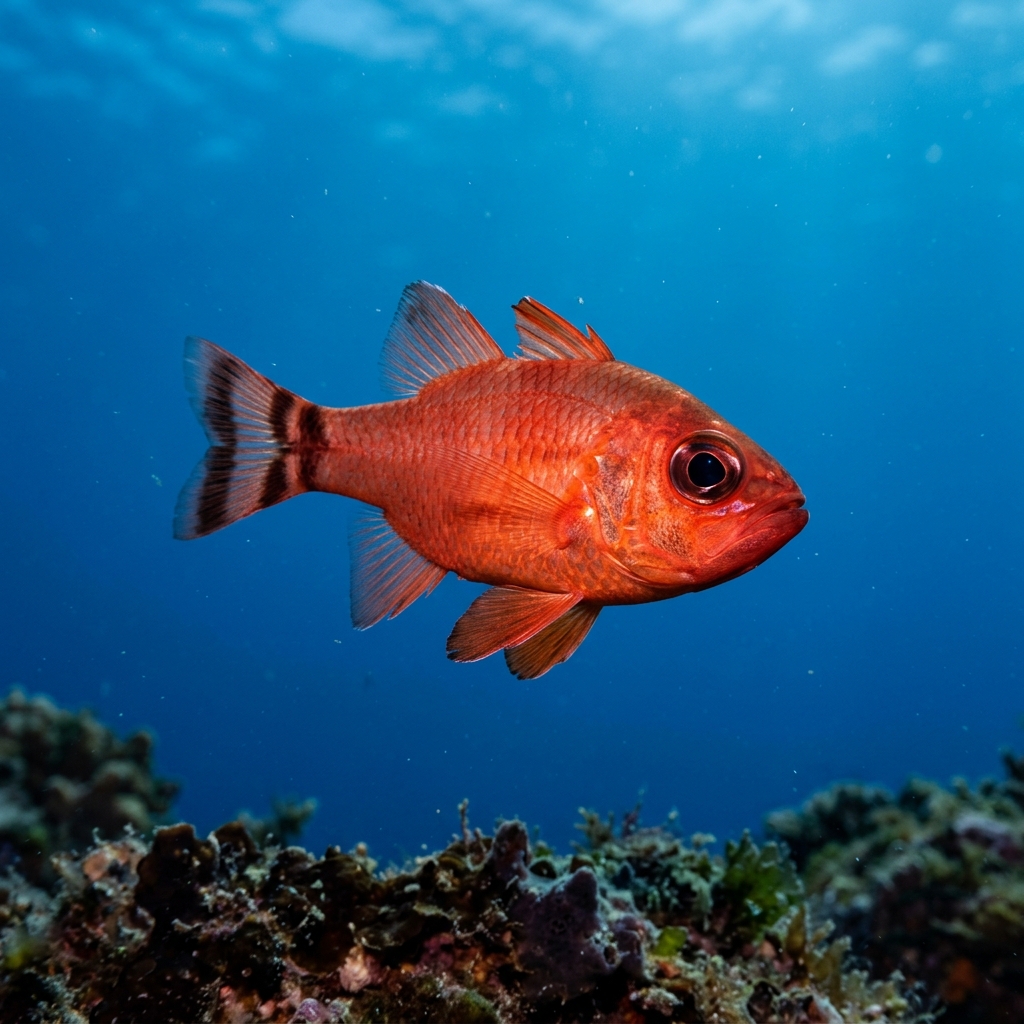
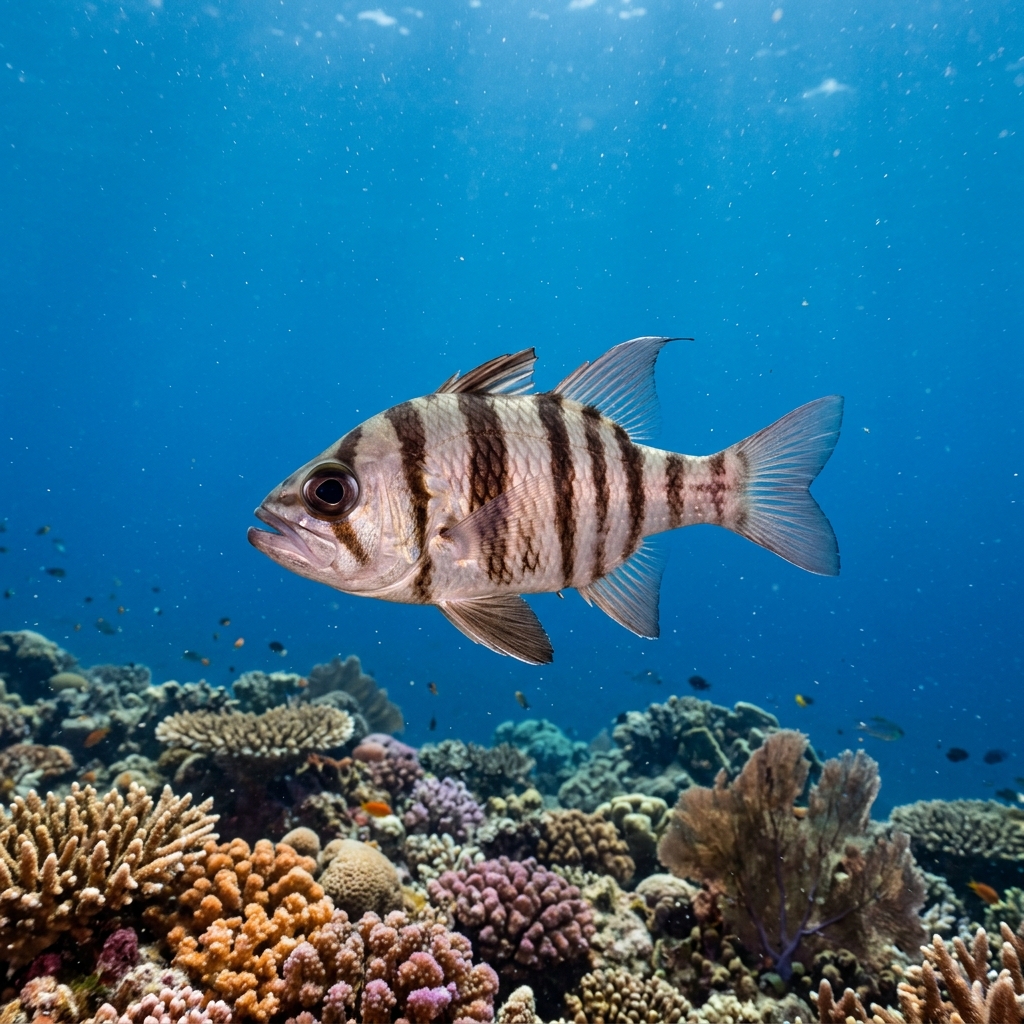
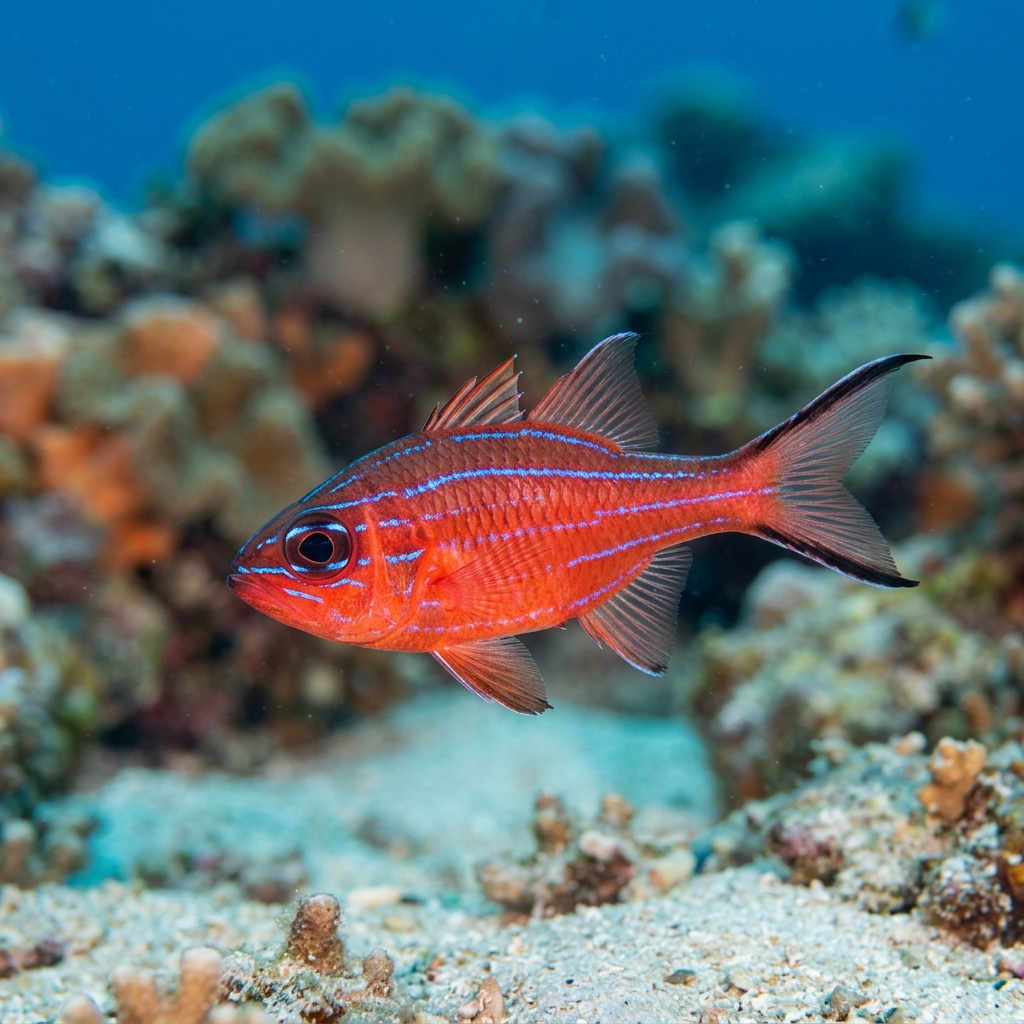
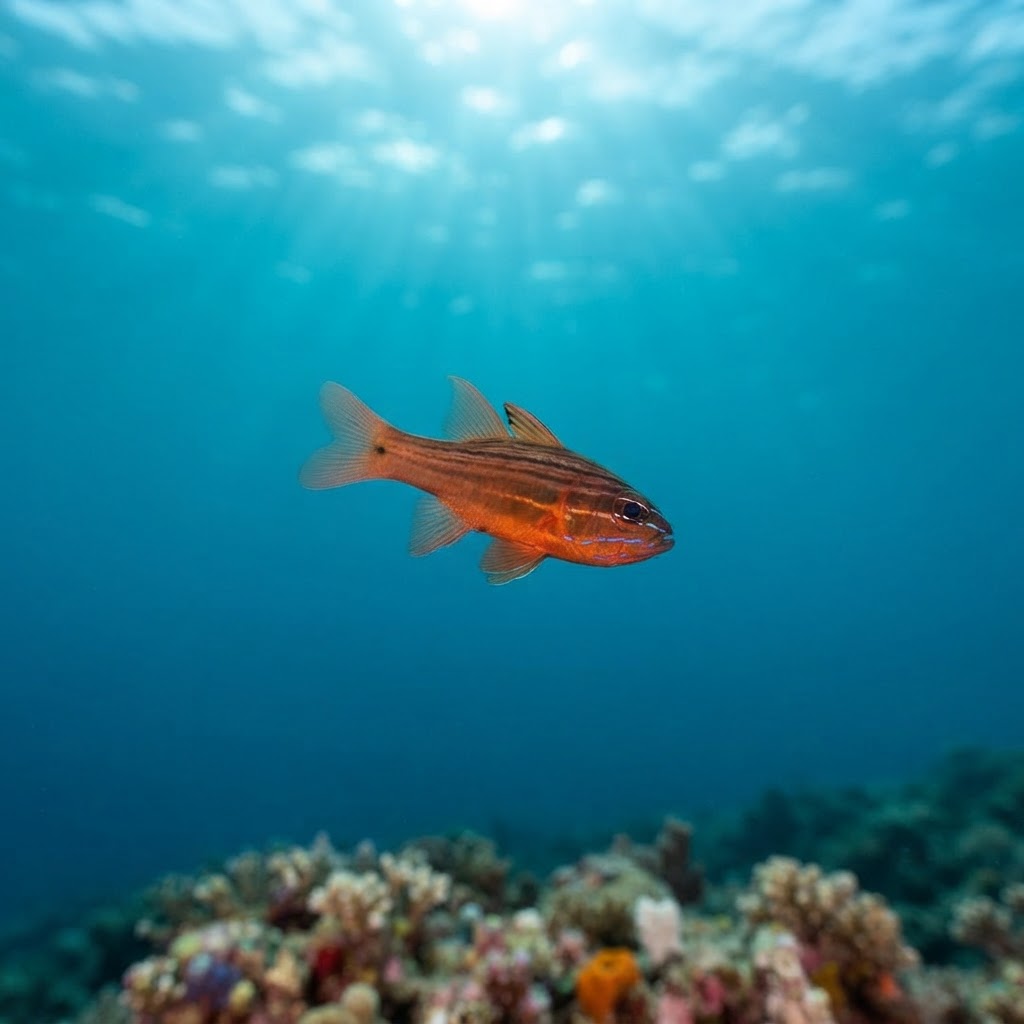
A small, deep-bodied fish around 8 cm, easiest to pick out by the row of narrow, dark horizontal lines running along a pale golden-brown body. Look for the two large, dark eyes and the slightly upturned mouth typical of cardinalfish, held in a stiff, almost motionless hover near cover. It usually sits alone or in small loose groups close to the reef structure rather than out in open water.
Divers usually find it hovering close to a coral head, ledge or patch of rubble, holding position with minimal movement rather than actively swimming the reef face. It tends to keep a low profile and retreat slightly deeper into cover when a diver approaches too fast, so a slow, steady approach gives the best look. Most sightings are during daylight reef dives rather than dedicated night dives, though many cardinalfish species are more active after dark.
Cardinalfish in this family are mouthbrooders, with males typically carrying the fertilised eggs in their mouth until the young are ready to disperse, so a male seen with a noticeably swollen jaw may be brooding a batch.
Sightings show no clear seasonal pattern, and the observed temperature range of 22.4 to 29.3C spans typical year-round tropical reef conditions in both Luzon and Nusa Tenggara. Plan around general dive-season logistics for those regions rather than a specific month for this fish.
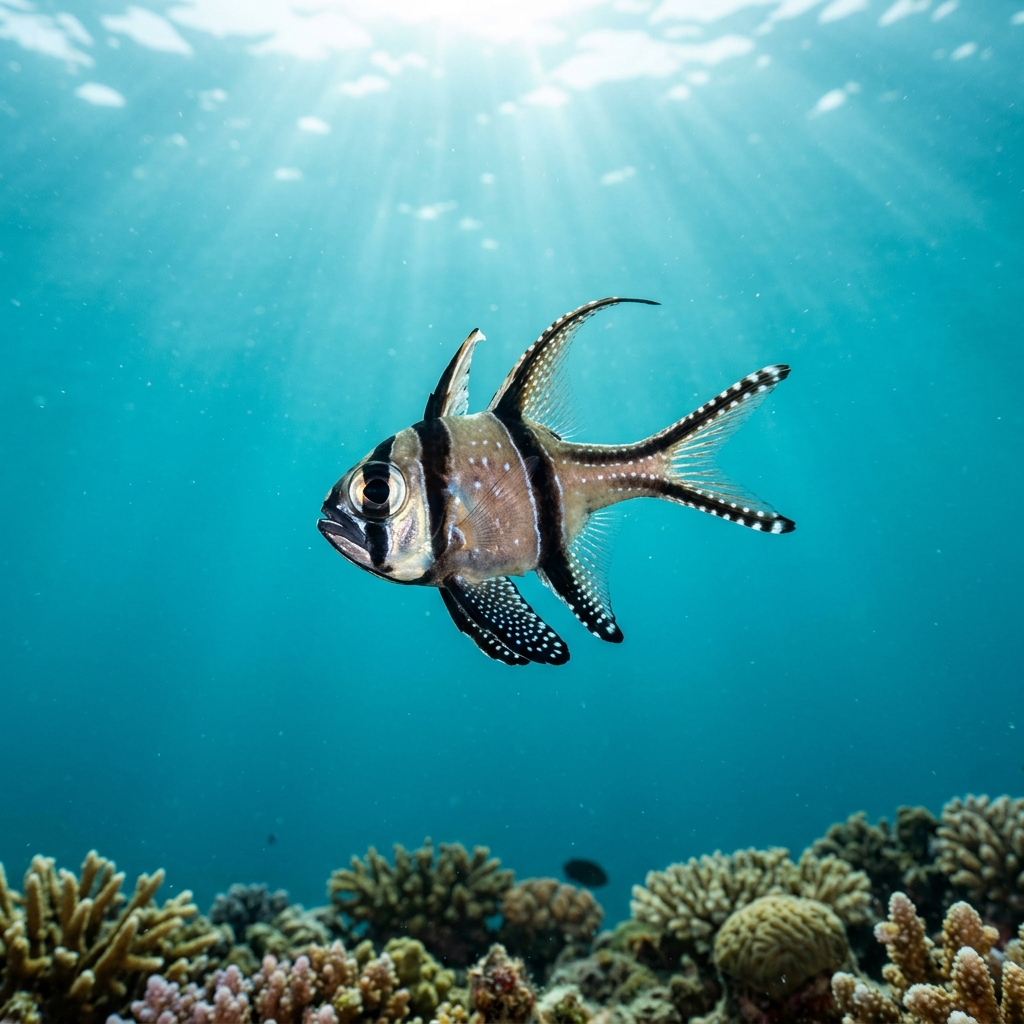
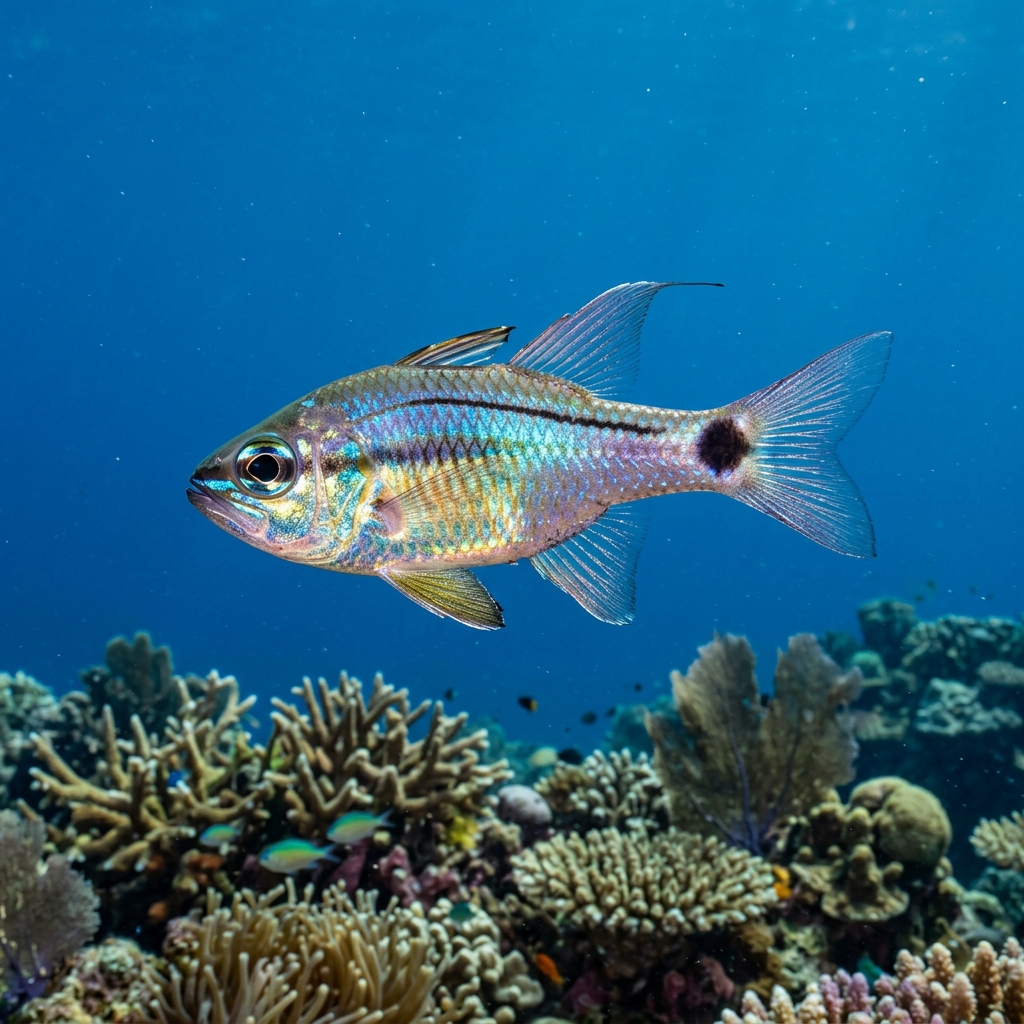
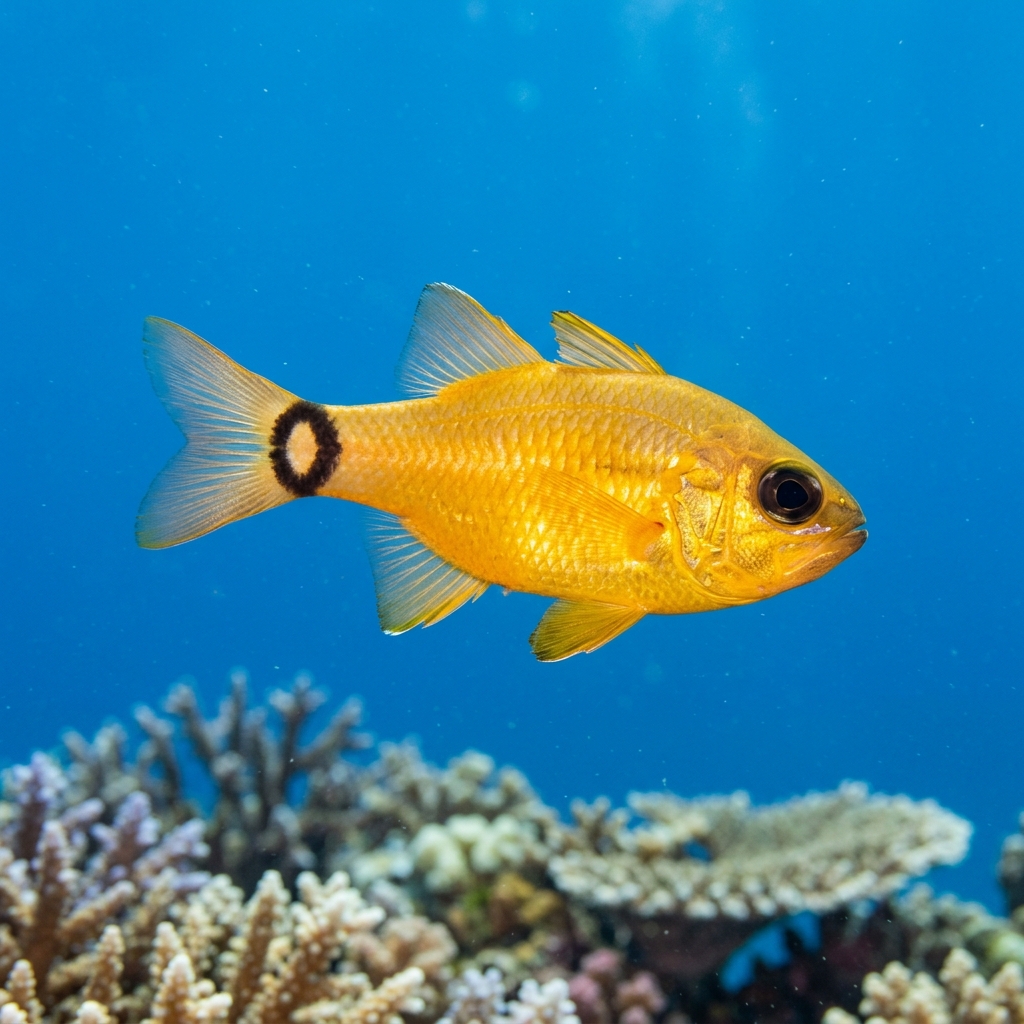
Reef neighbours a diver could mistake it for. Use the identification notes above to tell them apart.
Most reliably logged on reefs in the Philippines, especially around Luzon, with a further pocket of sightings in Indonesia's Nusa Tenggara region. Across both countries it turns up as an uncommon find, so it rewards divers who take time to check ledges, crevices and rubble patches rather than mid-water scanning.
Mapping where Yellowlined Cardinalfish is logged…
They are most often logged on reefs in the Philippines, particularly around Luzon, with additional sightings in Indonesia's Nusa Tenggara region. At both, they show up as an uncommon find rather than a guaranteed sighting.
There is no strong seasonal pattern in the sighting data, and the species tolerates a wide warm-water range of roughly 22 to 29C, so it can turn up on tropical reef dives at any time of year.
Look for a small, roughly 8 cm fish with a series of thin dark horizontal stripes along a golden-brown body, large dark eyes, and a habit of hovering motionless near reef cover rather than swimming in open water.
They stay small, reaching around 8 cm in length, which is typical for cardinalfish and part of why they are easy to overlook against coral rubble.
No, they pose no danger to divers. They are small, slow-moving reef fish that simply retreat into cover if approached too quickly.
Site and sighting data is aggregated from diver logs, iNaturalist and GBIF. For taxonomy and conservation status:
Iridescent Cardinalfish
1,781 sites