Cratena simba
A small orange-tentacled sea slug logged uncommonly on reefs in Bali and Queensland, in water from 22.7 to 29.7C year-round.
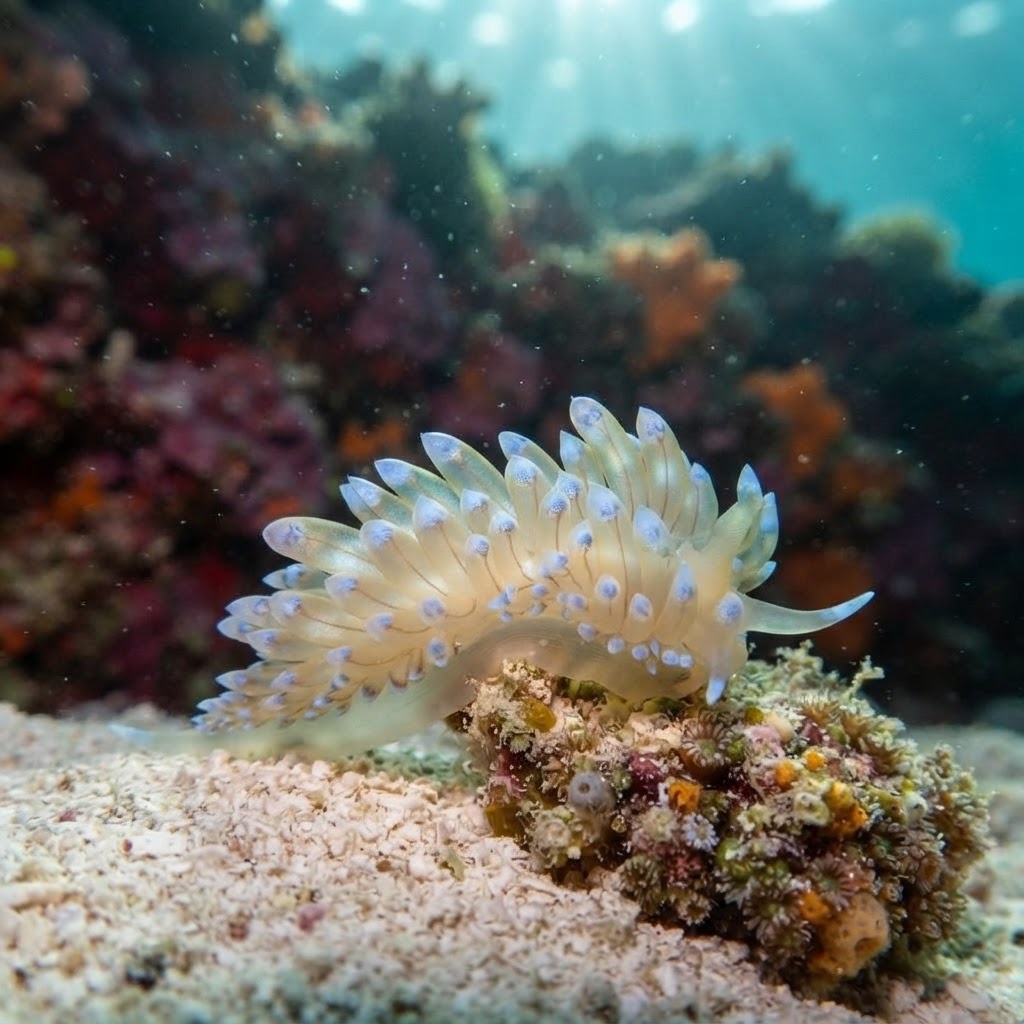
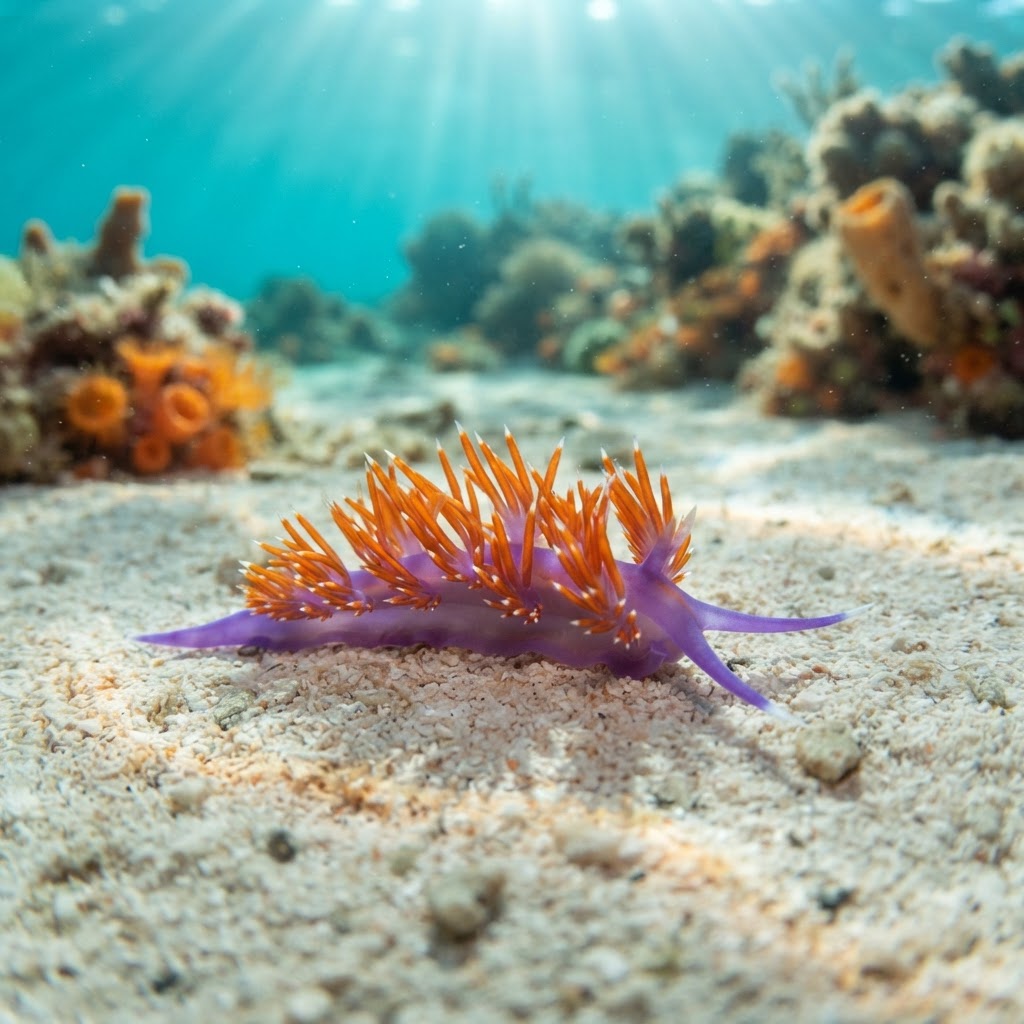
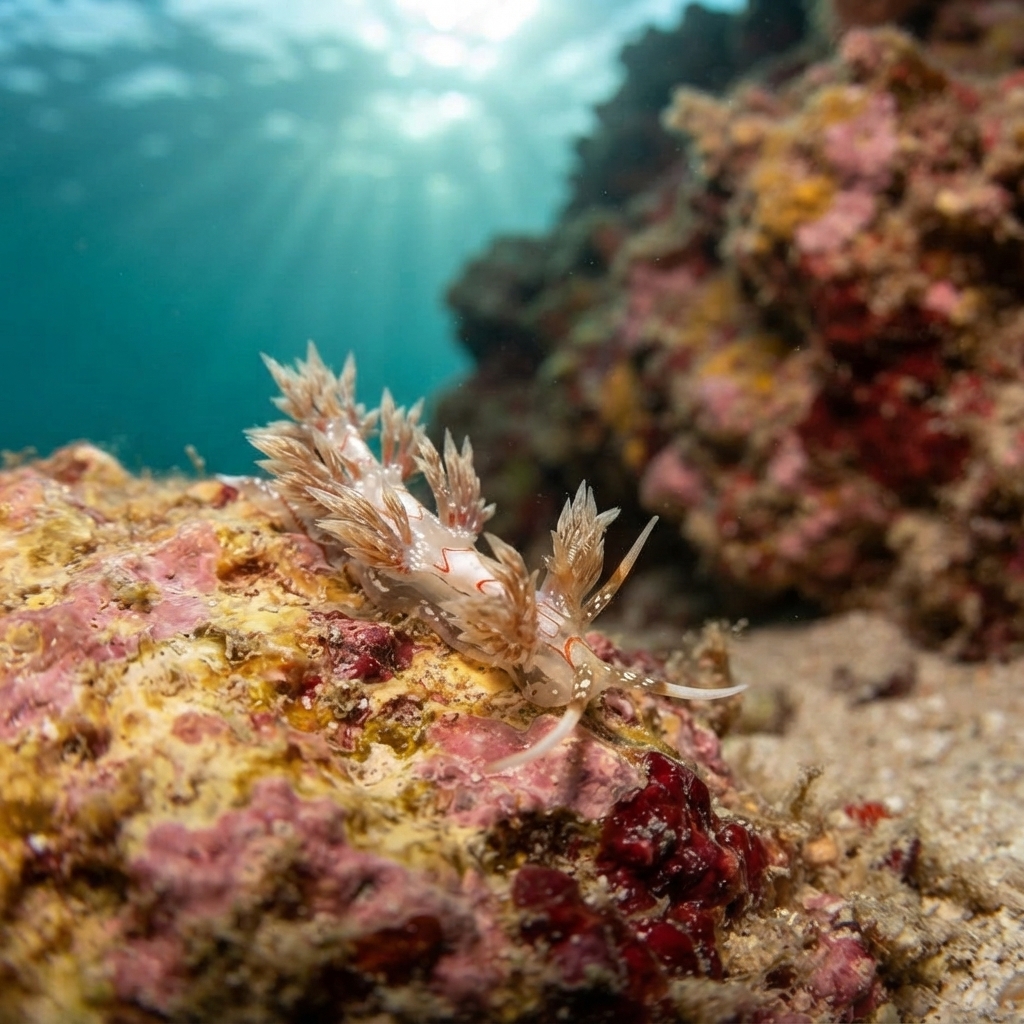
A small, slender sea slug carrying rows of finger-like projections (cerata) along its back, each tipped in shades of orange to reddish-brown that give it a mane-like fringe. The body itself is usually translucent to pale, so the coloured cerata do most of the work for identification. Its head bears two long, tapering rhinophores (sensory tentacles) that it waves slowly as it moves, and it rarely grows large enough to catch a diver's eye from more than half a metre away.
Divers typically find it grazing slowly across hard substrate or hydroid colonies, tucked into reef nooks where its food source grows. It shows no reaction to divers beyond its usual unhurried crawl, and like most aeolid nudibranchs it's most easily spotted by macro photographers scanning close to the substrate rather than mid-water.
Aeolid nudibranchs like this one feed on hydroids and can store the stinging cells from their prey in the tips of their cerata, repurposing them as their own defence.
No clear seasonal pattern shows up in the data, and its comfort range of roughly 22.7 to 29.7C spans typical tropical reef temperatures year-round, so any month is fair game in Bali or Queensland.
Reef neighbours a diver could mistake it for. Use the identification notes above to tell them apart.
Sightings so far are concentrated in Indonesia, especially around Bali, with a smaller cluster of logs from Queensland, Australia. It's a species worth adding to a muck-diving or macro-focused itinerary in those regions rather than something to plan a whole trip around.
Mapping where Lion Tentacle Aeolid is logged…
It's most reliably logged around Bali, Indonesia, with additional sightings from Queensland, Australia. Outside these regions, records are sparse, so it's best treated as a macro-diving bonus rather than a guaranteed find.
There's no detected season in the sighting data, and it tolerates a wide range of warm reef temperatures, so it can turn up year-round on the reefs where it's known to occur.
Look for a small, translucent-bodied nudibranch with rows of cerata tipped in orange to reddish-brown along its back, plus two long rhinophores on the head. It moves slowly across hard substrate or hydroid patches, and its size keeps it firmly in macro-photography territory.
Exact size data isn't available, but like most aeolid nudibranchs in this family it stays small, typically just a few centimetres long, making it a target for close-focus macro shots rather than a distance spot.
It feeds on hydroids and can recycle their stinging cells, storing them in the tips of its cerata to use as its own defence against predators.
Site and sighting data is aggregated from diver logs, iNaturalist and GBIF. For taxonomy and conservation status:
Blue Dragon
3,163 sites