Pauleo jubatus
A rare, tufted little nudibranch logged only around Grand Cayman in warm 25-31C water, year-round if you look closely.
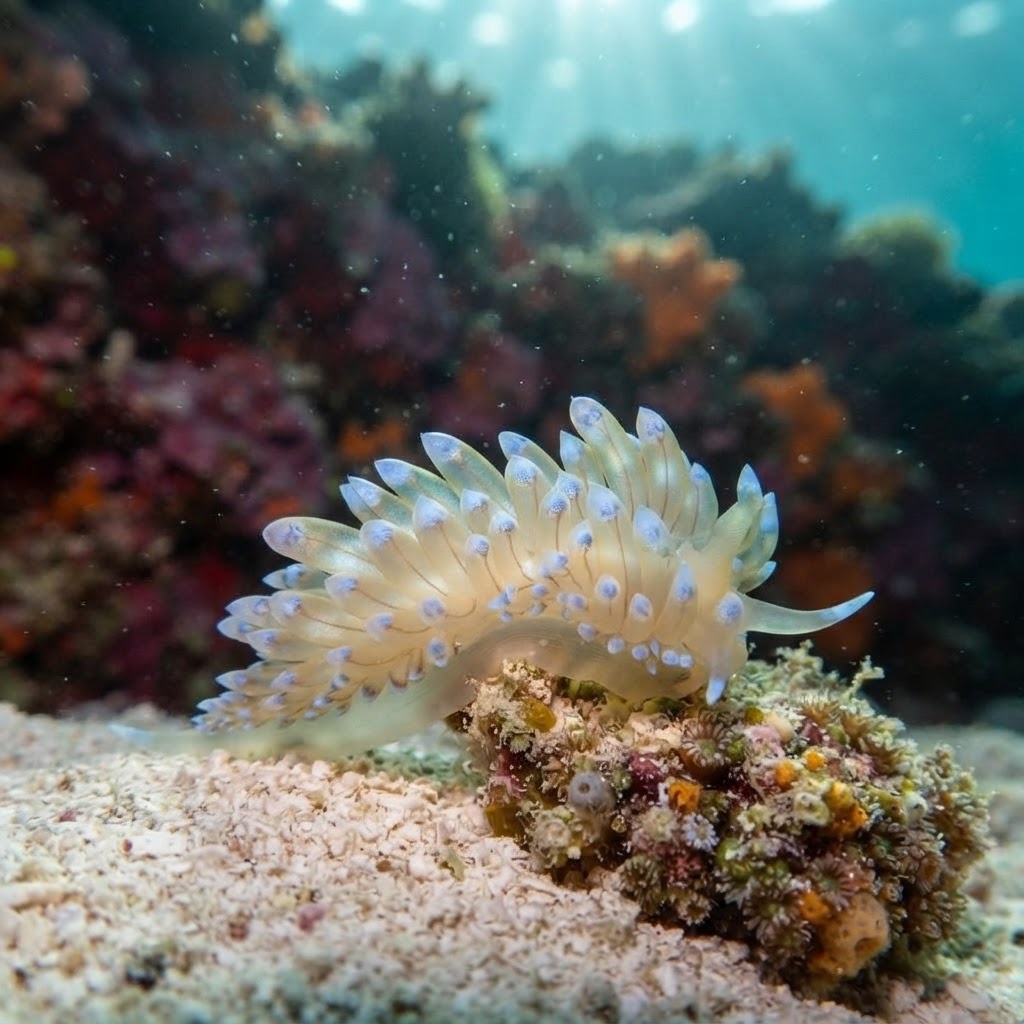
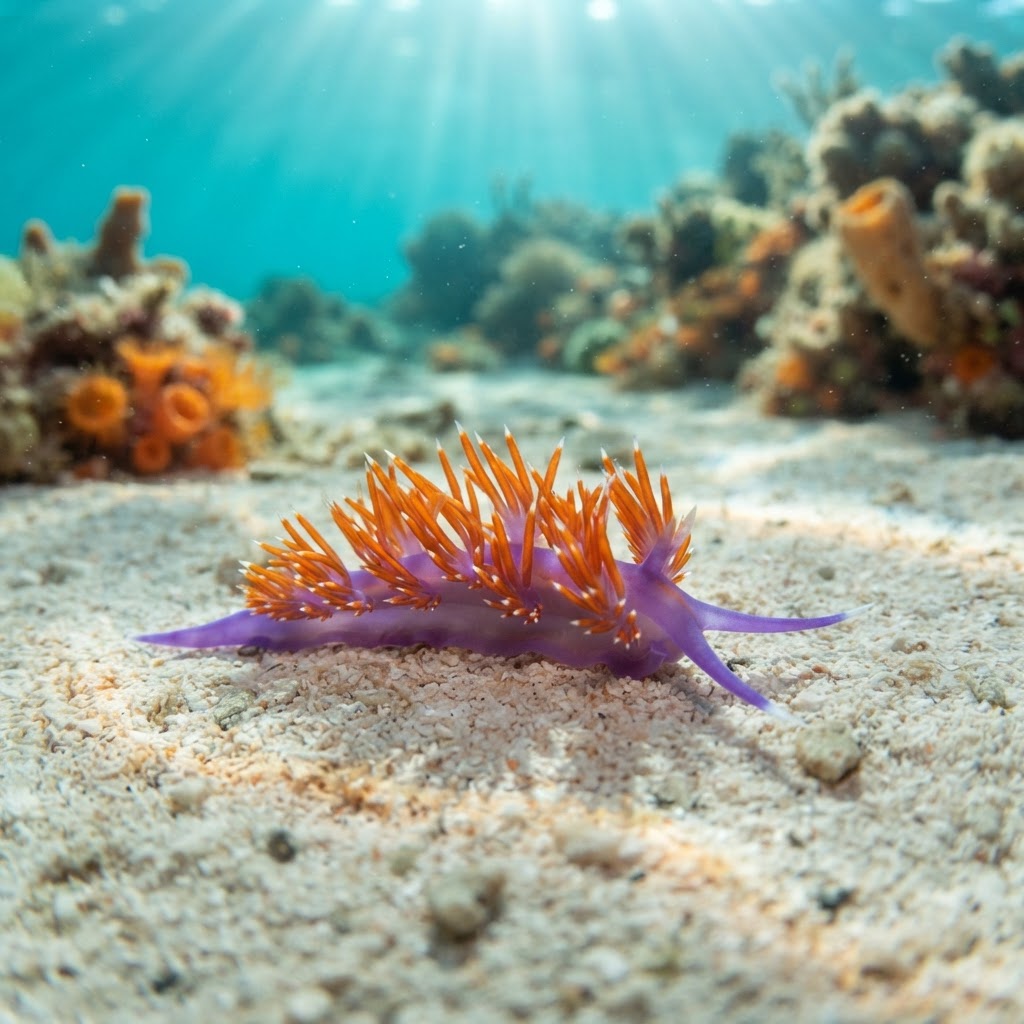
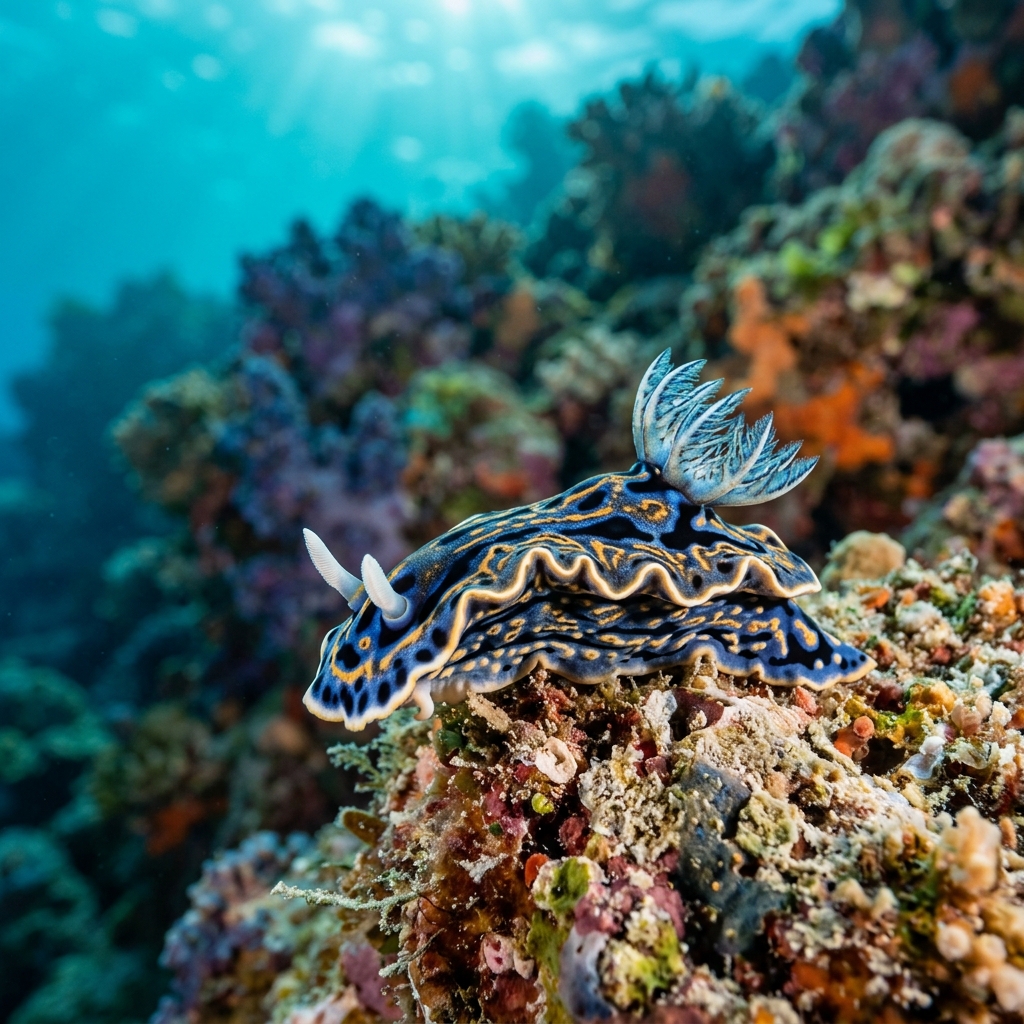
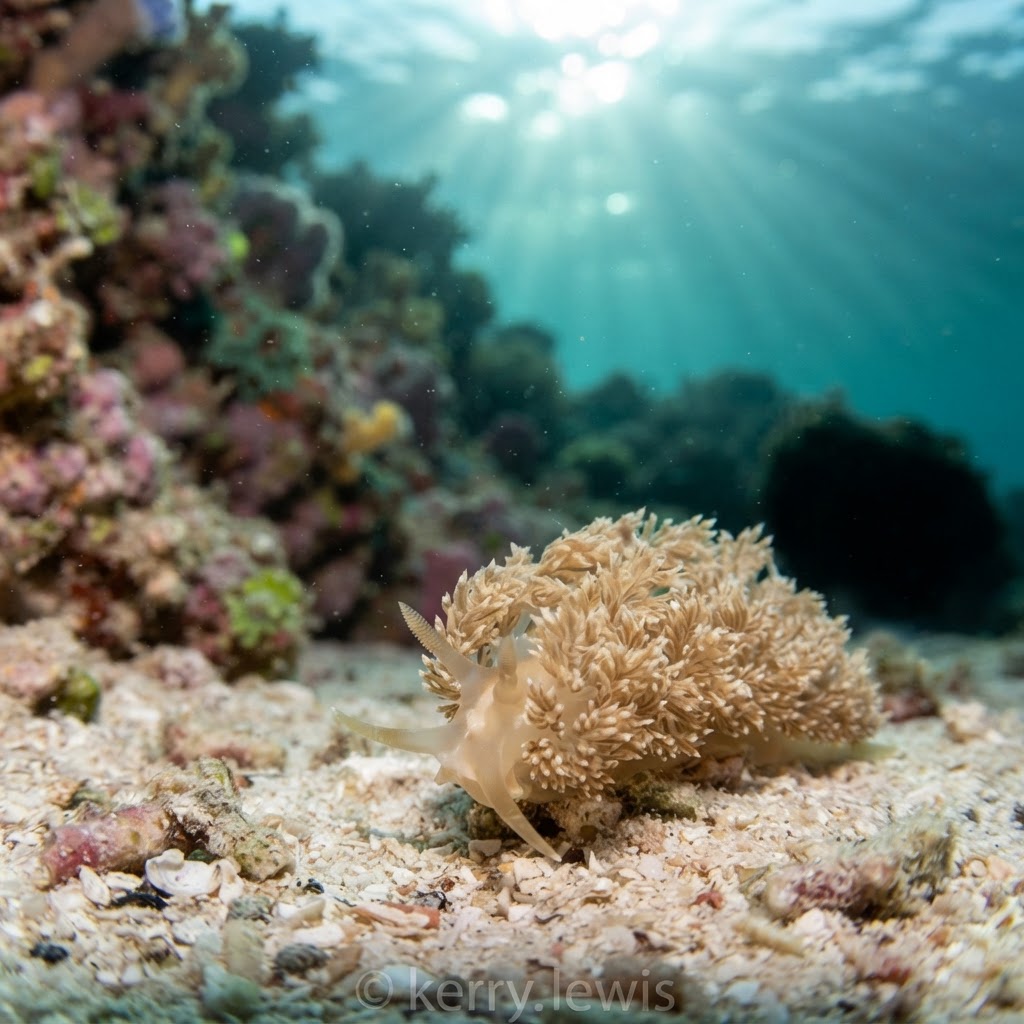
Tops out around 4 cm, with a slender body covered in tufted, hair-like projections (cerata) that give it a maned, shaggy look along the back. The cerata often carry warmer tones against a paler body, and the head end shows two short rhinophores (sensory tentacles) that a diver can use to orient front from back. It moves slowly across hard substrate, so once spotted it holds still long enough for a close look.
Divers find it grazing quietly on hard bottom or rubble, moving at the unhurried pace typical of aeolid nudibranchs as it works over its food source. It shows no reaction to divers beyond simple withdrawal if touched, and because it is small and rare at every site it is logged from, most sightings come from divers doing slow macro-focused passes rather than covering ground.
Like other aeolids, it likely stores stinging cells from the hydroids it feeds on inside those dorsal cerata, reusing its prey's own defences as its own.
Sightings don't show a seasonal pattern, and the observed water temperature range of 25.2 to 31.2C covers Grand Cayman's reefs year-round, so any month is fair game. It comes down more to slow, careful searching than timing a trip around a season.
Reef neighbours a diver could mistake it for. Use the identification notes above to tell them apart.
Every logged sighting so far comes from Grand Cayman in the Cayman Islands, making it the only confirmed place to look for this species. Search low-profile reef and rubble areas where small aeolid nudibranchs tend to graze, since it has not yet turned up elsewhere in diver records.
Mapping where Lion Mane Aeolid is logged…
All confirmed sightings so far are from Grand Cayman in the Cayman Islands, where it has been logged at several dive sites as a rare find.
There's no detected season, and it's been recorded in water from 25.2 to 31.2C, which spans Grand Cayman's reefs all year, so it can turn up in any month.
Look for a small nudibranch, about 4 cm, with a shaggy coat of hair-like cerata along its back and two short rhinophores on the head. It moves slowly over hard substrate or rubble, which makes it easy to examine once found.
They stay small, reaching around 4 cm in length, typical for aeolid nudibranchs in this family.
No, they pose no danger to divers. They are tiny, slow-moving grazers with no way to harm a diver.
Like related aeolid nudibranchs, it probably repurposes stinging cells from the hydroids it eats, storing them in its cerata as a borrowed defence.
Site and sighting data is aggregated from diver logs, iNaturalist and GBIF. For taxonomy and conservation status:
Blue Dragon
3,163 sites