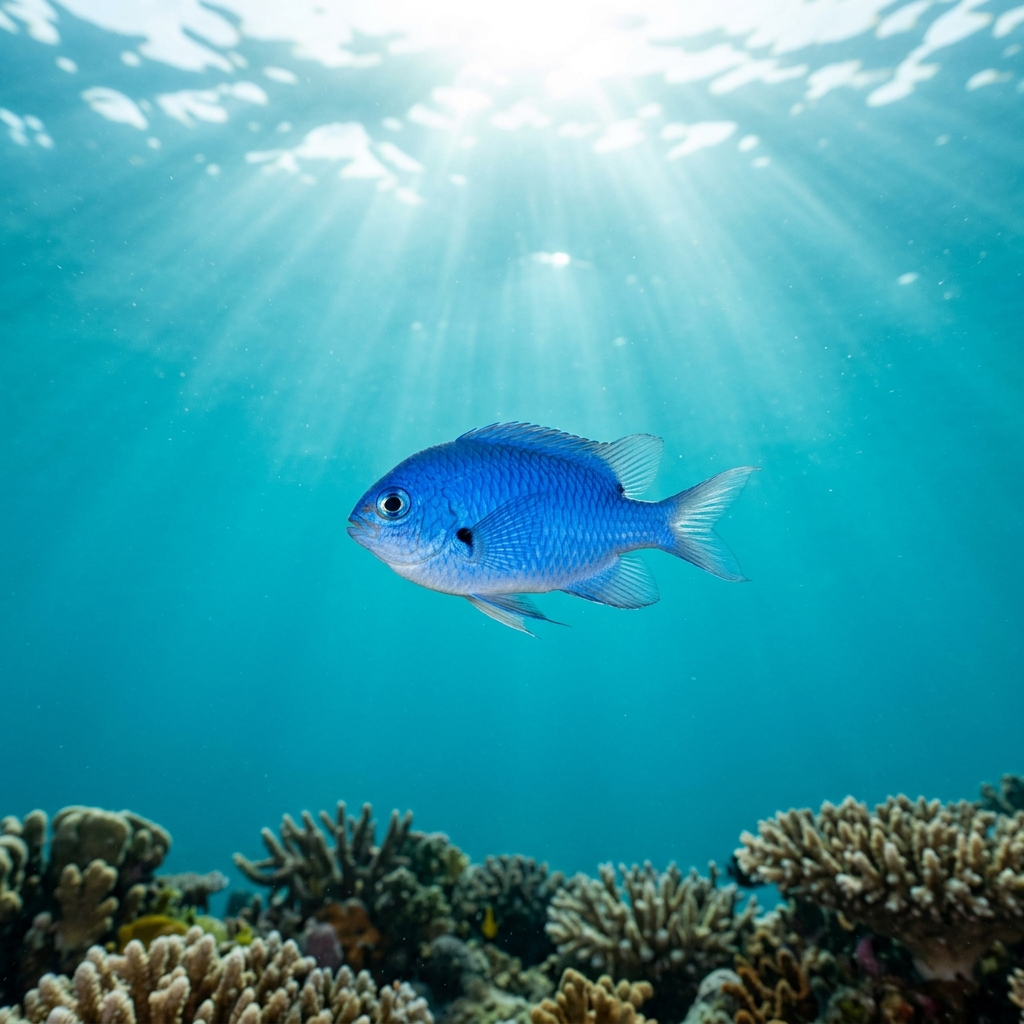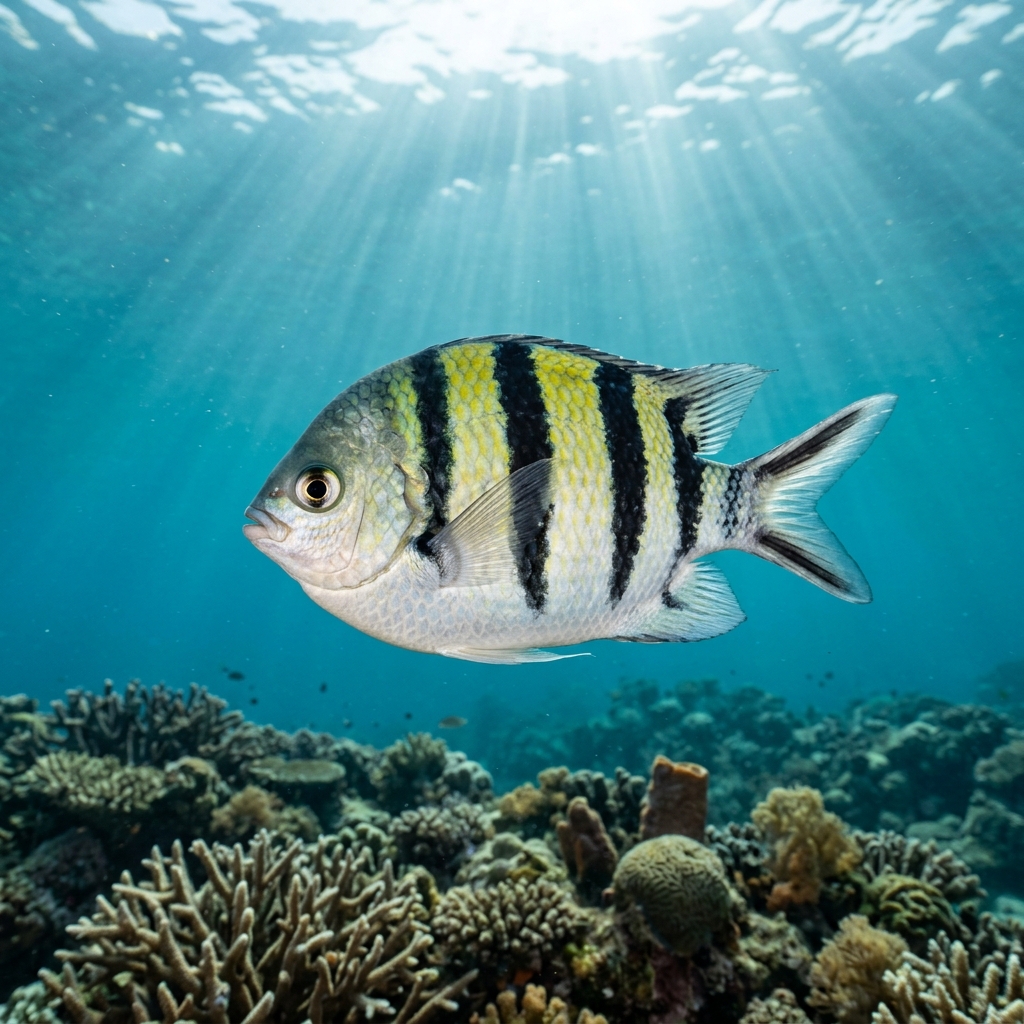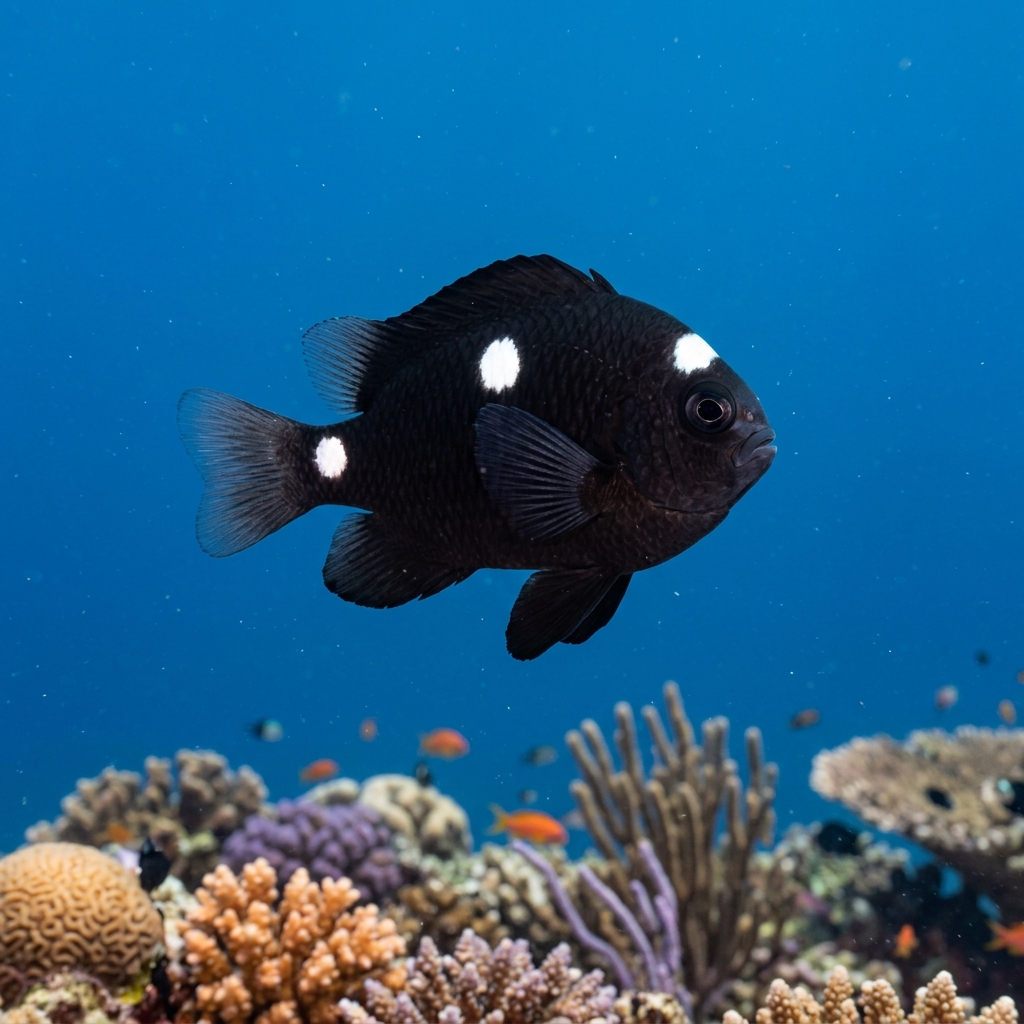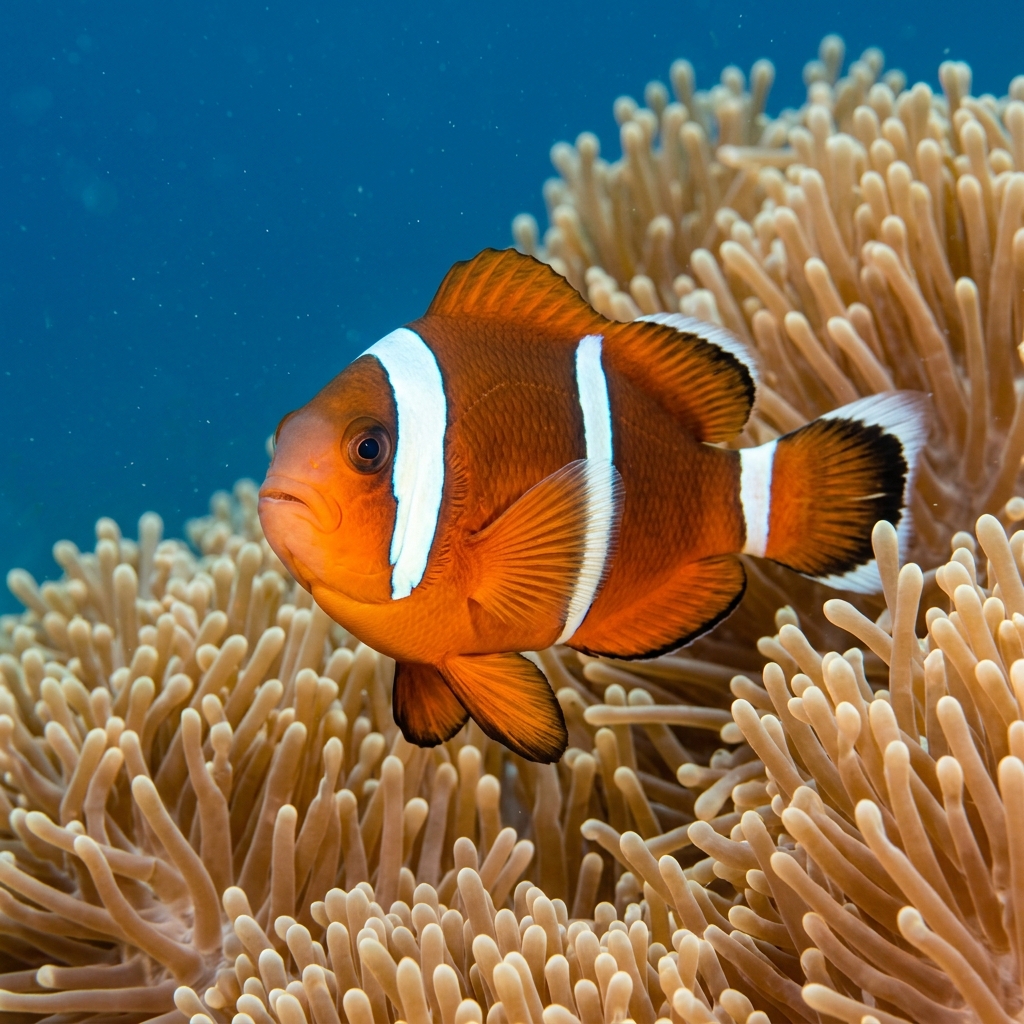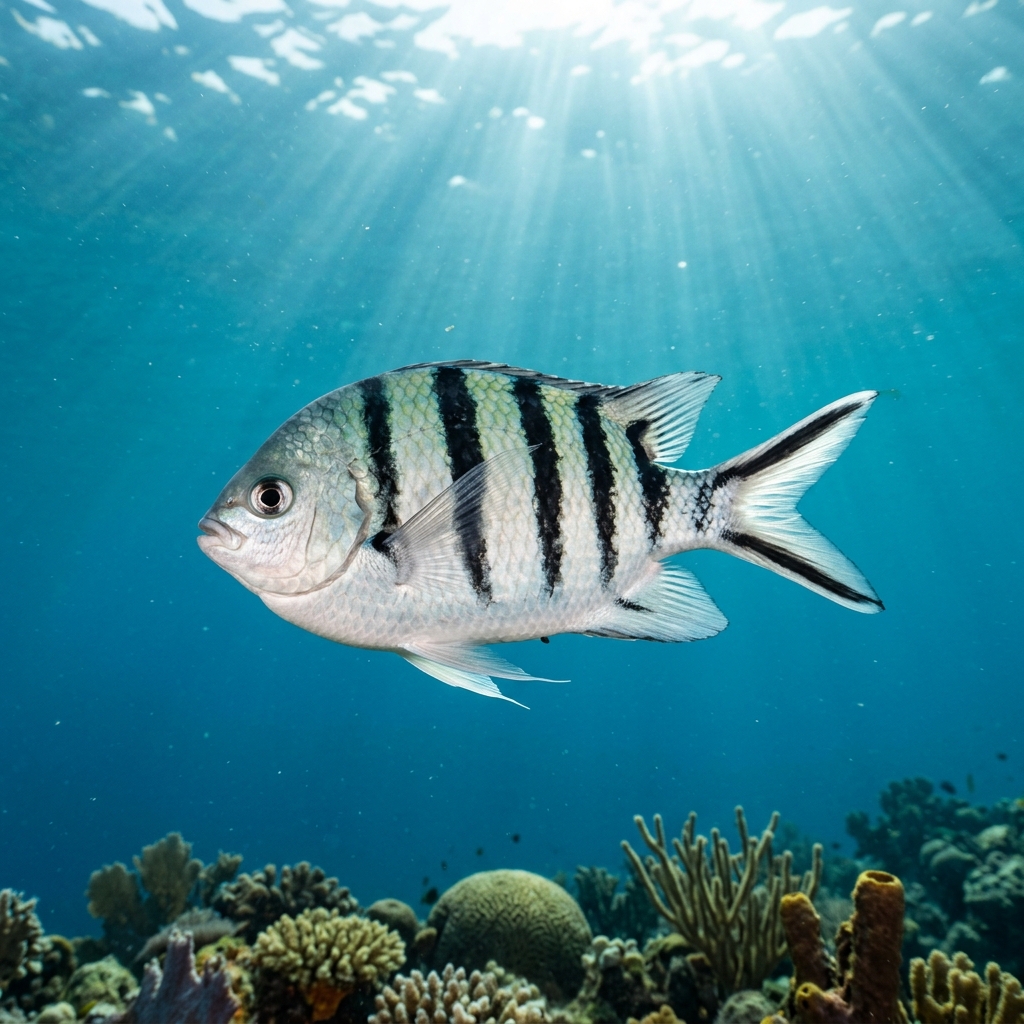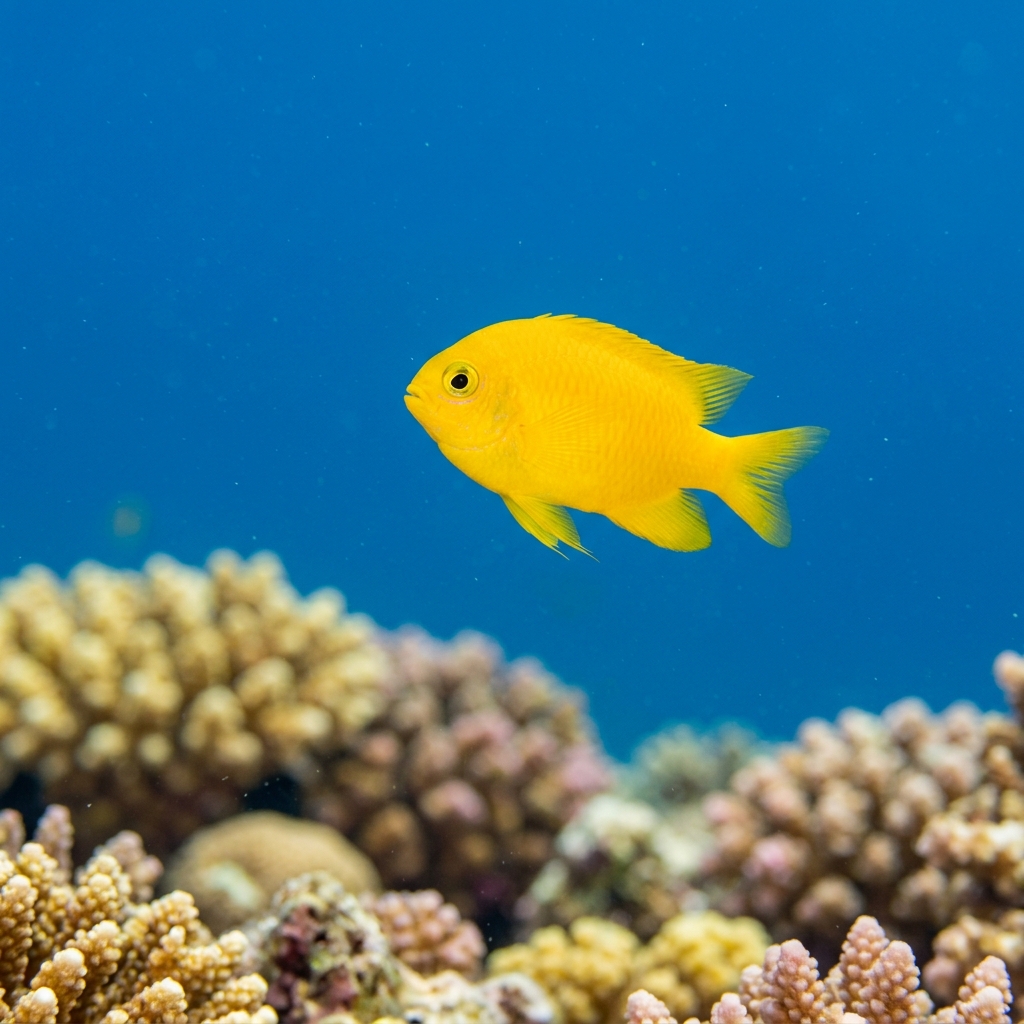
Pomacentrus moluccensis
Spot the vivid yellow lemon damsel on reefs across the Philippines, Indonesia and Queensland year-round. Here's how to find and identify it.
A compact, deep-bodied little fish barely 6 cm long, the lemon damsel is almost entirely vivid yellow, which makes it easy to pick out against coral. Look for a slightly translucent quality to the fins and a faint dusky margin on the dorsal fin. Its small size and uniform lemon colouring set it apart from most other damsels on the same reef.
During the day you'll find lemon damsels busily grazing algae across a small patch of reef, rarely straying far from their chosen spot. They're not shy around divers but they are boldly territorial, and it's entertaining to watch one tiny fish repeatedly chase off neighbours of similar size that stray too close. If you hover still near a colony, individuals will often resume their normal behaviour within moments.
Like other damsels, the lemon damsel actively farms its algae patch, weeding out less palatable species to encourage the growth of the algae it prefers, effectively cultivating its own food garden on the reef.
Present year-round in both the Northern and Southern Hemisphere with no concentrated season. Its preferred water temperatures of around 25 to 29 °C match the warm tropical reefs it inhabits, so there is no particular window to aim for.
Most commonly logged across the Indo-Pacific, with the strongest representation in the Philippines and Indonesia, particularly in the Visayas, Bali and Maluku. Australia's Queensland coast, Thailand's Phuket and Phi Phi region, Malaysia and Japan's Okinawa Islands are also reliable areas to encounter it.
Mapping where Lemon Damsel is logged…
Lemon damsels are spread across the Indo-Pacific. The Philippines and Indonesia have the most recorded sites, with particularly strong representation in the Visayas, Bali and Maluku. Queensland in Australia, Phuket and Phi Phi in Thailand, Malaysia and Okinawa in Japan are also well-documented locations.
There is no best season as such. Lemon damsels are present year-round across both hemispheres, staying comfortable in the 25 to 29 °C water typical of tropical Indo-Pacific reefs. Any visit to a suitable reef is equally likely to produce a sighting.
Look for a very small (around 6 cm), deep-bodied fish that is uniformly vivid yellow, including most of its fins. Its compact shape, bright colour and habit of hovering close to a single coral patch make it recognisable. Few other damsels in its range are this consistently and solidly yellow.
Lemon damsels are small reef fish, typically reaching around 6 cm in length. That makes them noticeably smaller than many other damsels you'll encounter on the same reef.
Not at all. They are territorial and will boldly charge other small fish that enter their patch, but they pose no threat whatsoever to divers. You can watch their territorial sparring at close range safely.
Lemon damsels are herbivores that graze algae directly from the reef surface. They actively tend a small territory, defending patches of algae from competitors. This farming behaviour makes them a surprisingly important part of reef ecology despite their tiny size.
Site and sighting data is aggregated from diver logs, iNaturalist and GBIF. For taxonomy and conservation status:
Dascyllus
3,697 sites