Learchis evelinae
A tiny facelinid nudibranch logged across Grande-Terre and Basse-Terre, Guadeloupe, on warm reefs from 25 to 31C year-round.
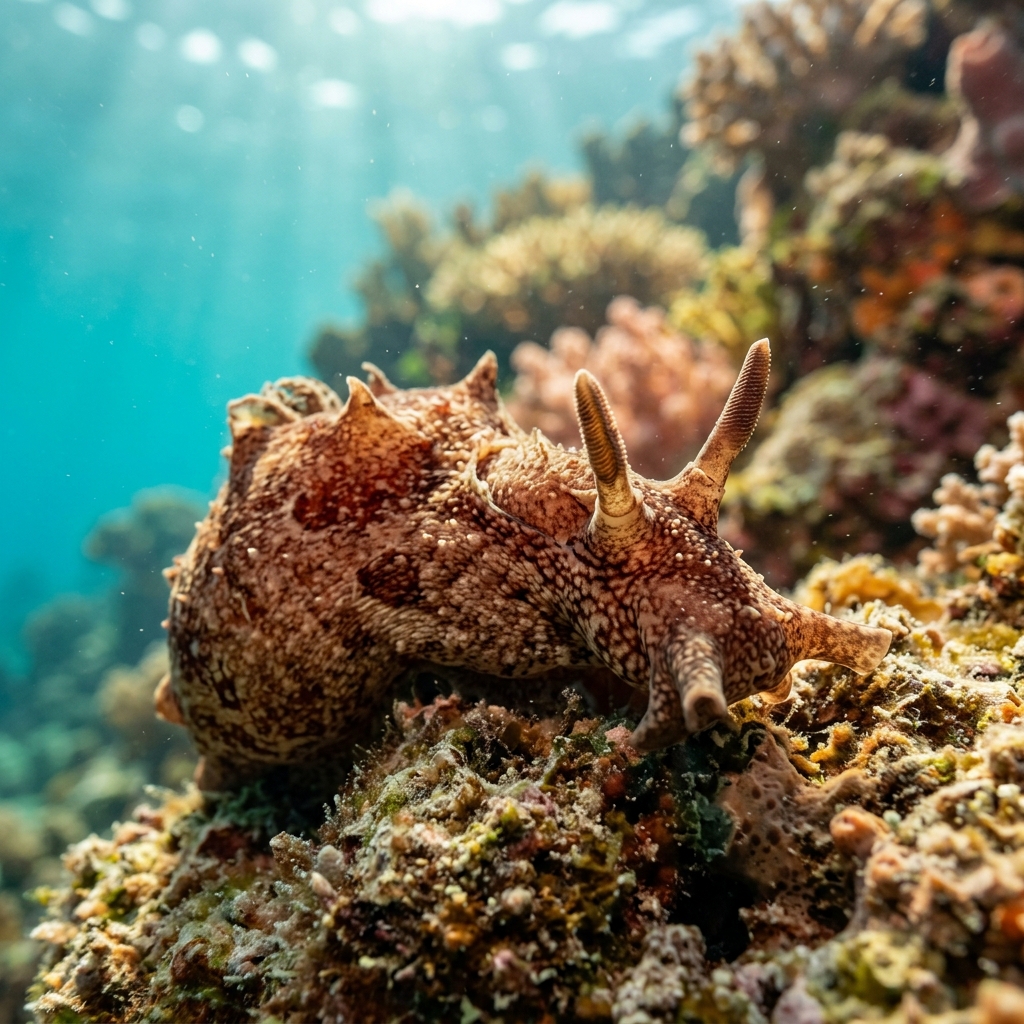
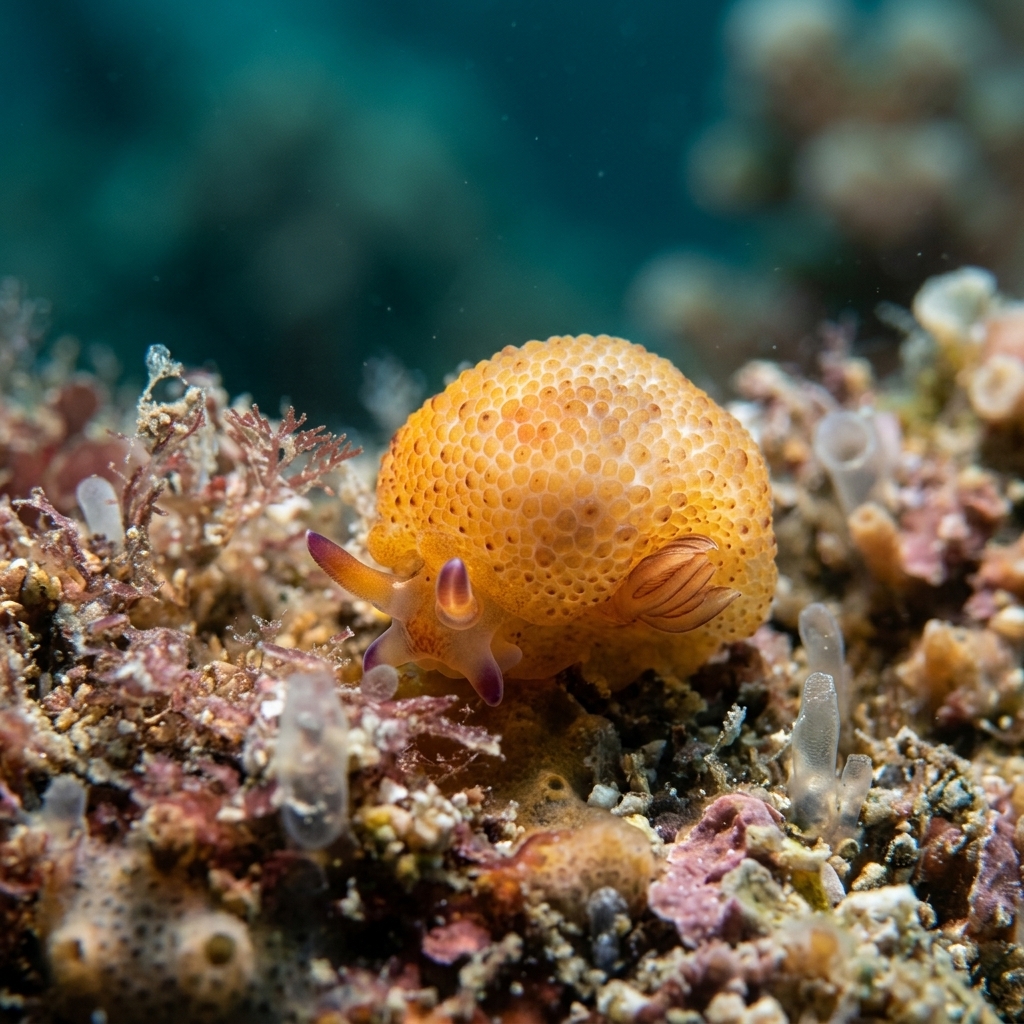
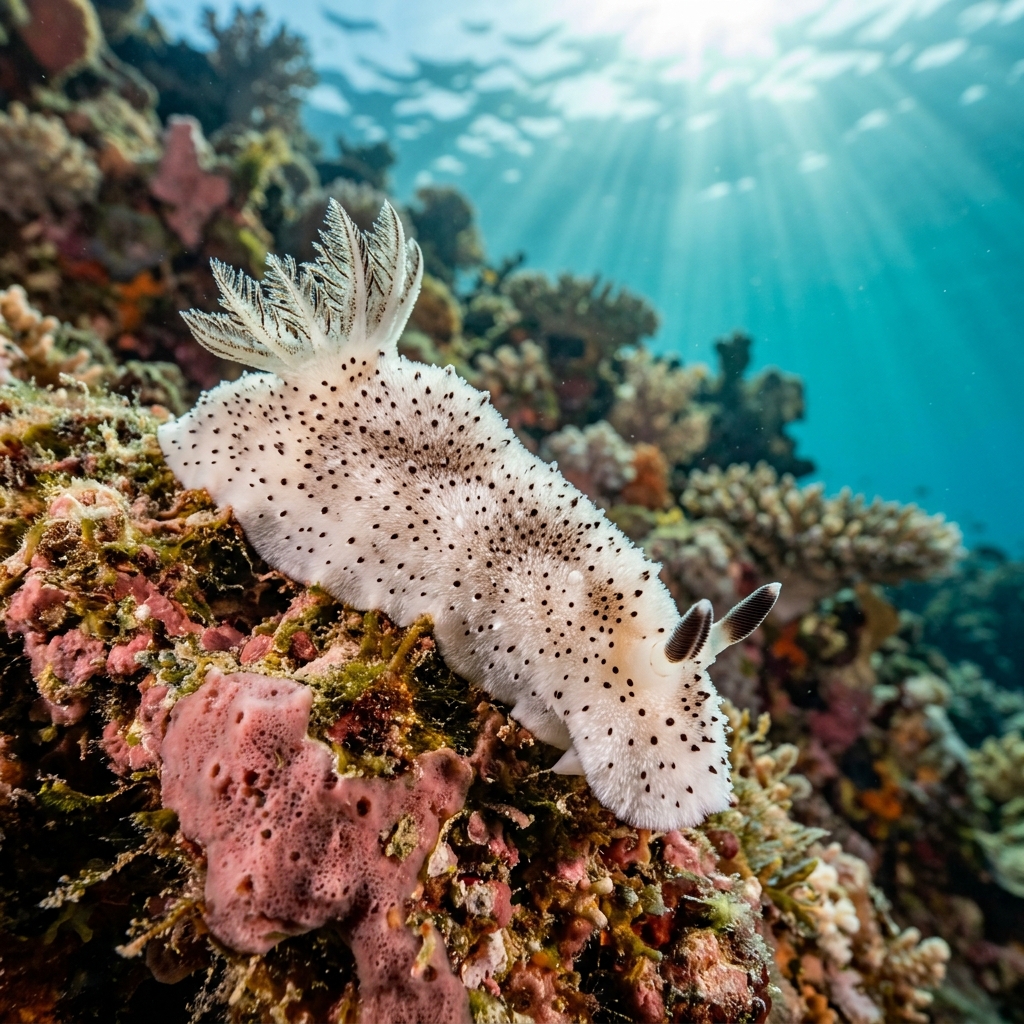
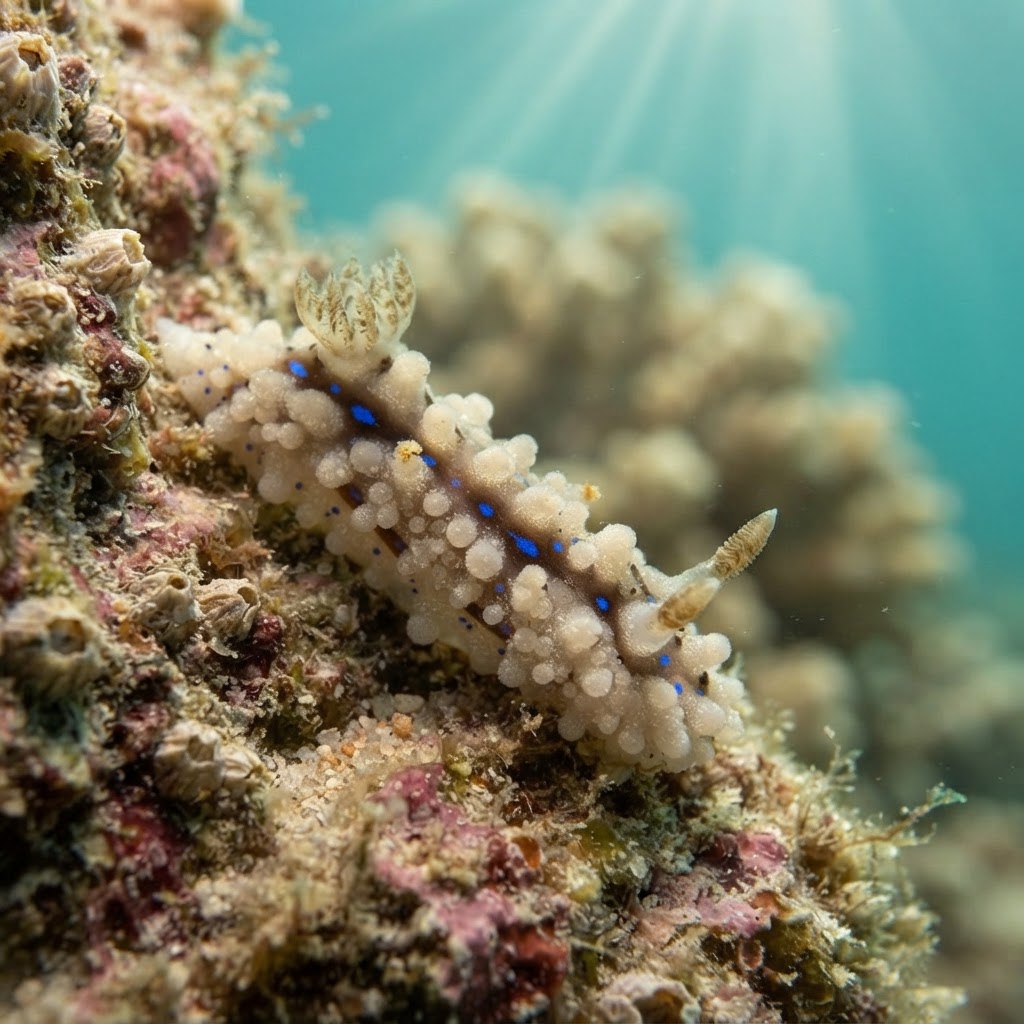
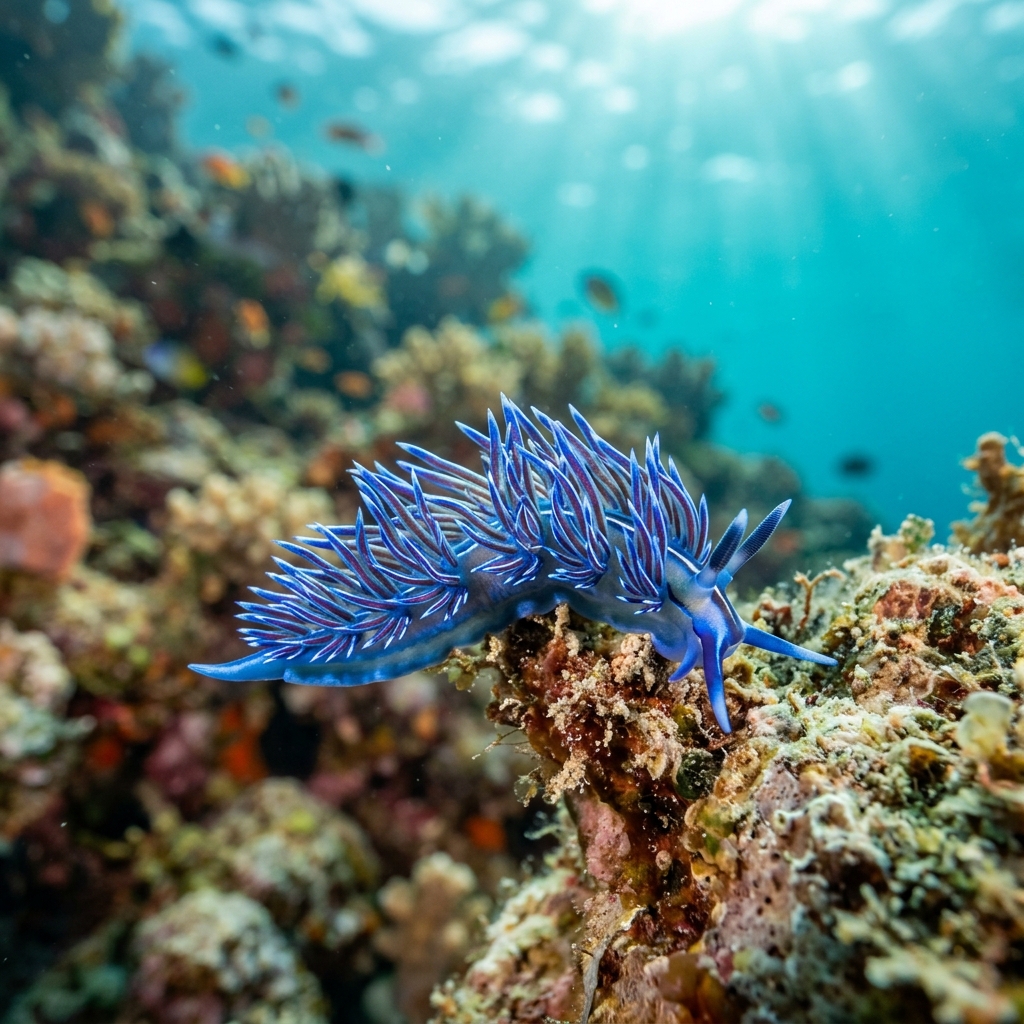
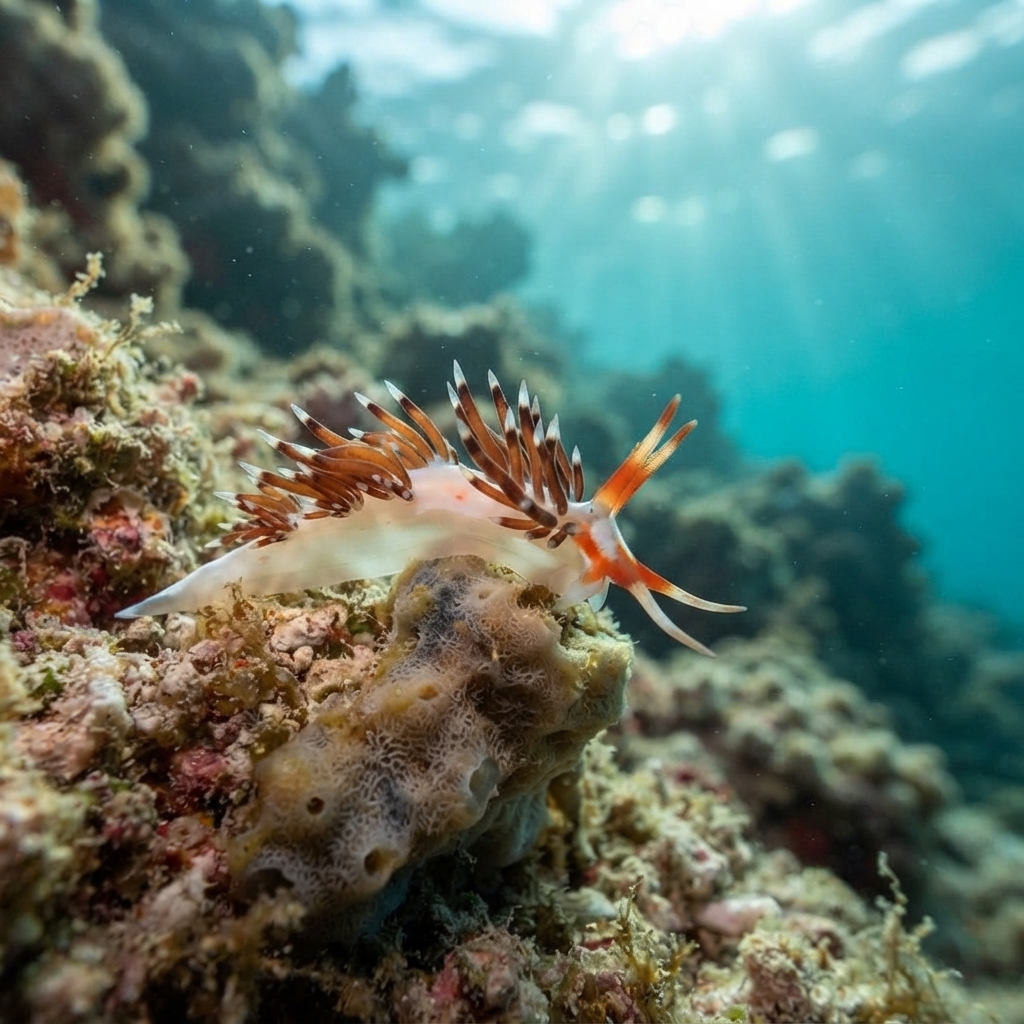
A small facelinid nudibranch, built low and slender with rows of finger-like cerata (the fleshy projections on its back that double as gills and gut) running down each side. Look closely at the colour and tips of the cerata against the surrounding rubble or algae, since size alone won't separate it from other small aeolids on the reef. There's no documented size range logged for this species, so expect it to be on the small end typical of the genus, easy to miss unless you're already scanning macro.
Divers typically find this one tucked into rubble, algae mats, or low reef structure rather than out in the open on a wall or slope. It moves slowly and shows little reaction to divers, so a steady macro eye and a slow drift over the substrate is the way to spot it. Most logs describe it as uncommon rather than rare, meaning patient searching pays off more than luck.
Like other facelinid nudibranchs, it likely feeds on hydroids and can recycle stinging cells from its prey into its own cerata as a defence, though this hasn't been specifically documented for this species.
No clear seasonal pattern shows up in the sighting data, so treat it as a year-round find. Water temperatures where it's been logged run from about 25 to 31C, comfortably warm across the calendar in Guadeloupe.
Nearly all logged sightings come from Guadeloupe, making it the place to look for this species. Within the country, Grande-Terre is the strongest area, with Basse-Terre also producing a reliable spread of sightings.
Mapping where Eveline's Learchis is logged…
Guadeloupe is by far the strongest area for this species, particularly around Grande-Terre and, to a lesser extent, Basse-Terre. Sightings outside Guadeloupe are not well documented.
There's no detected season, so it's considered a year-round sighting. It's been logged in water from about 25 to 31C, which covers Guadeloupe's typical range all year.
Look for a small, slender nudibranch with rows of cerata (soft finger-like projections) along its back, usually resting on rubble or low algae rather than open sand. Because several small facelinids share this build, a close macro look at colour and ceratal pattern is the reliable way to confirm it.
No verified size range has been recorded for this species, but as a small facelinid nudibranch it's likely only a centimetre or two, similar to related genus members.
No, this species poses no danger to divers. It's a small, defenceless nudibranch that simply goes about its business on the reef.
As with many facelinid nudibranchs, it probably feeds on hydroids and stores their stinging cells in its cerata for its own defence, a trick common across the family even though it hasn't been directly confirmed for this species.
Site and sighting data is aggregated from diver logs, iNaturalist and GBIF. For taxonomy and conservation status:
Light-spotted Aegires
3,168 sites