Doris fontainii
Cold-water nudibranch logged across Puerto Madryn, Argentina, in 9.7-15.7C water, year-round and usually uncommon.
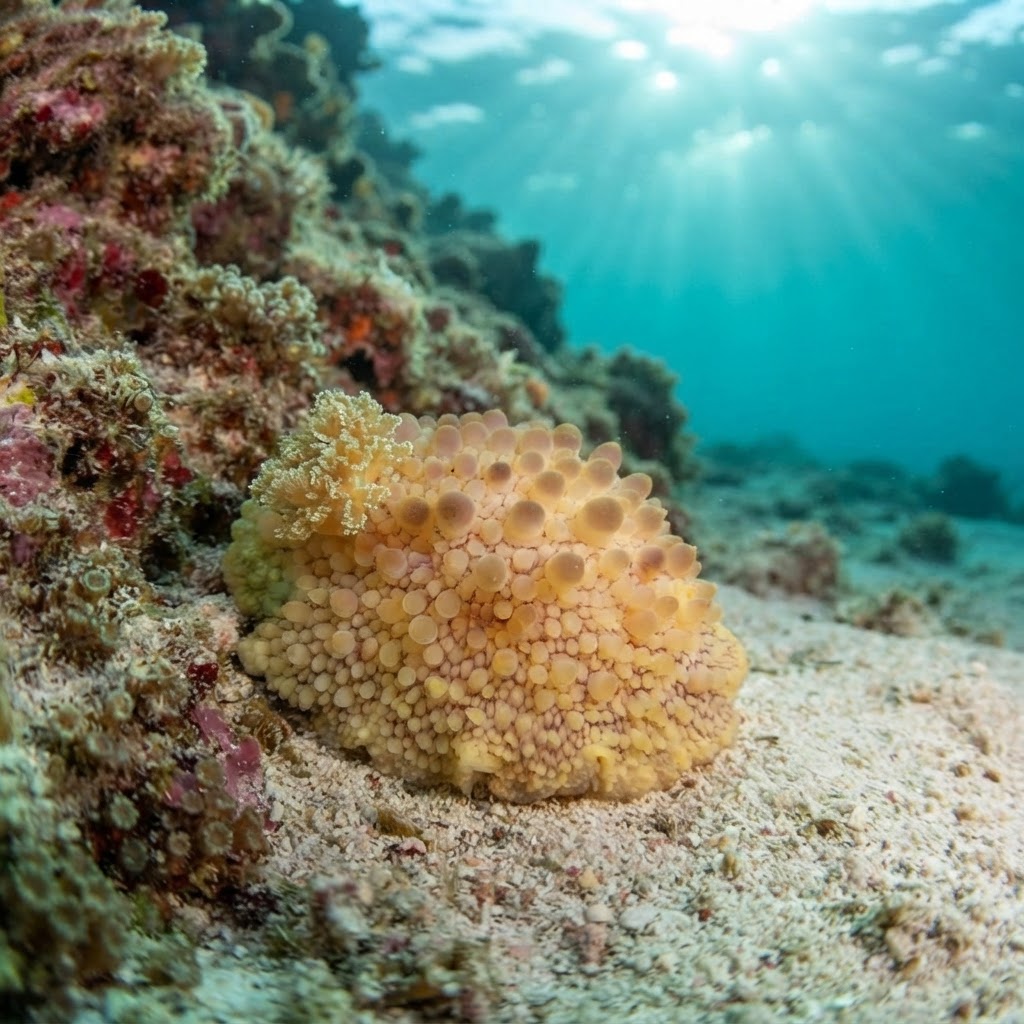
Squat, soft-bodied sea slug (nudibranch) to about 8 cm, covered in rounded, wart-like bumps (tubercles) that give it a rough, textured look rather than a smooth or frilly one. Body colour runs through mottled orange, brown and cream tones, which helps it blend into the rocky, algae-covered reefs it favours. Look for the feathery gill cluster (rosette) near the rear and the pair of sensory tentacles (rhinophores) up front, both typical dorid nudibranch features but easier to spot given the animal's stocky size.
Divers find it parked on rocky, algae-draped substrate, moving slowly as it grazes rather than swimming or fleeing from a torch or camera. It is an easy subject to approach and photograph since it has no quick escape response, though its mottled, bumpy body can make it easy to swim straight past. Most logs describe it as an uncommon find even at its core sites, so a slow, careful scan of the bottom pays off more than a fast fin over open reef.
Like other dorid nudibranchs, it almost certainly feeds on sponges, using that diet to build the chemical defences that make its soft, shell-less body unappealing to predators.
Sightings show no detected seasonal pattern, so treat it as a year-round find in the cold waters it favours, 9.7 to 15.7C. Dive it whenever you are diving Puerto Madryn or Camarones, rather than planning around a particular month.
This is a Patagonian speciality, most reliably logged around Puerto Madryn, Argentina, with a smaller but consistent presence at Camarones, Argentina, and a single logged site near Concepcion, Chile. Argentina holds the vast majority of recorded sightings, making the Puerto Madryn area the place to plan a dedicated search.
Mapping where Large Warted Sea Slug is logged…
It is most reliably found around Puerto Madryn, Argentina, with additional sightings at Camarones, Argentina, and one logged site near Concepcion, Chile. Argentina is by far the stronger bet if you want to look for it.
Sightings are spread across the year with no clear season, so it can turn up on any dive in its cold-water range, roughly 9.7 to 15.7C. Plan around good diving conditions at Puerto Madryn rather than a specific month.
Look for a stocky, warty-textured body around 8 cm long in mottled orange and brown tones, with a feathery gill tuft near the tail and two rhinophores up front. Its rough, bumpy skin sets it apart from smoother or more colourful nudibranchs on the same reefs.
They typically reach about 8 cm in length, a reasonably sizeable nudibranch that is easier to spot than many smaller reef slugs once you know its mottled, warty look.
No, it poses no danger to divers. It has no means of stinging or biting and simply grazes slowly over rock and algae, happy to be photographed up close.
It almost certainly grazes on sponges, in keeping with other dorid nudibranchs, using compounds from its diet to make its body distasteful to would-be predators.
Site and sighting data is aggregated from diver logs, iNaturalist and GBIF. For taxonomy and conservation status:
Blue Dragon
3,163 sites