Chrysiptera rex
A small purple-and-yellow damselfish found almost exclusively around Okinawa's Ryukyu reefs in warm 25-29C water.
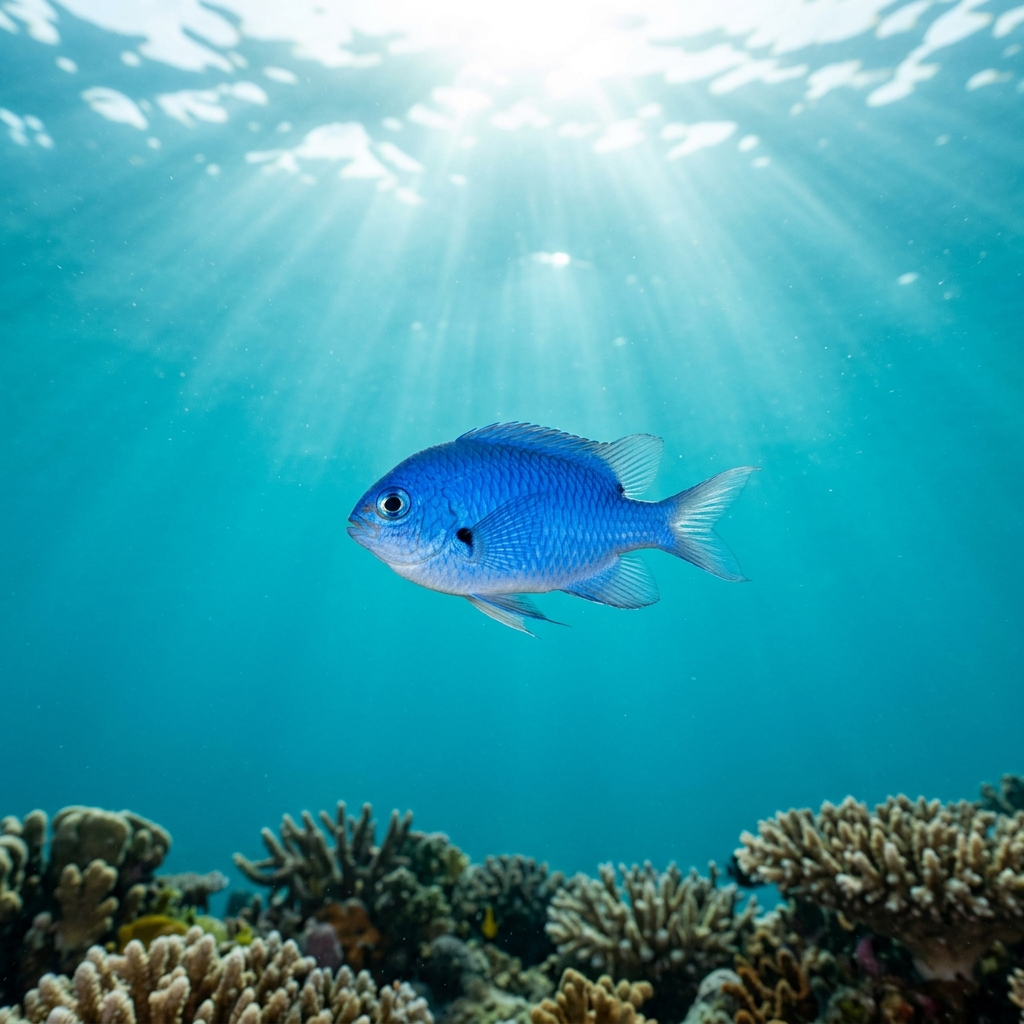
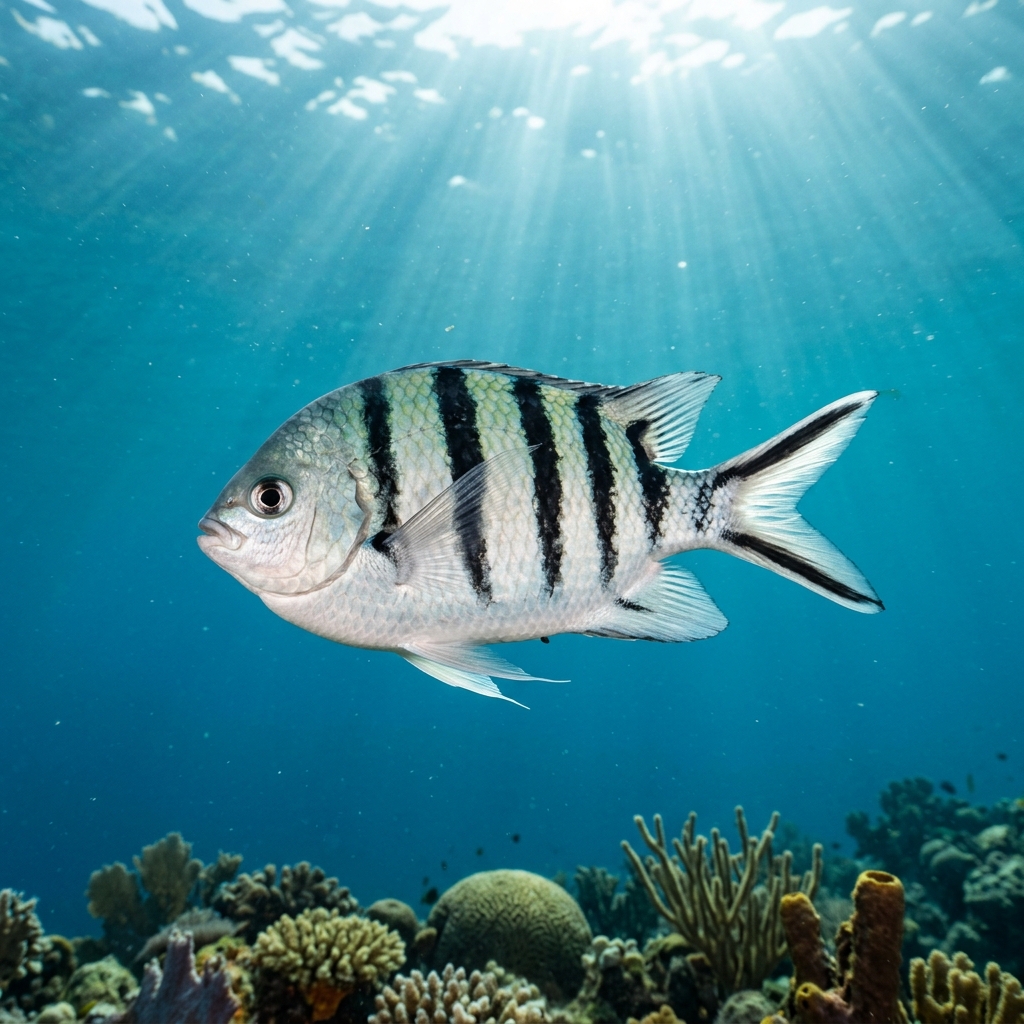
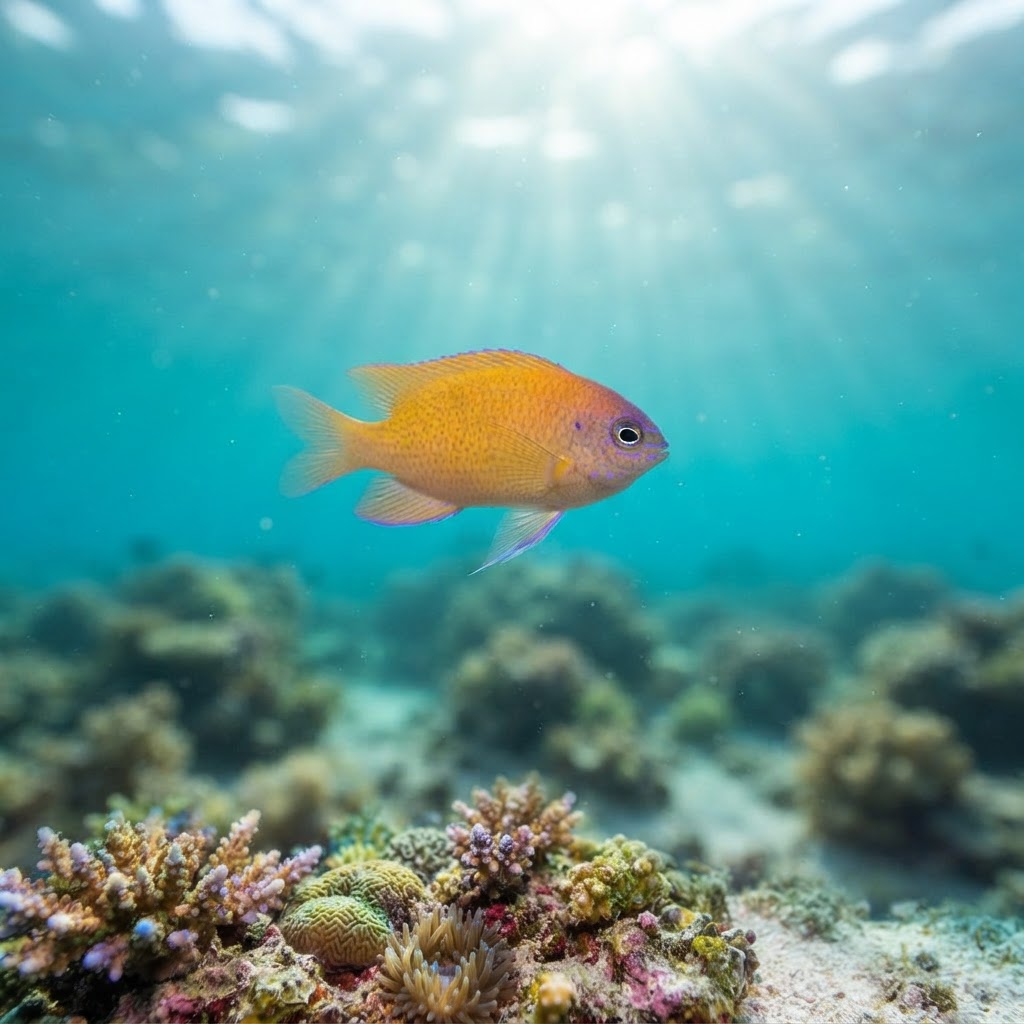
A tiny damselfish, about 5cm, with a deep violet-blue body that shifts to a sharp yellow tail and rear dorsal fin. The two-tone split down the body is the giveaway, with no stripes or spots to confuse the pattern. It tends to hover close to rubble and coral heads rather than out in open water, which makes that colour break easy to spot at close range.
Divers typically find it hovering in small groups just above rubble patches and low reef structure, sticking close to cover rather than roaming. It's a shy fish by damselfish standards, more often logged as uncommon or rare than seen in the loose, curious swarms some of its relatives form. Look for it on slower, closer-in reef sections rather than current-swept walls.
It's one of the more range-restricted damselfish in the Pacific, with its stronghold in the Ryukyu Islands rather than the wider Indo-Pacific spread typical of the genus.
No clear seasonal pattern shows up in the sighting data, and with a comfortable range of 25.4 to 29.3C it's plausible year-round on Okinawan reefs. Treat it as a resident species you can look for on any visit rather than one tied to a particular month.
This one is a Japan specialty, with sightings concentrated in Okinawa and the Ryukyu Islands. It hasn't turned up in meaningful numbers anywhere else in the logged data, so if you want to tick this species, Okinawa is the place to plan around.
Mapping where King Demoiselle is logged…
Okinawa and the wider Ryukyu Islands of Japan are the reliable spot, with sightings logged across dozens of local sites. It isn't a species you can count on finding outside that region.
There's no strong seasonal signal in the data, and the water stays in a comfortable 25.4 to 29.3C range, so it's realistic to look for it on any Okinawa dive trip regardless of month.
Look for a small, roughly 5cm damselfish with a violet-blue front half and a sharp yellow rear half and tail. It usually hovers near rubble or low reef structure rather than in open water.
They stay small, reaching around 5cm, typical of the damselfish family. You'll want to look closely at rubble patches rather than scan the open reef for something this size.
No, they pose no risk to divers. They're a small, shy reef fish that tends to keep its distance rather than approach.
Site and sighting data is aggregated from diver logs, iNaturalist and GBIF. For taxonomy and conservation status:
Dascyllus
3,697 sites