Janolus incrustans
An uncommon frilly nudibranch logged on Bali reefs in warm 25.6-31.6C water, year-round but rarely spotted.
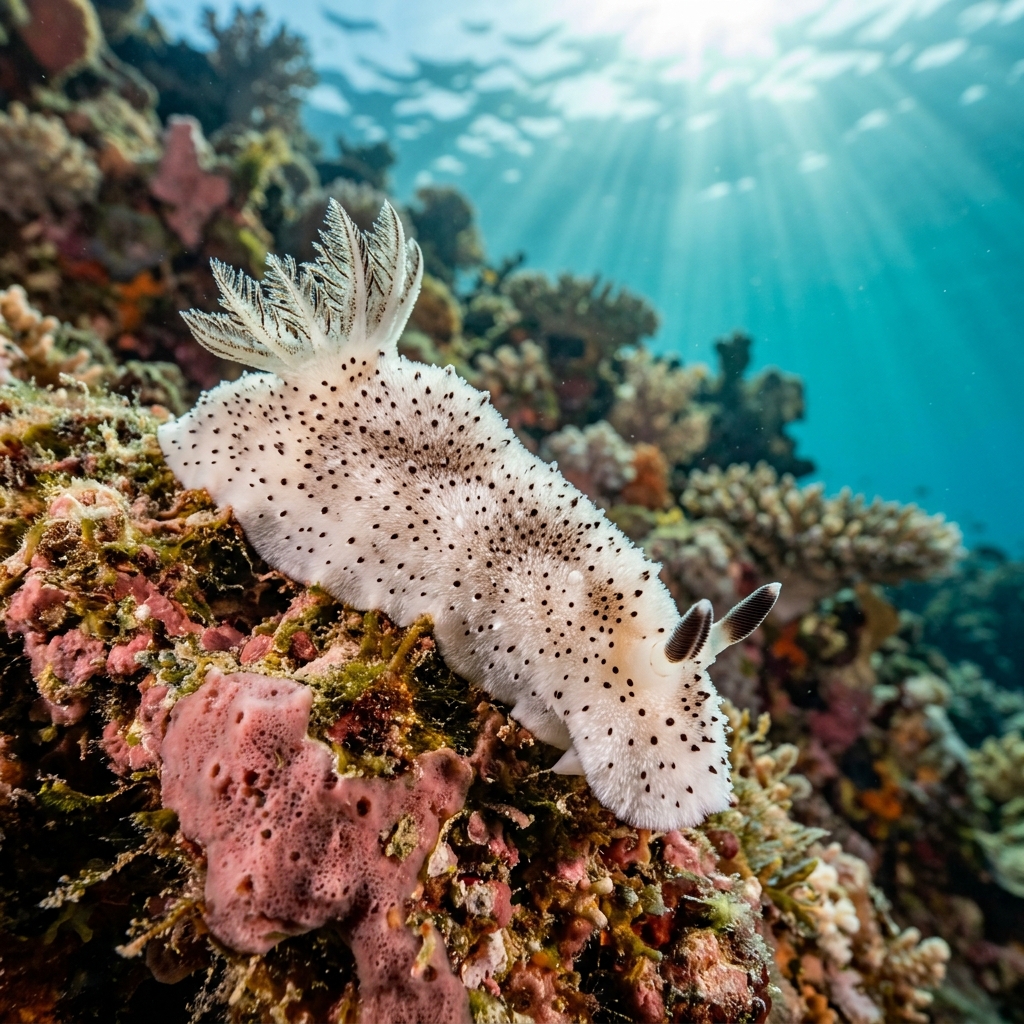
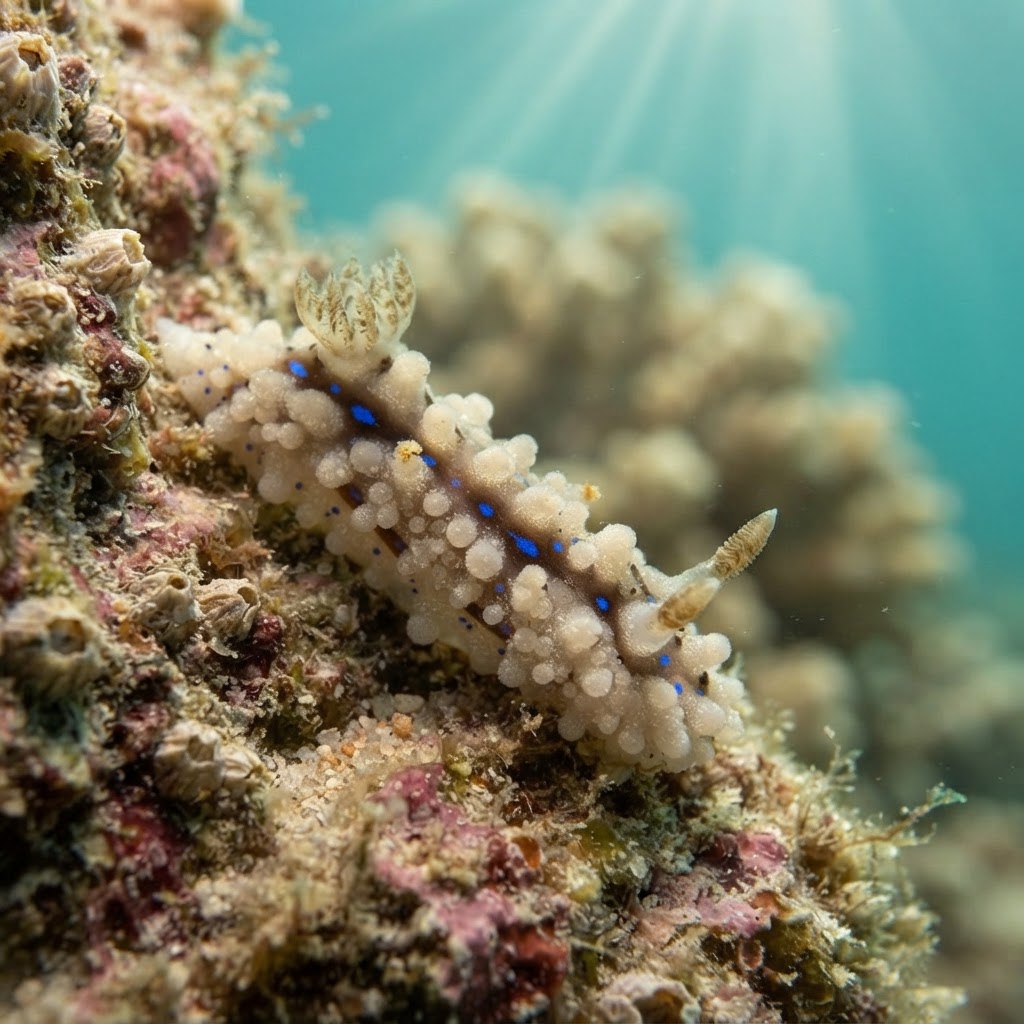
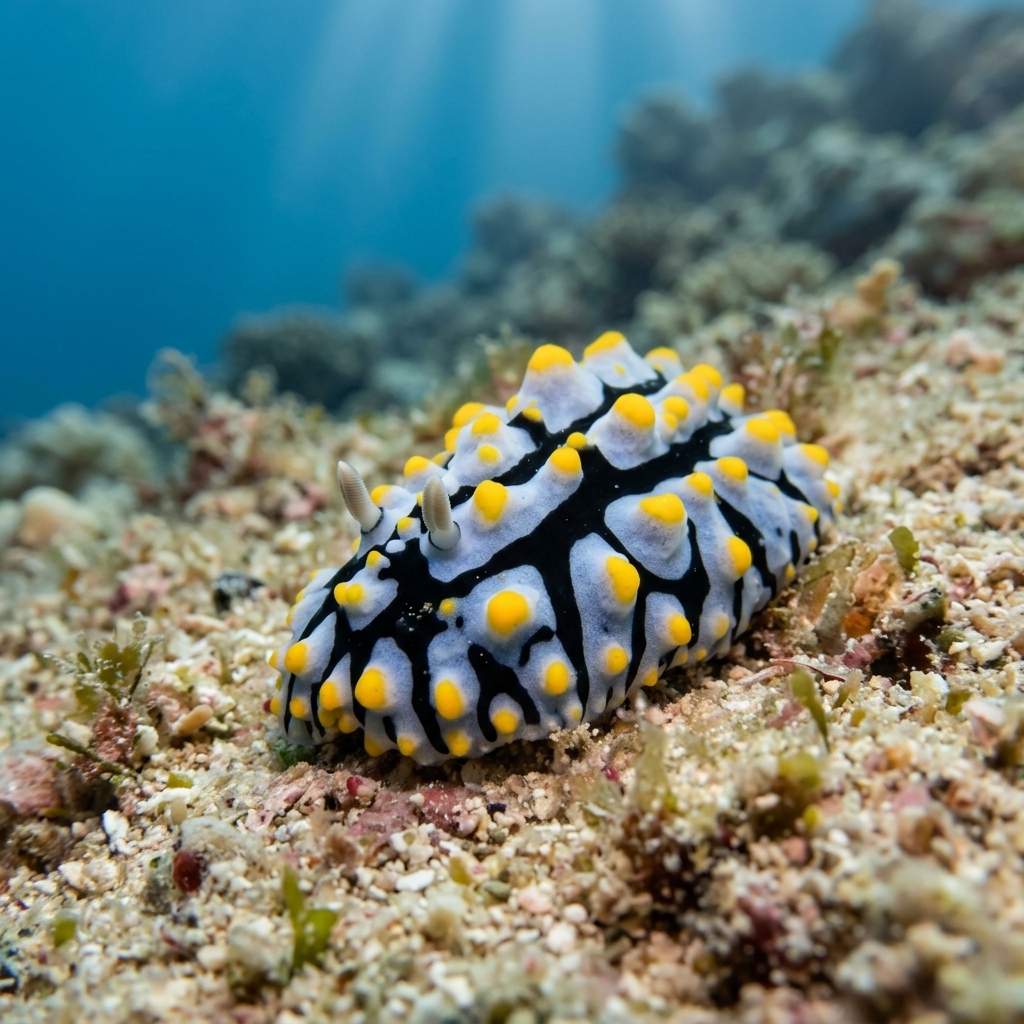
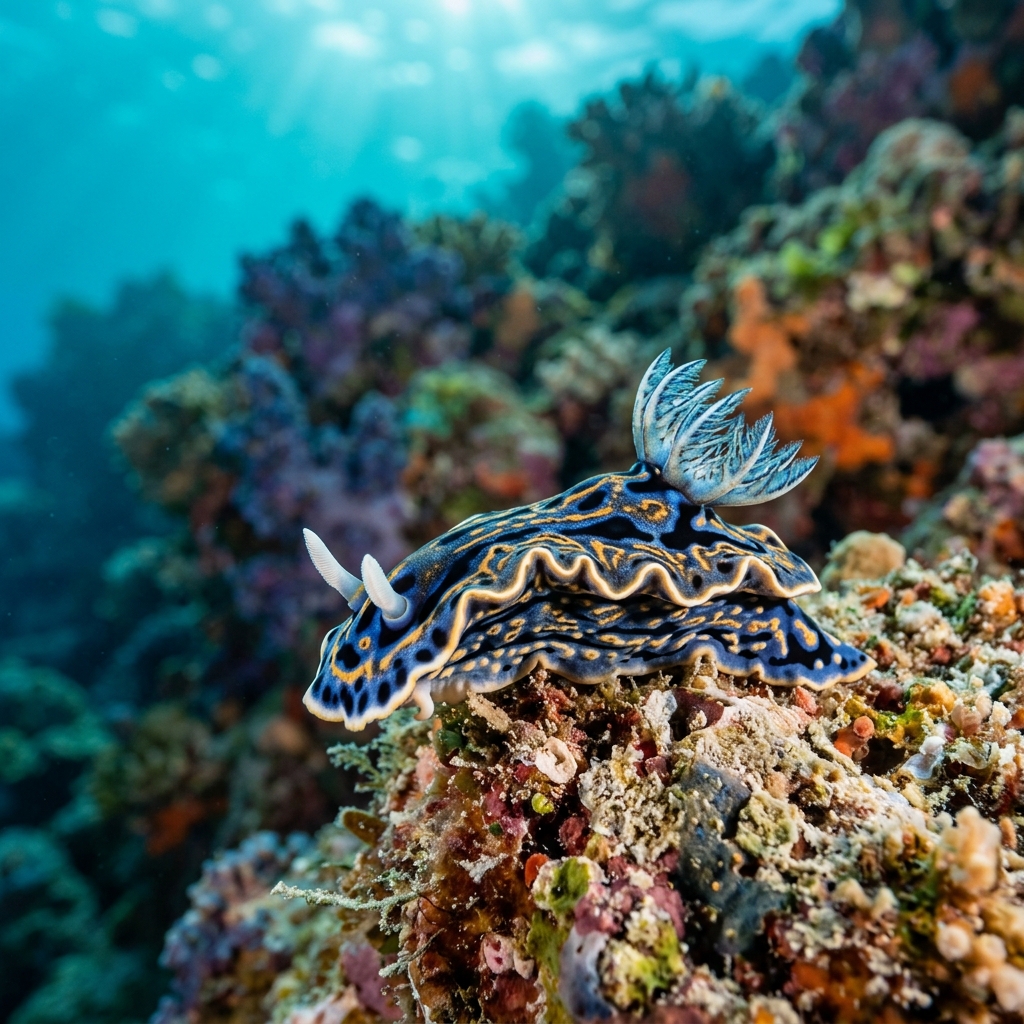
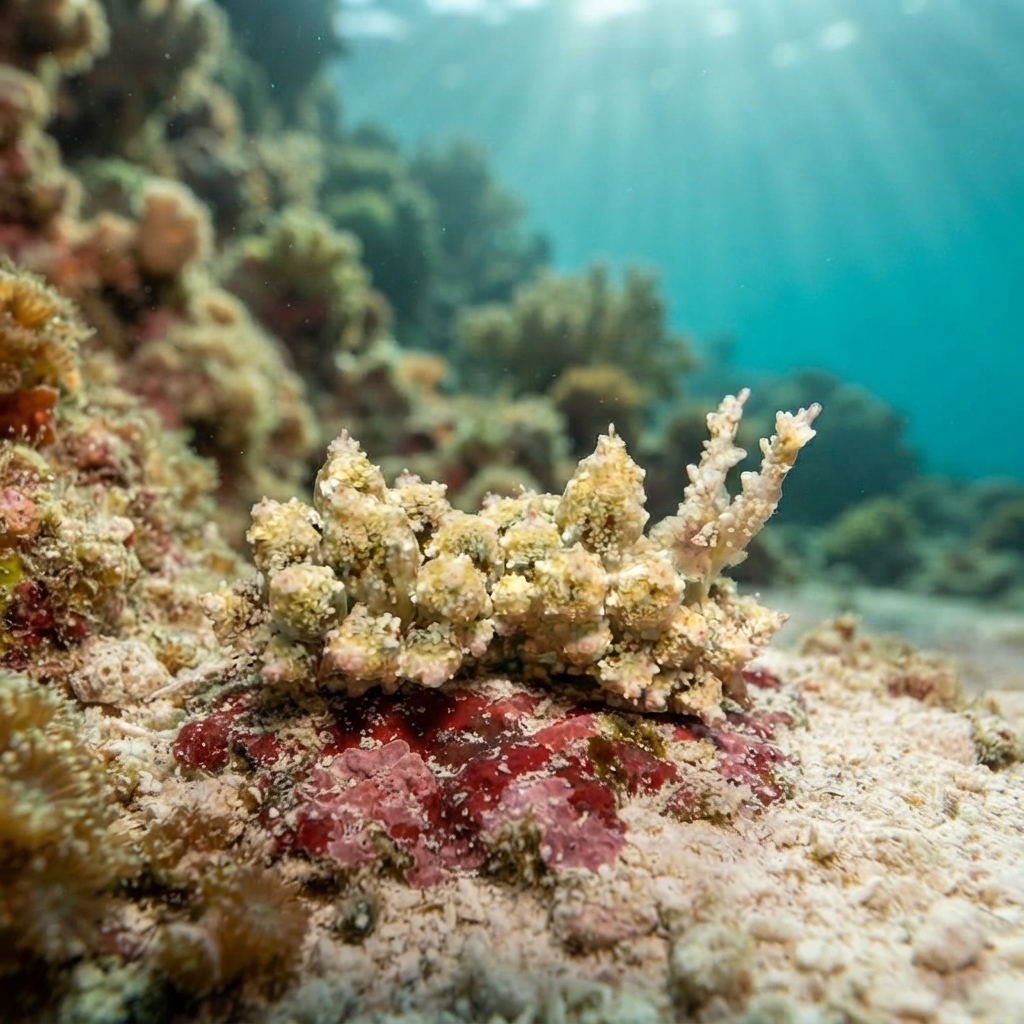
Look for a small, soft-bodied slug covered in slender, finger-like projections (cerata) that give it a frilly, almost fuzzy outline rather than the smooth mantle of many reef nudibranchs. The body tends toward a translucent or pale tone, letting the tips of the cerata stand out as the main visual cue against the substrate. Its size in the water is modest, so divers usually spot it only when scanning slowly across encrusted rock or rubble rather than swimming past at normal pace.
Divers encounter this nudibranch moving slowly over encrusted surfaces where it grazes, staying close to the substrate rather than swimming in open water. It shows no reaction to divers beyond continuing its slow crawl, and like most small nudibranchs it is easiest to find during a careful, close-focus look at rubble and rock rather than a general reef swim.
The cerata covering its back likely serve a similar role to those in related nudibranch species, helping with both breathing and possibly deterring predators by concentrating stinging cells taken from its prey.
There is no detected seasonal pattern, and with observed water temperatures between 25.6 and 31.6C, conditions stay suitable across the year on Bali's reefs. Treat it as a year-round possibility rather than a species tied to a particular month.
Sightings logged so far come from Bali, Indonesia, making it the only region with a confirmed diver record for this species. It is not reported elsewhere in the data, so Bali is currently the place to look if you want a real shot at finding one.
Mapping where Janolus incrustans is logged…
The only confirmed sightings logged so far are from Bali, Indonesia, which is currently the best-known spot for finding this nudibranch.
There is no clear season in the data. It has been recorded in warm water between 25.6 and 31.6C, conditions that persist year-round on Bali's reefs, so it can turn up any month.
Look for a small, soft-bodied slug with slender, frilly cerata covering its back, giving it a fuzzy rather than smooth outline. Its pale, often translucent body makes the cerata tips the main feature divers key on.
Exact size data is not available, but like most Janolus species it stays small, generally only a few centimetres long, so a slow close-focus search is needed to spot one.
No. It poses no threat to divers and can be observed safely without any special precautions.
Site and sighting data is aggregated from diver logs, iNaturalist and GBIF. For taxonomy and conservation status:
Blue Dragon
3,163 sites