Janolus hyalinus
A translucent nudibranch turning up on Zeeland dive sites in cool 10.8-17.5C water, most reliably logged in the Netherlands.
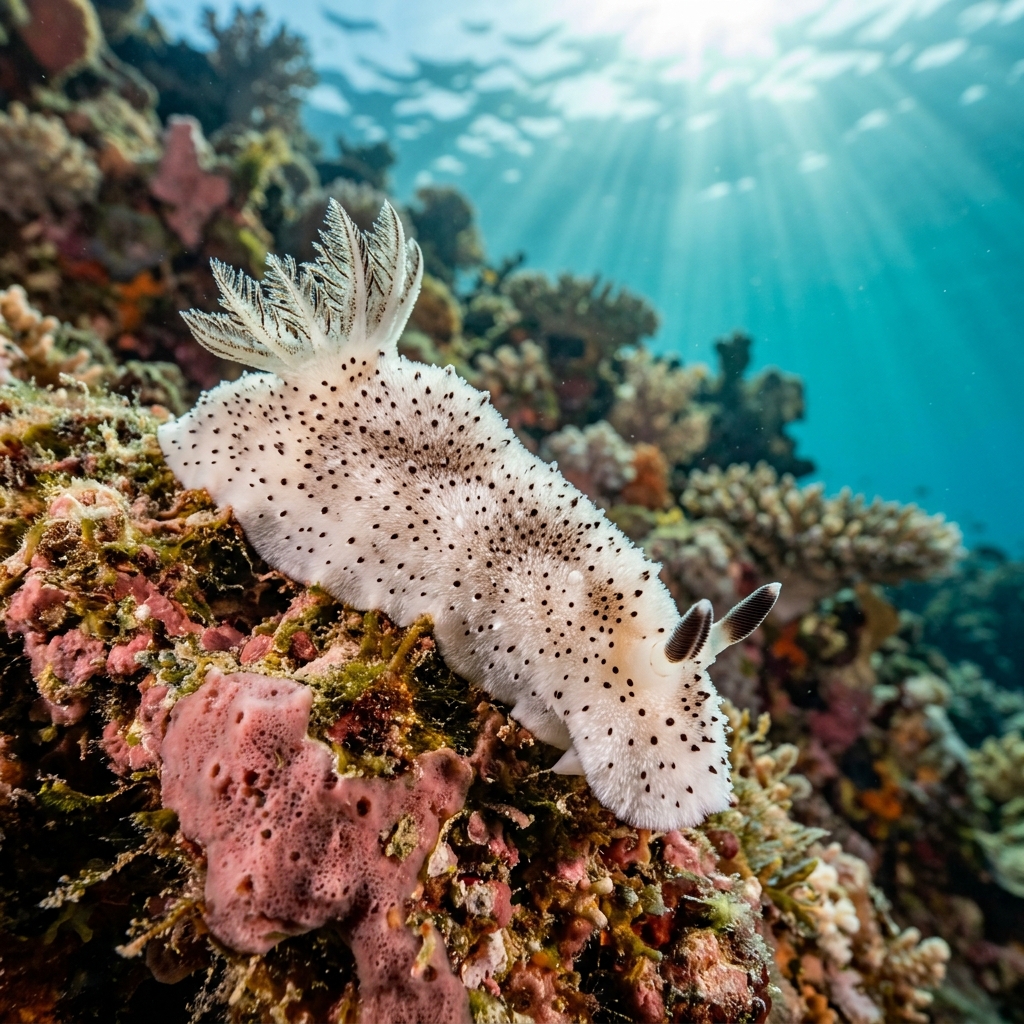
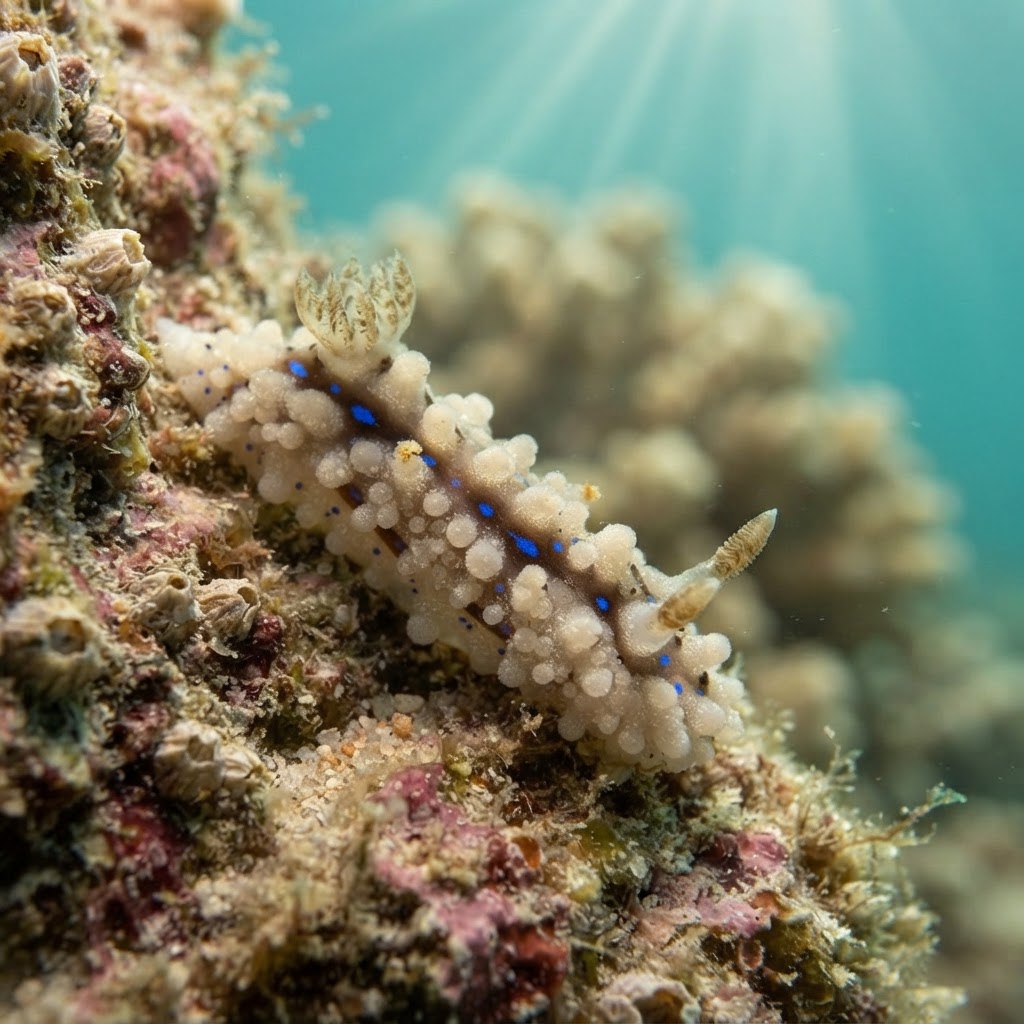
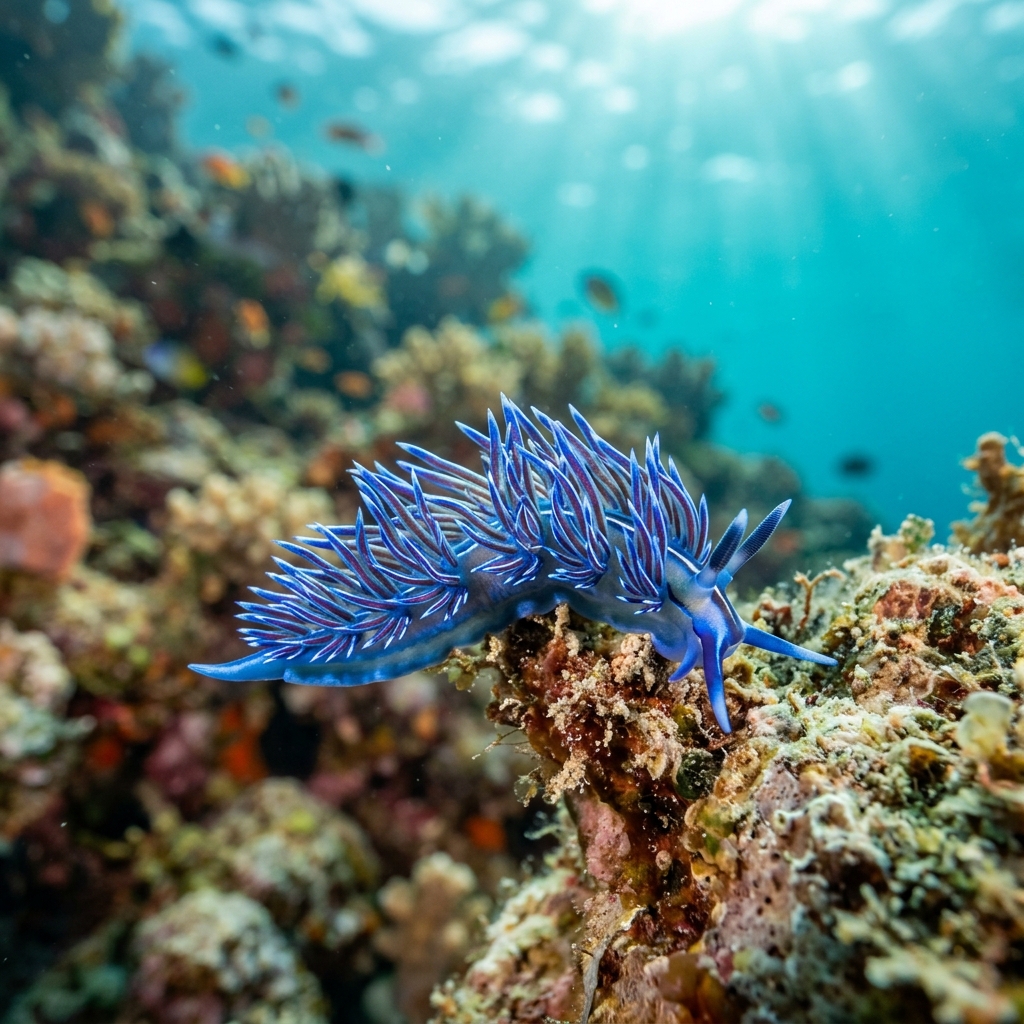
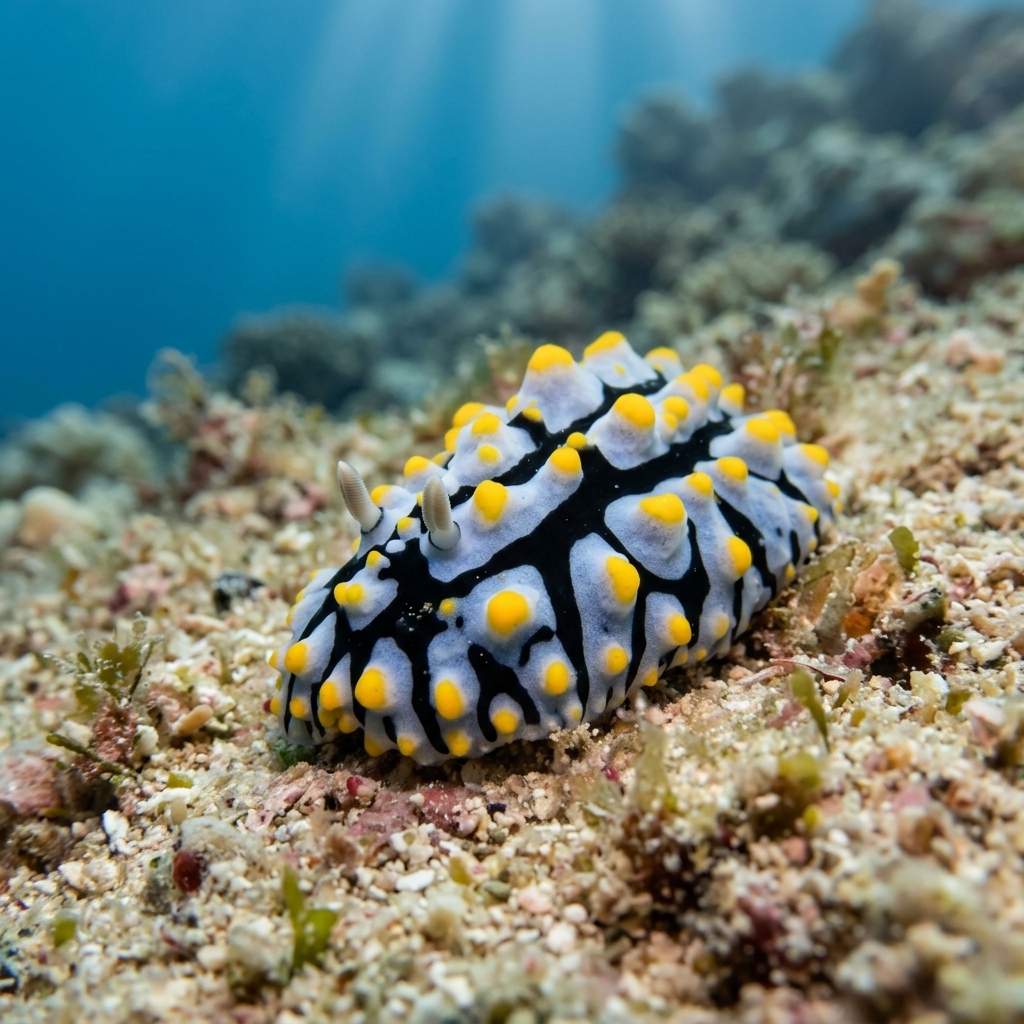
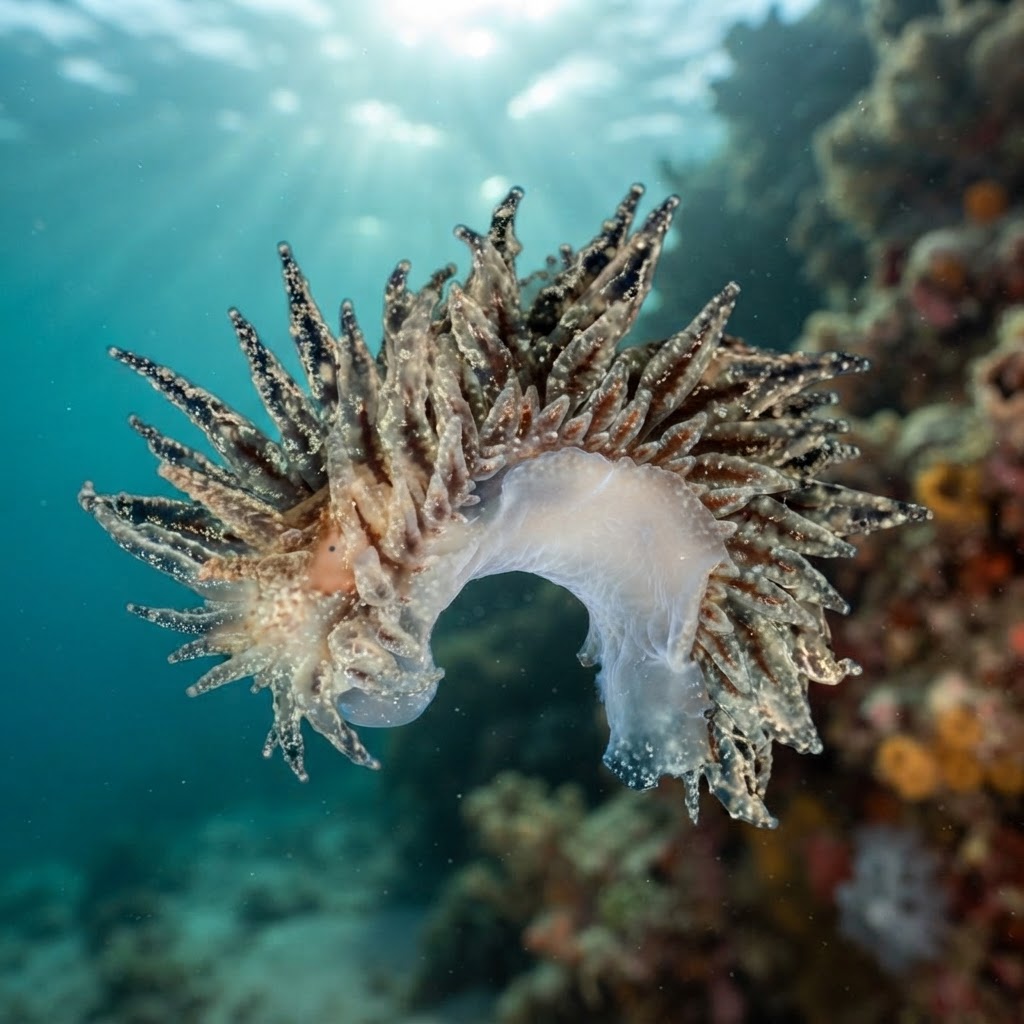
A small, semi-transparent nudibranch (sea slug) whose body is covered in slender, branching finger-like projections called cerata, which often carry white or orange tips that stand out against the see-through body. It sits low and narrow on the substrate rather than raised, and its translucence makes it look almost colourless until light catches the ceratal tips. There is no strong colour-morph or size data recorded, so look mainly for the branched cerata pattern and glassy body to confirm it.
Divers mostly find it sitting still or grazing slowly on hard surfaces like rock, pilings or debris in the cooler temperate sites where it's logged, rather than out in the open water column. It shows no reaction to divers and is easy to swim straight past, since its transparency and small size make it blend into the background. Most logs describe it as uncommon even at its best sites, so spotting one usually takes a slow, close look at the substrate rather than a casual pass.
Like other Janolus species, it likely feeds on hydroids or bryozoans, and its cerata may serve double duty in gas exchange and camouflage, since the translucent body lets the gut colouring show through instead of relying on pigment.
Sightings don't show a clear seasonal pattern, so treat it as a year-round possibility wherever it's found. It has been logged in water from 10.8 to 17.5C, which fits the cooler temperate conditions typical of Zeeland diving for most of the year.
This one is overwhelmingly a Zeeland, Netherlands species, where it turns up far more often than anywhere else logged so far. Smaller numbers have been recorded in Occitanie, France, and a single site in Victoria, Australia, making the Dutch coast the place to actually plan a dive around it.
Mapping where Glassy Janolus is logged…
It's most reliably found in Zeeland, Netherlands, which accounts for the vast majority of logged sightings. Smaller numbers have also been recorded in Occitanie, France, and one site in Victoria, Australia.
There isn't a detected seasonal pattern, so it's logged across the year rather than in a specific window. It has been recorded in water from 10.8 to 17.5C, which covers much of the diving season in its main Dutch sites.
Look for a small, glassy, near-transparent nudibranch covered in branching cerata, often with pale or orange tips. It sits low on rock or debris and is easy to miss without a slow, close search.
No, it poses no risk to divers. It has no stinging or venomous defences relevant to humans and simply goes about grazing on the substrate.
Exact size data isn't available, but like most Janolus species it stays small, generally just a few centimetres, and relies on its translucent body to stay inconspicuous rather than any bulk.
It's typically logged as uncommon even at its best sites, with only one site recording it as common. So finding one usually takes a deliberate, careful look rather than a lucky glance.
Site and sighting data is aggregated from diver logs, iNaturalist and GBIF. For taxonomy and conservation status:
Light-spotted Aegires
3,168 sites