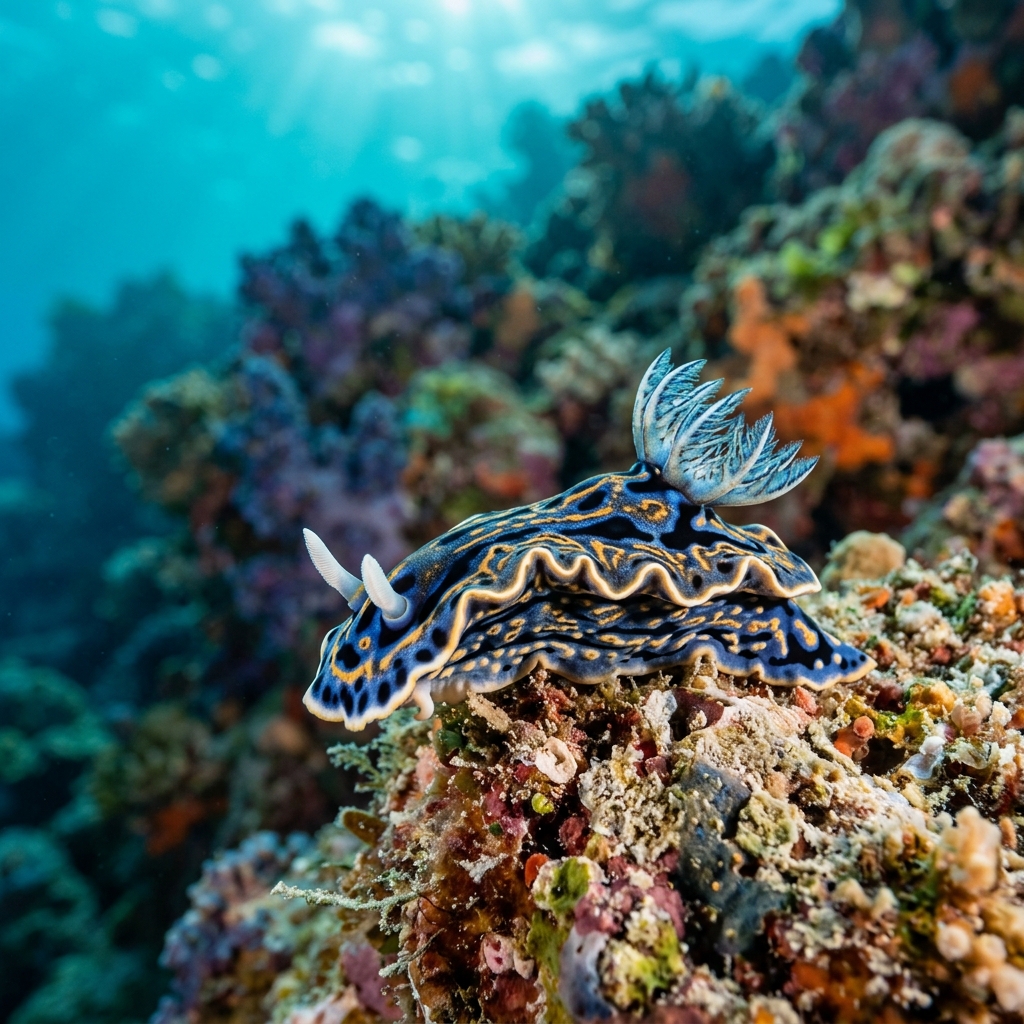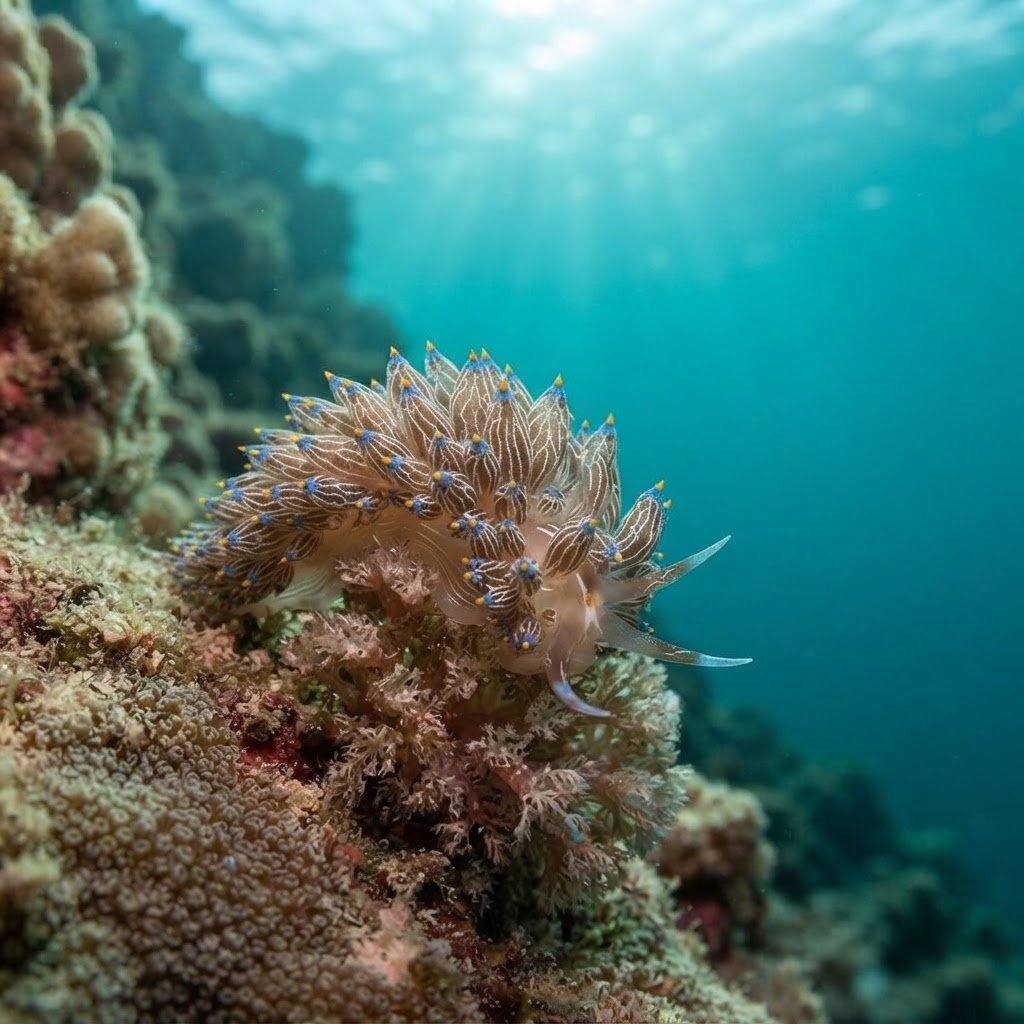
Janolus eximius
An uncommon find off New Zealand's North Island, this nudibranch turns up in cooler water between 13 and 19 C year-round.
A small, soft-bodied sea slug (nudibranch) with a translucent body and rows of slender, finger-like projections (cerata) along its back that give it a slightly bristly outline. Colouration tends toward pale, semi-transparent tones, which makes it easy to miss against sponge or algae-covered rock. Look closely at rocky reef surfaces rather than open sand, since this species stays low and close to structure.
Divers find this one tucked against rocky substrate, moving slowly as nudibranchs do, browsing over encrusting life rather than swimming or drifting in open water. It shows no particular reaction to divers beyond the usual slow, unhurried pace typical of the group, so a close, careful look with a torch or macro lens is the way to actually spot it. Best searched for on the same kind of temperate reef structure where sponges and hydroids grow, since these groups typically feed on that type of prey.
Like other members of the Janolidae family, this species likely feeds on hydroids, using its cerata both for that feeding and for a degree of camouflage against similarly textured backgrounds.
No clear seasonal pattern has emerged from diver logs, so treat this as a year-round species. It's been recorded in water between 13.1 and 19.1 C, which fits New Zealand's cooler temperate diving conditions across most of the year rather than a narrow warm-water window.
This species has been logged exclusively on the North Island of New Zealand, so far the only confirmed diver sightings anywhere. It shows up as an uncommon to rare find at rocky reef sites there, meaning you need to be looking closely rather than expecting it to stand out.
Mapping where Janolus Eximius is logged…
All confirmed sightings so far come from the North Island of New Zealand, where it turns up as an uncommon to rare find on rocky reef sites.
There's no detected seasonal pattern, so it can be found year-round. It has been observed in water from 13.1 to 19.1 C, consistent with New Zealand's temperate diving conditions across most months.
Look for a small, translucent nudibranch with rows of slender cerata along its back, giving it a slightly bristly silhouette. It sits low on rocky substrate and is easy to overlook against sponge-covered rock, so a slow, close search works best.
Exact size data isn't confirmed for this species, but like most Janolidae nudibranchs it stays small, typically only a few centimetres long, making close-up viewing essential.
No, this species poses no danger to divers. It's a small, slow-moving sea slug with no sting or defence relevant to humans.
Site and sighting data is aggregated from diver logs, iNaturalist and GBIF. For taxonomy and conservation status:
Blue Dragon
3,163 sites