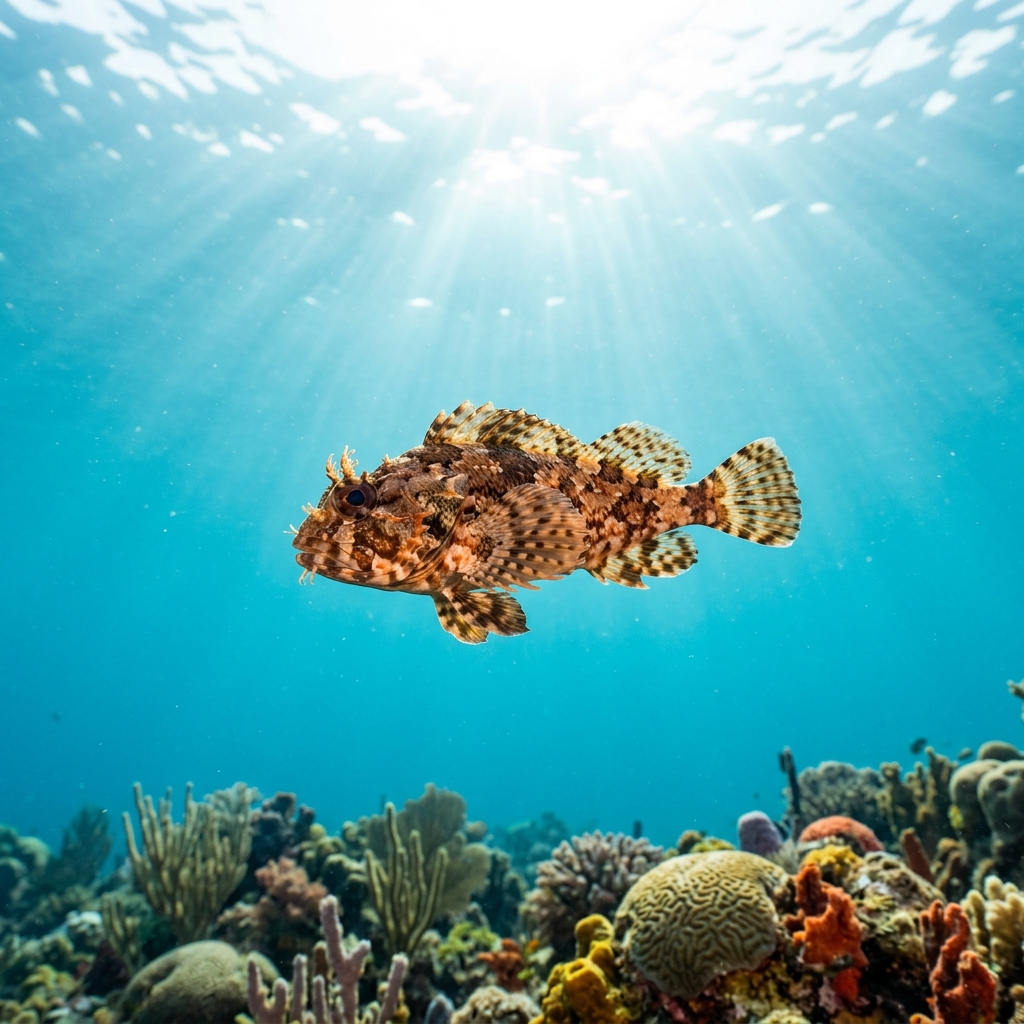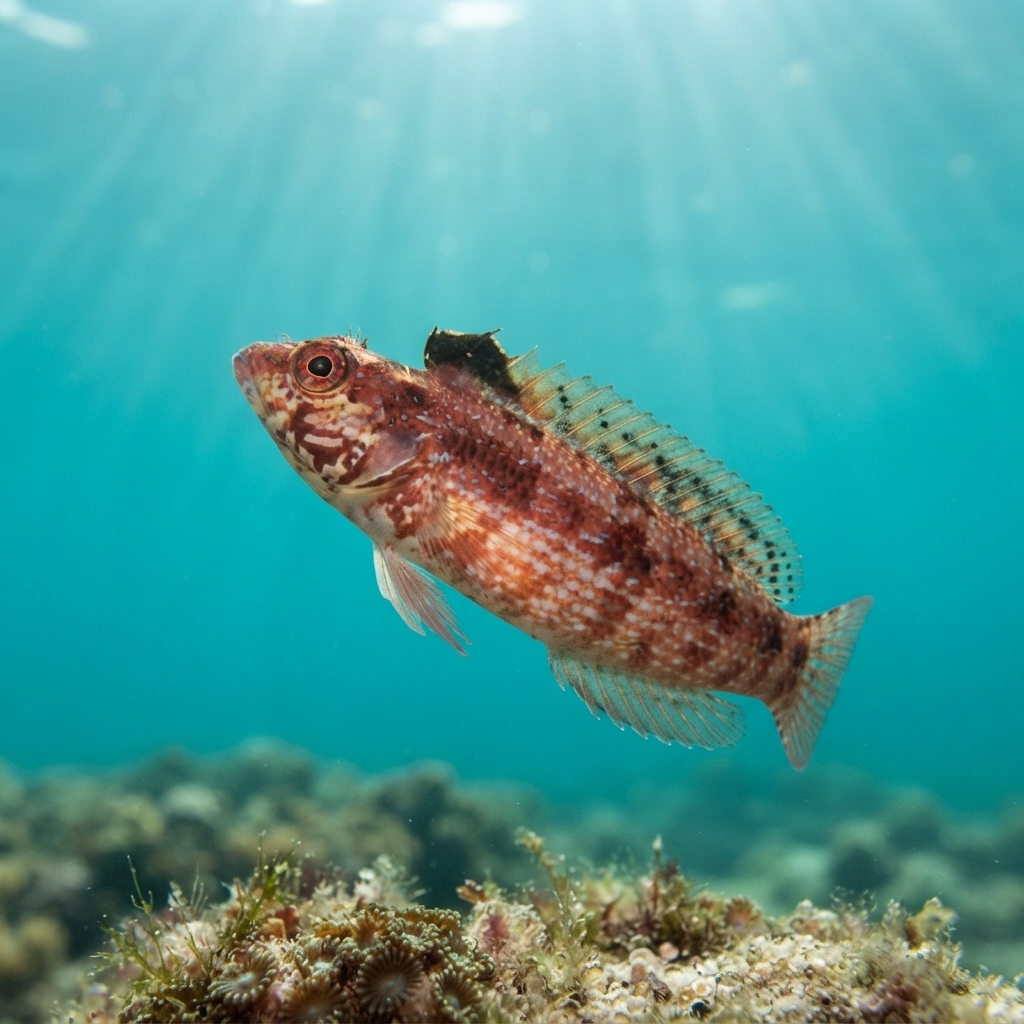
Alloclinus holderi
A speckled 7cm reef dweller most logged in California and Baja California, often missed on cooler kelp forest dives year-round.
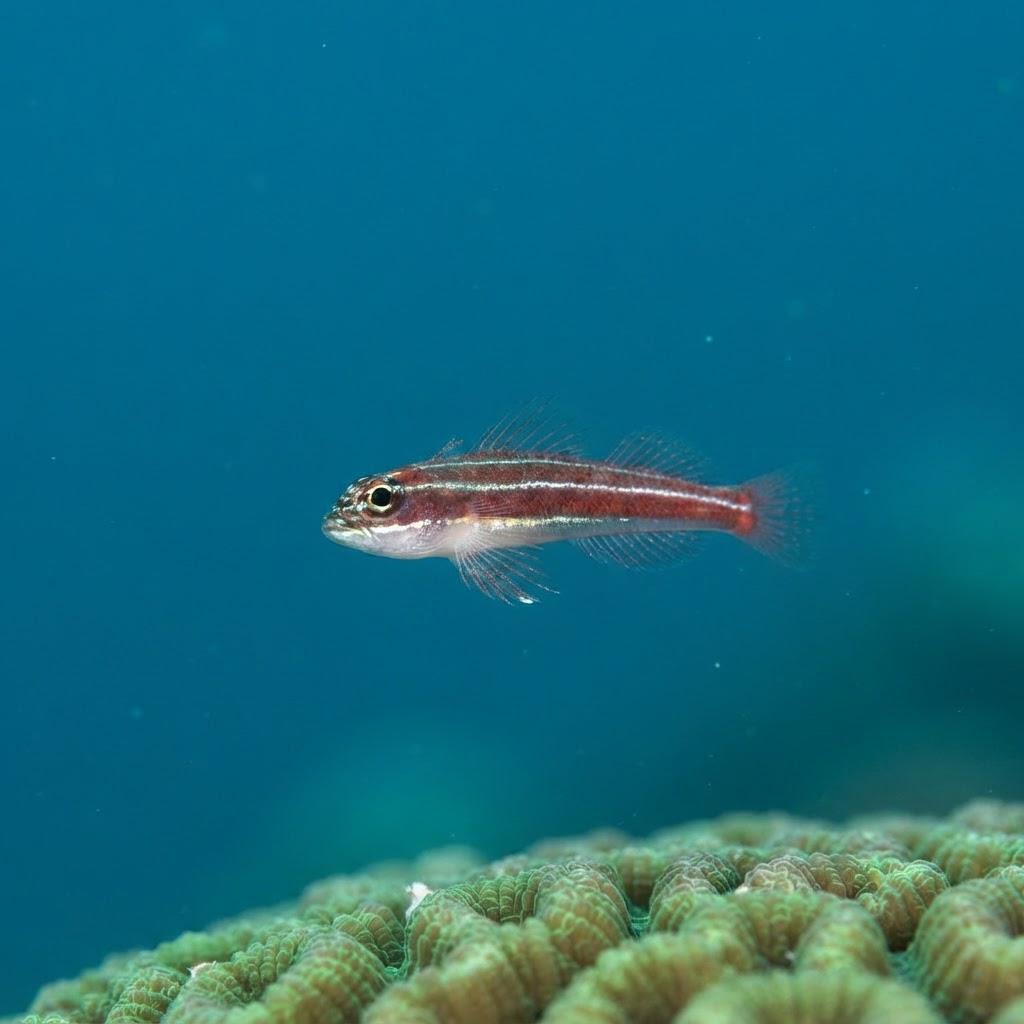
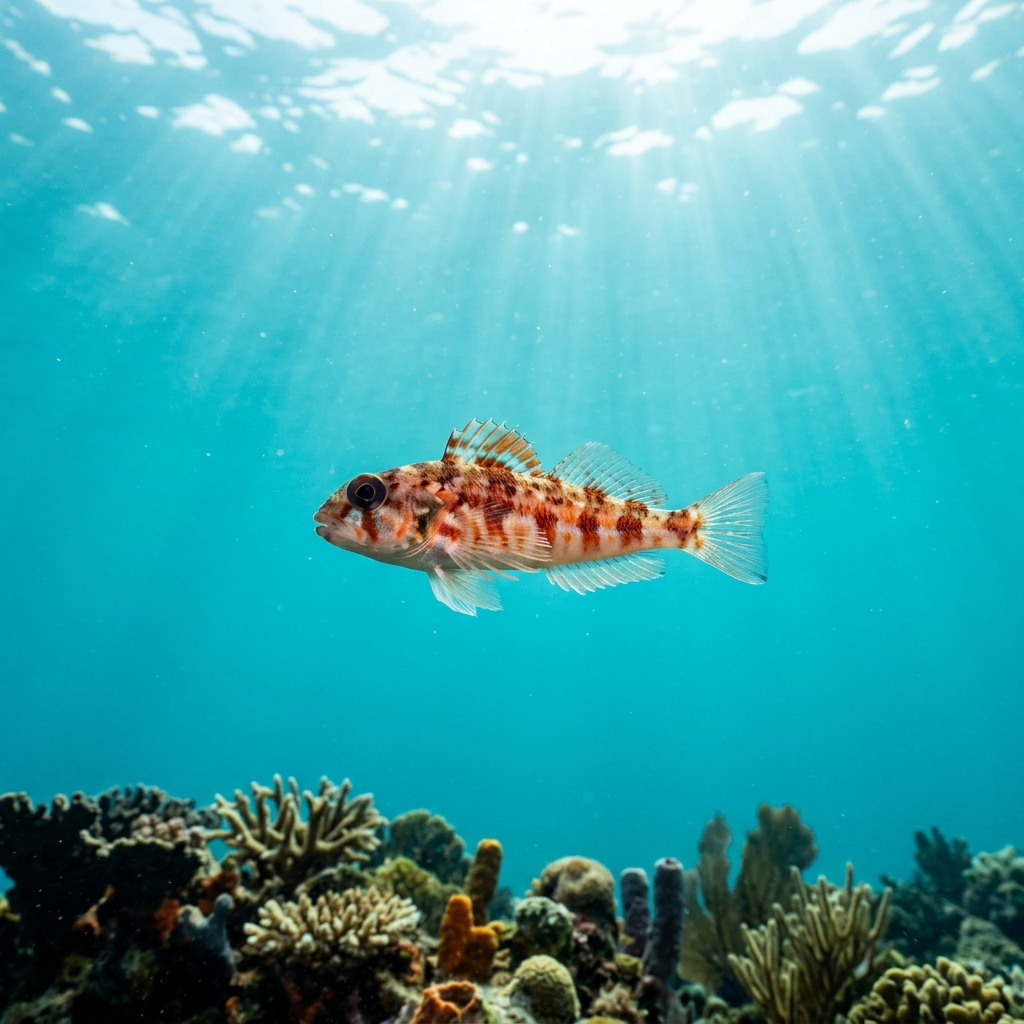
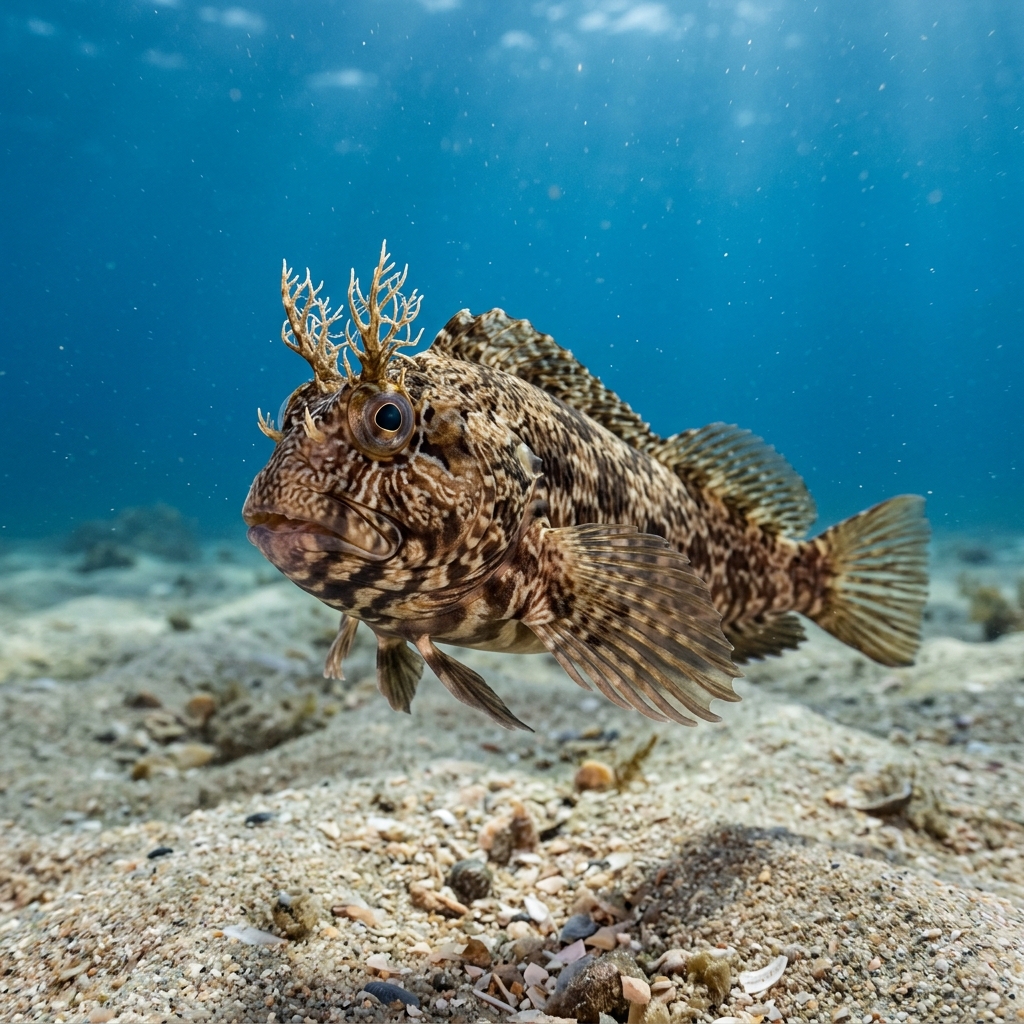
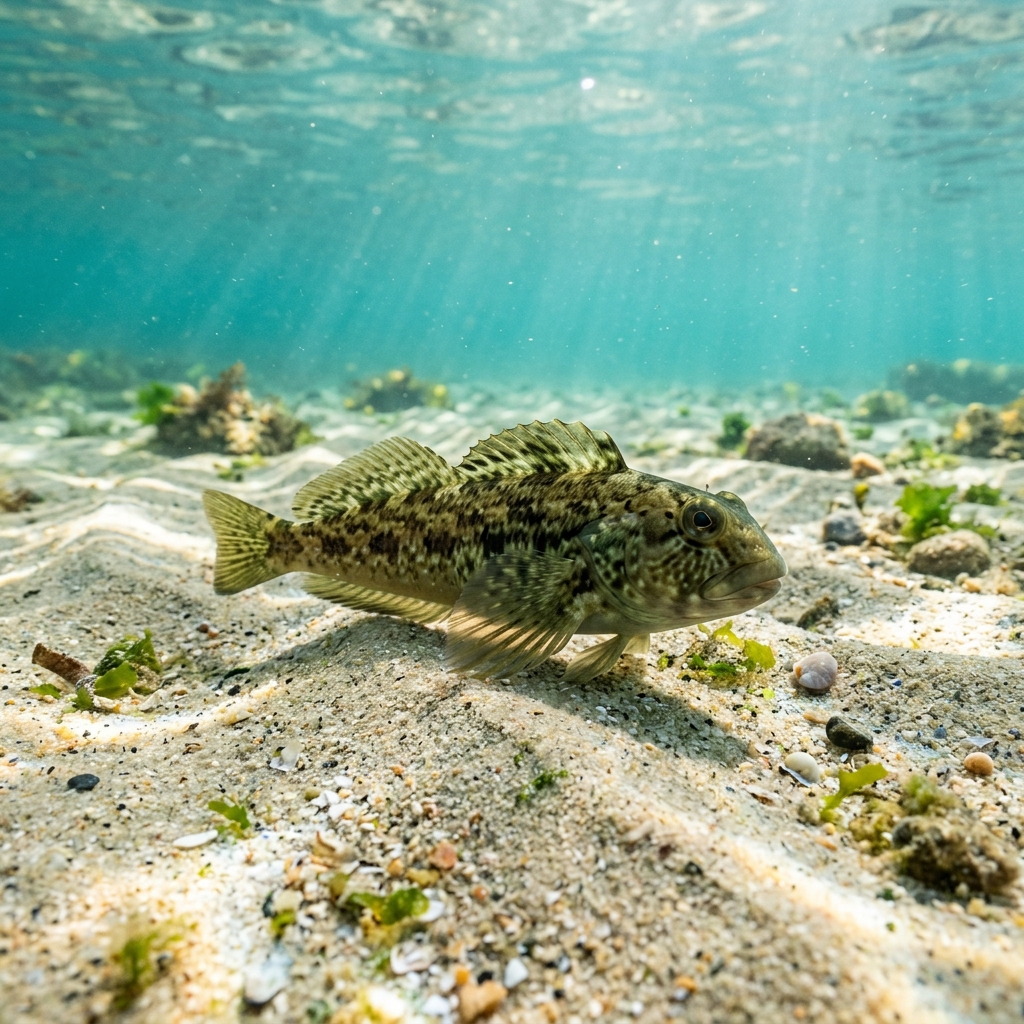
A tiny, slender fish topping out around 7 cm, with a mottled brown-and-cream pattern that breaks up its outline against rock and kelp holdfasts. Look for a blunt head, large eyes set high, and a habit of perching motionless on a rock ledge rather than swimming in open water. There is no strong colour difference reported between individuals, so size and posture are your best clues alongside habitat.
Divers usually find it wedged into a crevice or sitting still on a rock face, using its camouflage rather than fleeing when approached. It tends to stay close to structure in kelp forest and rocky reef settings rather than venturing into open water, so slow, careful scanning of ledges and holdfasts is how most divers actually spot one.
Its blotchy, sand-and-rock pattern is enough to make it disappear against bare reef even at close range, which is likely why it logs as uncommon or rare at most sites despite being present.
Sightings are logged year-round with no detected seasonal peak, matching a temperature niche of roughly 14 to 20 C typical of California and Baja kelp forest diving through most of the year.
Reef neighbours a diver could mistake it for. Use the identification notes above to tell them apart.
Most reliably found along the California coast in the United States, where it accounts for the large majority of logged sightings, with a secondary population in Baja California, Mexico. It shows up as an uncommon find at most sites within these regions rather than a guaranteed spot on any single dive.
Mapping where Island Kelpfish is logged…
California, USA is the strongest region for sightings, followed by Baja California, Mexico. Look for it on rocky reef and kelp forest dives rather than sandy or open-water sites.
There is no clear seasonal pattern, so it is logged throughout the year. It favours cooler water in the 14 to 20 C range typical of California and Baja diving conditions.
Look for a small, slender fish around 7 cm long with a mottled brown and cream pattern that blends into rock and kelp. It sits still on ledges and crevices rather than swimming openly.
They reach about 7 cm in length, making them one of the smaller fish divers try to spot on California kelp forest dives.
Not really. They are logged as uncommon at most sites and rare at others, largely because their camouflage lets them blend into rocky, kelp-covered terrain.
Site and sighting data is aggregated from diver logs, iNaturalist and GBIF. For taxonomy and conservation status:
Rusty Blenny
2,605 sites