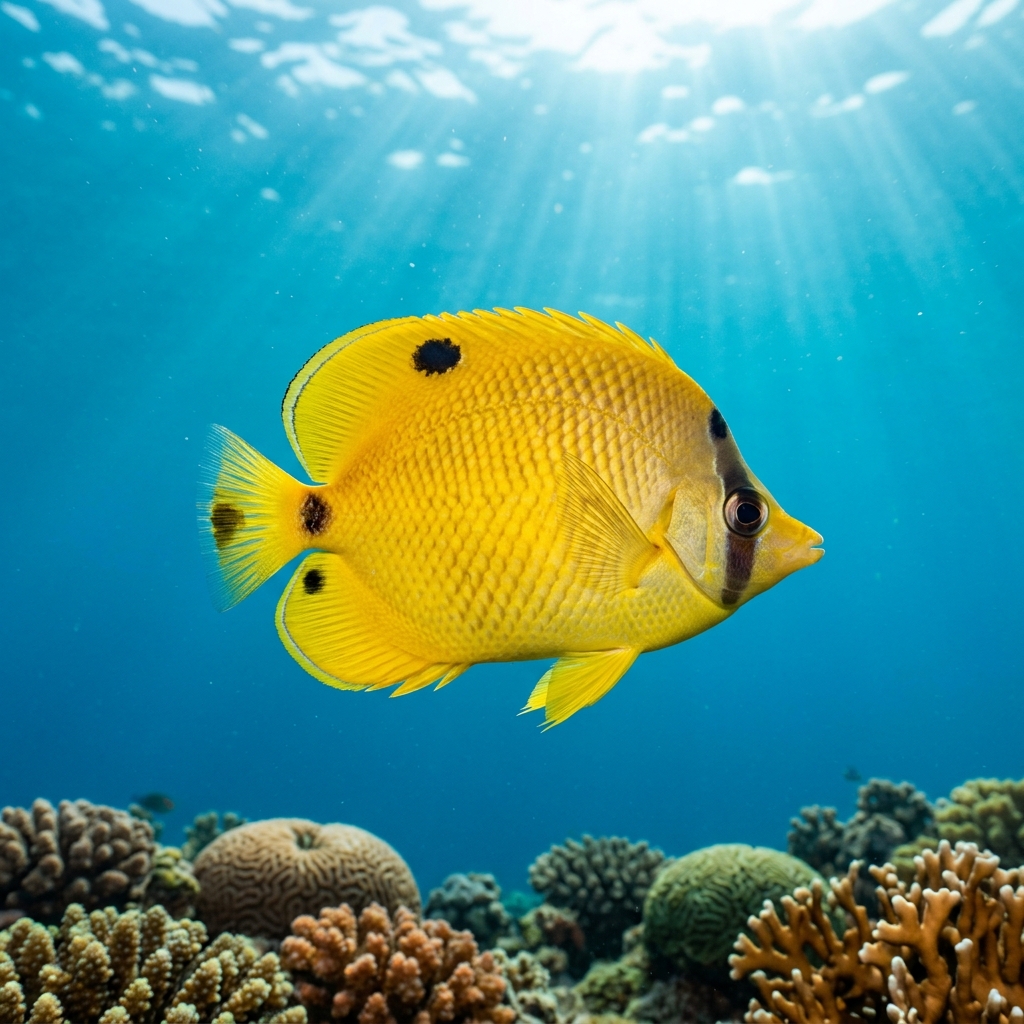
Chaetodon decussatus
White, black-barred butterflyfish logged across the Maldives' Northern Atolls and Sulawesi reefs in 27-30C water, year-round.
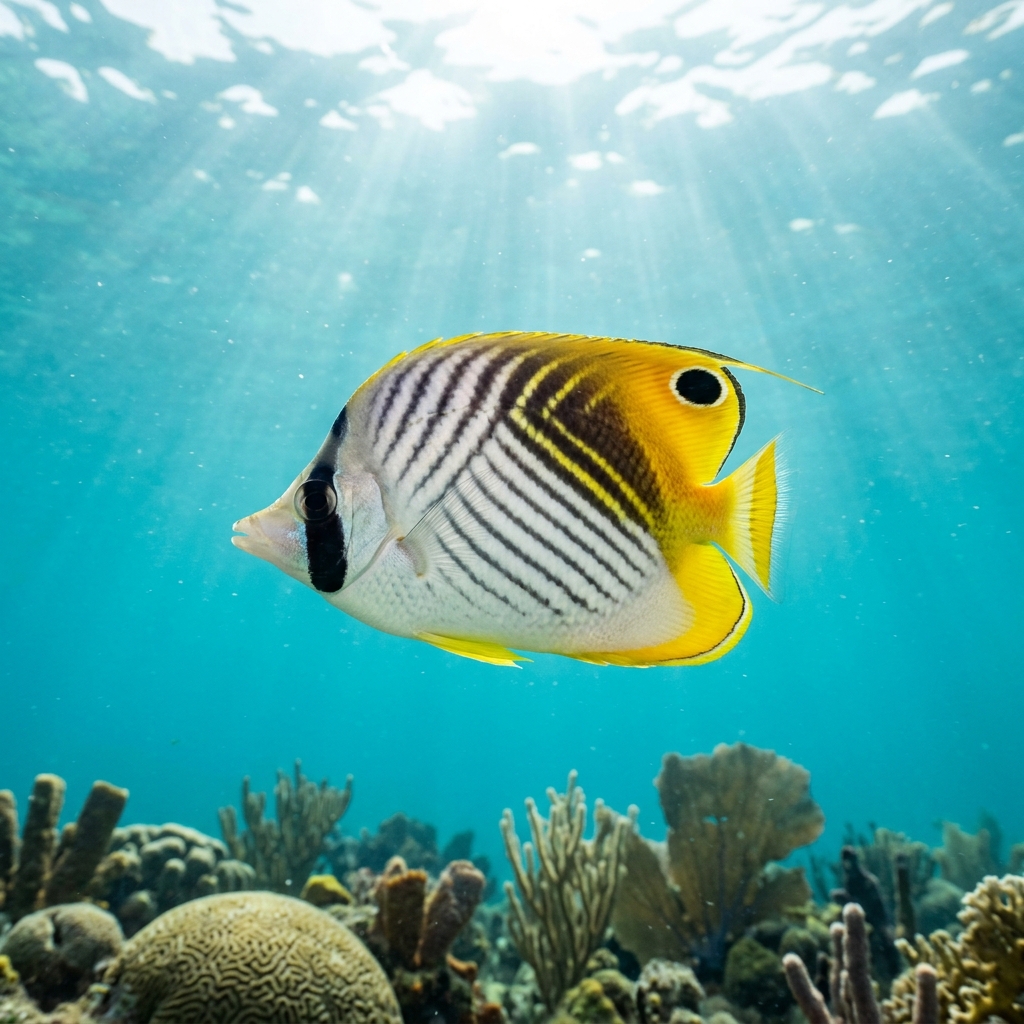
Bold white body crossed by black diagonal bars that form a rough X pattern across the flanks, with a black band running through the eye. Fins are edged in yellow, and the tail carries a narrow black margin. At around 14 cm this is a small, disc-shaped reef fish, usually seen alone or in a loose pair picking at the reef surface.
Look for it browsing low over reef flats and slopes, picking at coral polyps and algae with its pointed snout rather than schooling in open water. It's usually logged as an uncommon find, cruising alone or in a pair and staying close to the reef structure rather than out in the blue. Divers rarely get more than a fairly cautious pass before it ducks back toward cover.
Like most butterflyfish, it feeds directly on coral polyps as well as algae and small invertebrates, making it one of the reef's everyday grazers rather than a specialist.
No clear seasonal pattern shows up in the sightings, and it sits comfortably in warm 27.4 to 29.7C water year-round, so any month on a tropical Indo-Pacific reef trip works.
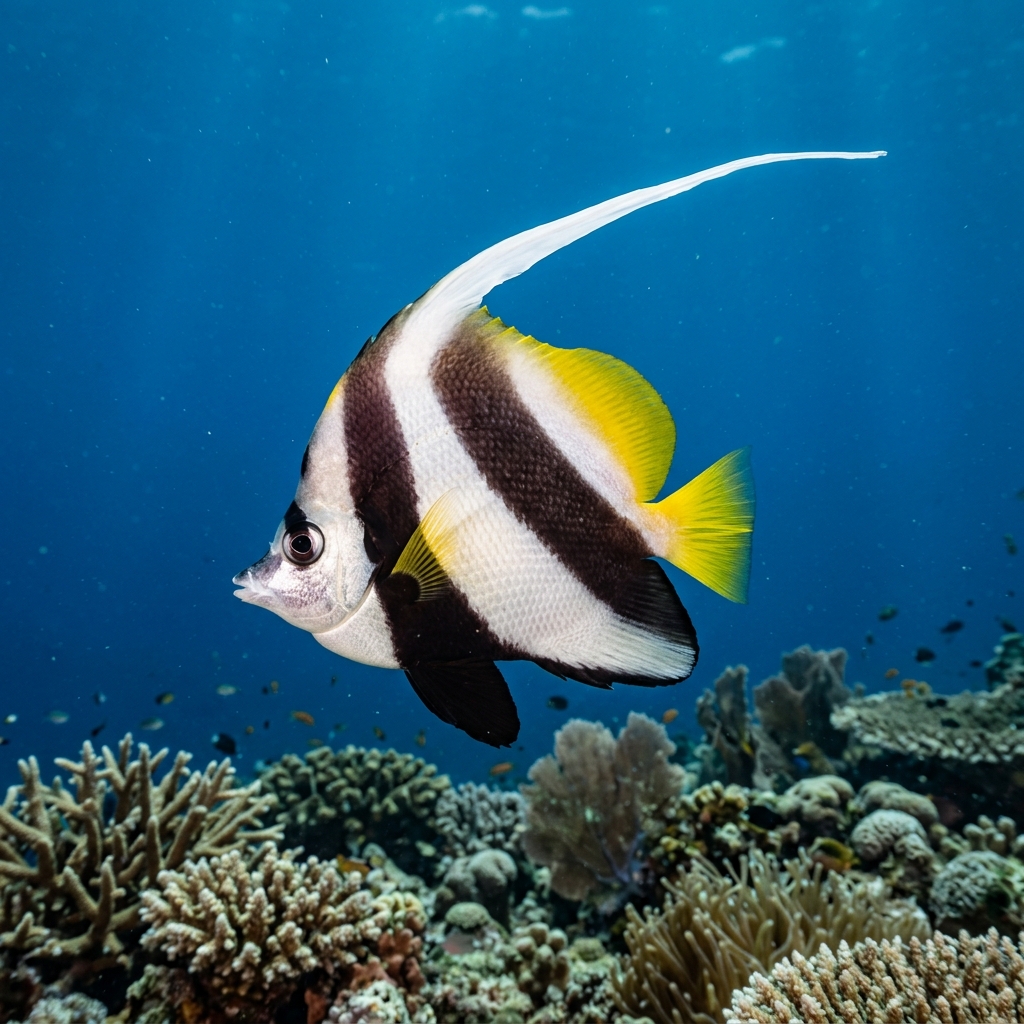
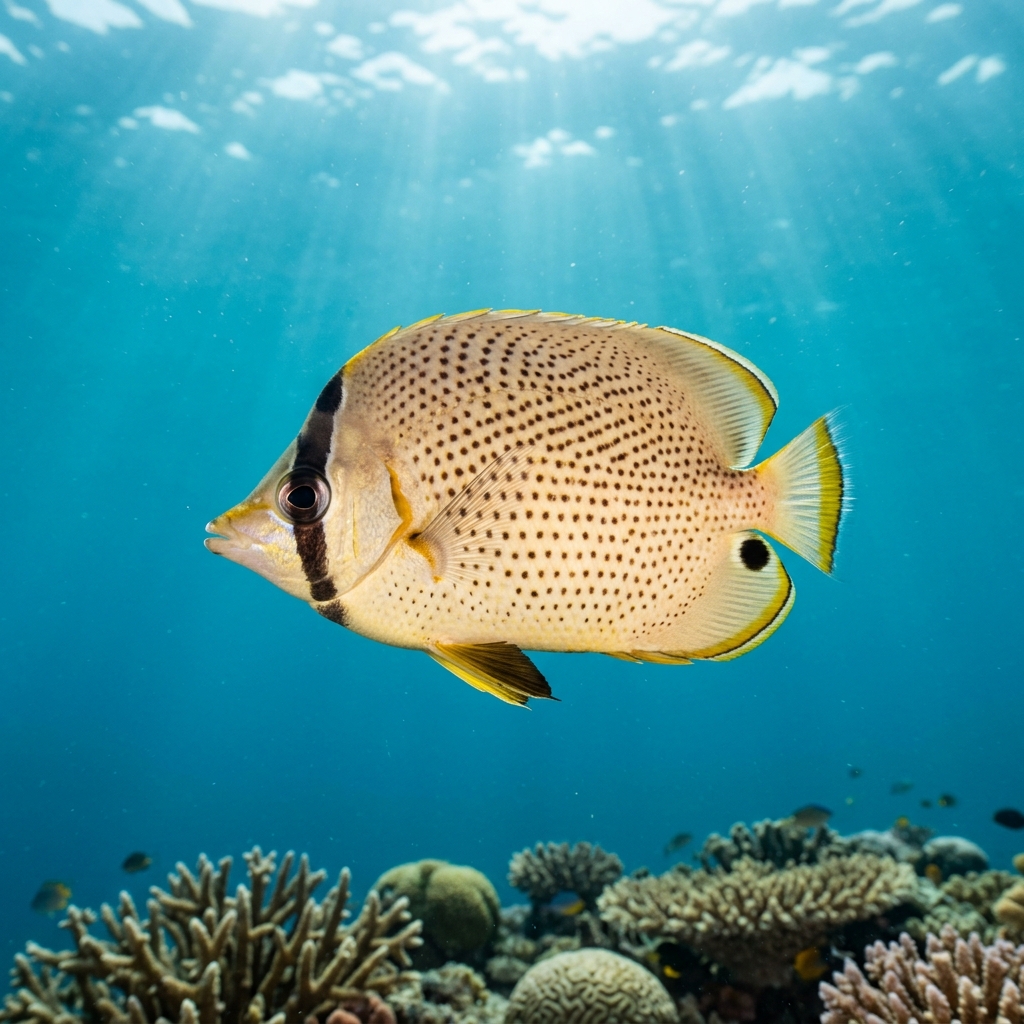
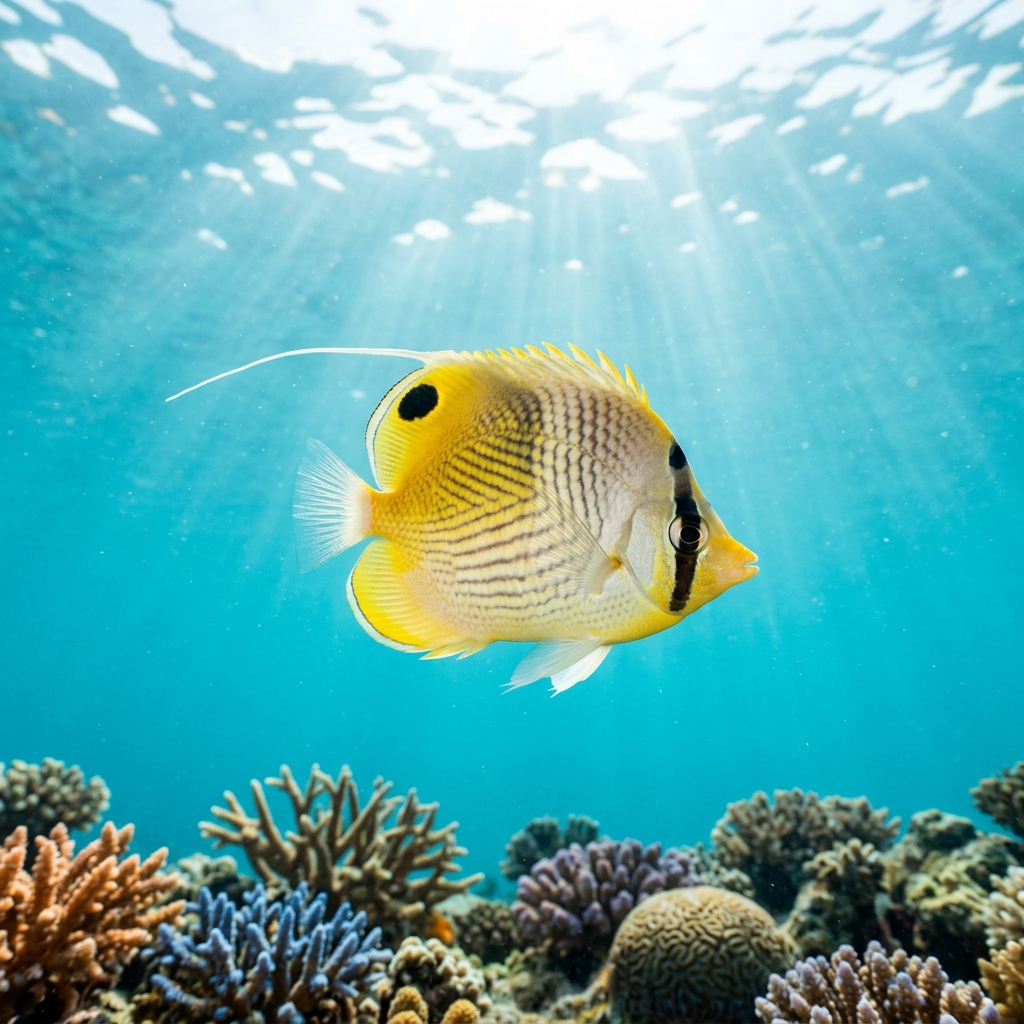
Reef neighbours a diver could mistake it for. Use the identification notes above to tell them apart.
Most reliably logged in the Maldives, particularly the Northern and Southern Atolls, with strong numbers also coming out of Sulawesi in Indonesia and Luzon, Palawan, Mindanao and the Visayas in the Philippines. Thailand, India, Malaysia and Sri Lanka round out the range, so it's a solid bet across most Indo-Pacific reef trips.
Mapping where Indian Vagabond Butterflyfish is logged…
Best chances are in the Maldives, especially the Northern and Southern Atolls, plus Sulawesi in Indonesia and the Philippine regions of Luzon, Palawan, Mindanao and the Visayas. It also turns up across Thailand, India, Malaysia and Sri Lanka.
There's no strong seasonal pattern in the sightings, and water temperatures on its reefs stay in the 27.4 to 29.7C range all year, so it's a year-round sighting rather than a seasonal one.
Look for a white body crossed by bold black diagonal bars, a black eye stripe, and yellow-tipped fins. At about 14 cm it's a compact, disc-shaped fish usually seen alone or in a pair close to the reef.
They typically reach around 14 cm, a small, easily overlooked reef fish rather than a showy centrepiece species.
No, they pose no threat to divers and simply go about grazing the reef, keeping a cautious distance rather than approaching.
Site and sighting data is aggregated from diver logs, iNaturalist and GBIF. For taxonomy and conservation status: