Heniochus pleurotaenia
Two long white streamers and a black bandit mask, spotted often across the Central Atolls of the Maldives in warm 28-29C water.
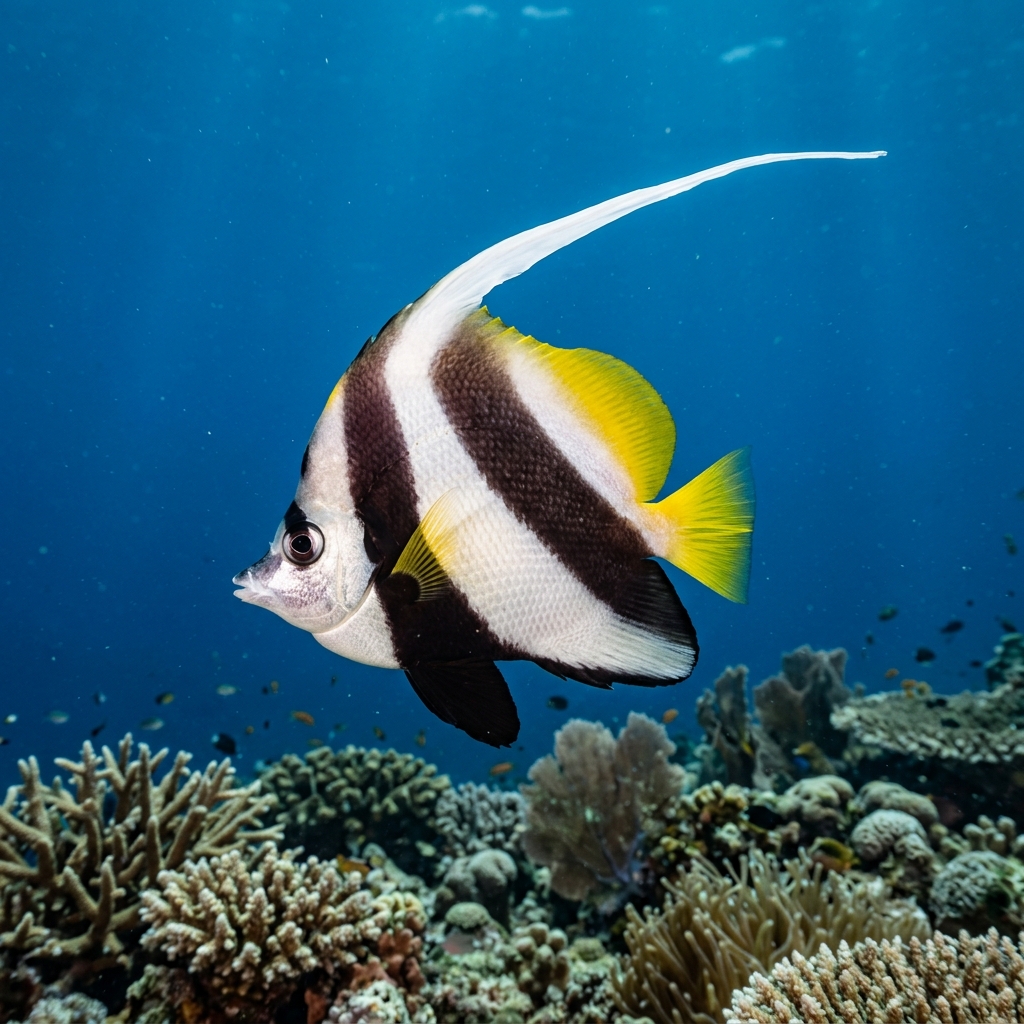
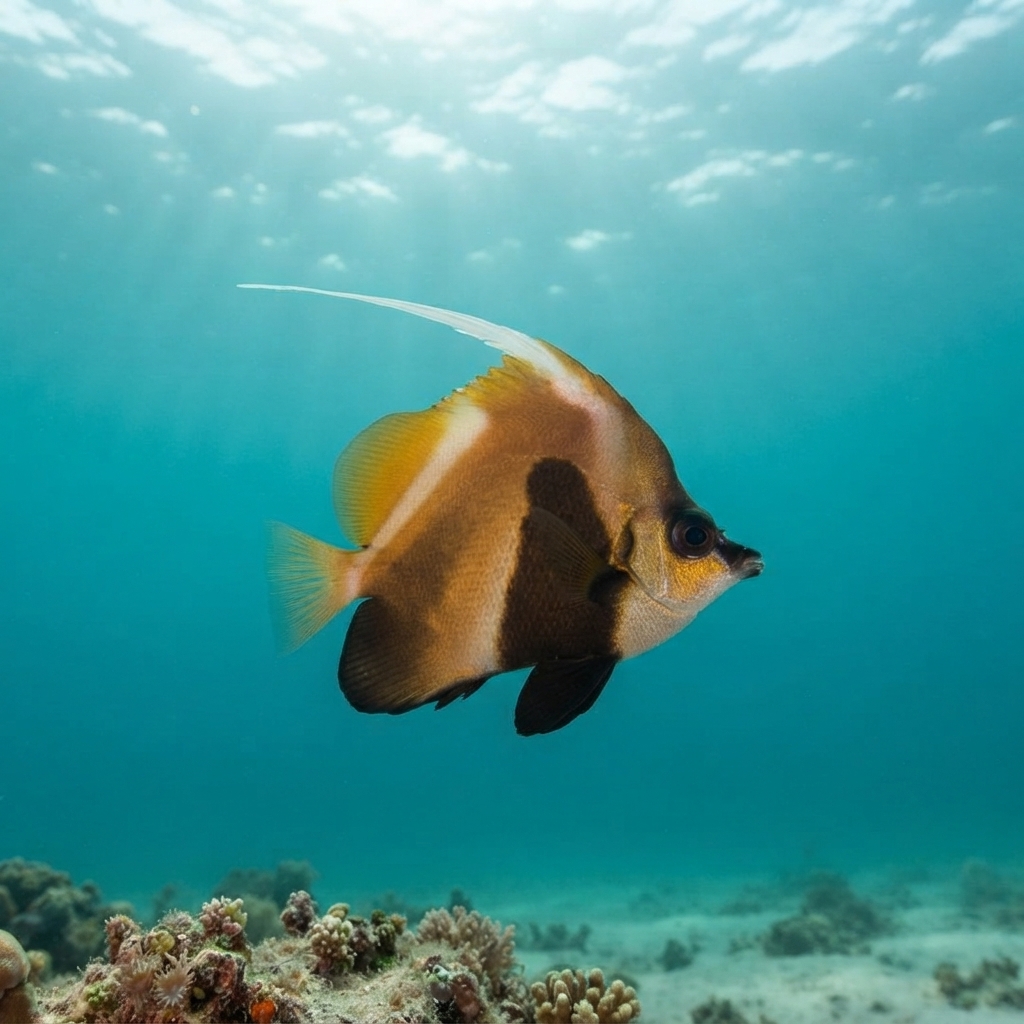
Small disc-shaped fish, about 12 cm, with a white body crossed by two bold black wedges, one through the eye and one over the midbody. A long white filament trails off the dorsal fin like a streamer, giving it a distinctive silhouette even at distance. It often swims with the front of the body angled slightly downward, nose toward the reef.
Usually seen alone or in loose pairs hovering over coral heads or along reef slopes, picking at plankton and small invertebrates in the water column. It tends to keep a bit of distance from divers rather than approach, drifting off slowly if you close in rather than bolting for cover. Most reports describe it as an uncommon but steady find rather than something that shows up in numbers.
That dorsal streamer is thought to help break up its outline against the reef, making it harder for a predator to judge exactly where the fish ends, a trick shared with several of its bannerfish relatives.
Sightings show no clear season, and the water it is found in sits in a narrow 28.1 to 29.4C band year-round, so any month on these reefs is fair game.
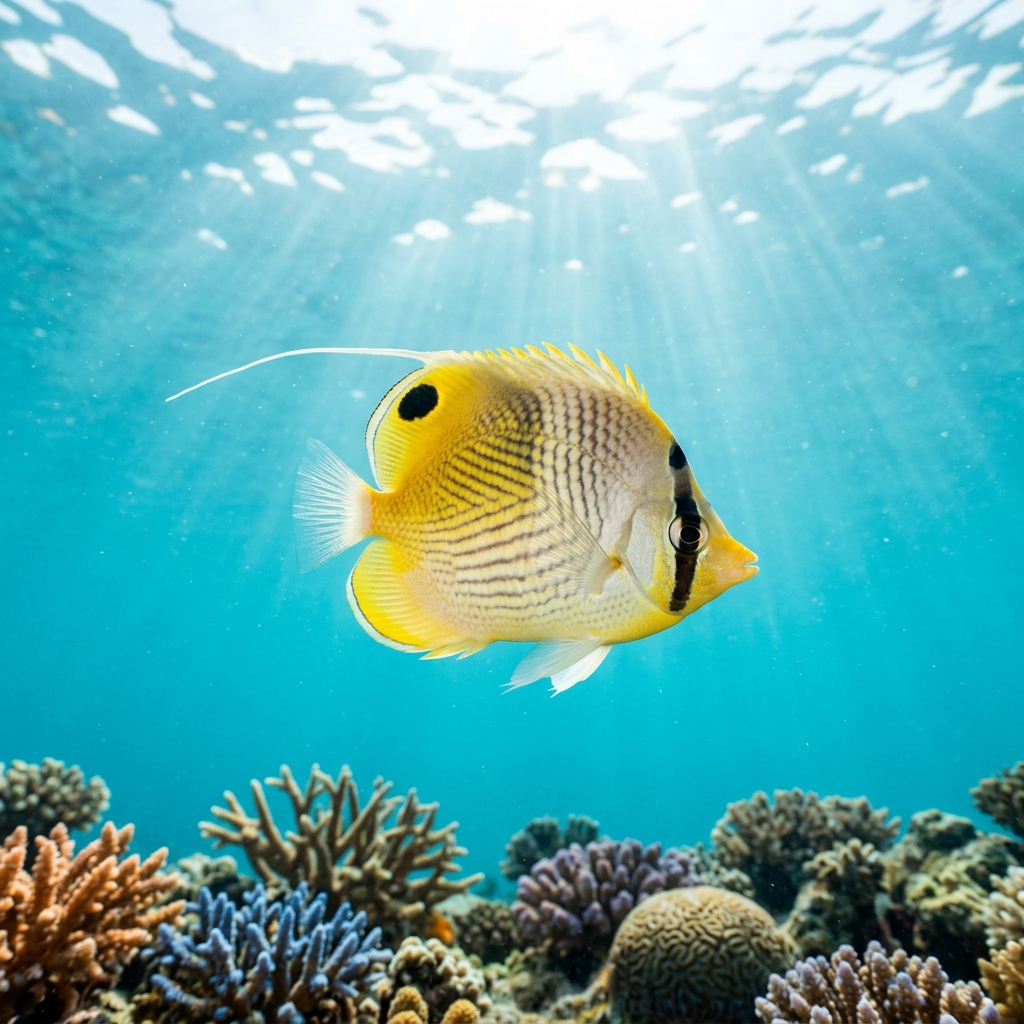
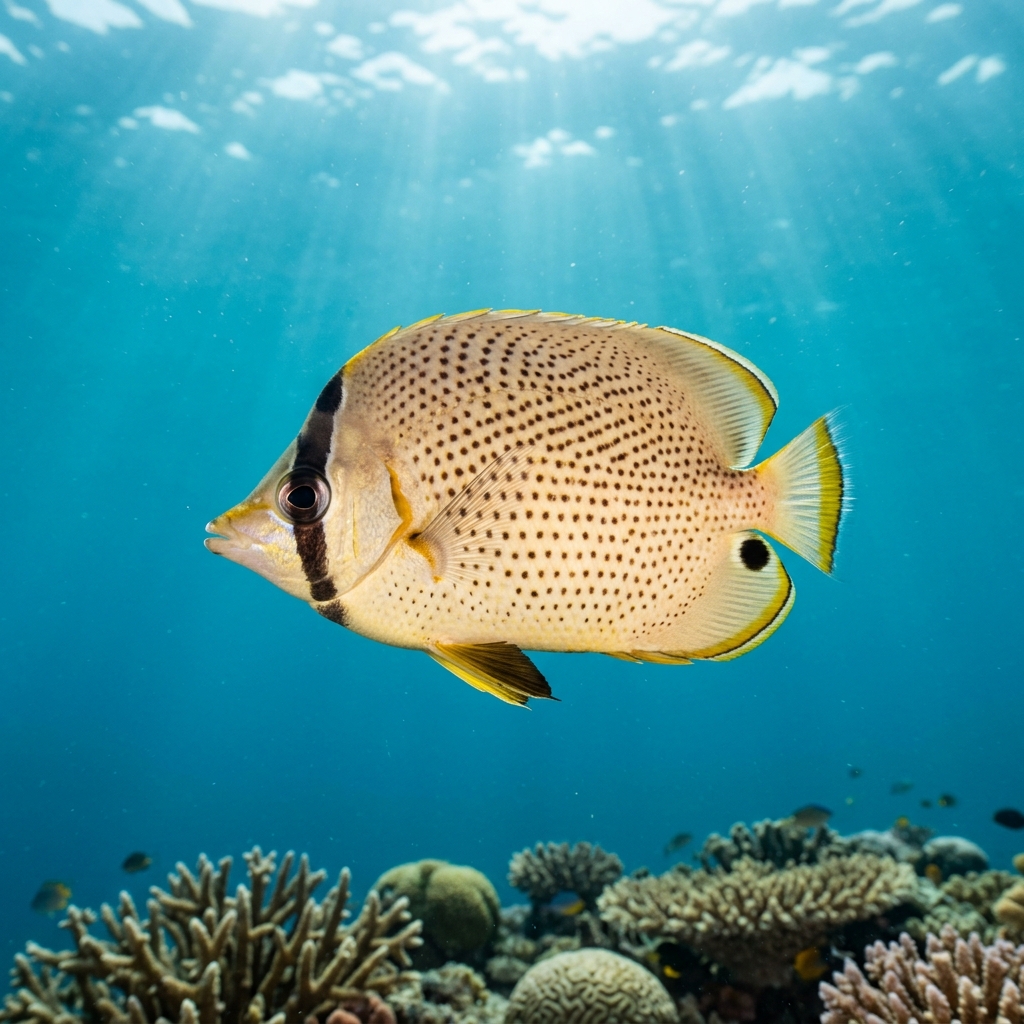
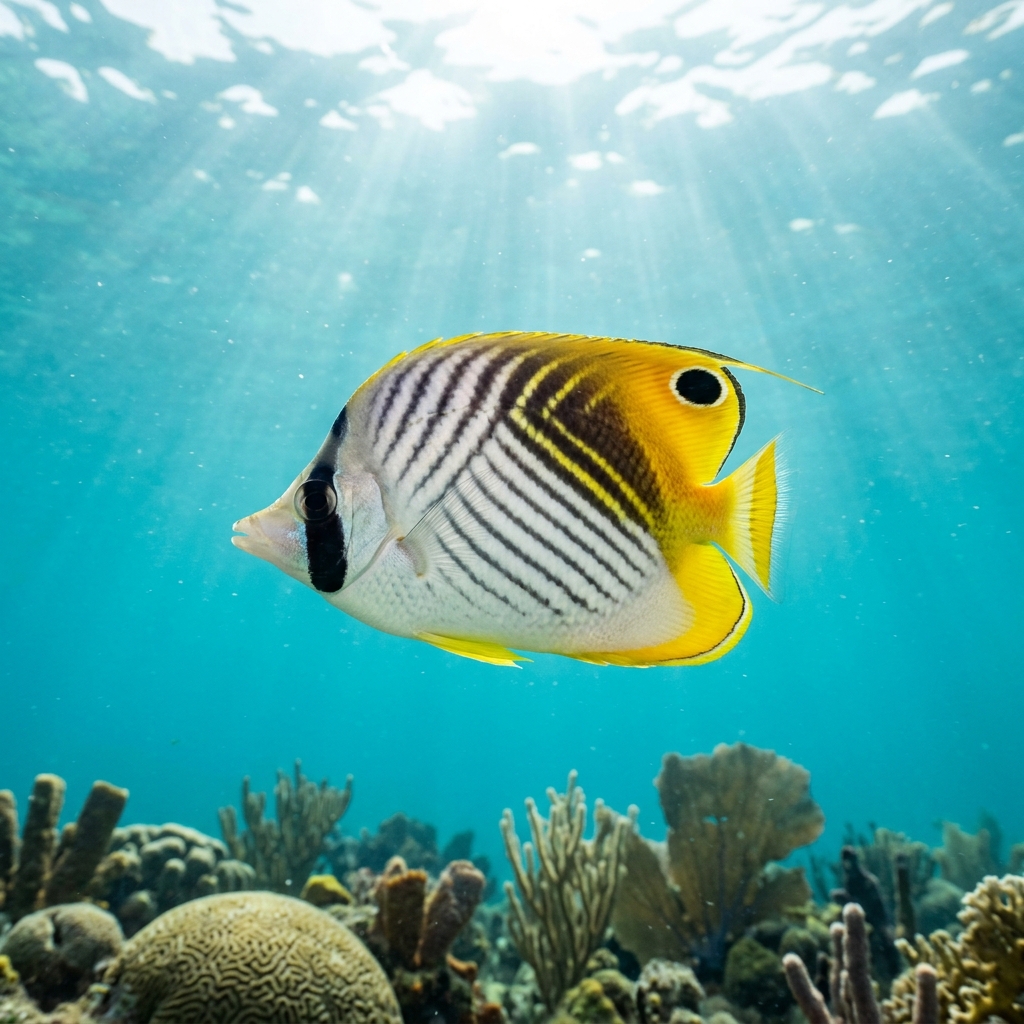
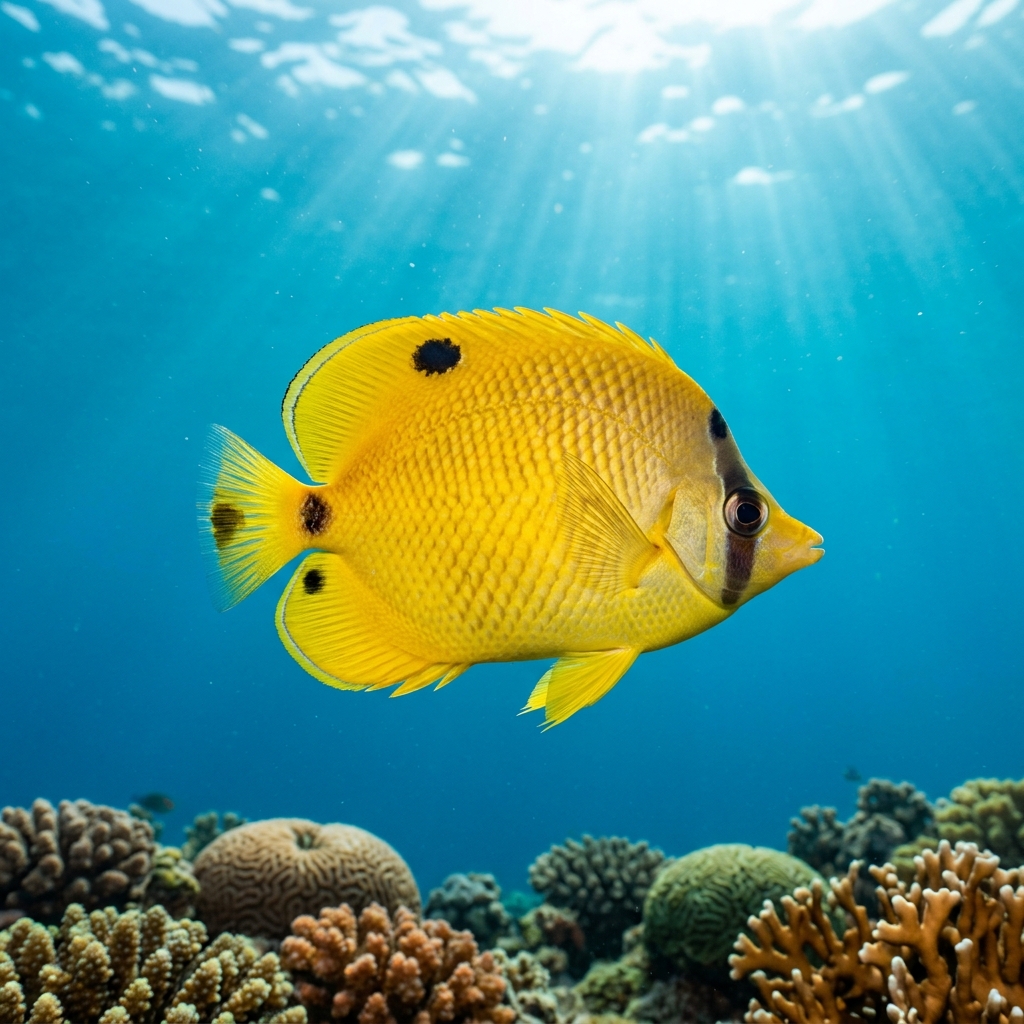
Reef neighbours a diver could mistake it for. Use the identification notes above to tell them apart.
Most reliably logged in the Maldives, especially the Central Atolls and Northern Atolls, where it turns up on a large number of sites. Outside the Maldives it is a solid find at Khao Lak in Thailand and around the Andaman Islands in India.
Mapping where Indian Bannerfish is logged…
The Maldives is by far the strongest region, particularly the Central Atolls and Northern Atolls, with further sightings logged at Khao Lak in Thailand and the Andaman Islands in India.
There is no strong seasonal pattern in the sightings, so it can be found year-round on reefs that stay in the warm 28 to 29C range it favours.
Look for a small white fish with two black bands, one across the eye and one across the body, plus a long trailing white filament off the dorsal fin. It is usually seen singly or in pairs hovering near coral rather than schooling.
They stay small, reaching around 12 cm, which is typical for butterflyfish of this genus.
No, they pose no threat to divers and simply drift away if approached too closely.
Site and sighting data is aggregated from diver logs, iNaturalist and GBIF. For taxonomy and conservation status: