Mecaenichthys immaculatus
Small dark damselfish common on New South Wales reefs in 18-23C water, seen year-round on rocky and coral edges.
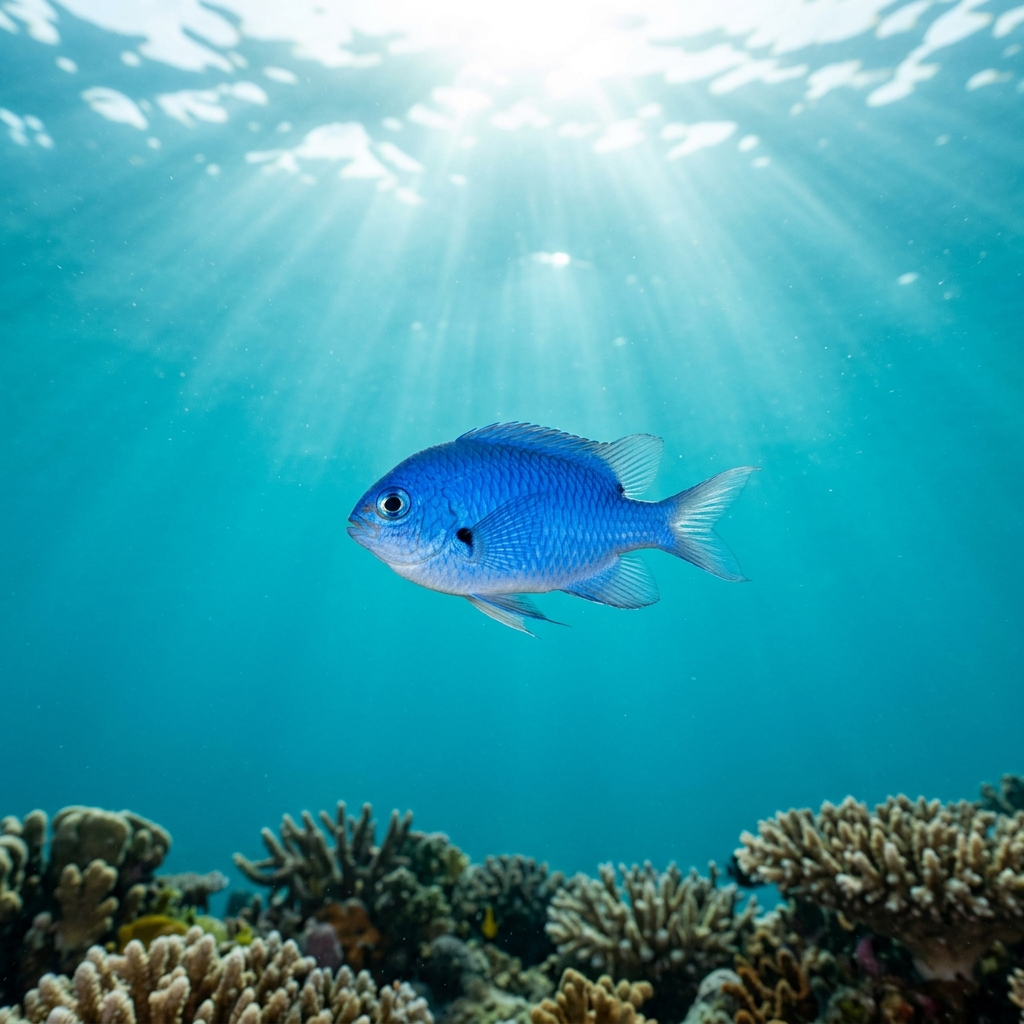
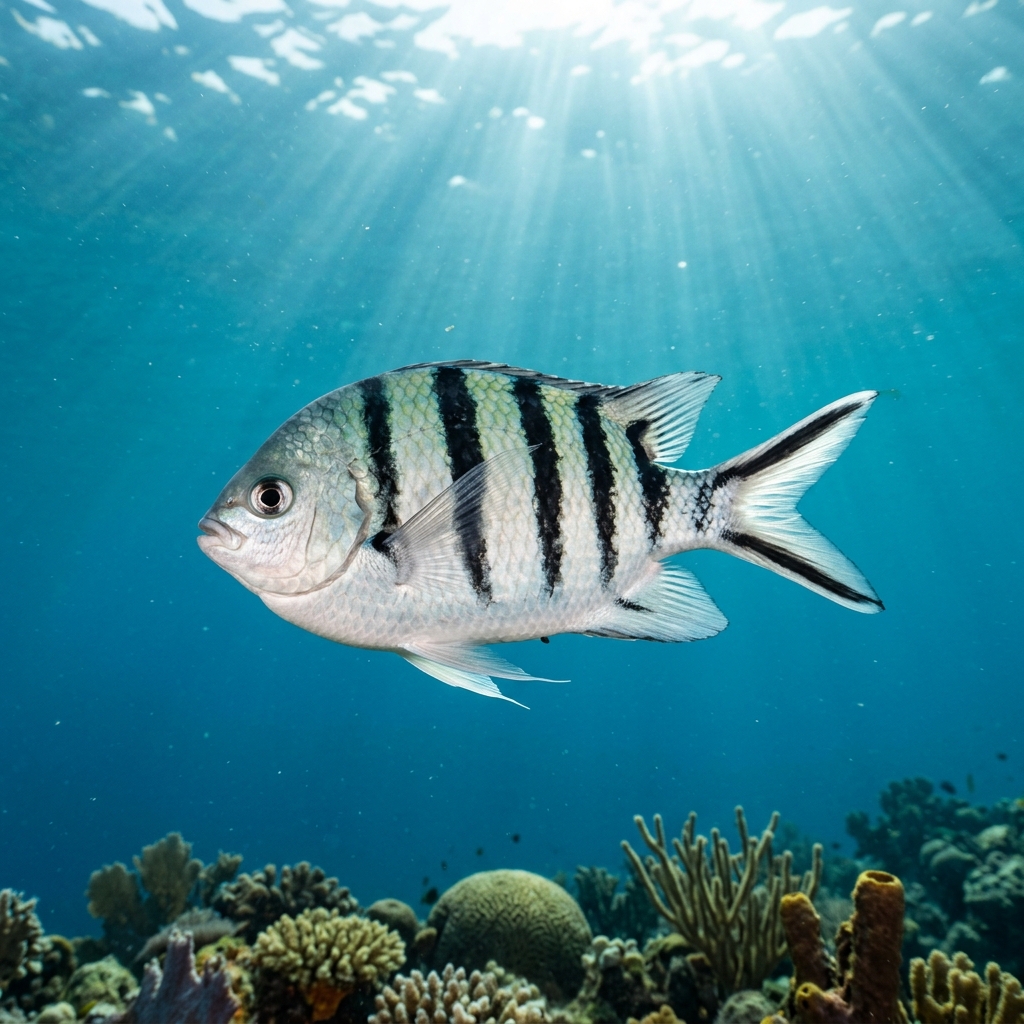
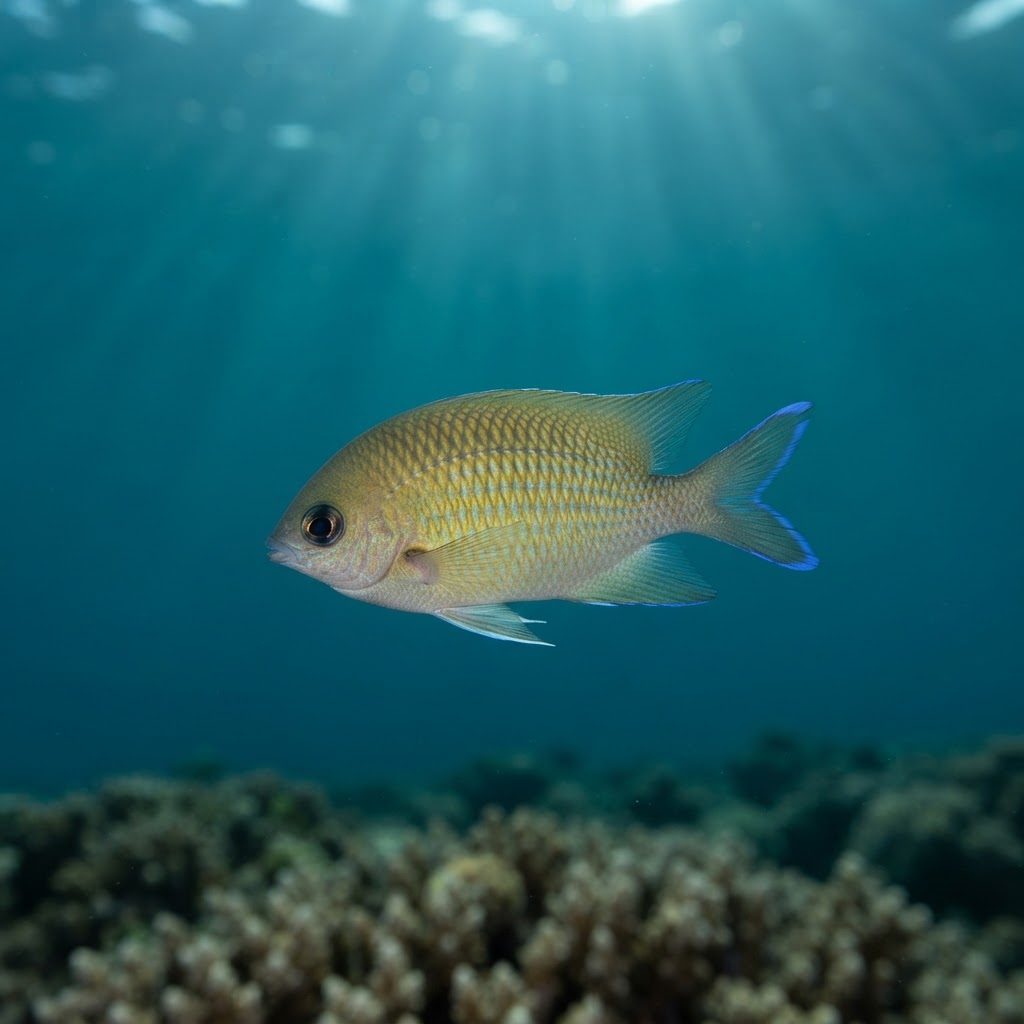
Small, deep-bodied damselfish around 8 cm, coloured a uniform dark blue-grey to near-black with a faint blue sheen along the upper body in good light. No bars, spots, or tail markings to speak of, which is itself the tell against busier-patterned damsels. Oval profile, forked tail, and the constant hovering-and-darting motion typical of pomacentrids help pick it out at a glance.
Expect to find it holding a patch of reef or rubble and defending it with short, fussy chases against other small fish, then ducking back to the same perch. It is not shy around divers, usually just keeping a body-length or two of distance rather than bolting, and it tends to stick close to structure rather than venturing into open water. Most sightings are on shallower rocky and reef ground, well within the top 15 metres.
As an algae-grazing damselfish it likely tends a small territory of turf algae on the reef, the same feeding-and-defence pattern seen across the pomacentrid family, which is why you often see one fish holding the same rock for an entire dive.
Sightings run year-round with no clear seasonal spike in the data, which fits its comfort range of roughly 18 to 23 C, a band NSW's temperate reefs sit in for much of the year. Any month is a reasonable bet if you are diving the right sites.
This one is essentially a New South Wales speciality among the dive logs, turning up reliably across rocky reefs and sponge gardens along that coast, from sites near Sydney down towards the south coast. Australia is the only country producing confirmed sightings in the data, so it is not a species to chase outside NSW waters.
Mapping where Immaculate Damsel is logged…
It is most reliably logged on reef and rocky sites in New South Wales, Australia, which accounts for essentially all recorded sightings. It has not turned up in diver logs outside Australian waters.
There is no strong seasonal pattern in the sightings, so it is considered a year-round fish on the NSW coast. Its comfort range of about 18 to 23 C matches the water temperature there for most of the year.
Look for a small, plain dark blue-black damselfish around 8 cm long with no obvious bars or spots, hovering close to a patch of reef or rock. Its lack of bold markings is the main clue compared to more patterned damsels and clownfish.
They stay small, typically around 8 cm as adults, which is on par with most reef damselfish.
No, they pose no threat to divers. They may dart at you if you get close to their patch of reef, but this is just territorial bluff, not a real risk.
Site and sighting data is aggregated from diver logs, iNaturalist and GBIF. For taxonomy and conservation status:
Dascyllus
3,697 sites