Dascyllus aruanus
Bold, black-and-white striped damselfish found across the Visayas, Bali, and the Maldives. Active on shallow reefs in warm 25-29 °C water year-round.
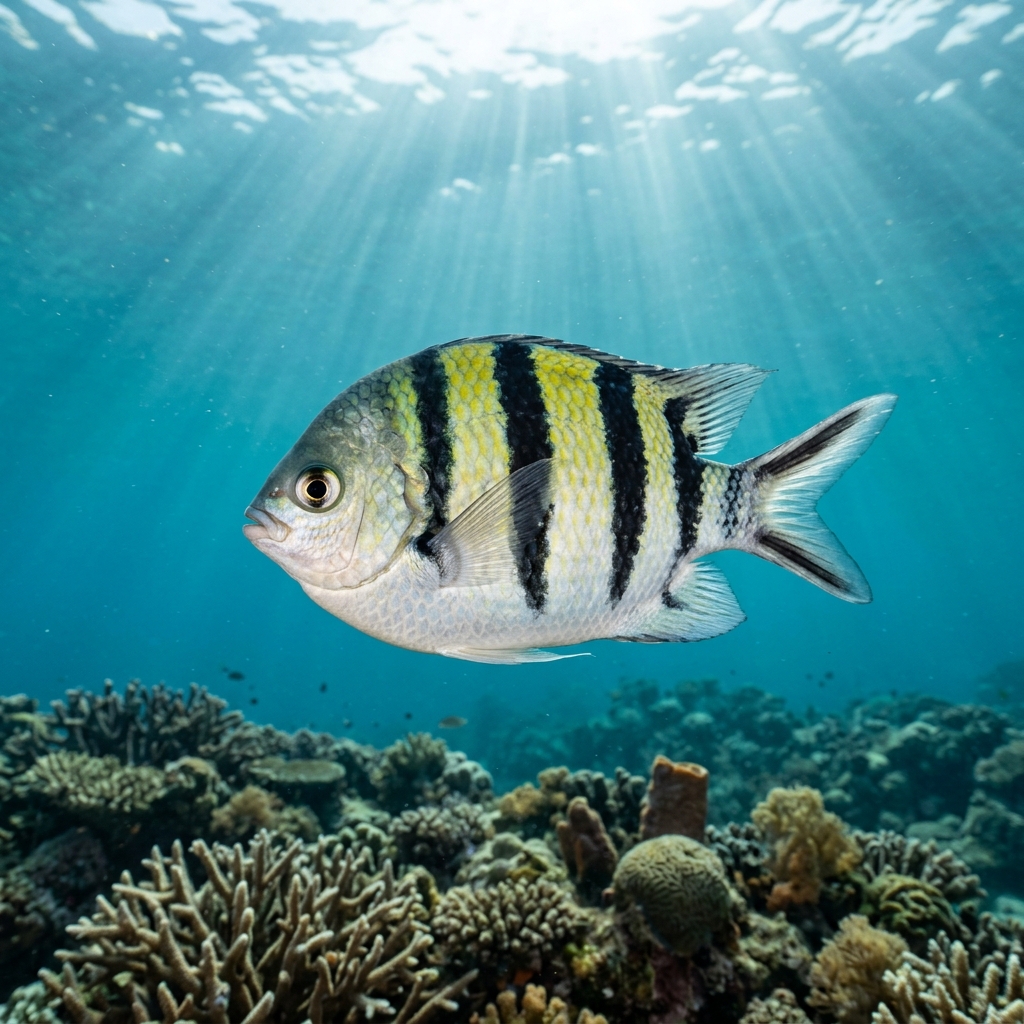
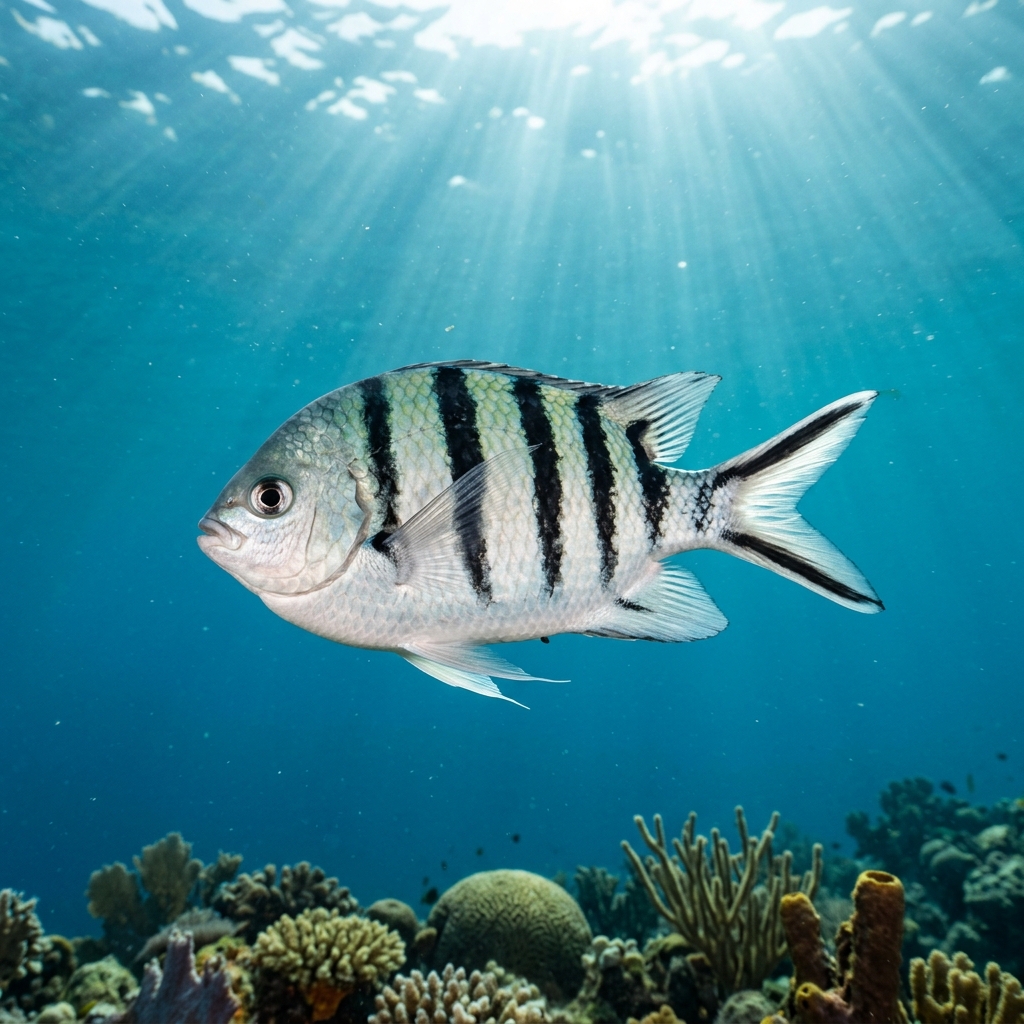
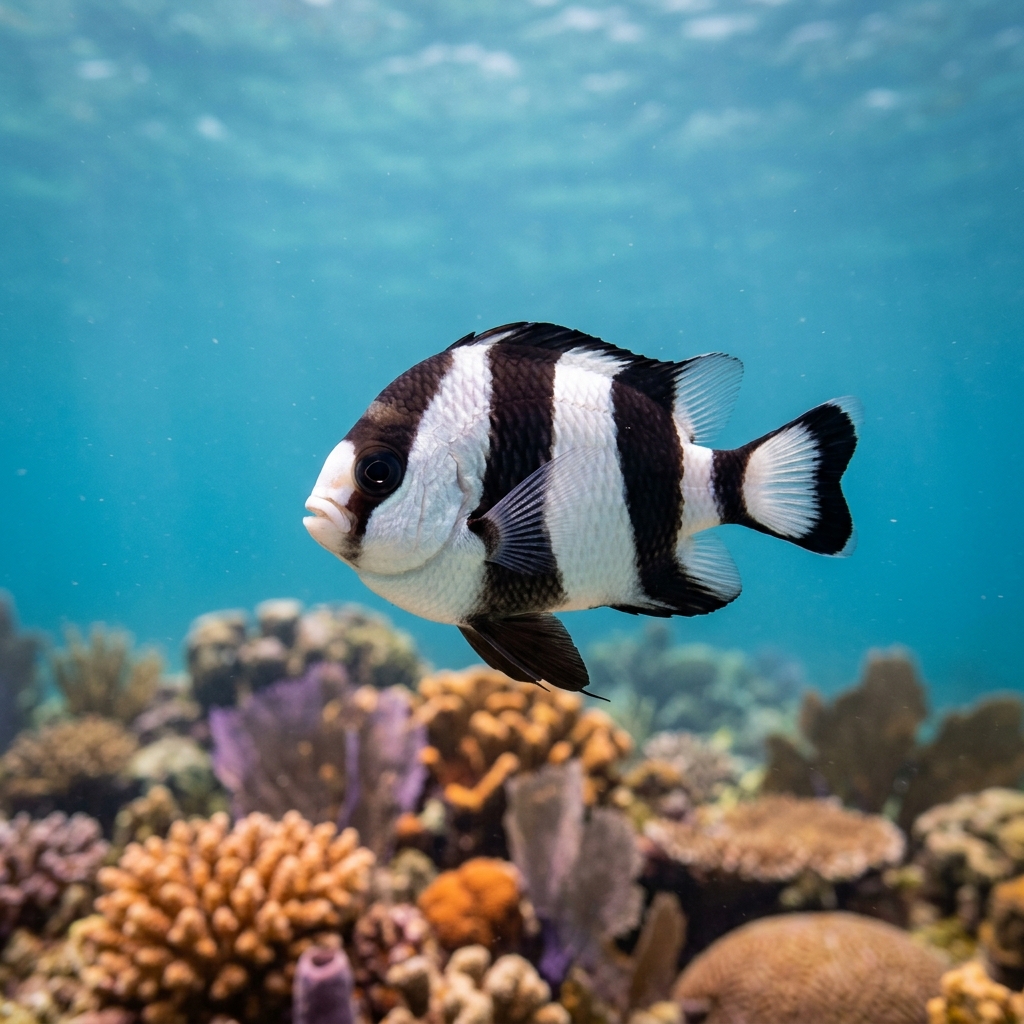
A small, deep-bodied fish roughly 7 cm long, instantly recognisable by its white body crossed by three bold black vertical bars, one through the head, one mid-body, and one across the tail end. The pattern looks like a classic humbug sweet, which is exactly where the name comes from. It nearly always hovers in tight groups over branching corals, rarely straying far, which makes the coral itself a useful finder's cue. Juveniles share the same striking barred pattern as adults.
Bold and conspicuous, humbug dascyllus spend their days hovering in loose groups just above branching corals, darting down into the branches when something startles them before popping straight back out. They show little fear of divers, you can approach within a metre and they will carry on with their territorial squabbles and short feeding forays rather than fleeing. Watch the group dynamics: individuals regularly chase neighbours and other species off their patch of coral, which makes even a stationary observation session lively.
Humbug dascyllus have a well-documented mutualistic relationship with certain corals: the fish shelter in and defend a coral head, and their waste nutrients can stimulate algal growth that the coral feeds on. On heavily dived reefs this partnership means you can often find the same group on the same coral head dive after dive.
In the Northern Hemisphere the sightings data concentrates from November through September, making only the southern-summer months the quietest window. Southern Hemisphere sites show activity from April through December. Given the species' preference for warm water between about 25 and 29 °C, it is present on tropical reefs for most of the year wherever those temperatures hold.
Most commonly logged across the Philippines and Indonesia, with the Central and Eastern Visayas and Bali being particularly strong areas. Australia's Queensland coast and the Maldives' North and Central Atolls also have solid records, and the species turns up consistently across Malaysia's West Sabah reefs and Sulawesi. The spread across the Indo-Pacific is wide, making it a frequent encounter on any shallow coral reef in the region.
Mapping where Humbug Dascyllus is logged…
They are most reliably seen across the Philippines, particularly the Central and Eastern Visayas, and throughout Indonesia, including Bali and Sulawesi. The Maldives, Queensland in Australia, and Malaysia's Sabah coast are also strong locations. Anywhere with healthy shallow branching corals in the Indo-Pacific is worth checking.
At Northern Hemisphere destinations the data shows sightings across most of the year, with November through September being the peak window. Southern Hemisphere sites such as Queensland are most productive from April through December. Their preference for warm tropical water means they are present year-round at most Indo-Pacific reef destinations.
Look for a small white fish about 7 cm long with three crisp black vertical bars running across its body. The bold barred pattern is unique among the small damselfish on Indo-Pacific reefs and is visible from several metres away. They almost always hover in groups directly above branching corals, which narrows the ID further.
They typically reach about 7 cm as adults, roughly the length of a human thumb. Their deep, rounded body shape makes them appear slightly chunkier than that measurement suggests when you see them underwater.
No. Although they are territorial and will aggressively chase away other fish, they pose no risk to divers. You can hover close to their coral and watch the action without any concern.
They are strongly site-attached, using a single coral head as shelter, a spawning site, and a territory to defend. The branching structure gives them a quick bolt-hole from predators. This loyalty to one spot is why you can often return to the same coral on a repeat dive and find the same group right where you left them.
Site and sighting data is aggregated from diver logs, iNaturalist and GBIF. For taxonomy and conservation status:
Dascyllus
3,697 sites