Dischistodus prosopotaenia
Damselfish common on reefs in Java and Sabah, warm water 25-29C, spotted year-round if you know where to look.
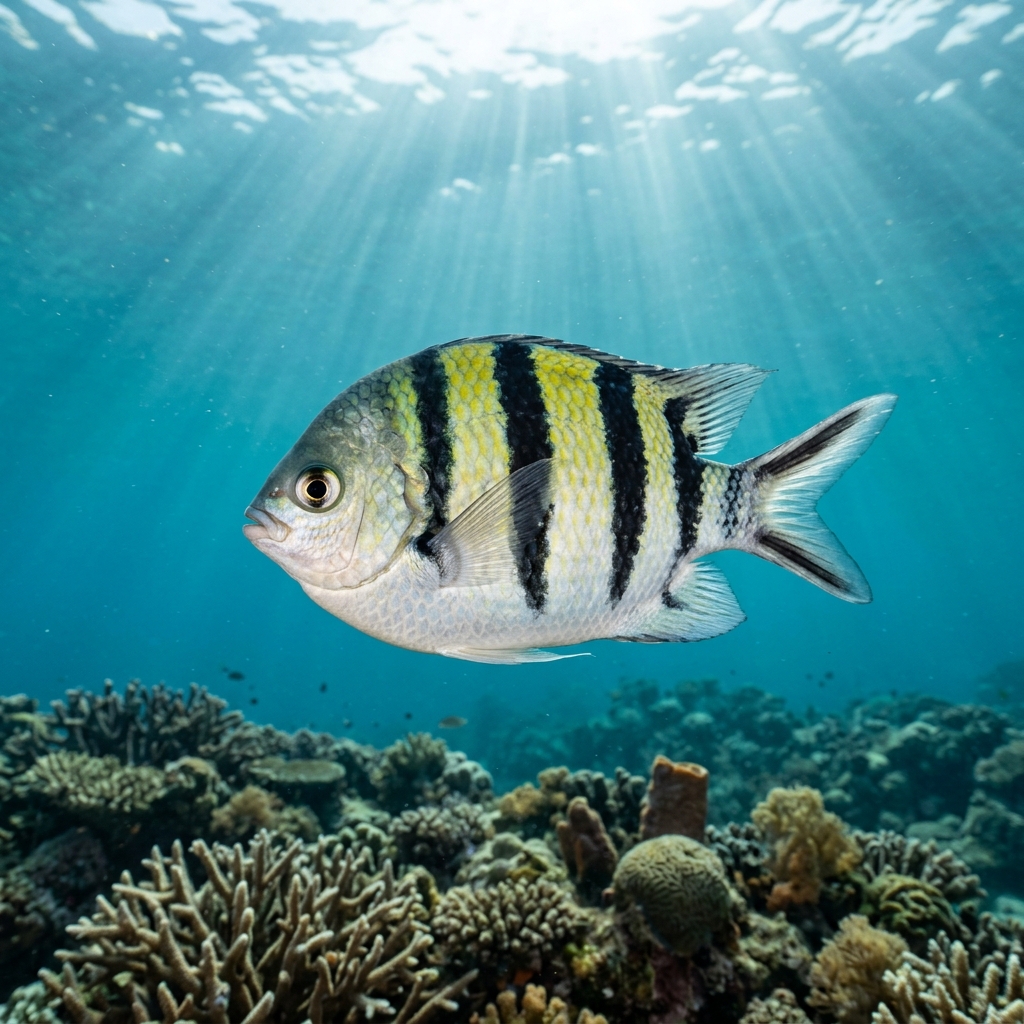
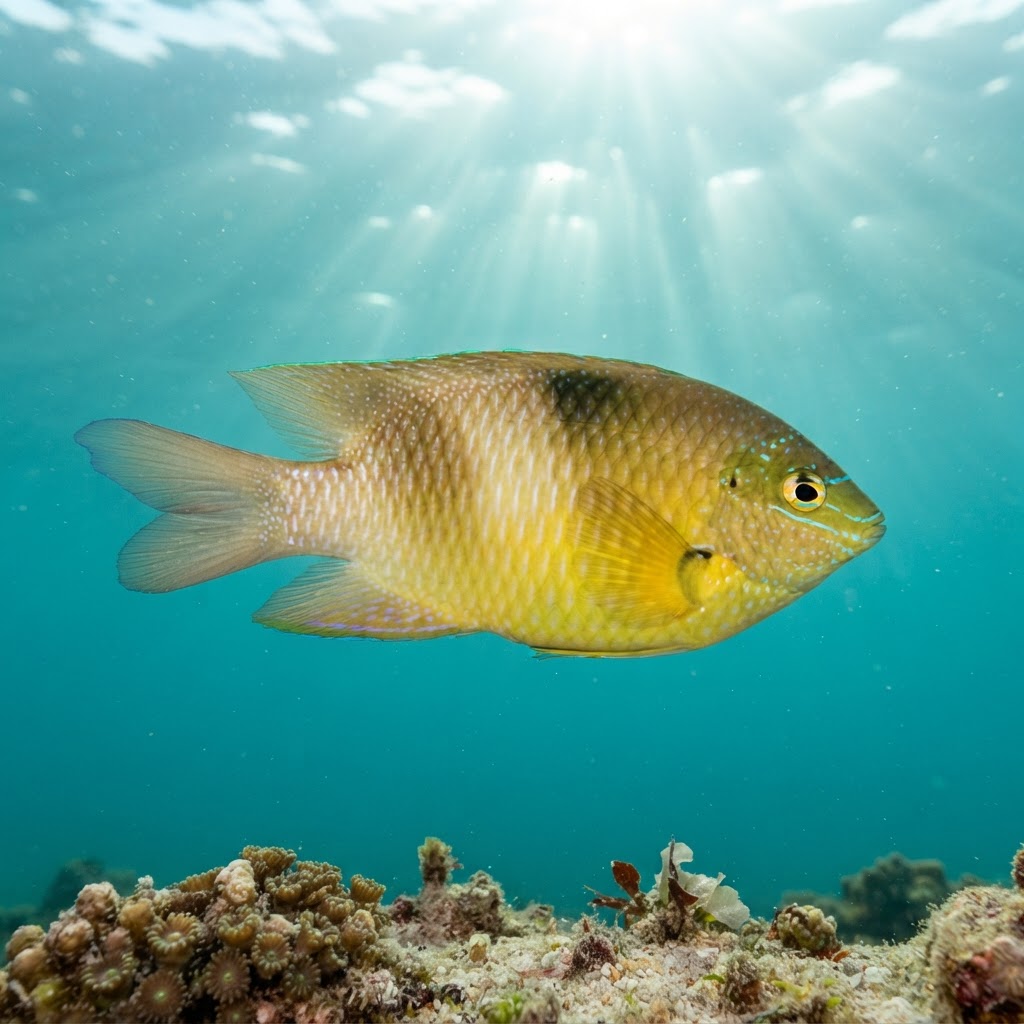
A small, deep-bodied damselfish around 13 cm, with a body that shades from dusky grey-brown toward the tail into a warm honey-yellow wash across the head and nape, giving it its name. It has the stocky, oval profile typical of Dischistodus damsels, with a small mouth and a single continuous dorsal fin. Look for it hovering close to a patch of rubble or sand it seems reluctant to leave.
Divers usually find it holding station over a patch of sand or rubble near the reef base, guarding a small feeding or nesting territory rather than schooling in open water. It is not especially flighty and will often let you approach slowly for a closer look before darting back to its patch. Most sightings come from typical daytime reef dives rather than any particular time of day.
Like other Dischistodus damsels, it likely tends a small algae patch on the substrate, chasing off other fish that wander too close, a common damselfish strategy for farming its own food supply.
No clear seasonal pattern shows up in the sightings data, and its comfort range of 25.4 to 29.3 C matches tropical reef conditions year-round, so any month works across its range.
Most reliably logged on reefs in Java, Indonesia and Sabah, Malaysia, which together account for the bulk of recorded sightings. It also turns up with reasonable consistency in Western Australia, Palawan in the Philippines, and around Tufi in Papua New Guinea.
Mapping where Honey-head Damsel is logged…
It's most consistently seen on reefs in Java, Indonesia, and Sabah, Malaysia, with further sightings across Western Australia, Palawan in the Philippines, and Tufi in Papua New Guinea.
There's no strong seasonal signal in sightings, and it favours warm reef water between roughly 25 and 29 C, so it can be spotted on tropical reefs at any time of year.
Look for a small, oval-bodied damselfish about 13 cm long with a grey-brown body that lightens to a golden-yellow wash over the head. It typically hovers near a patch of sand or rubble rather than roaming widely.
They reach around 13 cm in length, a fairly typical size for a damselfish, making them easy to overlook against a busy reef background.
No, they pose no danger to divers. They may act territorial toward other small fish near their patch of reef but show no aggression toward people.
Site and sighting data is aggregated from diver logs, iNaturalist and GBIF. For taxonomy and conservation status:
Dascyllus
3,697 sites