Pleurobranchus hilli
A large mottled sea slug logged mostly in Victoria, Australia, in cool 14.7-22C water, seen year-round but never guaranteed.
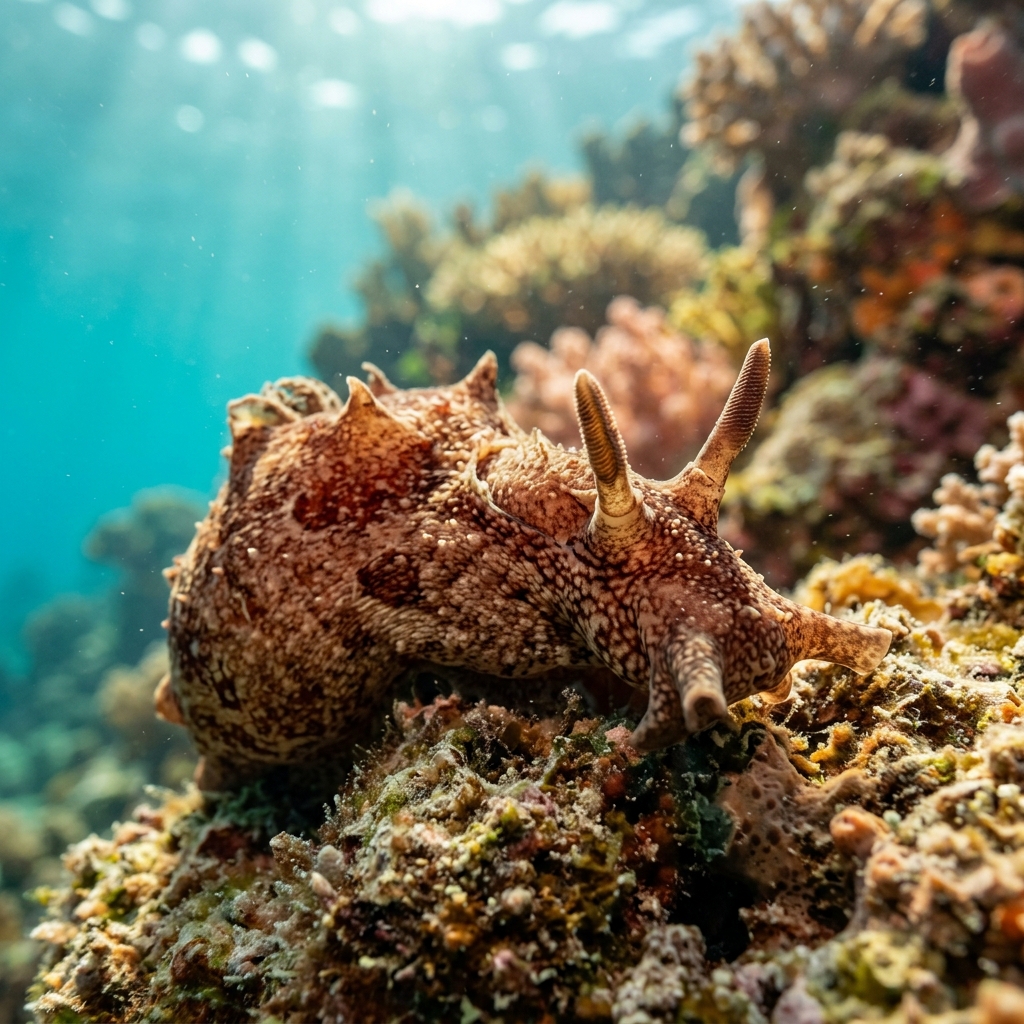
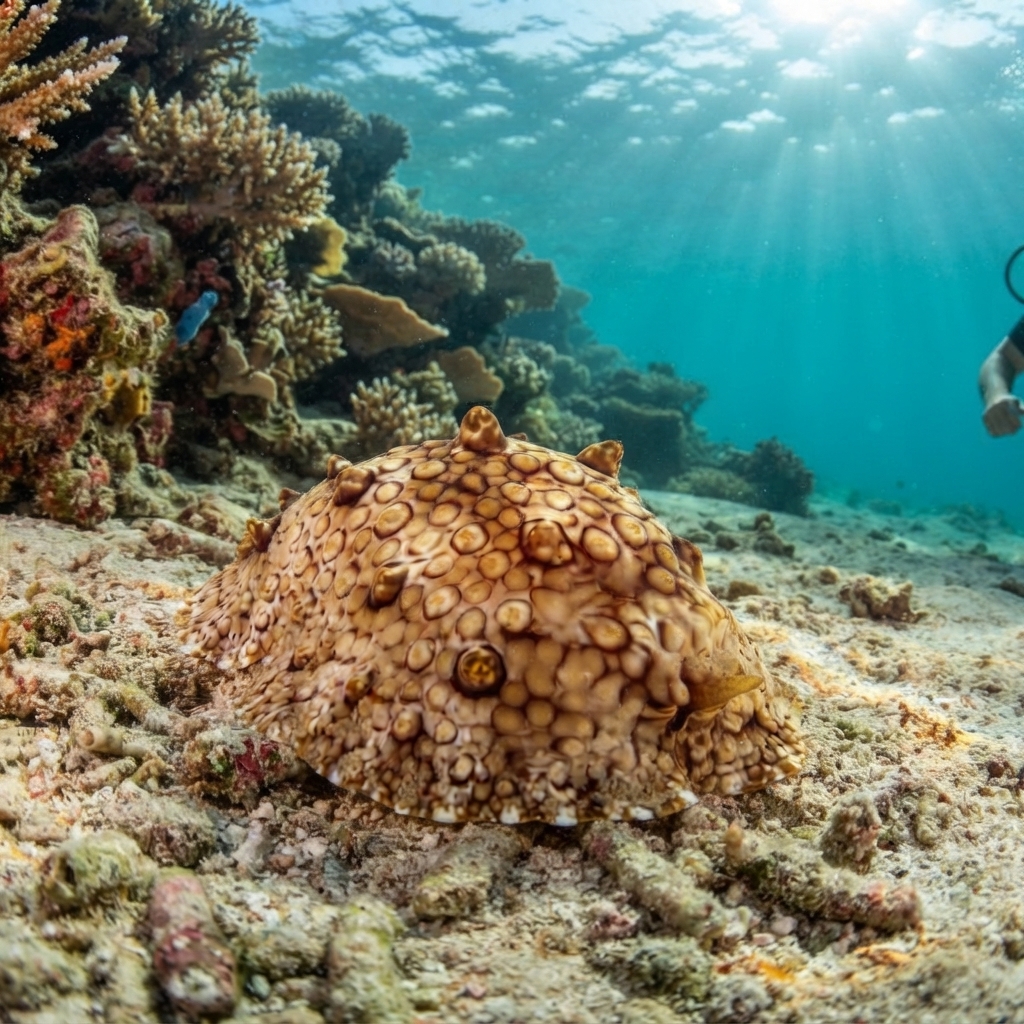
Grows to around 21cm, making it one of the larger slugs a diver will run into on a temperate reef. Body is broad, flattened and warty-looking, with a mottled brown, tan and cream pattern that breaks up its outline against rock and sponge. The mantle covers most of the body with no obvious external gill visible from above, and the overall impression is a slow-moving, fleshy lump rather than a brightly patterned nudibranch.
Divers typically find it moving slowly over rock, rubble or sponge-covered reef, grazing rather than swimming, and it pays little attention to a torch or a diver hovering close by. Most logs describe it as uncommon to rare at any given site, with a handful of spots where it turns up more reliably, so it rewards a slow, close look at the substrate rather than mid-water scanning. Being a night-active-leaning grazer for many pleurobranchs, sightings on evening or low-light dives are worth watching for, though daytime finds are also logged.
Like other pleurobranchs, it likely feeds on ascidians (sea squirts) and sponges, rasping them off the reef with a file-like tongue, which explains why it turns up on sponge-crusted rock rather than open sand.
There is no clear seasonal pattern in the sighting data, so treat it as a year-round possibility. It has been recorded in water from 14.7 to 22.0C, which covers most of Victoria's diving season, so timing your dive around temperature is not really necessary.
Victoria, Australia is by far the strongest area for this species, with South Australia and Western Australia turning up occasional records as well. All logged sightings so far come from Australian waters, so it is effectively an Australian temperate-reef specialty rather than a tropical find.
Mapping where Hill's Pleurobranchus is logged…
Victoria, Australia is the strongest area, with South Australia and Western Australia producing occasional sightings too. So far it has only been logged in Australian waters.
There is no strong season in the data, so it is best treated as a year-round possibility in Victoria's temperate waters, which sit between roughly 14.7 and 22C.
Look for a large, fleshy, mottled brown and cream sea slug up to about 21cm long, with a broad flattened body and a warty-looking mantle covering most of its back. It moves slowly over rock and sponge rather than swimming.
They can reach around 21cm in length, making them noticeably larger and bulkier than most reef nudibranchs a diver will encounter on the same dive.
No, it poses no known danger to divers and can be observed and photographed at close range without any risk.
It most likely grazes on sponges and ascidians on the reef surface, in keeping with the feeding habits of other pleurobranch sea slugs.
Site and sighting data is aggregated from diver logs, iNaturalist and GBIF. For taxonomy and conservation status:
Light-spotted Aegires
3,168 sites