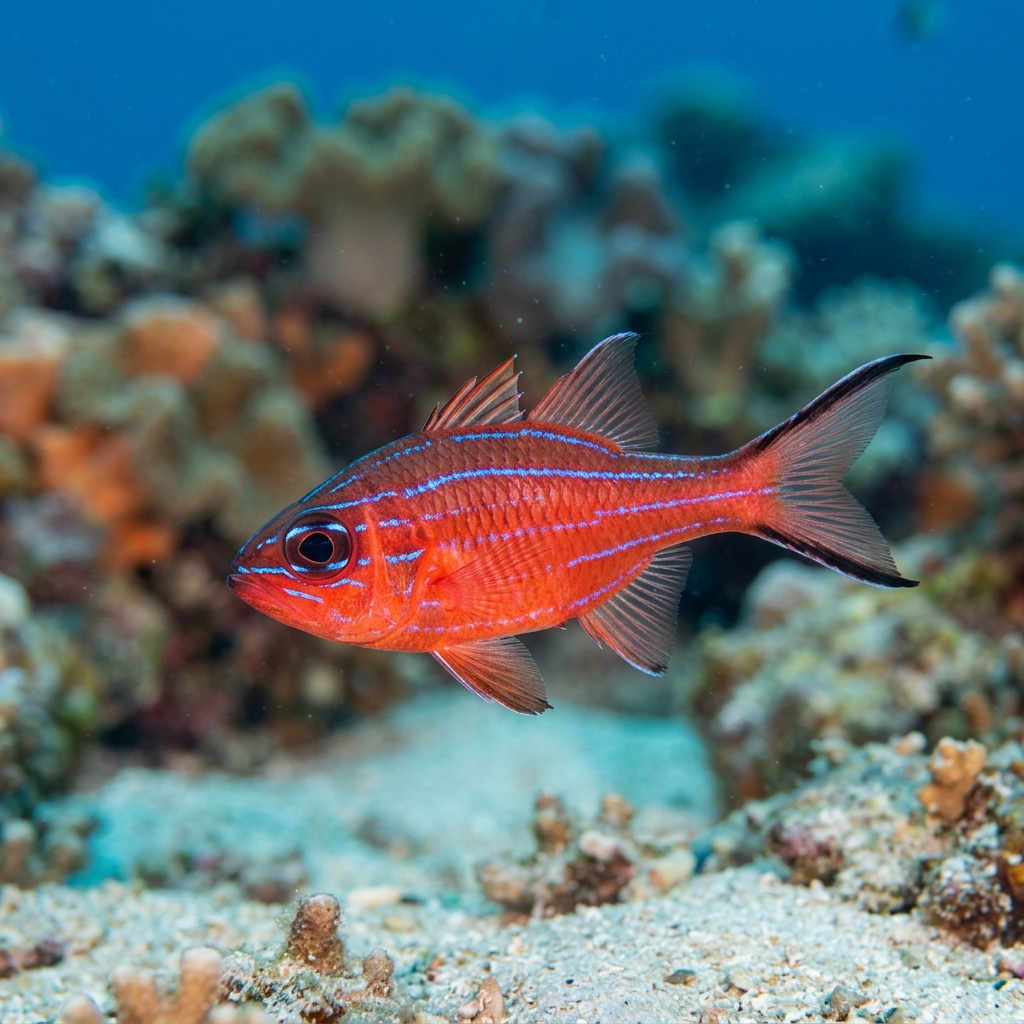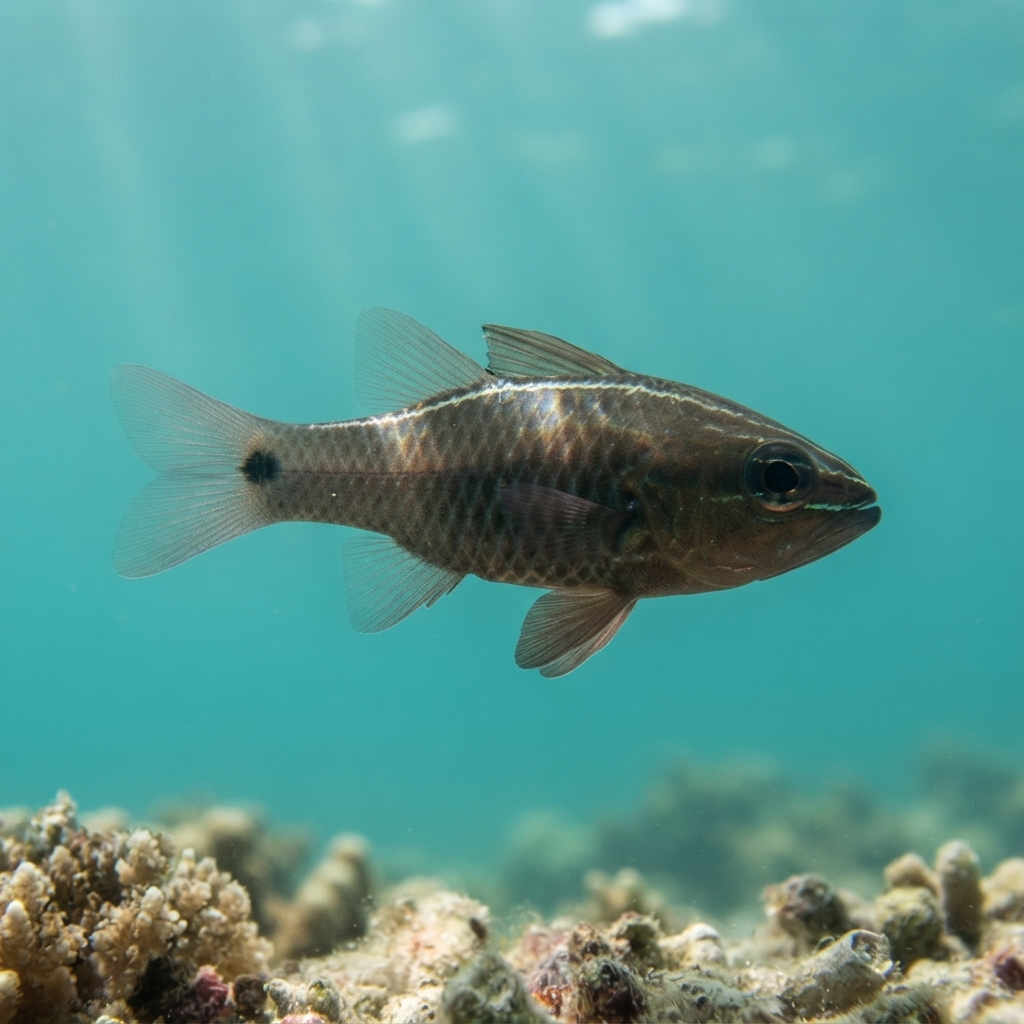
Ostorhinchus hartzfeldii
Common on reefs across the Visayas at 27.6 to 29.3 C, this small cardinalfish shelters in crevices year-round. Here's how to spot it.
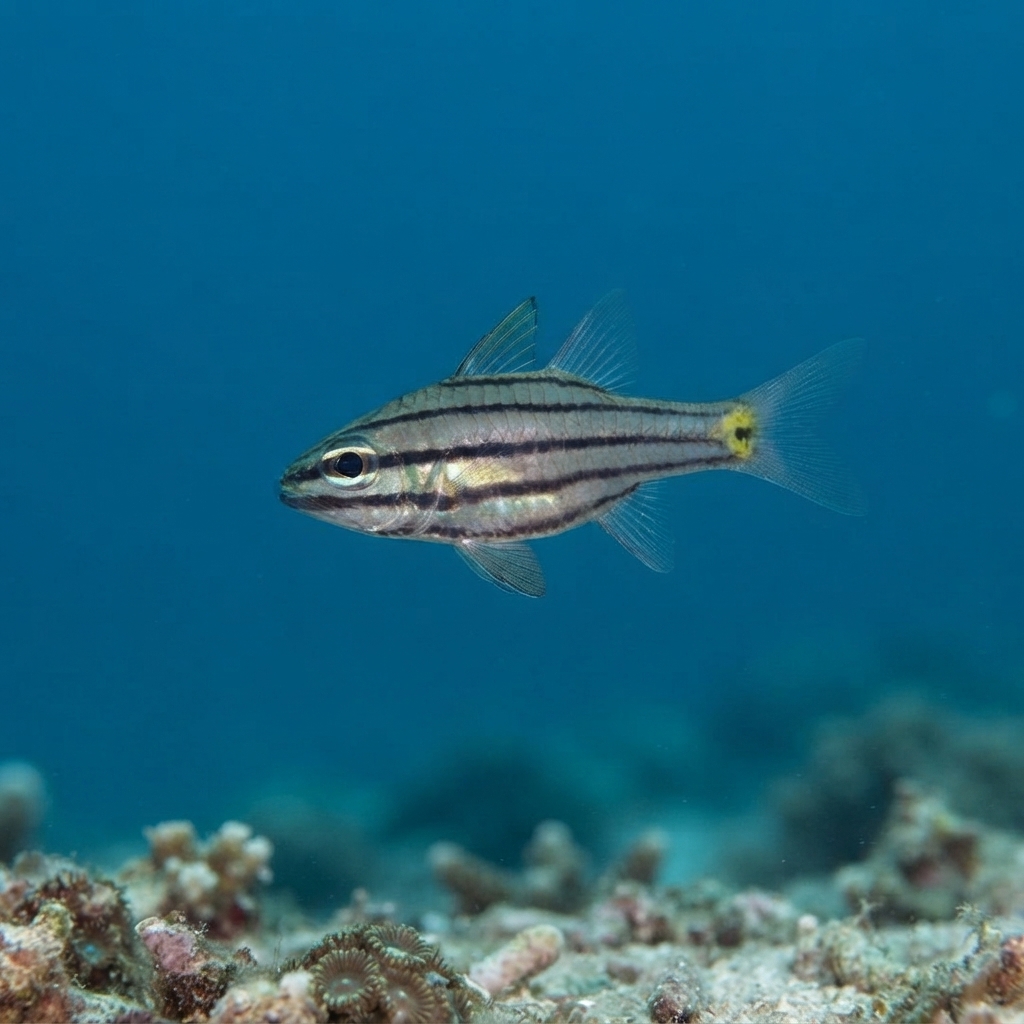
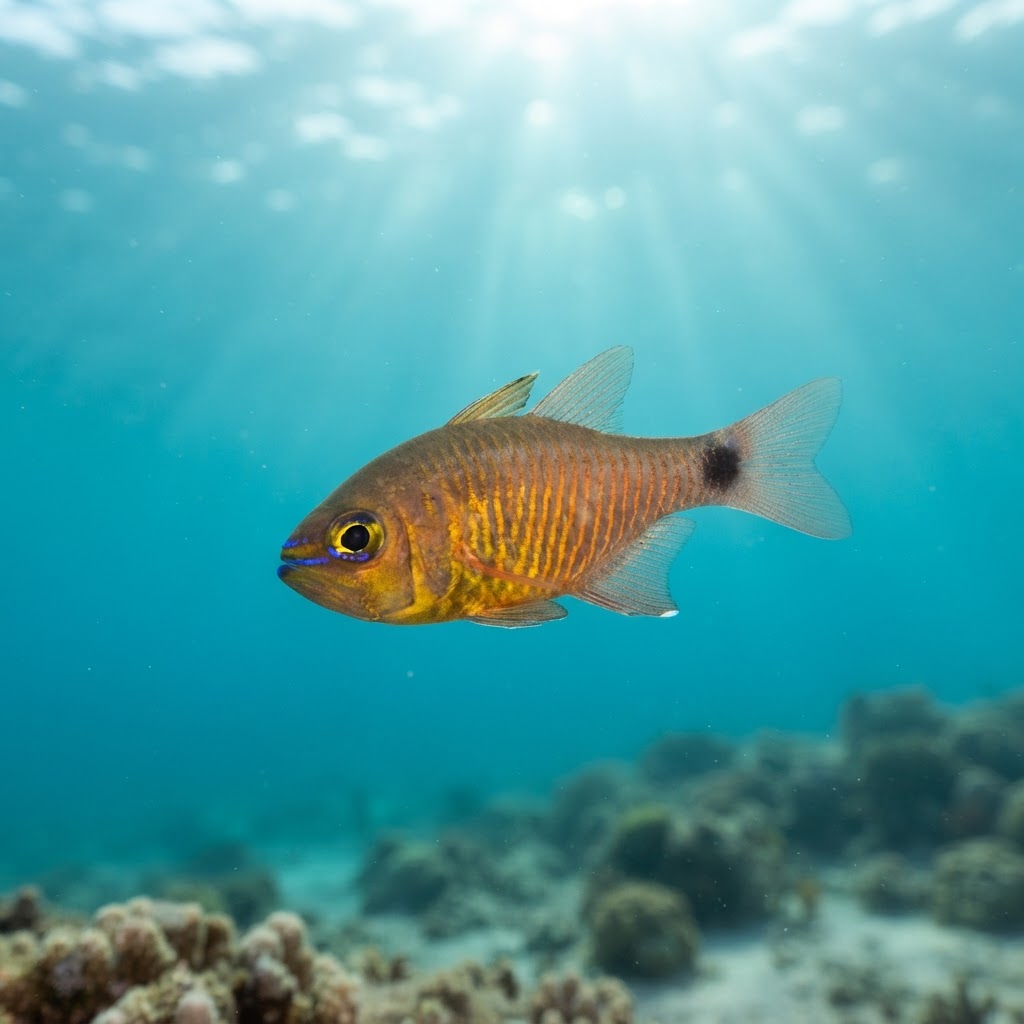
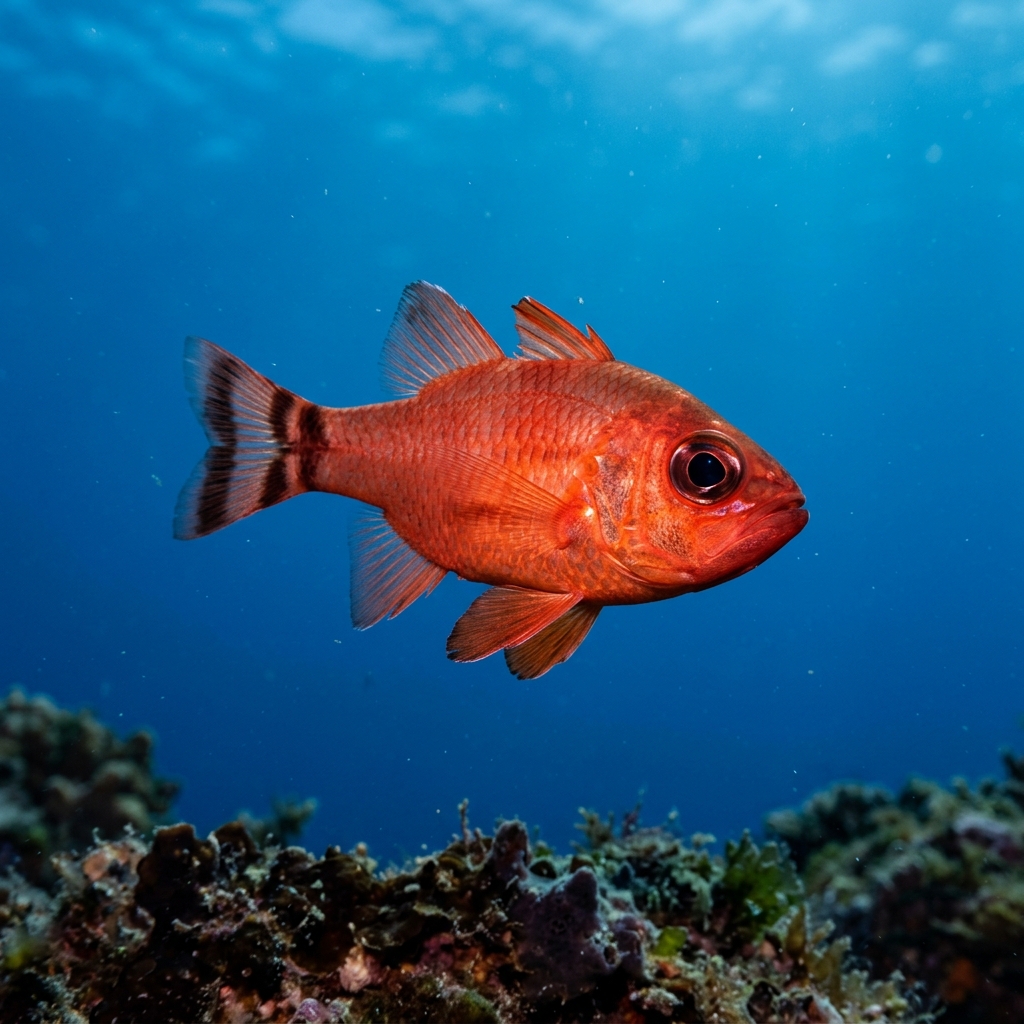
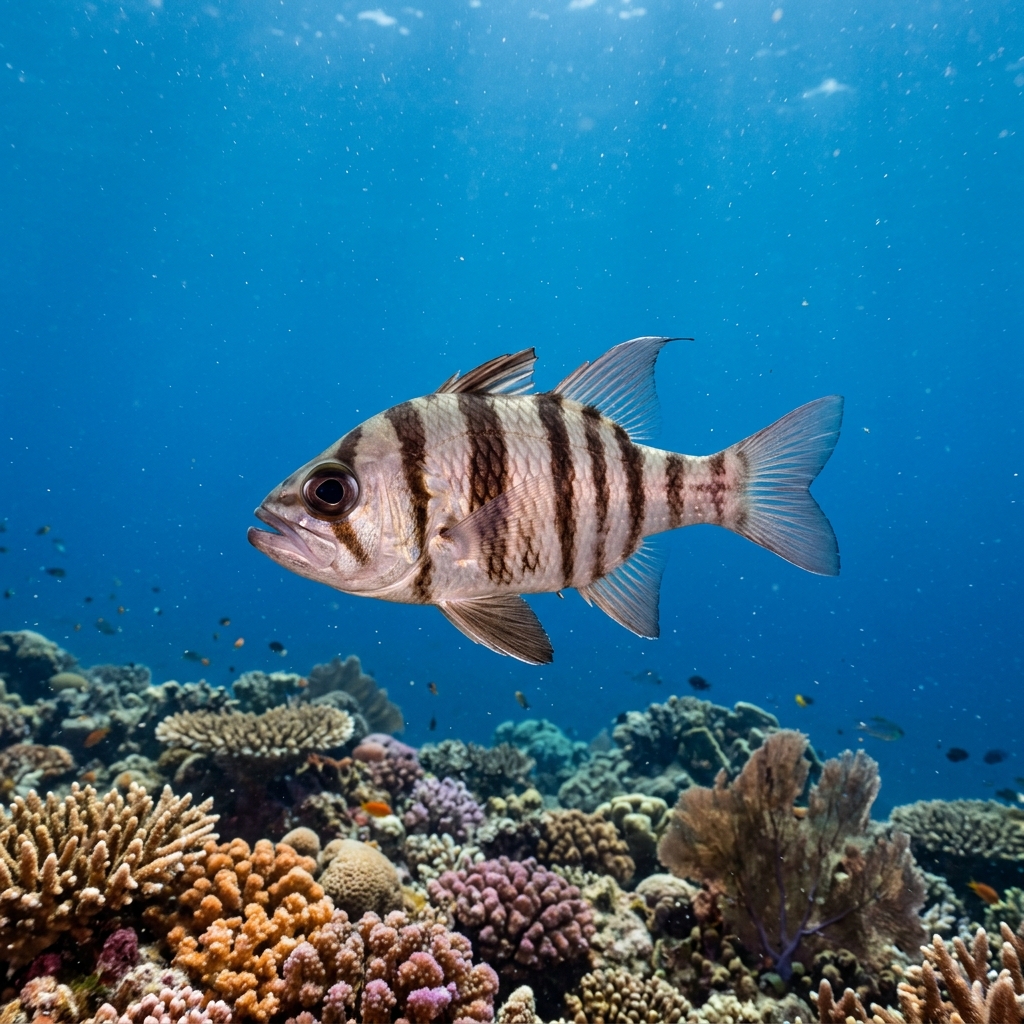
A small, deep-bodied fish around 8 cm with the classic cardinalfish look: big dark eyes, a blunt face, and two dorsal fins held separately. Body colour runs reddish-brown to tan, usually with faint pale stripes along the sides that are easiest to pick out with a torch. Look for it hovering close to a hole or ledge rather than out in open water, often in small loose groups.
Spends the day tucked close to coral crevices, overhangs, and reef rubble, usually in small loose clusters rather than solitary. It holds fairly still and lets divers approach within a metre or so before easing back into cover, making it an easy subject for a patient macro shot. Like most cardinalfish it becomes more active after dark, spreading out over the reef to feed.
Cardinalfish in this family are mouthbrooders: males carry the fertilised eggs in their mouth until the young hatch, guarding the whole clutch rather than leaving it exposed on the reef.
No clear seasonal pattern shows up in the data, and with a comfortable range of 27.6 to 29.3 C it's a year-round resident on these tropical reefs. Any month works for a sighting in the Visayas or Sulawesi.
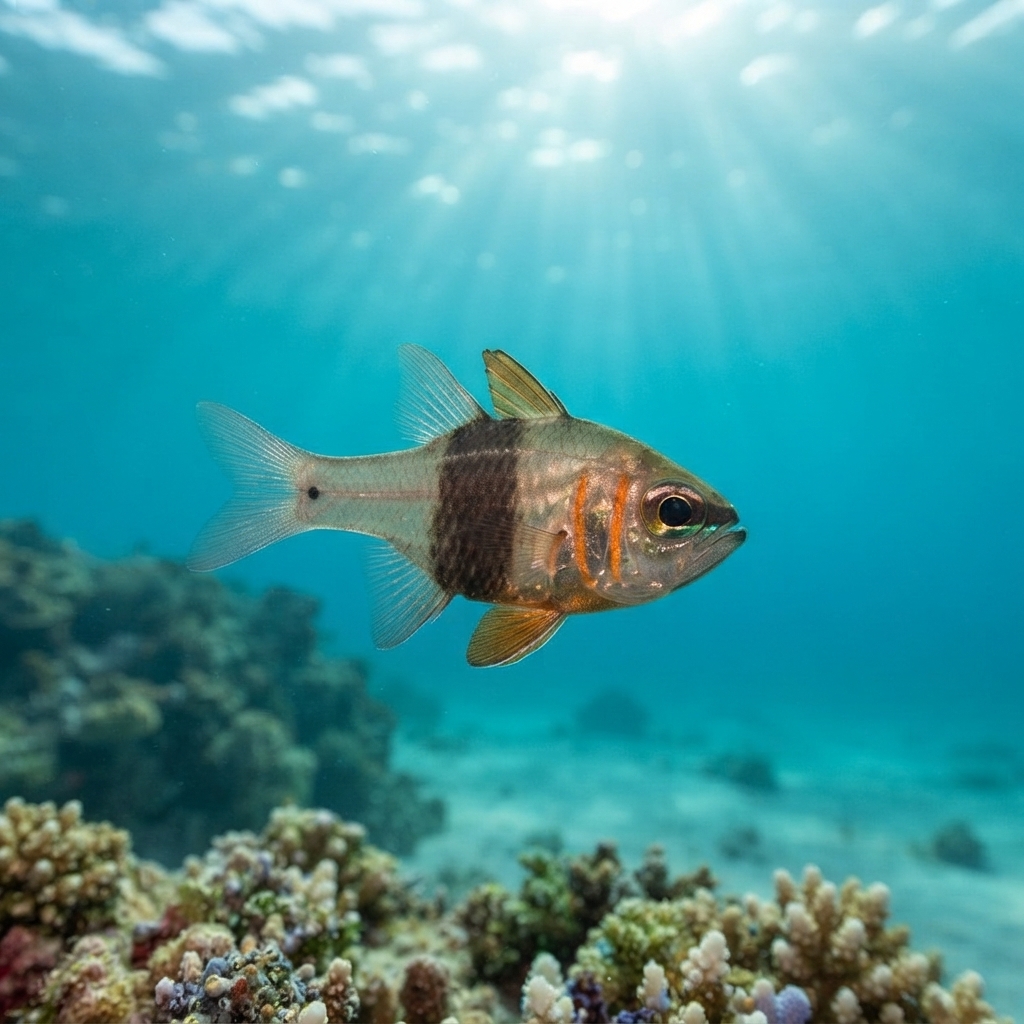
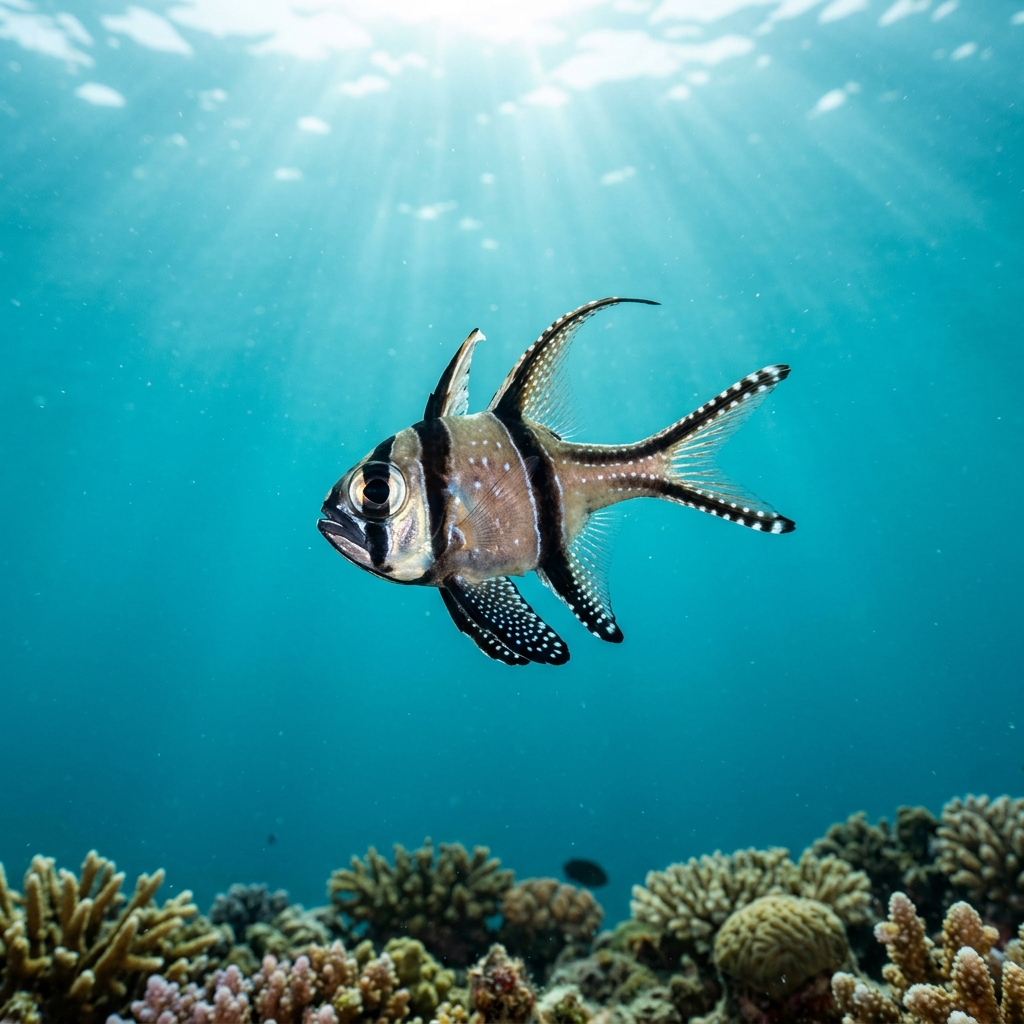
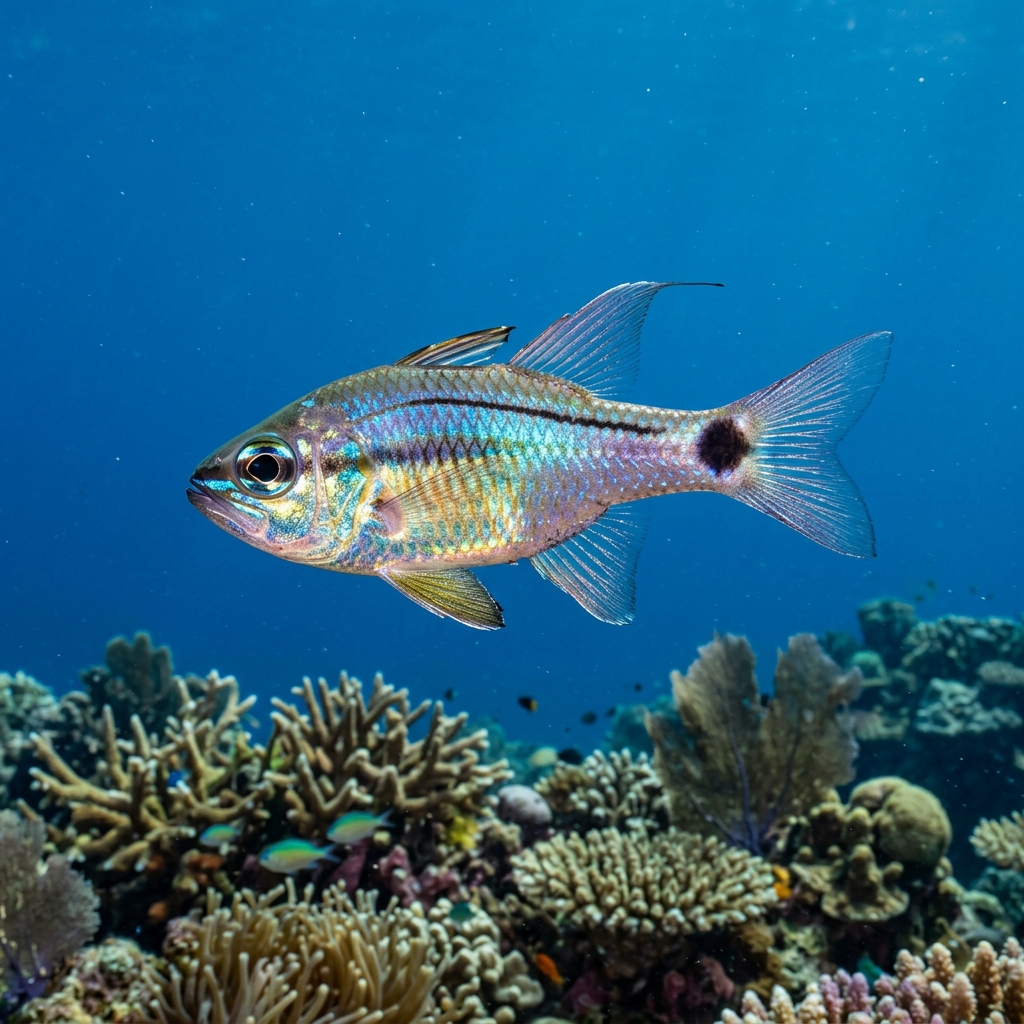
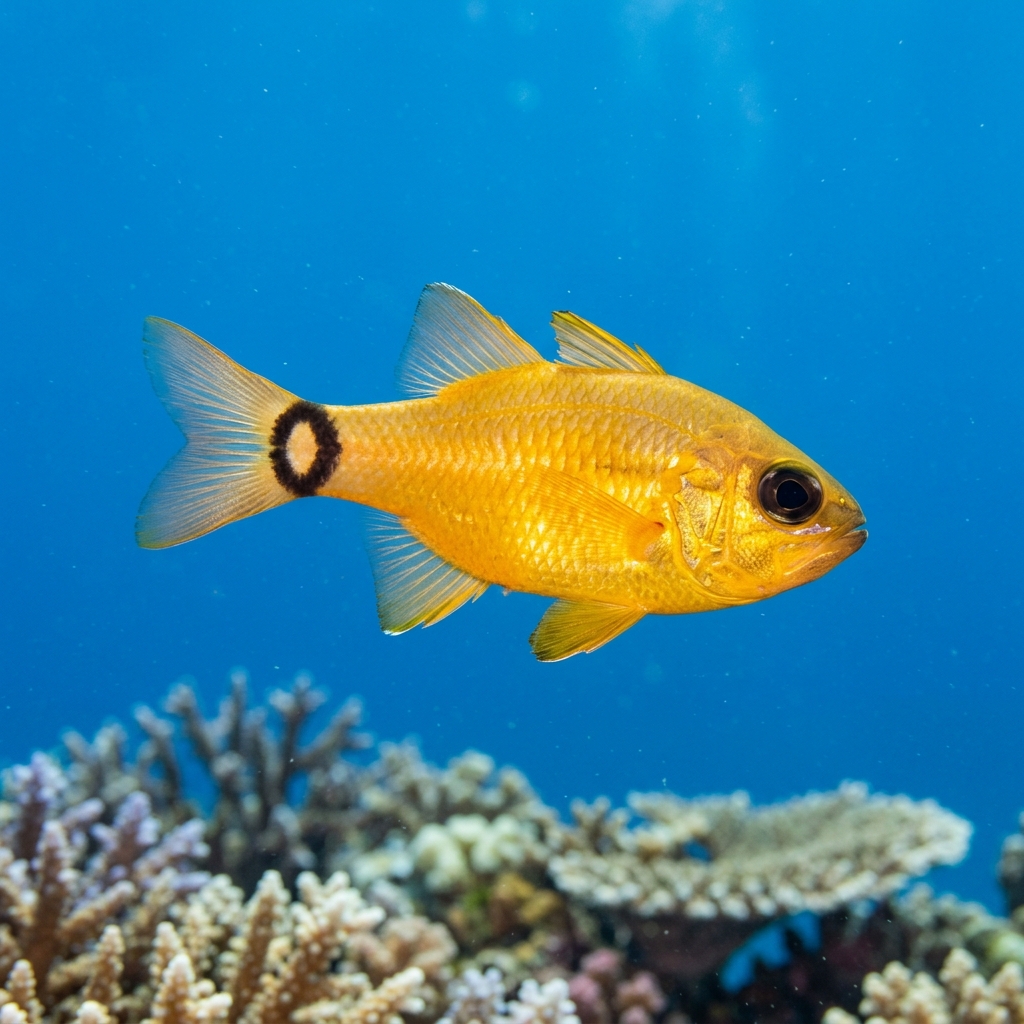
Reef neighbours a diver could mistake it for. Use the identification notes above to tell them apart.
Most reliably logged across the Visayas in the Philippines, which accounts for the bulk of recorded sightings, with further records from Sulawesi and Bali in Indonesia. Within its range it's reported as common at most sites and only occasional at a handful of others, so a bit of reef searching around crevices and overhangs usually pays off.
Mapping where Hartzfeld's Cardinalfish is logged…
The Visayas region of the Philippines is the most reliable place to find them, with additional sightings from Sulawesi and Bali in Indonesia. They're logged as common at most of these sites, so a slow look around reef crevices usually turns one up.
There's no strong seasonal pattern in the sightings, and water temperatures in its range stay warm year-round (27.6 to 29.3 C), so it's a fair bet on any dive trip to the Visayas or Sulawesi.
Look for a small reddish-brown fish around 8 cm long with large eyes and faint pale side stripes, hovering near a crevice or overhang rather than swimming in open water. It often sits in small loose groups close to shelter.
They stay small, reaching around 8 cm, which is typical for cardinalfish in the Apogonidae family.
No. They're a harmless small reef fish that poses no risk to divers and will simply retreat into cover if approached too closely.
Like other cardinalfish, males are mouthbrooders, holding the fertilised eggs in their mouth until they hatch instead of leaving them on the reef.
Site and sighting data is aggregated from diver logs, iNaturalist and GBIF. For taxonomy and conservation status:
Iridescent Cardinalfish
1,781 sites