Acanthodoris pilosa
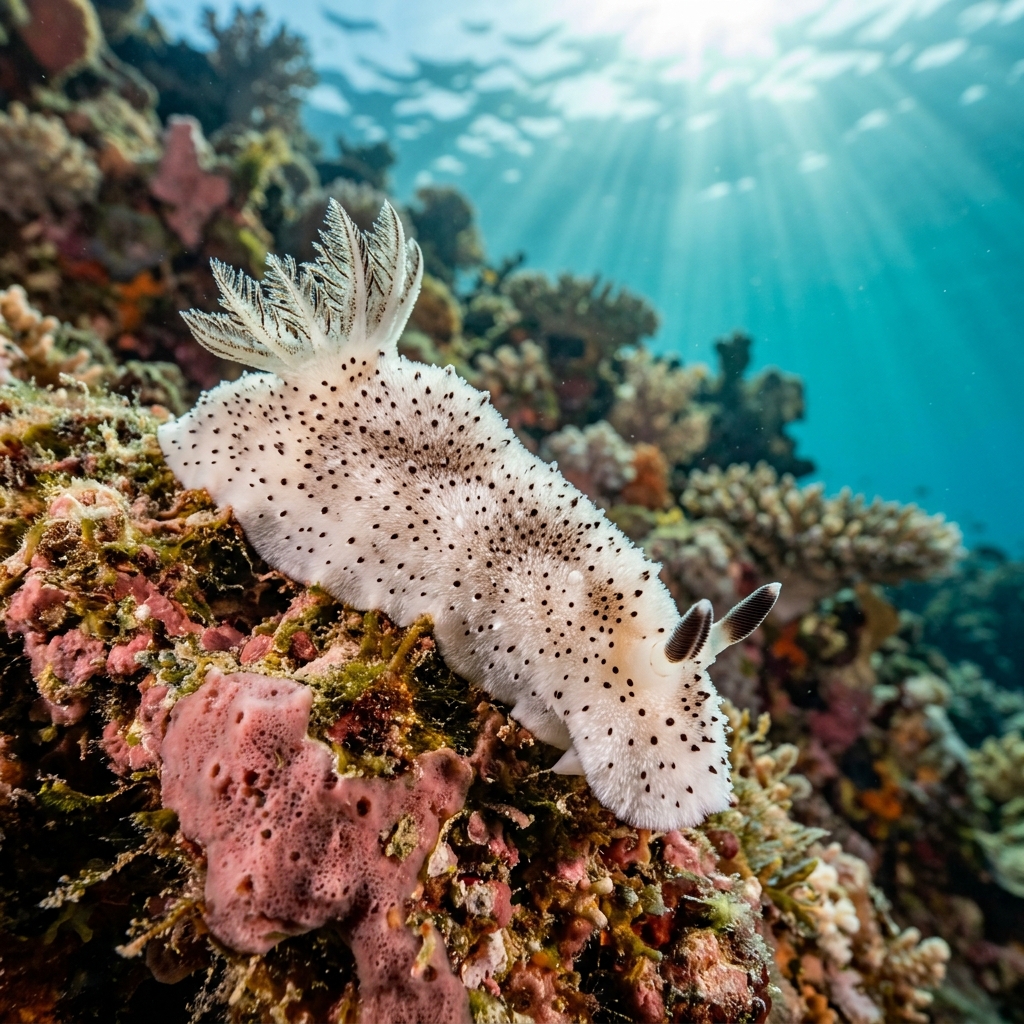
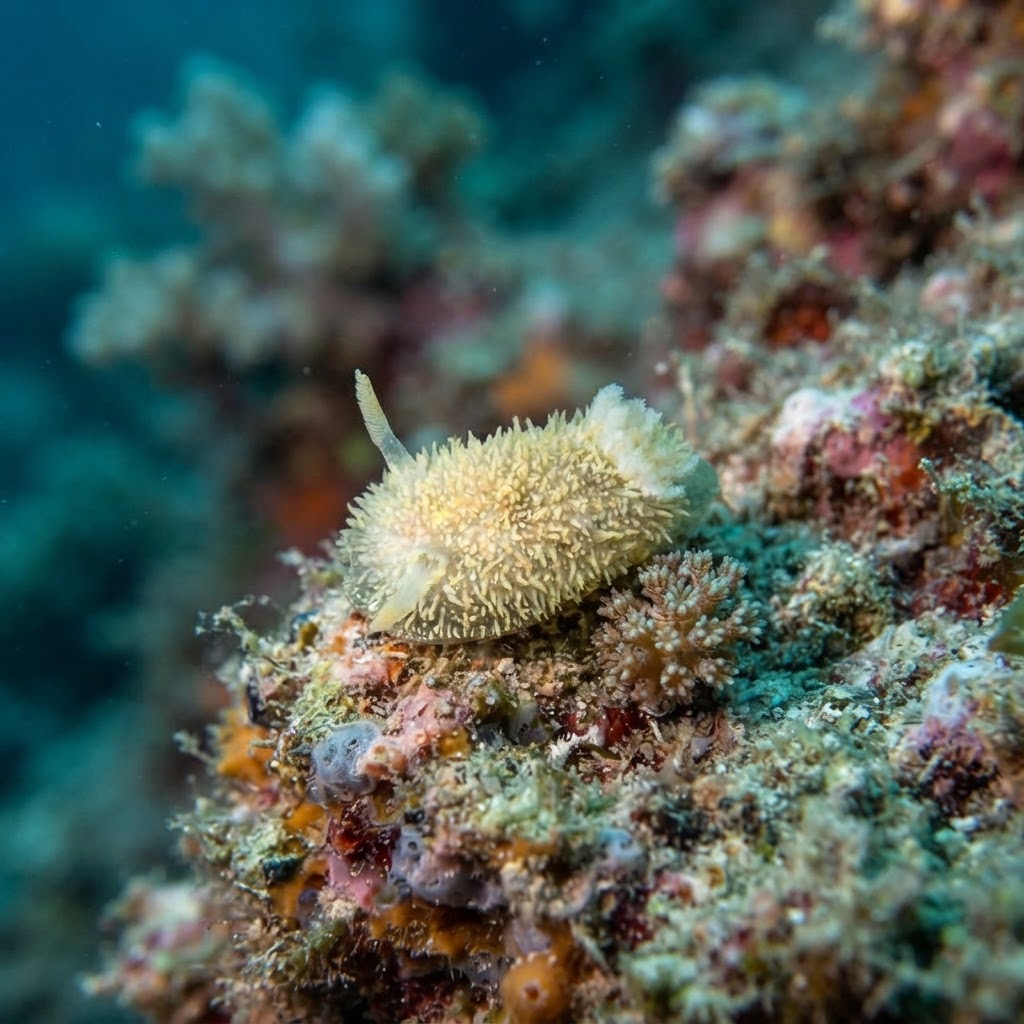
A 1cm fuzzy grey-white nudibranch found on cold-water dives in Zeeland, Northern Ireland and Østlandet, year-round in 7.6-13.6C water.
A tiny slug barely a centimetre long, usually grey, white or pale brown with a covering of soft-looking, hair-like tubercles (bumps) that give the whole body a fuzzy, frosted texture. Look for the two rhinophores (sensory tentacles) on the head and a small cluster of feathery gills near the rear, both often tipped darker than the body. Its low, oval, bumpy profile against smooth rock or weed is usually the giveaway, since nothing else that small in cold northern water looks quite so shaggy.
Found crawling slowly over rock, shell debris and weed in shallow, cool coastal water, often on the same low-visibility silty or rocky ground divers use for other nudibranch hunting. It shows no reaction to divers beyond simply carrying on grazing, since it has no eyes worth mentioning and relies on chemical senses rather than sight. Most logs come from estuarine and near-shore neritic sites rather than open offshore reef, so it rewards divers who slow down and scan structure closely rather than mid-water.
Those hair-like tubercles aren't just texture, they help camouflage it among the encrusting bryozoans and hydroids it feeds on, which is also its main food source as an adult.
Sightings show no detected seasonal pattern, so treat this as a year-round find wherever it occurs. It sits comfortably in cold water from about 7.6 to 13.6C, matching the temperate seas it's dived in across the year.
Most reliably logged in the Netherlands, especially around Zeeland, and a strong presence across the United Kingdom, particularly Northern Ireland, England, Scotland and Wales. Also turns up consistently in Norway's Østlandet region, Danish sites in Jutland, and German dives in Schleswig-Holstein.
Mapping where Hairy Spiny Doris is logged…
It's most commonly logged in the Netherlands, particularly Zeeland, and across the United Kingdom, especially Northern Ireland. Norway's Østlandet region, Danish sites in Jutland and German dives in Schleswig-Holstein also produce regular sightings.
There's no clear seasonal pattern in sightings, so it's considered a year-round find. It lives in cold water between roughly 7.6 and 13.6C, which is typical of northern European coastal dives at any time of year.
Look for a tiny, 1cm slug with a grey or white body covered in soft, hair-like bumps, giving it a fuzzy texture. Two rhinophores sit on the head and a small gill cluster near the tail, both often darker-tipped than the rest of the body.
They stay small, typically around 1cm long as adults, which makes them easy to miss unless you're looking closely at rock and weed surfaces.
No, they pose no danger to divers. They're small, slow-moving, and have no means of harming anything larger than the tiny invertebrates they graze on.
It grazes on encrusting bryozoans and hydroids growing on rock and weed, using its fuzzy tubercled body as camouflage while it feeds.
Site and sighting data is aggregated from diver logs, iNaturalist and GBIF. For taxonomy and conservation status:
Light-spotted Aegires
3,168 sites