Geitodoris heathi
A small, bumpy nudibranch found in cool Pacific waters from British Columbia to California, usually uncommon but worth the search.
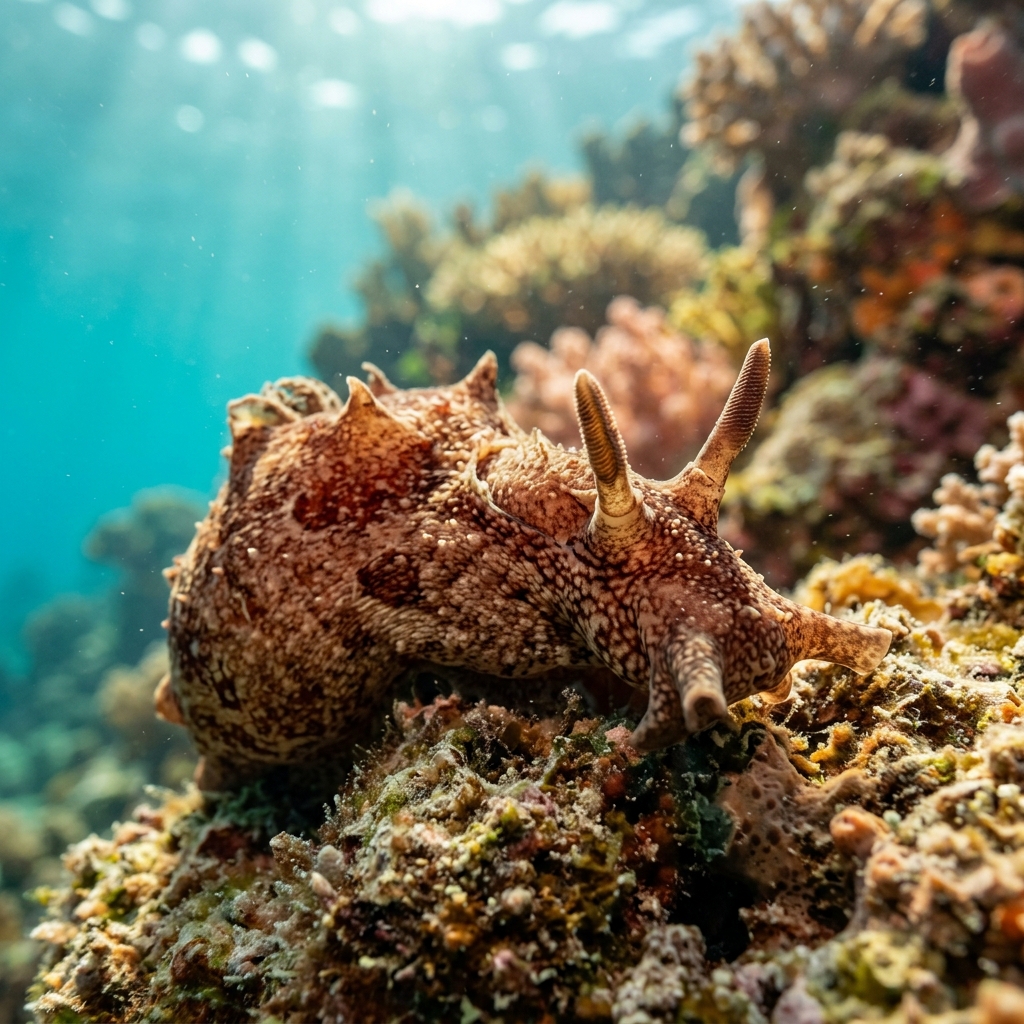
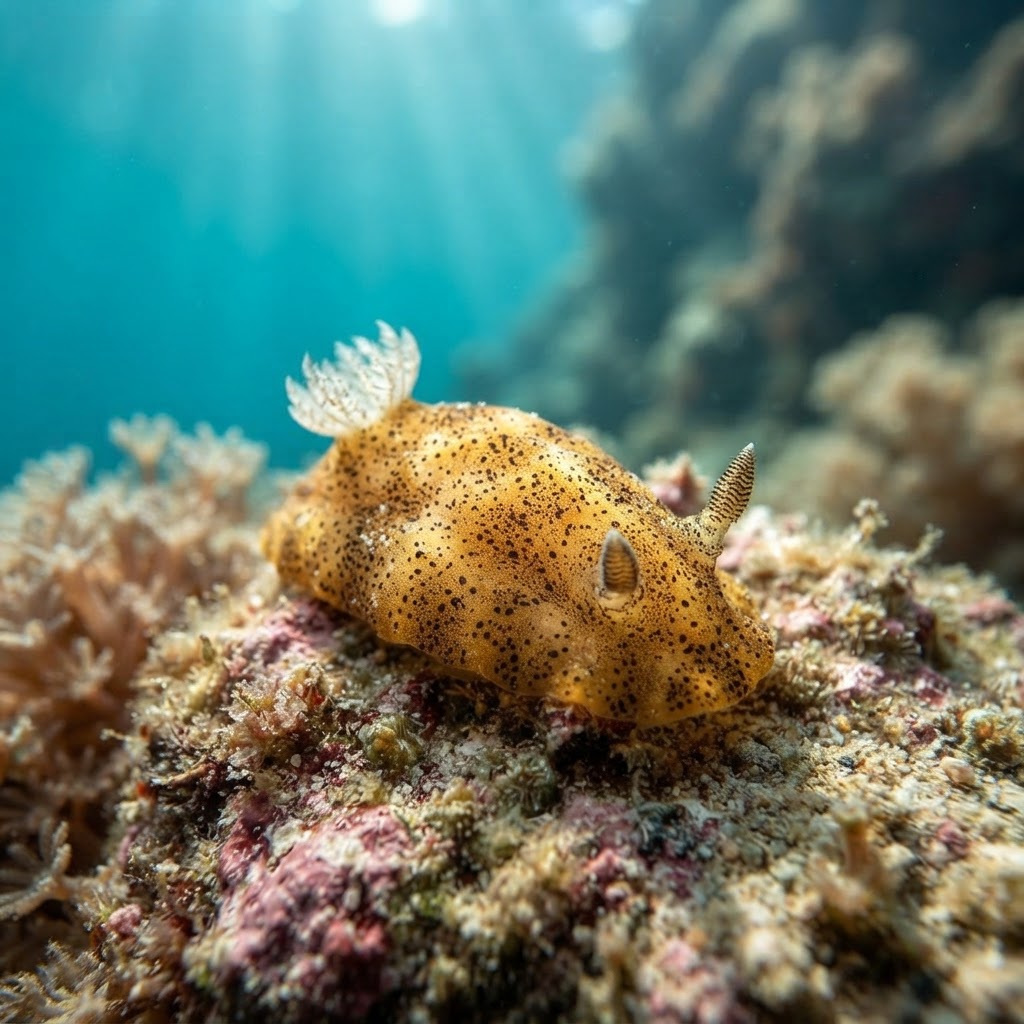
A small, bumpy-backed nudibranch reaching about 2 cm, with a warty (tuberculate) surface that gives it a rough, gritty texture rather than a smooth gel-like skin. Colouration runs cream to pale brown with mottled patterning that blends into rocky, silty bottoms. Look for the feathery gill cluster (rhinophores and gill plume) tucked near the rear, a giveaway of its dorid family even when the mottled body disappears against the substrate.
Divers find it slowly grazing over rocky, low-light bottoms, usually solo and tucked close to the substrate where its mottled body breaks up its outline. It moves at the unhurried pace typical of dorid nudibranchs and pays no attention to divers hovering nearby, making it an easy subject for a macro lens once spotted. Most logs describe it as uncommon rather than a guaranteed find, so a slow, close look at rubble and rock crevices pays off.
Like other dorid nudibranchs, it likely feeds on sponges, using specialised radula to rasp at its prey, a diet that also explains why it's usually found tight against rocky, sponge-covered substrate rather than out in the open.
Sightings don't show a clear seasonal pattern, so treat it as a year-round find in the cold water it favours, around 8.7 to 15.4 C. Cold Pacific waters stay within that range most of the year, which likely explains the lack of a strong season in the logs.
Most reliably found on cold-water dive sites in British Columbia, Canada, and California, United States, with a further cluster of sightings through the Pacific Northwest and a single record from Alaska. This is a temperate rocky-reef species rather than a tropical reef one, so look to the North American west coast rather than warm-water destinations.
Mapping where Gritty Doris is logged…
It's most commonly logged in British Columbia, Canada, and California, United States, with additional sightings through the wider Pacific Northwest and one record from Alaska. It's a cold-water Pacific species, so it turns up on temperate rocky reefs rather than tropical dive destinations.
There's no strong seasonal pattern in the sightings, so it's considered a year-round find. It lives in cold water between roughly 8.7 and 15.4 C, a range that persists through most of the year on the Pacific Northwest coast.
Look for a small, warty-backed nudibranch around 2 cm long, coloured cream to pale brown with mottled patterning that camouflages it against rocky or silty seabeds. Its rough, bumpy texture and rear gill plume are the key clues that separate it from smoother nudibranch species.
They stay small, typically reaching about 2 cm in length, so divers need to look closely at rocky substrate to spot one.
No. They pose no danger to divers and can be safely observed and photographed up close without disturbing them.
As carnivores, they're presumed to feed on sponges like related dorid nudibranchs, rasping at their prey with a specialised feeding structure. This diet ties them closely to sponge-covered rocky habitat.
Site and sighting data is aggregated from diver logs, iNaturalist and GBIF. For taxonomy and conservation status:
Light-spotted Aegires
3,168 sites