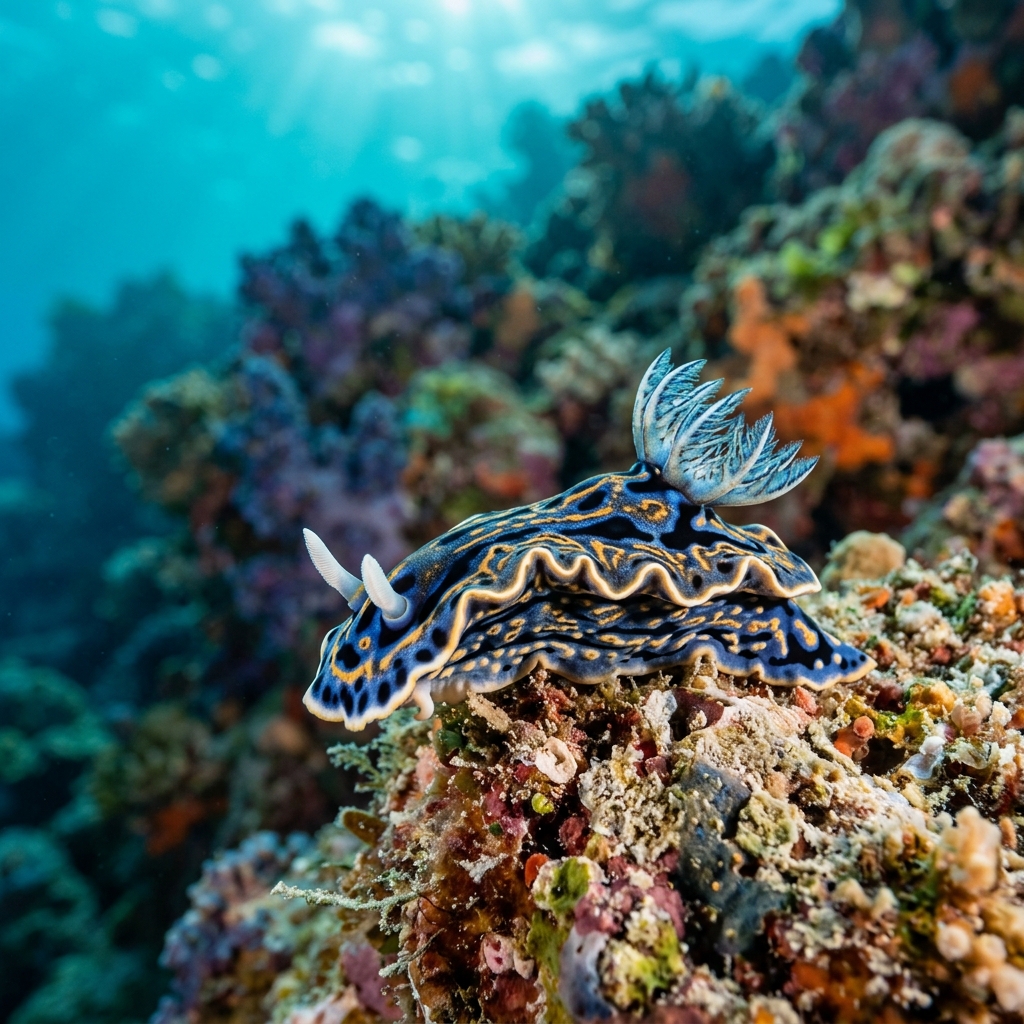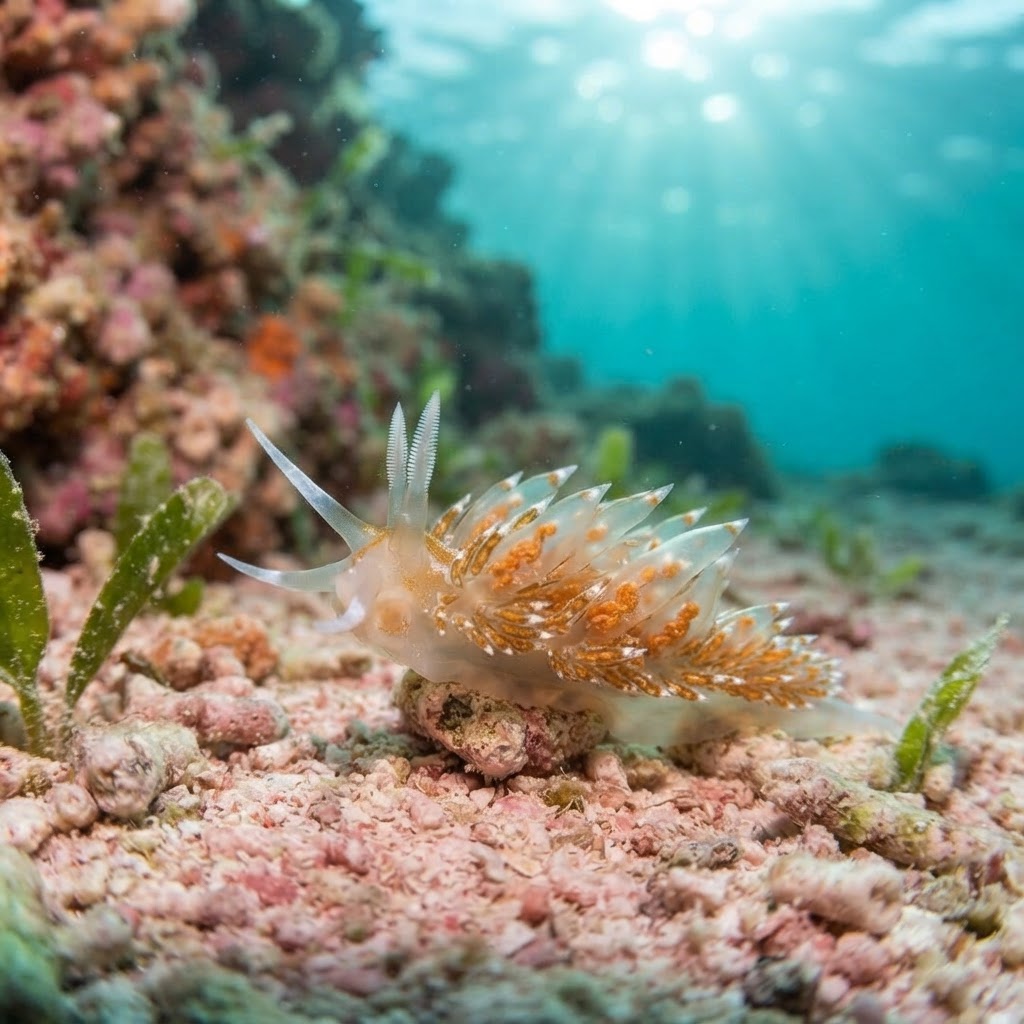
Tularia bractea
Uncommon nudibranch logged along Victoria, Australia's temperate coast in water as cool as 14.7C, present year-round.
Small, soft-bodied sea slug with a mantle showing green and gold tones and a finely textured or ruffled edge typical of the apataidae family. Look for the pair of sensory tentacles (rhinophores) on the head and feathery gills toward the rear, both diagnostic of nudibranchs at close range. It moves slowly across rock and rubble, so size and colour are usually the only clues you get before it is gone from view; expect something a few centimetres long rather than a large animal.
Divers find it grazing slowly over rock and reef structure, doing what most nudibranchs doforaging with little regard for a torch or camera hovering nearby. It is not a fast or reactive animal, so patient divers get a good long look once one is spotted, though most logs describe it as uncommon rather than a guaranteed find on any given dive.
Like other nudibranchs, it lacks a shell as an adult and instead relies on chemical defences absorbed from its diet, so its bright green and gold colouring likely doubles as a warning rather than pure decoration.
Sightings show no detectable seasonal pattern, so it is logged across the year rather than in a tight window. Its comfort range of 14.7 to 22.0C fits Victoria's cool temperate water for most of the year, which likely explains the year-round reports.
Almost every logged sighting comes from Australia, with Victoria standing out as the strongholdthink temperate reef and rocky-shore sites rather than tropical coral. A single site in South Island, New Zealand rounds out the known range, but this is very much a Victorian speciality dive.
Mapping where Green/gold Tularia is logged…
Victoria, Australia is by far the most reliable region, with a single additional site recorded in South Island, New Zealand. It is a temperate-water species, so look on rocky reef and rubble sites rather than coral reefs.
There is no strong seasonal signal in the sightings, so it turns up across the year. Its recorded temperature range of 14.7 to 22.0C matches Victoria's cool-water conditions for most months.
Look for a small, slow-moving sea slug with green and gold mantle colouring and a textured or ruffled body edge. Check for rhinophores on the head and gill tufts near the tail, both standard nudibranch features that confirm the ID.
Exact size data is not recorded for this species, but like most members of its family it is a small animal, typically only a few centimetres long. Expect to need a close look rather than spotting it from a distance.
No, this species is not considered dangerous to divers. It has no reported sting or bite risk and simply grazes on the reef, ignoring divers nearby.
Site and sighting data is aggregated from diver logs, iNaturalist and GBIF. For taxonomy and conservation status:
Blue Dragon
3,163 sites