Tenellia speciosa
Small, uncommon nudibranch logged across Western Cape dive sites in 13-19C water, spotted year-round on cool reefs.
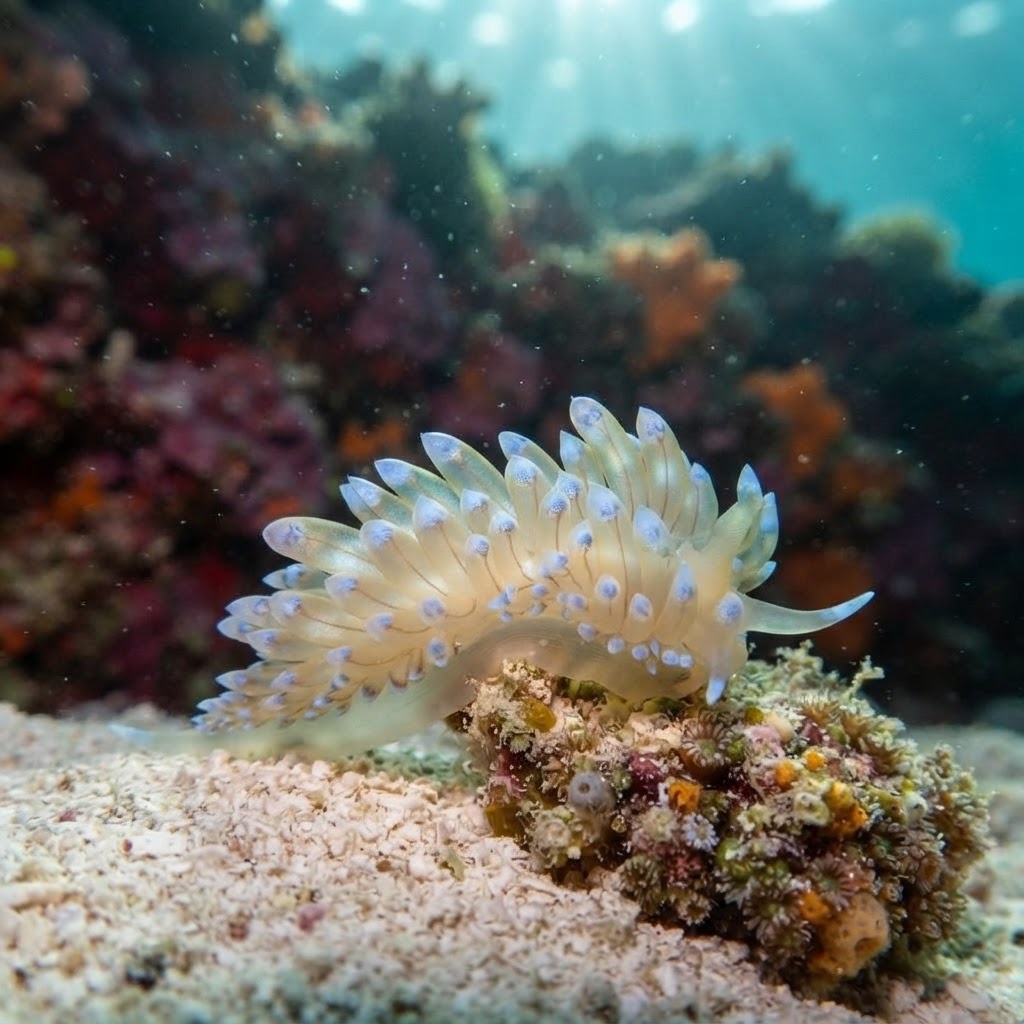
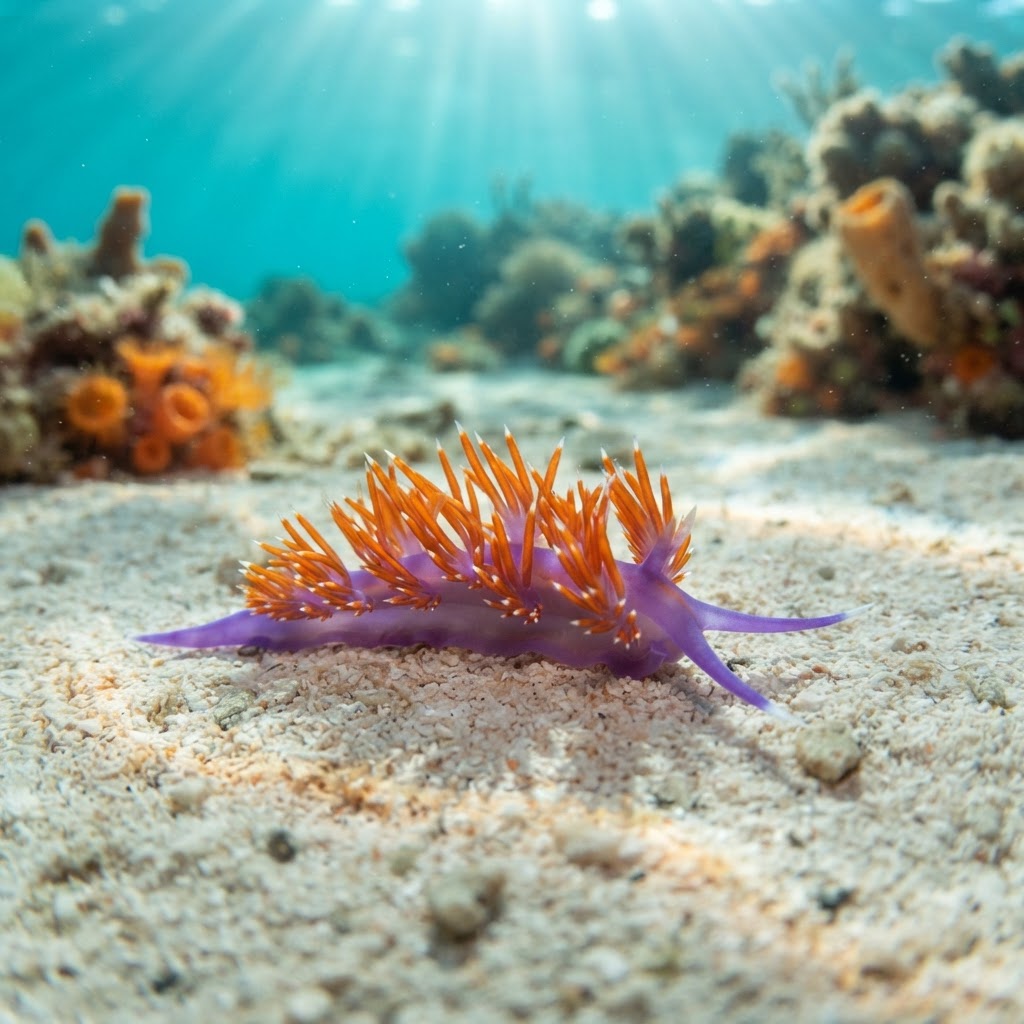
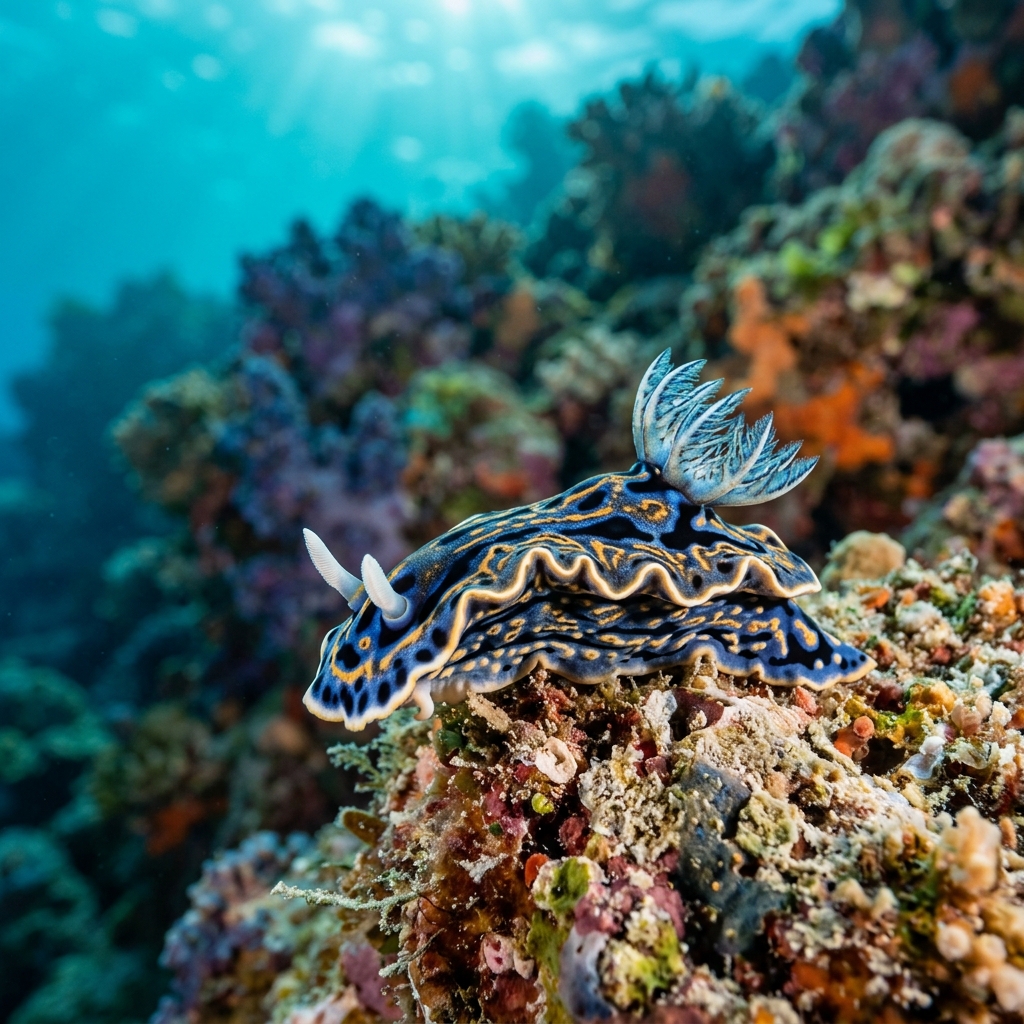
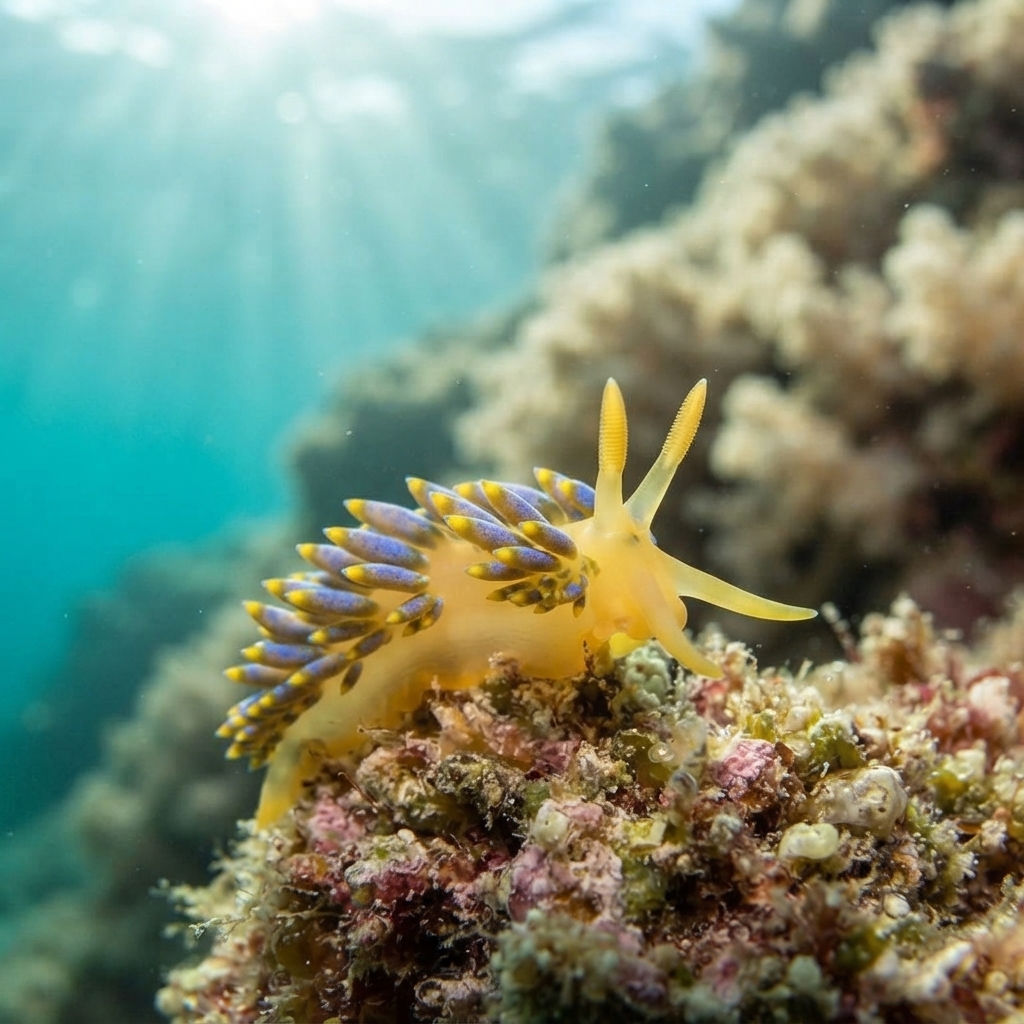
A small, slender nudibranch with a translucent to pale green body that lets internal organs show faintly through the skin. Look for the slim finger-like projections (cerata) running down its back, which often carry a hint of green or yellow tint matching its diet. It moves slowly across rock and algae-covered surfaces, easy to miss unless you're scanning close to the substrate.
Divers find this one moving slowly over rocky or algae-covered surfaces, tucked into the kind of cluttered, cold-water reef terrain typical of the Western Cape. It shows no reaction to divers beyond its usual unhurried crawl, so a careful, close look at the substrate is how you'll actually spot it rather than any behaviour that draws attention.
Like other members of its family, it likely feeds on hydroids, and any green or yellow tint in its cerata probably comes from pigments picked up through that diet rather than from the animal itself.
Sightings don't show a clear seasonal pattern, and with water temperatures ranging from 13.4 to 19.4C year-round in the Western Cape, this species appears to be a possible find on any cool-water dive there.
Reef neighbours a diver could mistake it for. Use the identification notes above to tell them apart.
Every logged sighting of this species comes from South Africa, with Western Cape sites forming the entire known record for divers. If you're diving the cool reefs around the Western Cape, this is one of the small finds worth slowing down for on a macro-focused dive.
Mapping where Green Candy Roundhead is logged…
All recorded sightings are from South Africa, concentrated in the Western Cape region. It's logged as uncommon to rare across a handful of specific dive sites there.
There's no detected seasonal pattern, so it's best treated as a year-round possibility in the Western Cape's cool water, which typically sits between 13.4 and 19.4C.
Look for a small, translucent to pale green body with slender cerata running along its back. It moves slowly over rocky, algae-covered surfaces, so check closely rather than expecting it to stand out.
No, this species poses no danger to divers. It's a small, slow-moving nudibranch with no sting or defence relevant to humans.
Exact size data isn't available, but like most members of its family it's a small nudibranch, likely only a centimetre or two long, making it easy to overlook on a reef.
Site and sighting data is aggregated from diver logs, iNaturalist and GBIF. For taxonomy and conservation status:
Blue Dragon
3,163 sites