Halgerda terramtuentis
A small white nudibranch with gold-edged tubercles, most reliably logged on Hawaii's reefs in water around 23-29C, year-round.
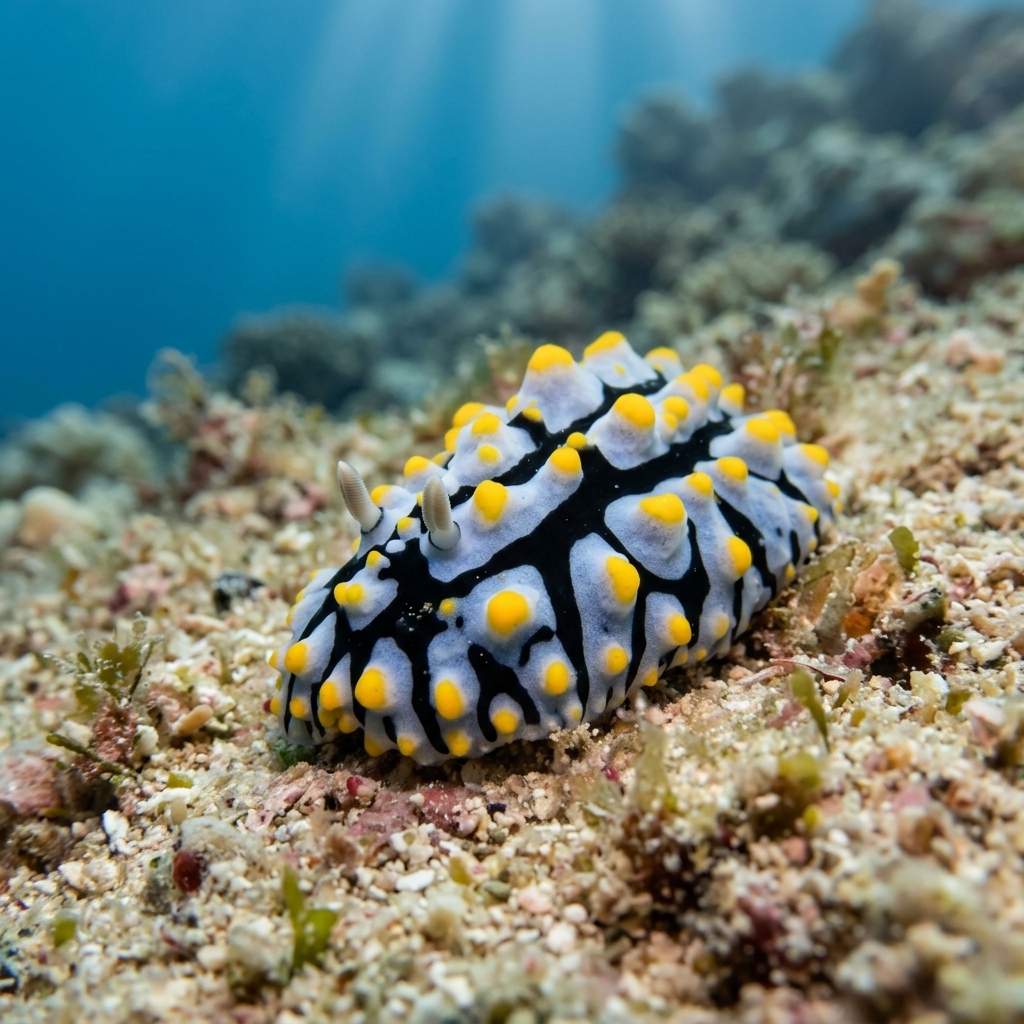
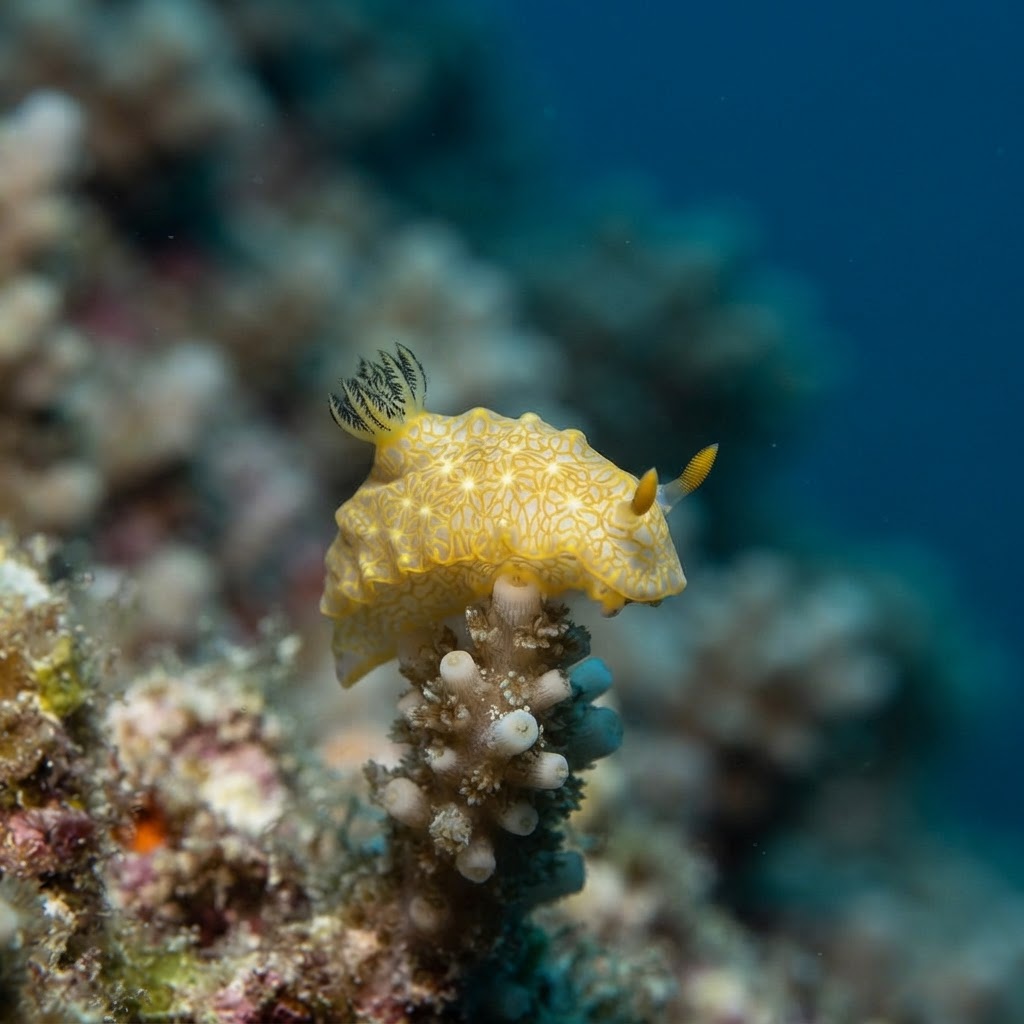
Look for a small white to cream body, only about 3 cm long, covered in raised tubercles (bumps) tipped in gold or orange. The gold spots form a lace-like pattern across the back, which is where the common name comes from, and the rhinophores (the paired sensory stalks on the head) are also tipped gold. It moves slowly across the substrate and is easy to miss unless you are scanning close to the reef surface.
Divers find it parked on the reef surface or grazing slowly across rock and rubble, usually during the day. It shows no reaction to divers beyond continuing its slow crawl, so a careful eye and a macro lens are more useful than patience.
Like other Halgerda species, it feeds on sponges, and the gold-tipped tubercles covering its body likely help camouflage it against encrusting sponge and algae growth on the reef.
Sightings show no detectable seasonal pattern, and its observed temperature range of roughly 22.6 to 28.6C covers Hawaii's reefs year-round, so there is no particular month to target.
This one is essentially a Hawaii speciality among logged dive sites, with sightings concentrated across reefs there and no other country showing up strongly in the data. Within Hawaii it turns up across a broad spread of sites rather than one or two famous spots, so it is worth a slow, close look on any Hawaiian reef dive.
Mapping where Gold Lace Nudibranch is logged…
It is most consistently logged on reefs across Hawaii, where it has been recorded at a wide spread of dive sites. Sightings outside Hawaii are not well documented in current data.
There is no strong seasonal signal, and its comfortable temperature range spans roughly 22.6 to 28.6C, matching Hawaii's reefs all year. Any month is a reasonable time to look.
It is a tiny white to cream nudibranch, about 3 cm long, with gold or orange-tipped tubercles scattered across its back in a lace-like pattern. The rhinophores on its head also carry gold tips, which helps confirm the ID at close range.
They are small, typically reaching around 3 cm in length, so they are easy to swim past without noticing on a reef.
No. They pose no threat to divers and can be safely observed and photographed at close range without disturbing them.
Site and sighting data is aggregated from diver logs, iNaturalist and GBIF. For taxonomy and conservation status:
Nudibranch
3,168 sites