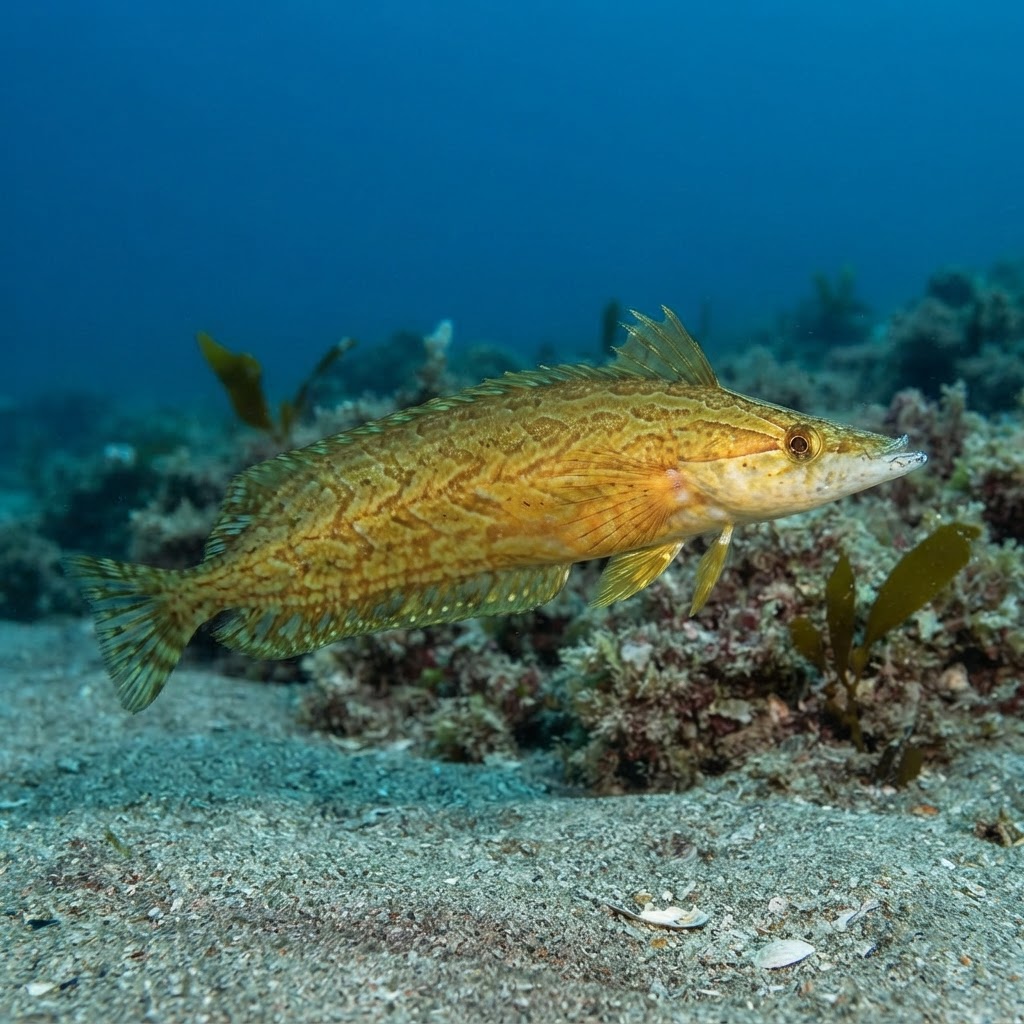
Heterostichus rostratus
Long, colour-shifting kelpfish drifting through California kelp beds at 12.6-24.6C, logged year-round across the state's dive sites.
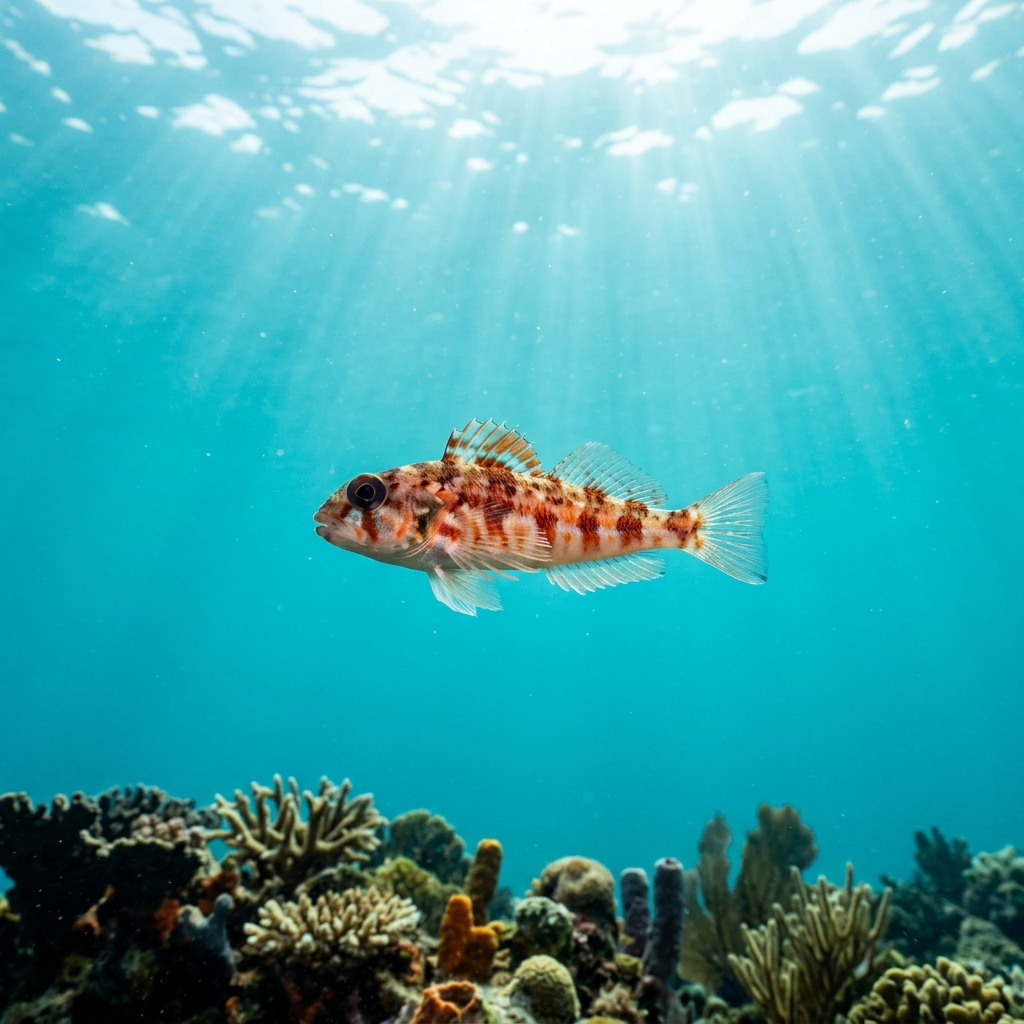
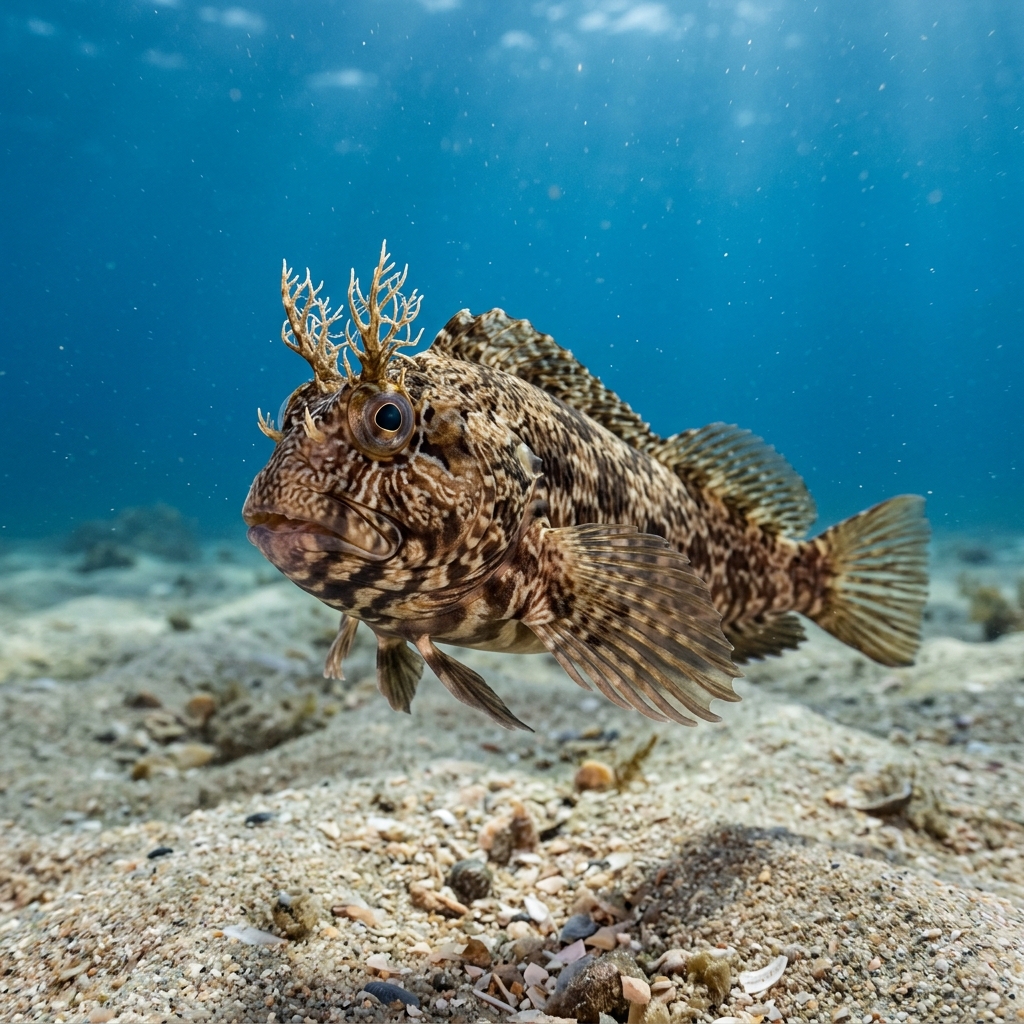
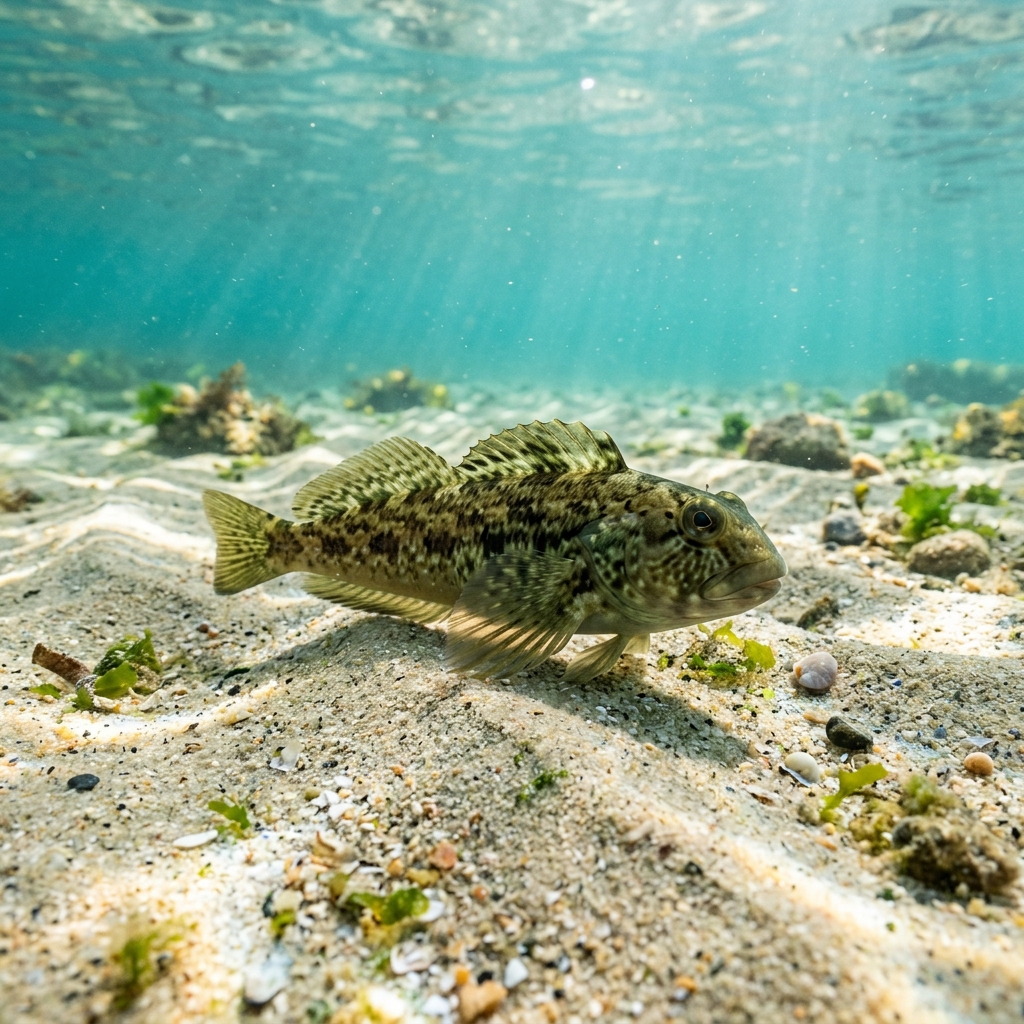
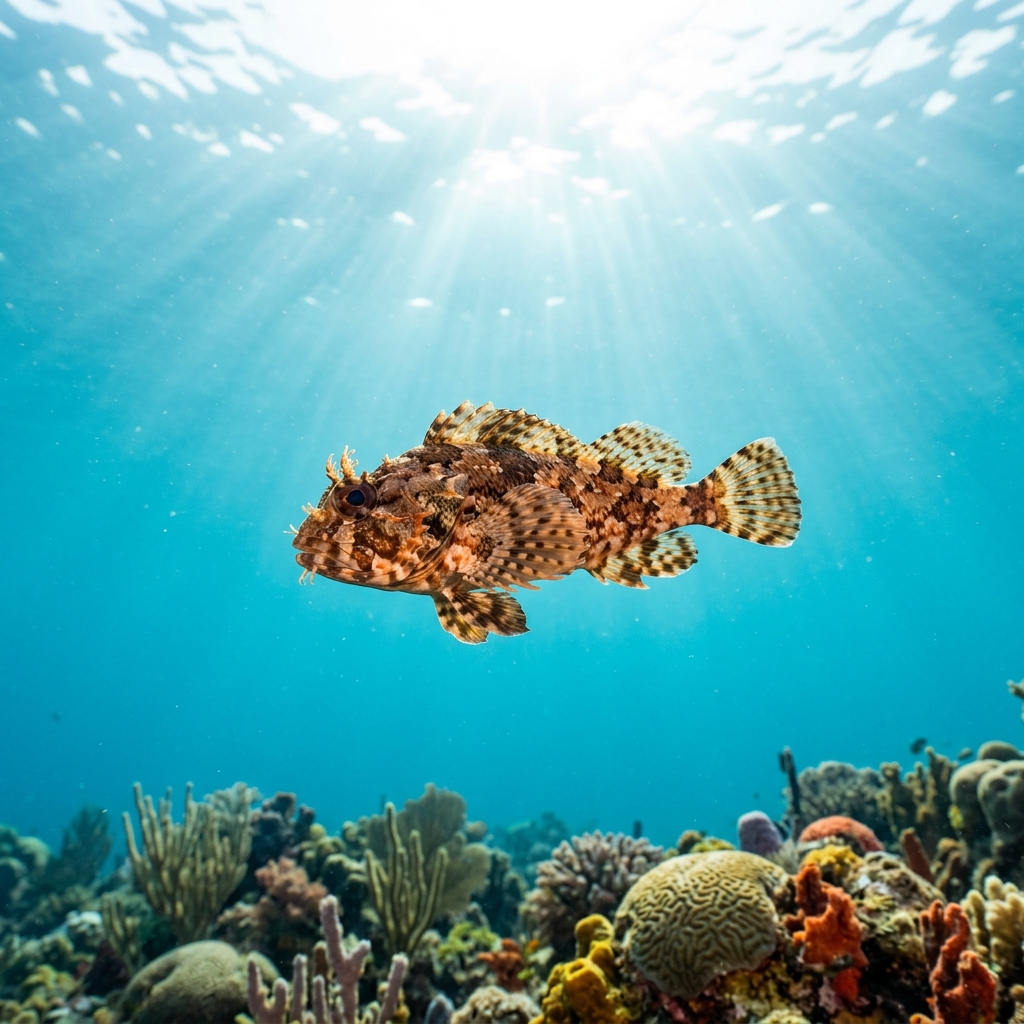
Long, slender body that reads more like an eel or a blade of kelp than a typical fish, reaching around 42cm. Colour ranges widely from olive-green to reddish-brown to brown depending on the surrounding kelp, one of the best camouflage tricks on the reef. A pointed snout and a single long dorsal fin running nearly the length of the body are the two things to key on when it holds still against a kelp stipe.
Look for it hanging motionless among kelp blades and stipes, angled to match the current and the kelp's sway rather than swimming in open water. It relies on stillness and colour-matching over speed, so slow, close looks along kelp fronds turn up more sightings than scanning open water. Divers who pause and look into the kelp canopy rather than past it tend to spot these before the fish moves off.
Giant kelpfish can shift body colour to match the kelp species or algae they're currently resting in, making the same individual look distinctly different from one kelp bed to the next.
Sightings show no detected seasonal pattern, so treat it as a year-round find in California kelp forests. It's logged across a wide temperature range, 12.6 to 24.6C, matching the swings kelp forest divers already expect through the seasons.
This one is a California speciality: every logged sighting in the data comes from the United States, concentrated in California's kelp forest dive sites. If you're diving kelp beds anywhere along the California coast, this is a species worth scanning for rather than something you need to travel far to find.
Mapping where Giant Kelpfish is logged…
California's kelp forest dive sites are the place to look, with sightings concentrated there rather than spread across other regions. Look specifically in kelp beds rather than open sand or rocky reef.
There's no strong seasonal pattern in sightings, so they're findable year-round in California kelp forests. Water temperatures at sighting sites range from about 12.6 to 24.6C across the year.
Look for a long, slender, kelp-blade-shaped body up to about 42cm, a pointed snout, and a dorsal fin that runs almost the entire length of the back. Colour varies from olive-green to reddish-brown, matching the kelp it's resting against.
They typically reach around 42cm in length, with a body long and thin enough to be mistaken for a strand of kelp at a glance.
They can change body colour to blend with the specific kelp or algae they're sheltering in, so the same fish can look quite different in separate kelp beds. This makes them one of the better camouflage artists in temperate reef systems.
No, they pose no danger to divers. They're a calm, camouflage-reliant fish that tends to hold still rather than react defensively when approached.
Site and sighting data is aggregated from diver logs, iNaturalist and GBIF. For taxonomy and conservation status:
Rusty Blenny
2,605 sites