Solenostomus leptosoma
Spot Delicate Ghost Pipefish in the Maldives, Philippines and Indonesia in warm 24-29 °C tropical waters. ID tips and top dive regions inside.
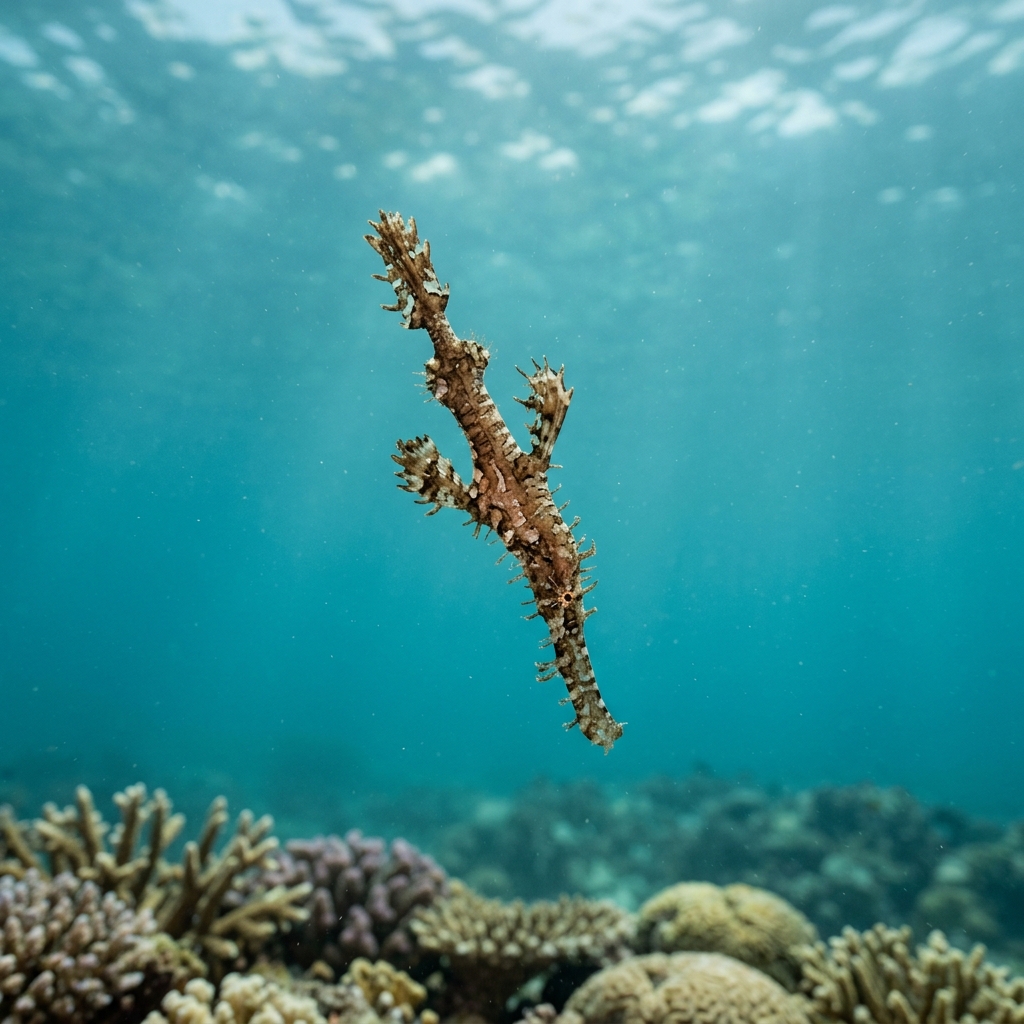
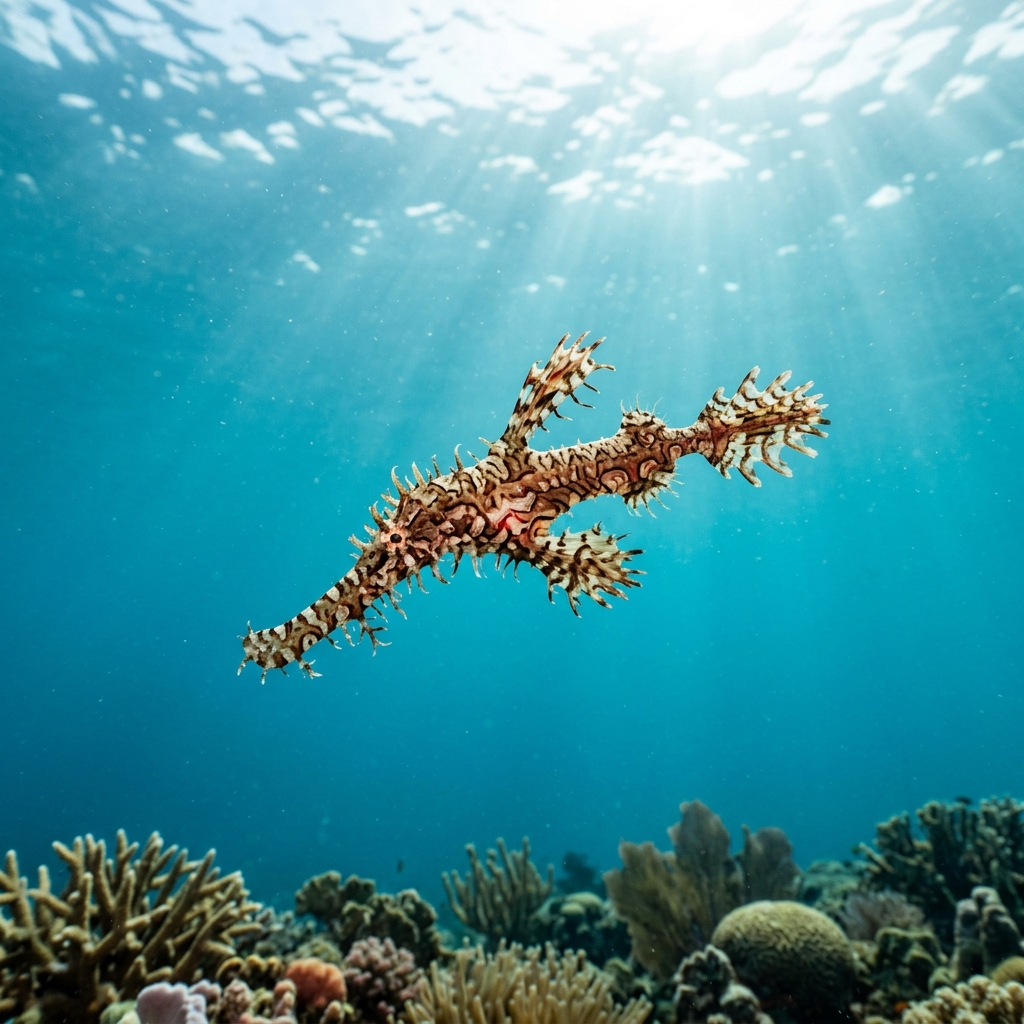
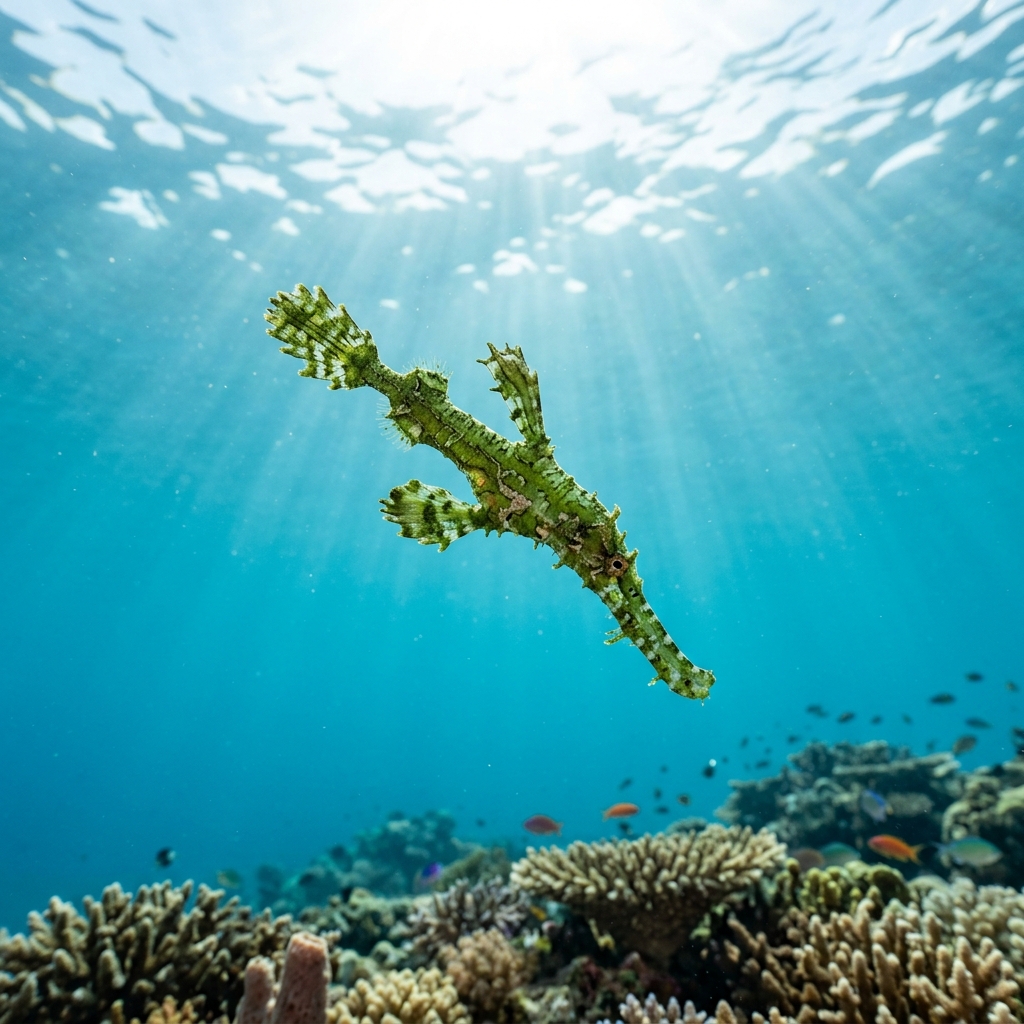
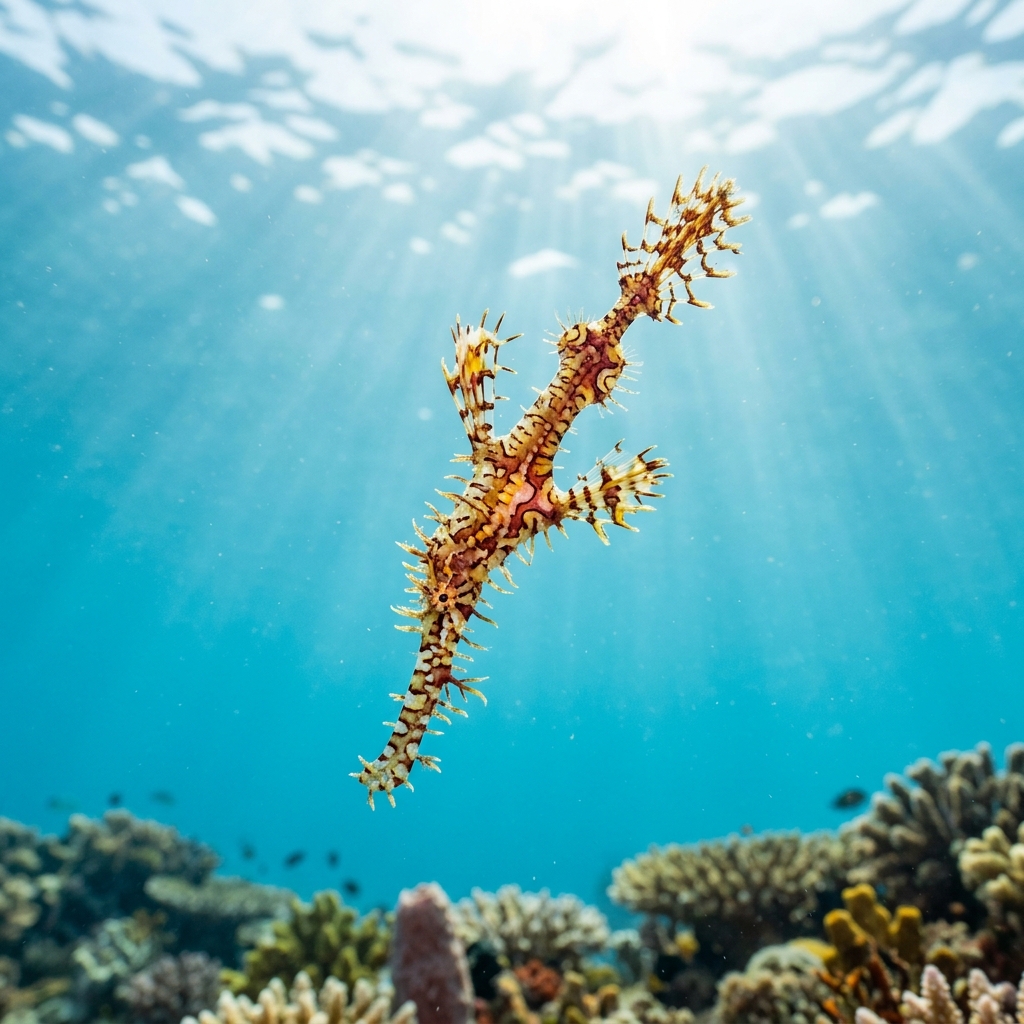
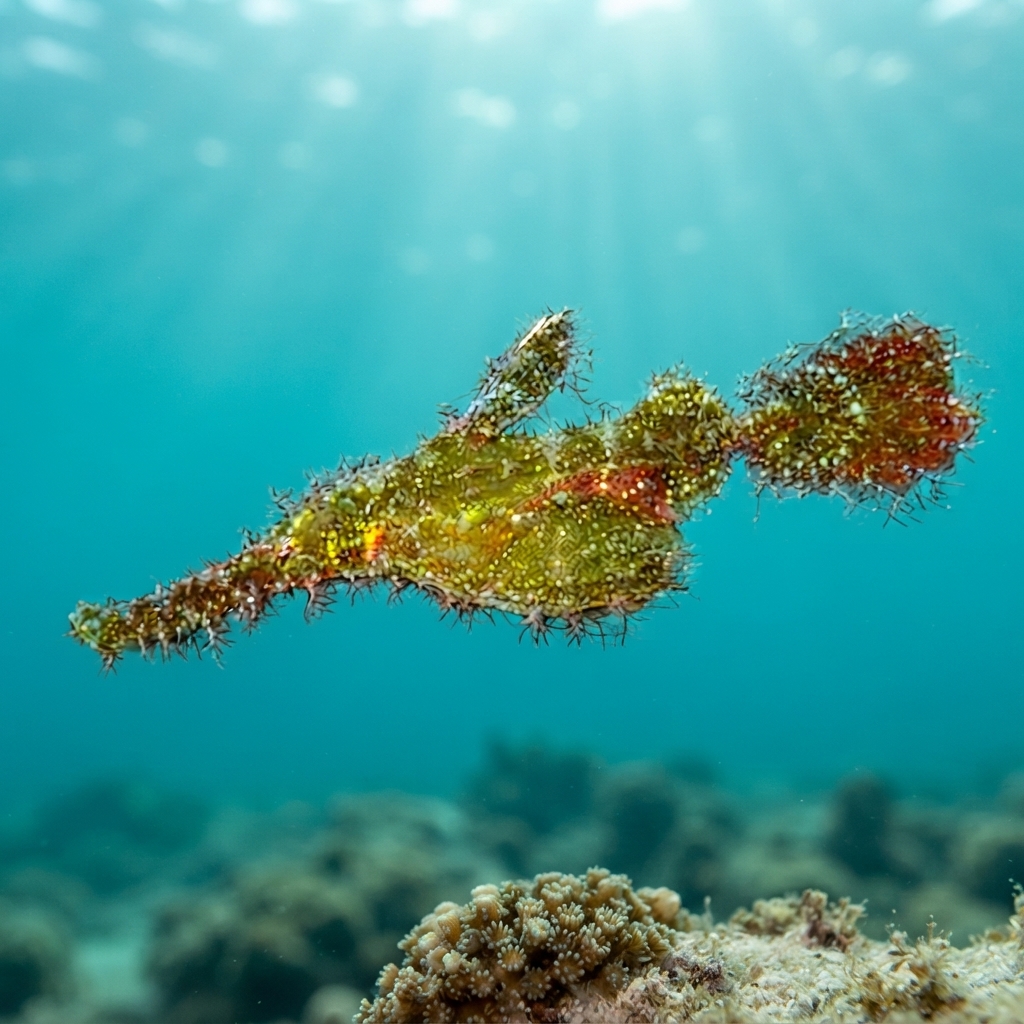
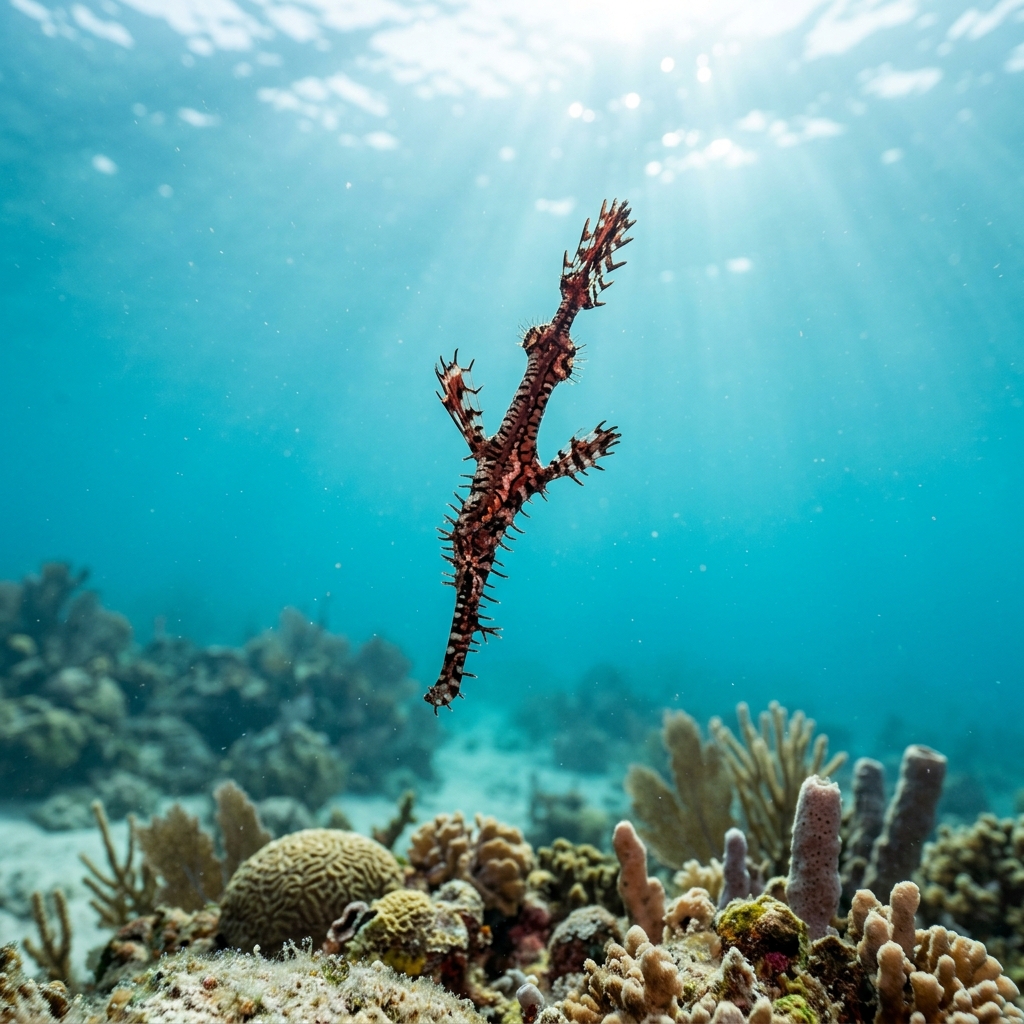
Look for an extremely slender, almost thread-like body with delicate, wispy skin filaments that help it vanish against seagrass or feathery corals. Colouration is typically pale and translucent, often with subtle patterning that mirrors whatever debris or algae it is drifting among. Compared to the bulkier Robust Ghost Pipefish, this species looks almost impossibly fragile, which is your best underwater cue for a confident ID.
Ghost pipefish in general are masters of stillness, and this species is no exception, when you find one it is usually hovering almost motionless, head-down among crinoids, seagrass blades, or soft coral branches, relying on camouflage rather than flight. It tends to drift very slowly with the current to mimic floating debris, so a diver who approaches calmly and looks carefully will often find it unmoved. Scanning the base of crinoids or patches of fine-leafed algae in sheltered, shallow reef areas gives you the best odds.
Like other ghost pipefish, the female carries the eggs in a brood pouch formed by her pelvic fins, the reverse of what most people expect, and the opposite of true pipefish where males carry the young.
No clear seasonal peak has emerged from the data, so this is treated as a year-round resident on tropical reefs. Its observed temperature niche of roughly 24 to 29 °C aligns with standard warm Indo-Pacific conditions, suggesting consistent presence wherever those temperatures hold.
Reef neighbours a diver could mistake it for. Use the identification notes above to tell them apart.
The species' range model covers a broad sweep of the Indo-Pacific, with the greatest number of logged sites in the Maldives, particularly the North & Central Atolls, and across the Philippines, especially in the Visayas and Palawan regions. Indonesia (Maluku & Papua) and Australia's Queensland coast also appear strongly in the data, with additional presence in Japan, Malaysia, Mozambique, and Fiji.
Mapping where Delicate Ghost Pipefish is logged…
The strongest coverage sits across the Maldives (especially the North & Central Atolls), the Philippines (Visayas and Palawan), and Indonesia (Maluku & Papua). Queensland in Australia, Japan, Malaysia, Mozambique, and Fiji also feature in the range data.
There is no confirmed seasonal window in the data, so any time of year is potentially viable. This species is tied to warm tropical waters around 24-29 °C, which persist year-round at most sites in its Indo-Pacific range.
Focus on the body shape: this species is noticeably more slender and fragile-looking than other ghost pipefish, with fine wispy filaments along its body. Its pale, often translucent colouration and tendency to hover head-down in soft corals or seagrass are key underwater clues.
Not at all. They are entirely harmless and, if anything, far more at risk from careless fin kicks than you are from them. Slow, controlled buoyancy around the fragile habitats they favour is good practice.
Unlike seahorses where the male is pregnant, in ghost pipefish it is the female who carries the eggs in a brood pouch formed by her enlarged pelvic fins. She is also typically larger than the male, making her the easier of the pair to spot.
Site and sighting data is aggregated from diver logs, iNaturalist and GBIF. For taxonomy and conservation status:
Ghost Pipefish
249 sites