Lecithophorus capensis
A pale, translucent nudibranch turning up on Western Cape dives in cool 13-19C water, mostly logged as an uncommon find.
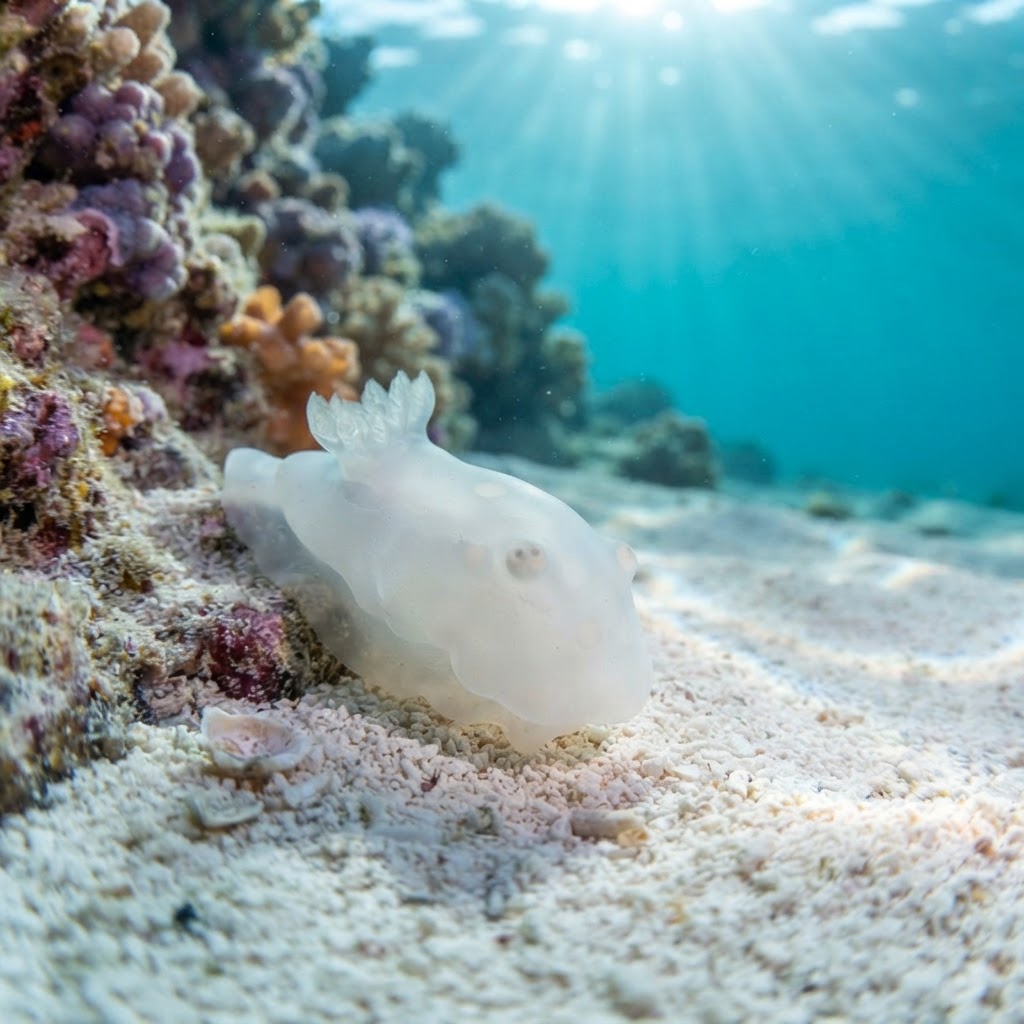
A small, pale to near-translucent nudibranch with a soft, almost see-through body that gives it its common name. Look for the subtle, low-profile mantle and the gill cluster (feathery breathing organs on the back) sitting close to the body rather than raised, against dark reef rubble or kelp holdfasts where its pale colour stands out.
Divers find it slow-moving or stationary on rock and rubble, doing what nudibranchs do best: grazing quietly and largely ignoring anything happening around it. It shows no flight response to divers, so a patient, close look with a torch is usually all it takes to pick out its pale form against darker cold-water reef.
Like other dorid nudibranchs, it likely feeds on sponges or similar encrusting invertebrates, using its diet to influence its own colouring and camouflage against the reef it grazes on.
Sightings do not show a clear seasonal pattern, so treat this as a year-round find on Western Cape dives. It has been logged in water from 13.1 to 19.1C, which covers the typical cool-water range divers encounter there through most of the year.
This is a Western Cape speciality, with every logged sighting coming from South Africa and the vast majority clustered in the Western Cape region. If you are diving the cold, nutrient-rich reefs around Cape Town and the surrounding coastline, this is where to keep an eye on the substrate.
Mapping where Ghost Dorid is logged…
It is most reliably logged on dives in South Africa's Western Cape region, where cold-water reefs support most recorded sightings. Outside this area it has not been documented in diver logs.
There is no strong seasonal pattern in the sighting data, so it is best treated as a year-round possibility on Western Cape dives. Water temperatures where it has been seen range from about 13 to 19C, typical of that coastline for much of the year.
Look for a small, pale, almost translucent nudibranch with a low, soft mantle and a modest gill cluster on its back. Its washed-out colouring against darker rock or rubble is the main giveaway underwater.
Exact size data is not confirmed, but like most dorid nudibranchs it is a small, easily overlooked animal best spotted with a slow, close search of the substrate.
No, this is a harmless, slow-moving nudibranch that poses no risk to divers. It has no venomous stings or defences relevant to human contact.
Site and sighting data is aggregated from diver logs, iNaturalist and GBIF. For taxonomy and conservation status:
Light-spotted Aegires
3,168 sites