Babakina anadoni
A 1cm nudibranch with orange-tipped cerata, most reliably logged in Guadeloupe's Basse-Terre and El Hierro in the Canary Islands.
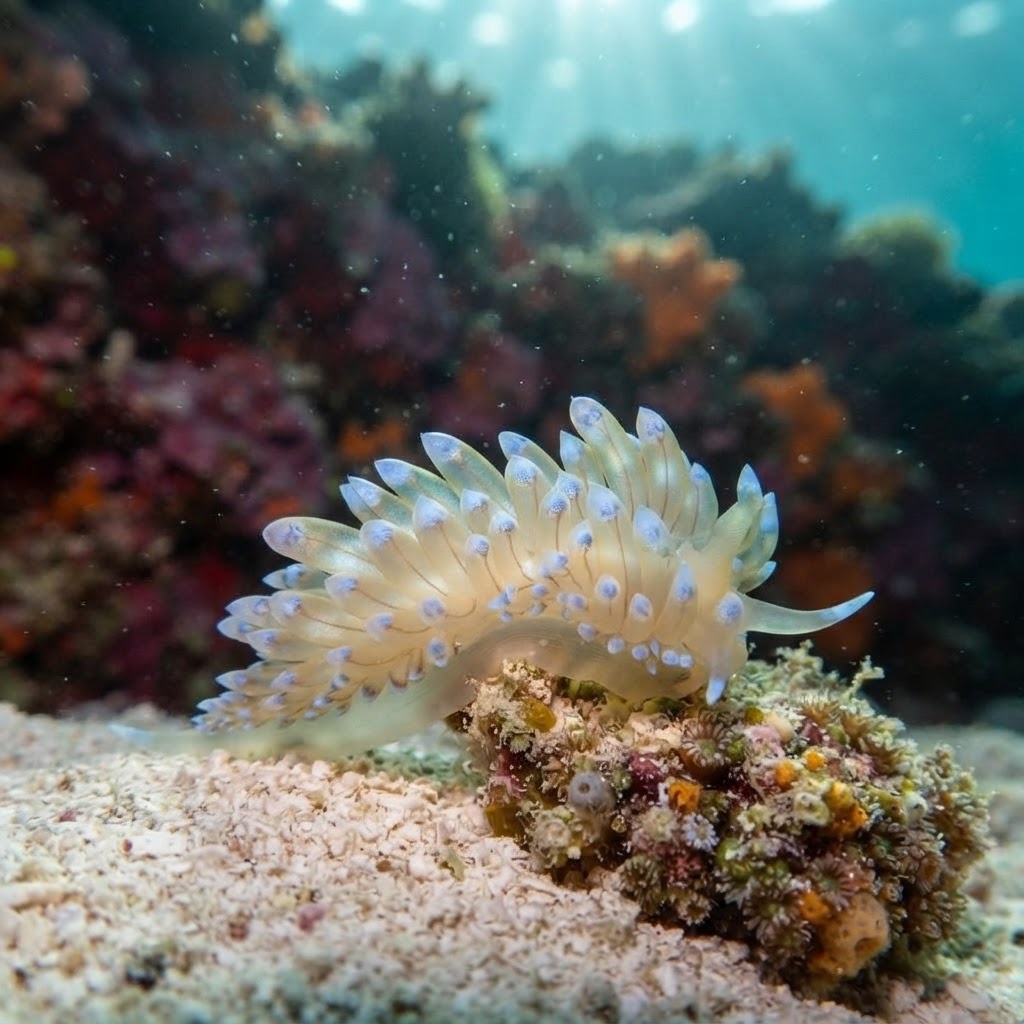
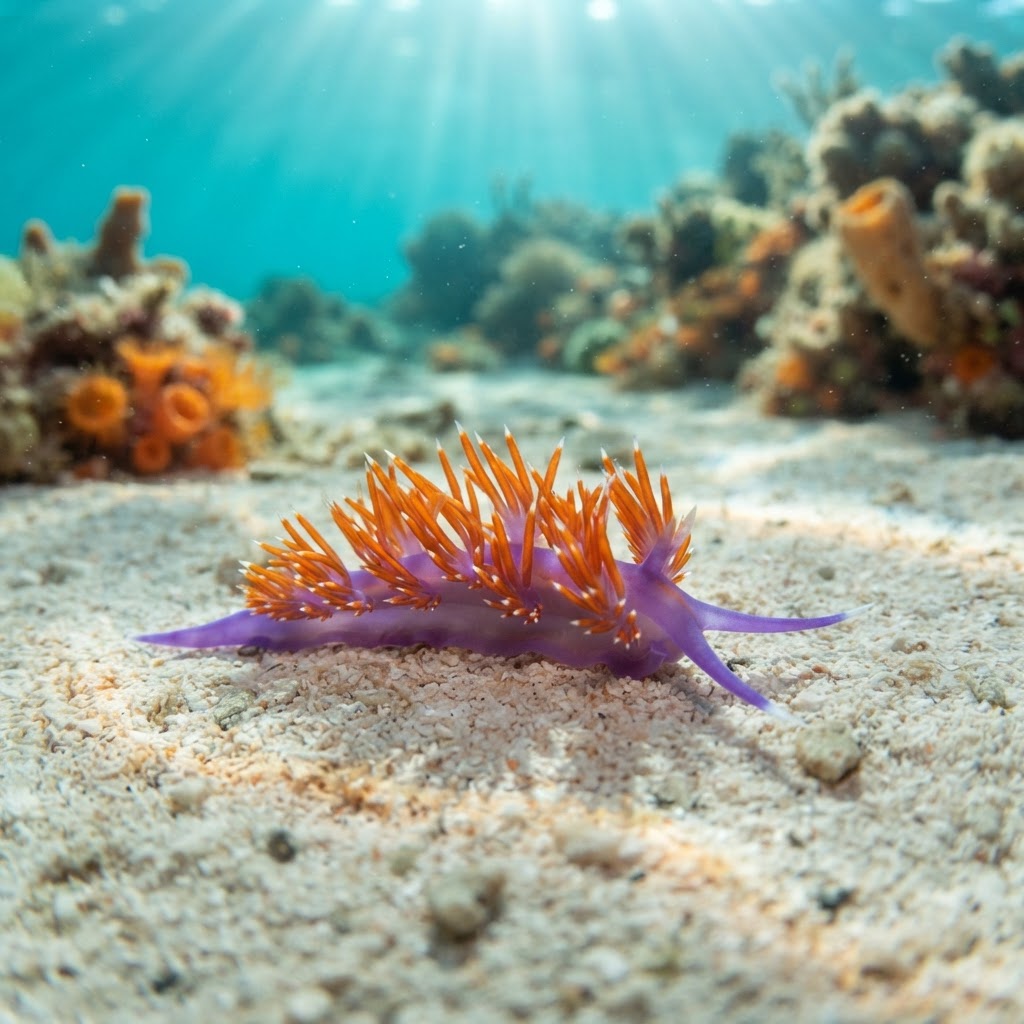
A tiny sea slug, rarely more than 1 cm, with a translucent white to pale body covered in tufts of finger-like projections called cerata (soft, retractable outgrowths on the back). Each ceras is tipped in vivid orange to red, giving the whole animal a spiky, colour-flecked look against plain rock or rubble. You will need a macro lens or a sharp eye and a torch to pick it out at all, it is easy to walk straight past.
Found grazing slowly over rock and rubble, usually tucked into crevices or low-light corners where its prey hides. It shows no reaction to divers beyond its usual crawl, it has no eyes worth speaking of and no reason to flee. Most sightings come from divers scanning bare or algae-dusted substrate rather than open coral, since that is where it hunts.
Like other aeolid nudibranchs, it likely feeds on hydroids and can repurpose their stinging cells for its own defence, storing them in those orange-tipped cerata rather than making its own venom.
Sightings show no detectable season, and with a tolerance stretching from 11.8 to 28.8 C it turns up year-round wherever divers look closely, whether that is a chilly UK wreck or a warm Canary Islands reef.
Reef neighbours a diver could mistake it for. Use the identification notes above to tell them apart.
Most reliably logged in Basse-Terre, Guadeloupe and El Hierro in the Canary Islands, with a further reliable presence around England in the United Kingdom and Galicia in Spain. That spread across warm Atlantic islands and cooler UK coastline shows it tolerates a wide temperature range rather than sticking to one type of reef.
Mapping where Gaudy Babakina is logged…
It is most often logged in Basse-Terre, Guadeloupe and El Hierro in the Canary Islands, with further sightings around England and Galicia in Spain. It favours rock and rubble rather than open coral, so look at those sites rather than the reef itself.
There is no clear season in the sighting data, and it has been recorded from 11.8 to 28.8 C, so it is a year-round find wherever divers search carefully.
Look for a translucent white body under 1 cm long, covered in soft finger-like cerata tipped in bright orange or red. It sits low on rock or rubble and moves slowly, so a torch and a close look are essential.
About 1 cm, making it one of the smaller nudibranchs divers log, and easy to miss without a macro lens.
Like related aeolid nudibranchs, it is thought to feed on hydroids and store their stinging cells in its cerata, turning a predator's own weapon into its own defence.
Site and sighting data is aggregated from diver logs, iNaturalist and GBIF. For taxonomy and conservation status:
Blue Dragon
3,163 sites