Austraeolis catina
Tiny 1cm nudibranch logged mostly in Grande-Terre, Guadeloupe, in warm 25-31C water year-round on the reef.
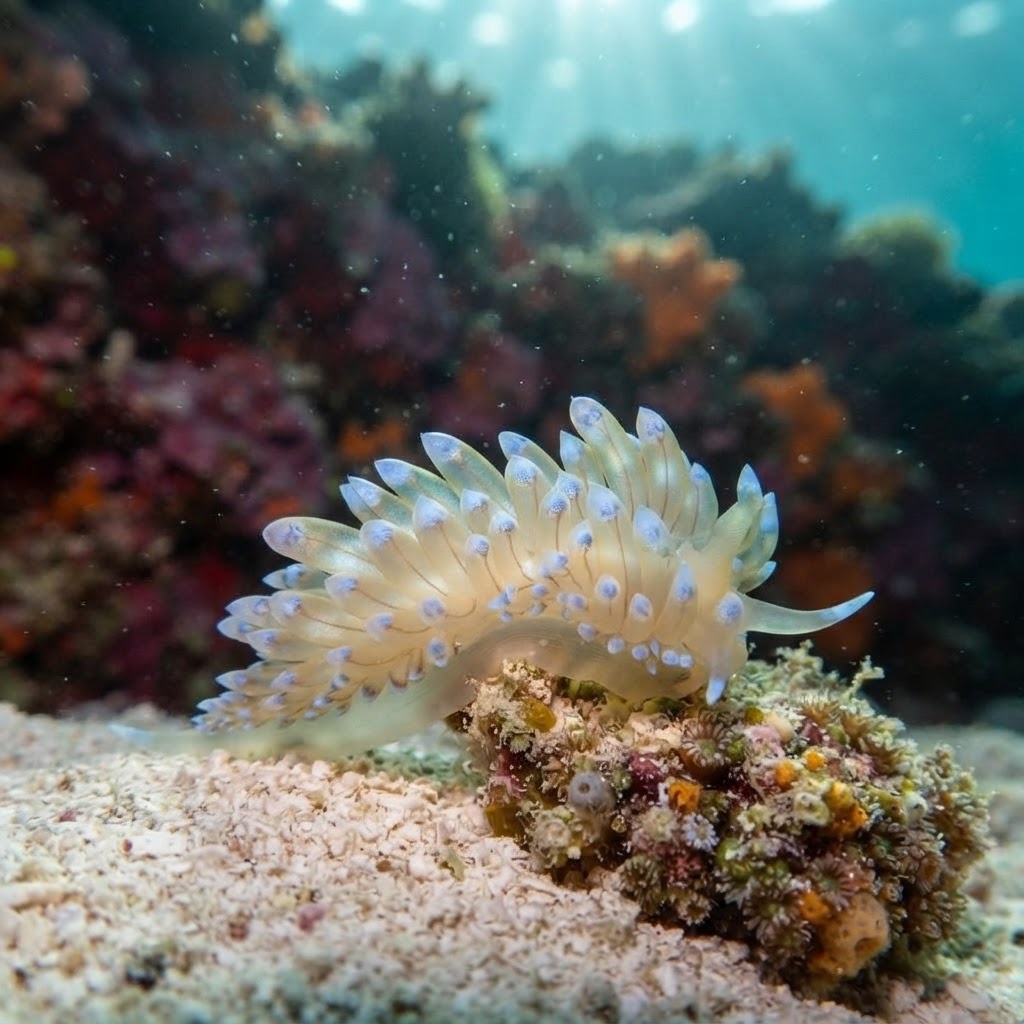
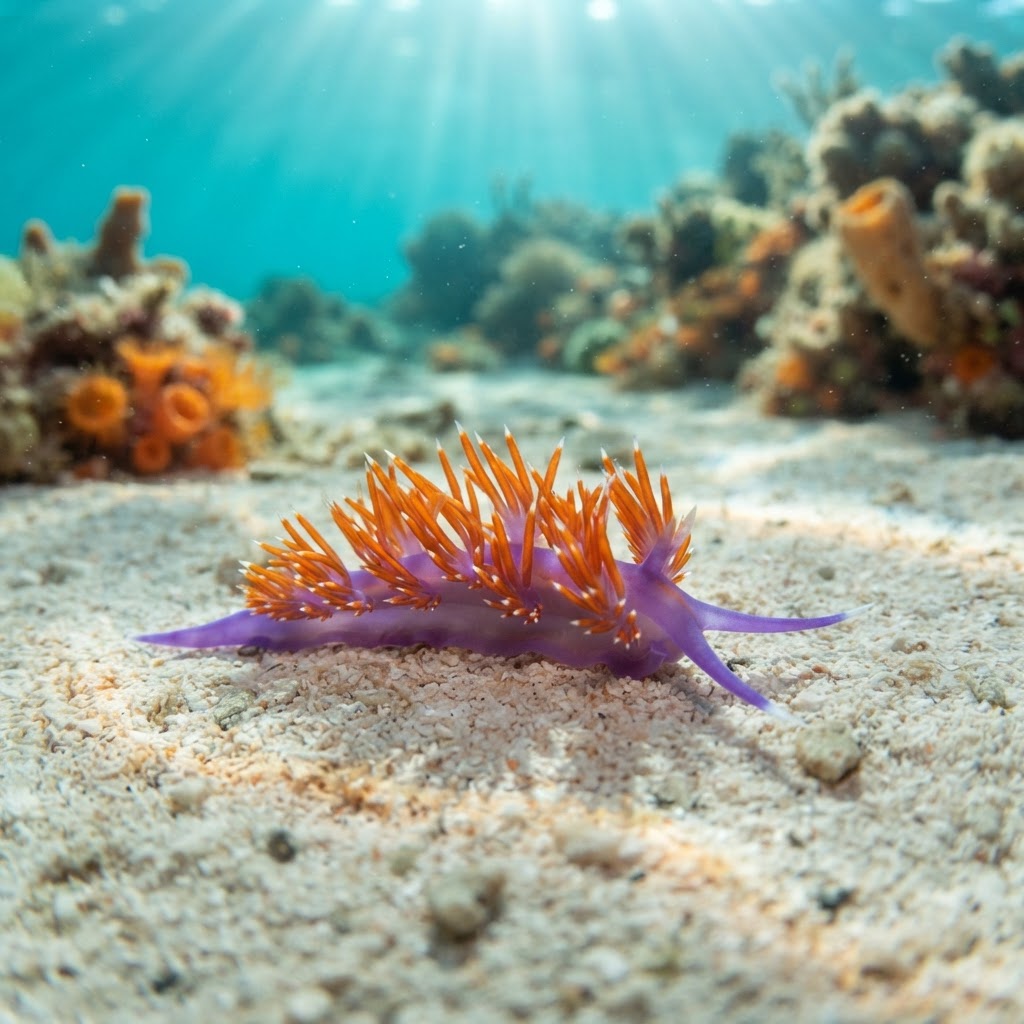
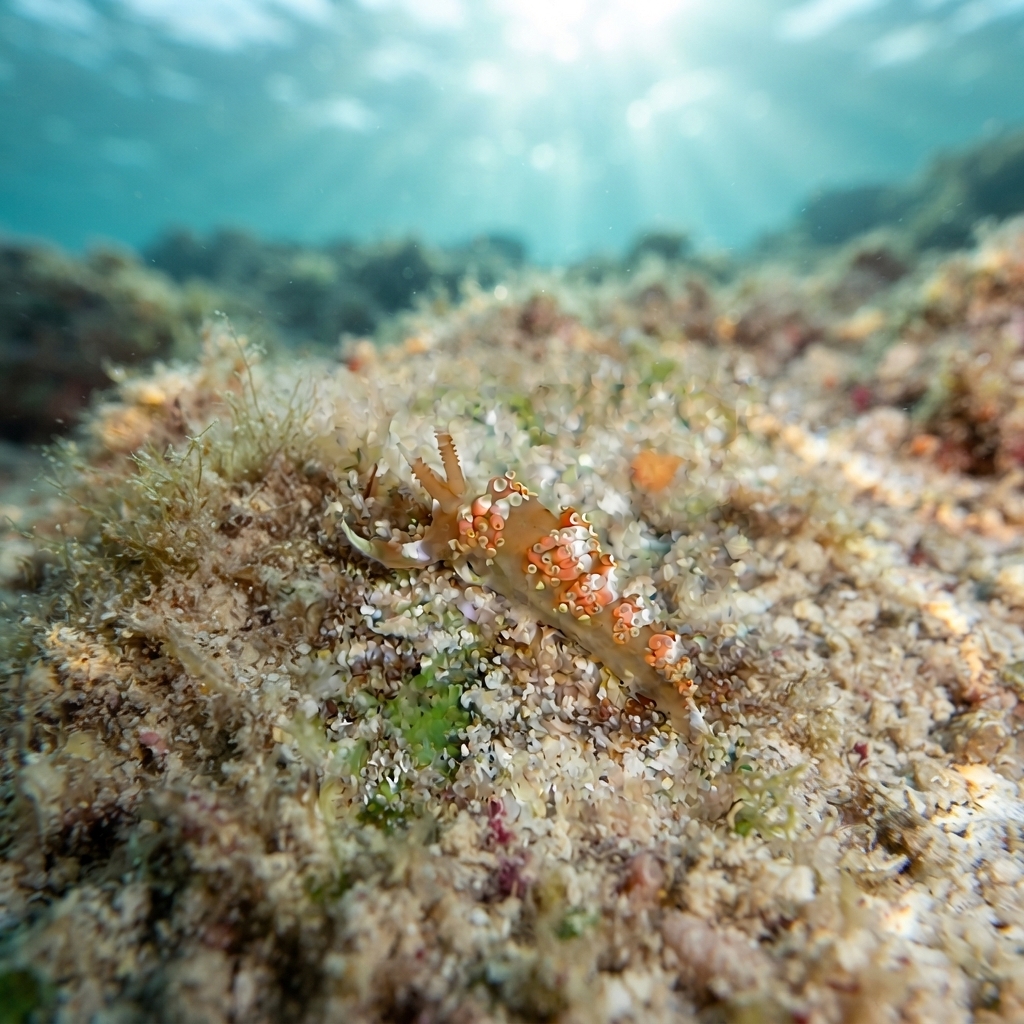
A tiny nudibranch, barely 1cm long, easy to swim past unless you are already scanning rubble and sponge patches closely. Look for a slender, translucent body lined with finger-like projections (cerata) tipped in orange or reddish colour, running down the back in rows. The head end carries two rhinophores (small sensory tentacles) that give it a slightly antenna'd look under torchlight.
Divers find it slow-moving over rubble, sponge, and low reef structure, usually on a macro-focused dive rather than a drift by. It shows no reaction to divers, being far too small and slow to register a threat, so a steady light and a macro lens are your best tools. Most sightings come from patient bottom time rather than mid-water encounters.
Like other aeolid nudibranchs, it likely stores stinging cells from its hydroid or cnidarian prey in those orange-tipped cerata and redeploys them as its own defence.
No clear seasonal pattern shows up in the sightings, and the 24.9 to 30.9C range it's been found in covers typical Caribbean reef temperatures year-round, so any month is fair game.
Reef neighbours a diver could mistake it for. Use the identification notes above to tell them apart.
Most reliably logged in Guadeloupe, especially around Grande-Terre and also in Basse-Terre, where it turns up as an uncommon find on muck and rubble dives. Outside Guadeloupe, it has also been logged around Grand Cayman in the Cayman Islands, though sightings there are rarer.
Mapping where Gastropod is logged…
It's most often logged in Guadeloupe, particularly Grande-Terre and Basse-Terre, with additional sightings around Grand Cayman in the Cayman Islands.
There's no detected season in the sighting data, and it's found across a broad warm-water range of roughly 25 to 31C, so it can turn up on any dive through the year.
Look for a translucent 1cm body carrying rows of slender cerata tipped in orange, with two rhinophores on the head. It's easiest to spot with a torch on rubble or sponge-covered substrate during a slow macro dive.
It stays tiny, typically around 1cm long, so most divers only notice it while doing a dedicated macro search.
It's thought to recycle stinging cells from the hydroids it feeds on, storing them in its orange cerata for its own defence, a trick common among aeolid nudibranchs.
No, it poses no risk to divers. It's far too small to interact with and has no venom delivery aimed at anything larger than the tiny prey it targets.
Site and sighting data is aggregated from diver logs, iNaturalist and GBIF. For taxonomy and conservation status:
Blue Dragon
3,163 sites