Bonisa nakaza
A cool-water nudibranch found almost entirely off South Africa's Western Cape, in water from 13 to 19C, year-round.
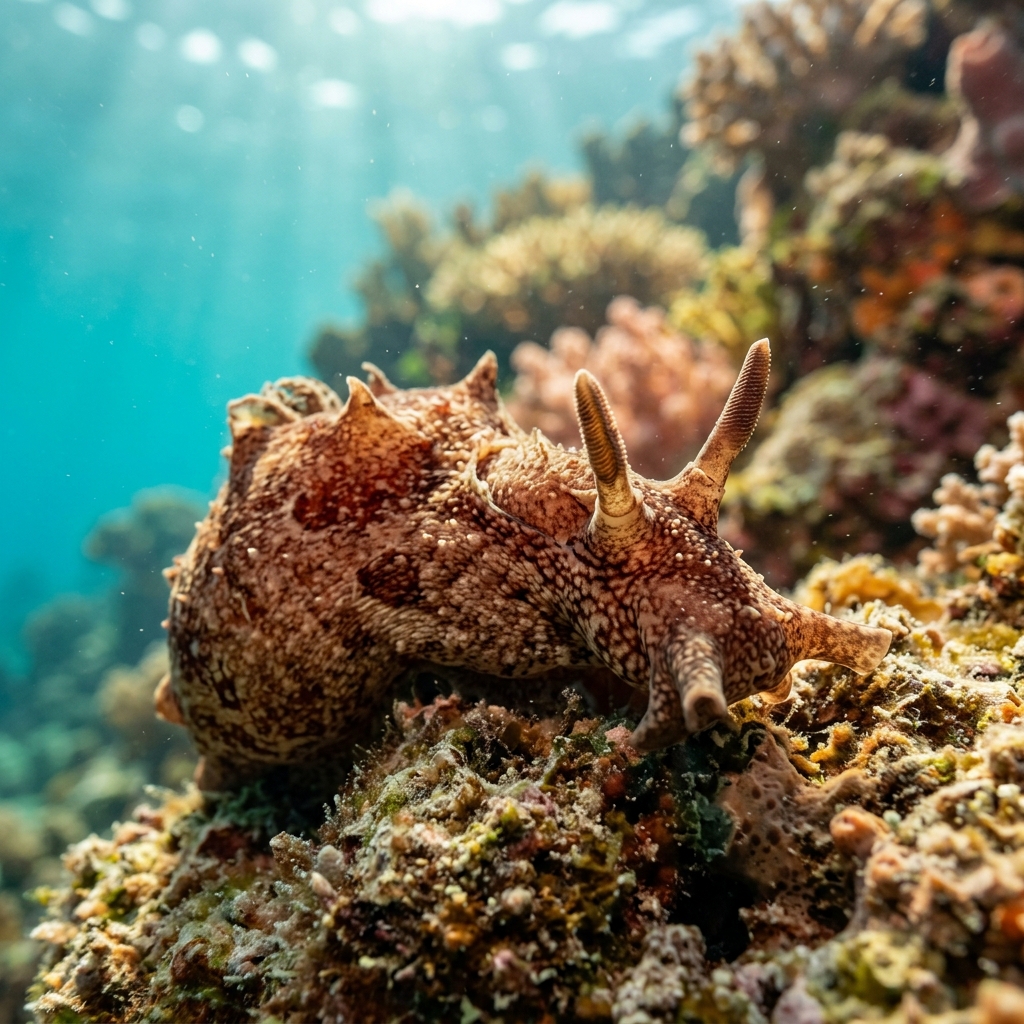
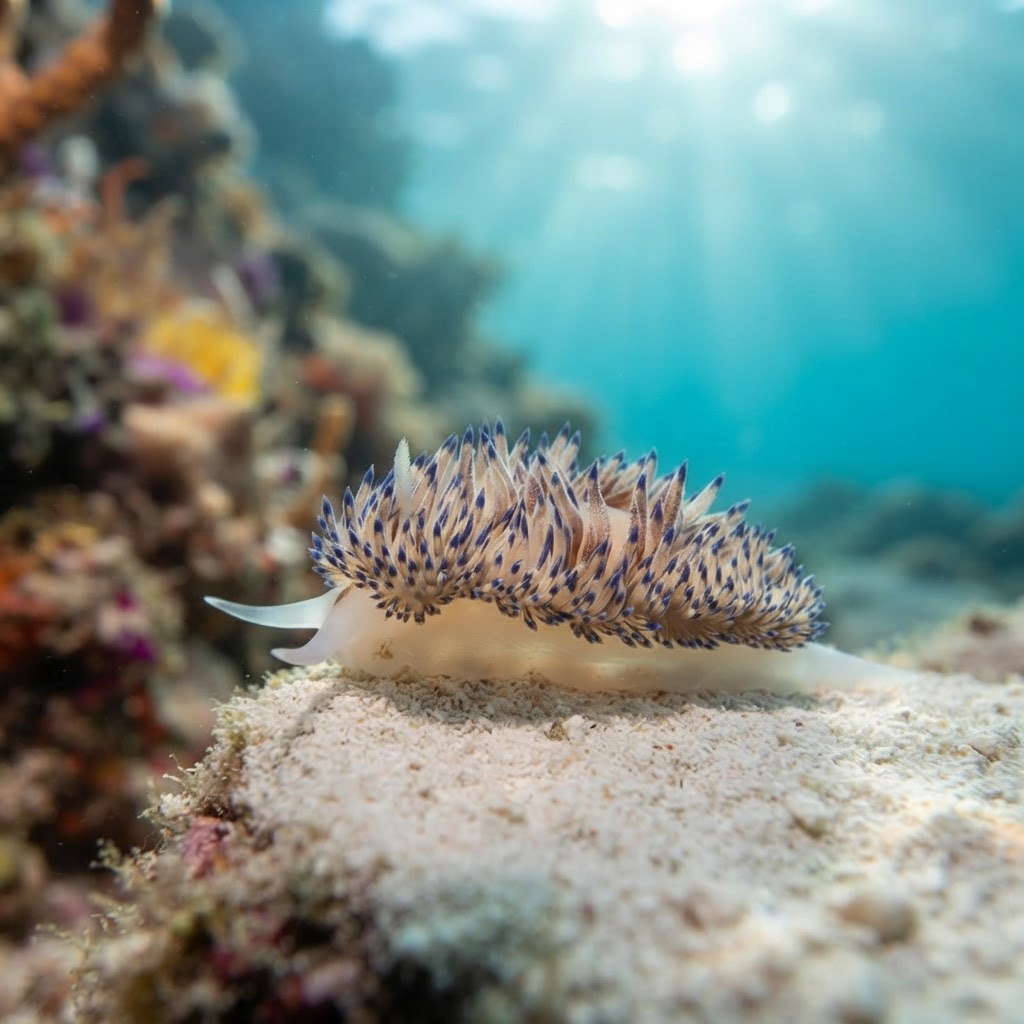
A small, slender nudibranch with a translucent white to pale body and rows of finger-like projections (cerata) along its back tipped in fiery orange, giving it a flame-like look against the cool, dark reef. It has a soft, almost see-through appearance underwater, so divers usually spot it by scanning slowly over rock and kelp holdfasts rather than picking out a bold silhouette from a distance.
Divers find it clinging to rock, kelp holdfasts and encrusting growth on cool reef walls, moving slowly and paying no attention to divers or torches. It's logged as very common at many Western Cape sites, so a patient scan of likely nooks on a single dive can easily turn up more than one. Look for it during the same slow, close-focus muck-diving style searches you'd use for other small nudibranchs.
Like other nudibranchs, its diet likely shapes its colour: the orange in its cerata is thought to come from pigments absorbed from the hydroids or prey it feeds on, worn openly as a warning rather than hidden.
Sightings show no clear seasonal pattern, so treat it as a year-round find on Western Cape reefs. It's adapted to cool water (13.1 to 19.1C), which is roughly what these sites run year-round, so there's no particular season to chase.
This one is essentially a Western Cape speciality: every logged site sits in South Africa, with the Western Cape region accounting for the sightings by a wide margin. If you're diving the cold, nutrient-rich reefs around Cape Town and along the Western Cape coast, this is one of the nudibranchs you're most likely to run into.
Mapping where Gasflame Nudibranch is logged…
Almost all recorded sightings come from South Africa's Western Cape, making it a strong candidate on cool-water reef dives around Cape Town and along that coastline.
There's no detected season, so it turns up year-round on Western Cape reefs where the water sits in its preferred 13 to 19C range.
Look for a small, pale, translucent body with rows of cerata tipped in bright orange running down its back, resembling little flames against the rock. It moves slowly over reef and kelp holdfasts and is easy to miss unless you're looking closely.
No, they pose no threat to divers. Like most nudibranchs, any chemical defences they carry are aimed at predators, not people, so they're completely safe to observe and photograph.
Exact size data isn't well documented for this species, but like most nudibranchs in its family it's a small, slender animal best appreciated with a macro lens or close-focus mask.
Site and sighting data is aggregated from diver logs, iNaturalist and GBIF. For taxonomy and conservation status:
Light-spotted Aegires
3,168 sites